Robbie Thain
Founder, CEO

Recent WSJ retail coverage highlights a $545M funding round for Whatnot. Learn how this massive digital shift compares to traditional physical experiential marketing.
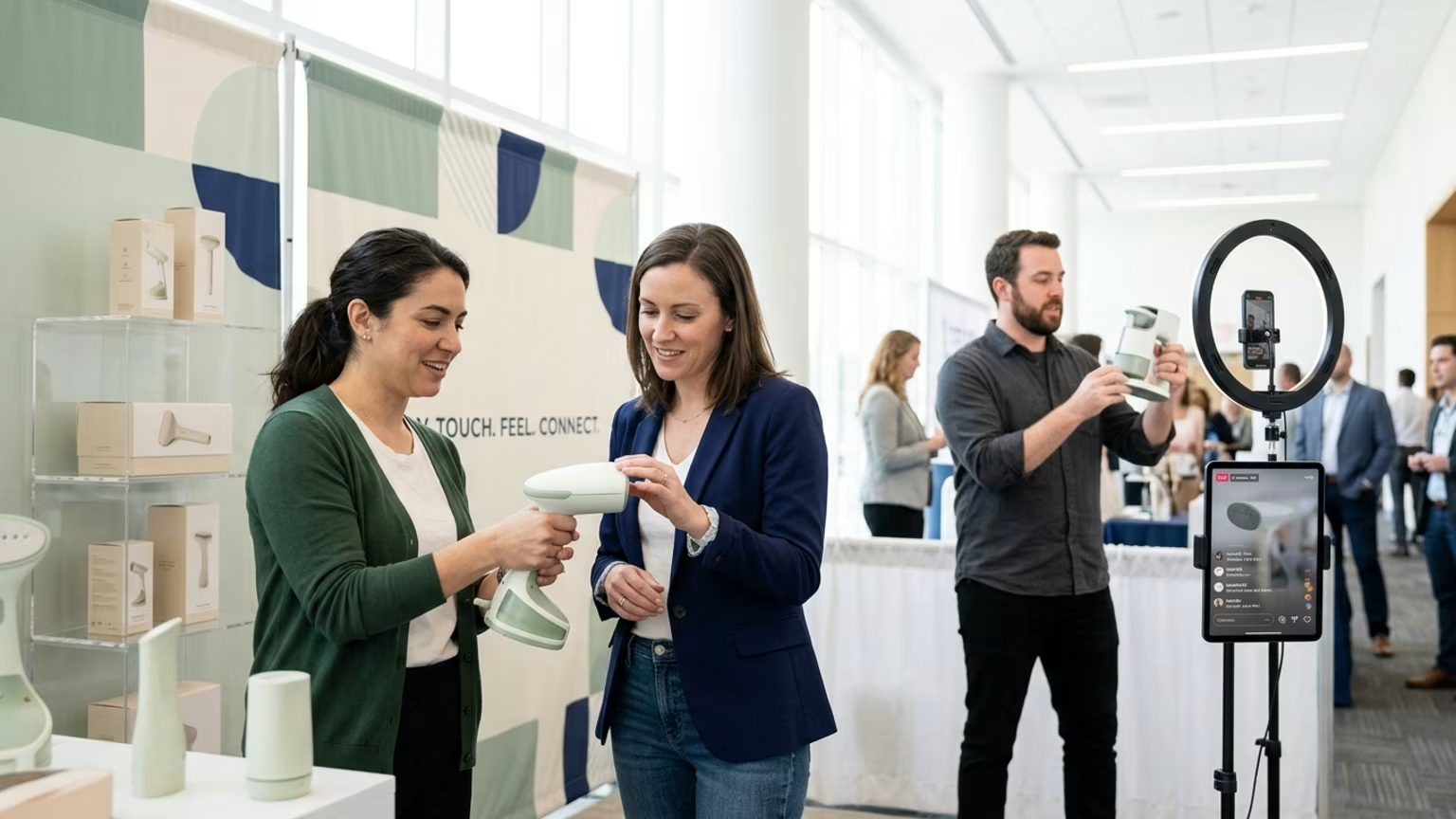
The smartest retail plays are not always happening where algorithms dictate. In a market where domestic sales remain relatively sluggish, success often hinges on a visceral connection rather than passive scrolling. A folding table in aisle six, or a retrofitted airstream in downtown Austin, can move physical products faster than a generic digital ad. However, recent Wall Street Journal reporting on Whatnot highlights a massive capital influx for interactive digital environments, setting up a distinct strategic choice for consumer brands.
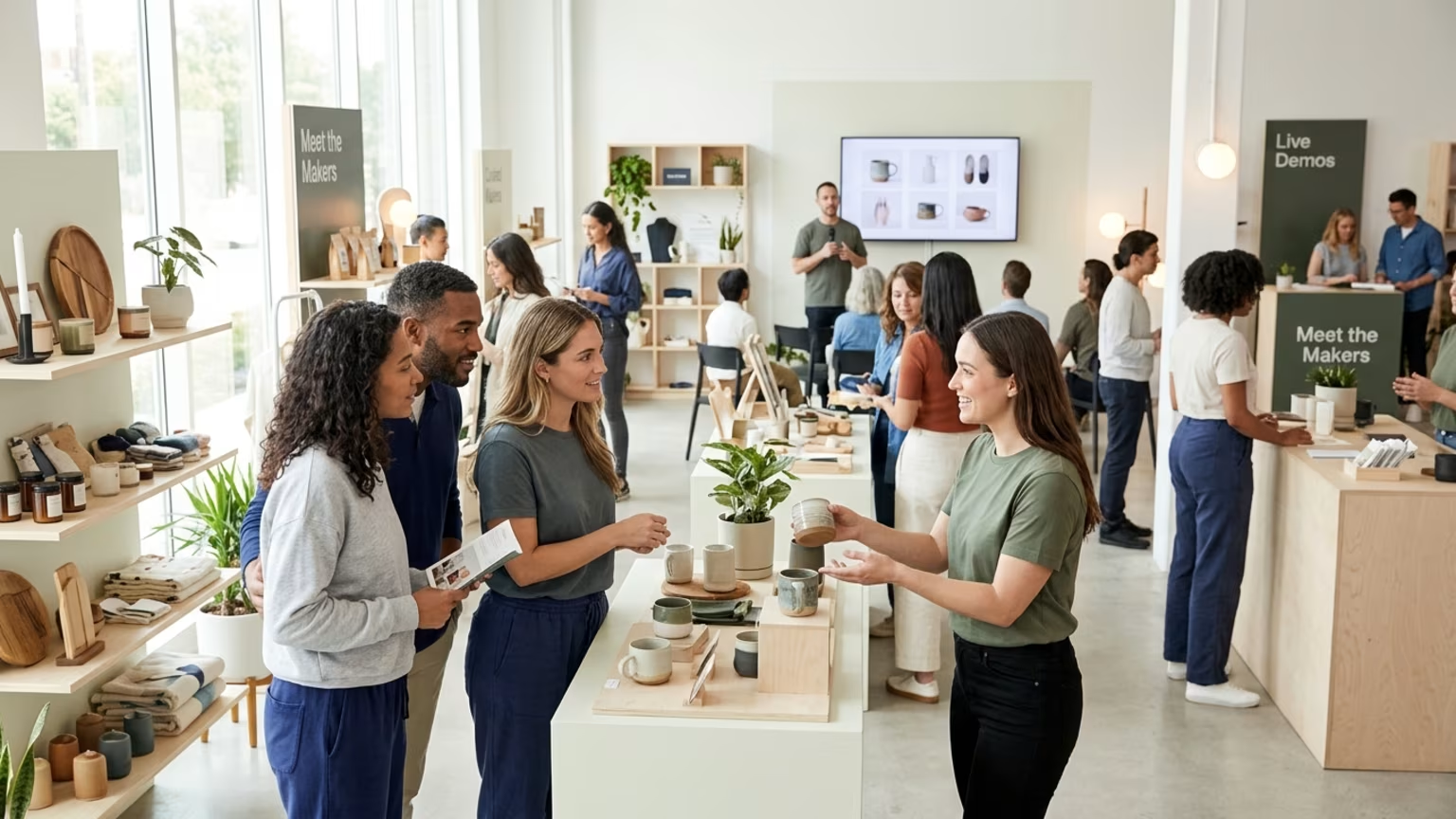
In-person field marketing remains the standard mechanism for driving trial and immediate retail sell-through. This approach places brand ambassadors and physical products directly in the path of the shopper. The primary goal is intercepting consumers just moments before they make a purchasing decision. Many CPG field marketing programs rely on trained demo support staff to remove the friction of uncertainty that often blocks a first-time purchase.
Executing these physical campaigns requires navigating a strict set of logistical constraints. Marketing teams must manage local municipal permitting, retailer-specific footprint guidelines, and complex supply chain deliveries. Scheduling consistent and reliable staff across multiple regional markets adds another layer of operational difficulty. The physical footprint is strictly bound by geography, meaning brands can only reach consumers who walk past their specific activation site.
Despite these constraints, the format creates undeniable clarity for both the brand and the retail partner. When consumers can hold a product, they are far more likely to trust its value. Our team created a launch experience that resonated with retail shoppers and generated momentum for future collaborations.
One VP of Marketing reflected on our partnership: 'Robbie, it was a pleasure working with you and your team. You turned our launch into an experience that connected with shoppers and built lasting excitement for our brand. We're already looking forward to the next project together.'
This type of verified retail impact is why brands continue to fund physical sampling programs. The feedback loop is immediate and highly visible to store managers. When a team pours cups of a new beverage and shoppers immediately move those units off the shelf, the campaign proves its worth.
The digital alternative relies on compressing entertainment and purchasing into a single interactive feed. The Wall Street Journal reported that several major U.S. consumer brands are seeing stronger revenue growth overseas while domestic sales remain relatively sluggish. In response to uneven domestic demand, investors are backing digital platforms that merge product curation with real-time purchasing. Whatnot operates a marketplace combining livestreams, auctions, product discovery, and online storefronts.
Founded by Grant LaFontaine and Logan Head in 2019, Whatnot represents the most heavily funded example of this modern digital mechanic. The platform removes the geographical limitations of a retail aisle, allowing sellers to broadcast to thousands of potential buyers simultaneously. Whatnot operates across North America, the United Kingdom, and Europe. This digital footprint requires high-quality video production and engaging on-screen talent instead of traditional field staff and localized permits.
The financial momentum behind this digital approach is substantial. Whatnot raised $545 million in Series G financing, led by ICONIQ Capital, Lightspeed Venture Partners, and Avra. This latest round valued Whatnot at approximately $20 billion, nearly twice the company’s reported valuation in its previous financing round. The Series G reportedly closed on August 5, 2026, adding to the massive capital the platform has attracted.
The rapid escalation in private-market value points to strong institutional belief in the interactive commerce model. Reported private-round valuations for Whatnot rose from roughly $5 billion in January 2025 to $11.5 billion in October 2025 and $20 billion in August 2026. Whatnot has raised approximately $1.5 billion since its founding in 2019.
Beyond the financial metrics, the platform drives heavy user participation. Separate coverage reported that Whatnot added 20 million accounts in 2025 and streams more than 550,000 hours of shows per week.
Additional backers highlight the broad interest from major institutional players. New investors included Kleiner Perkins and Wellington Management. Other new participants were Robinhood Ventures Fund I, S32 and Standard Capital. Returning investors featured CapitalG, Y Combinator and Durable Capital Partners. The group also included Alkeon and Andreessen Horowitz. Greycroft, BOND and DST also returned.
For premium food, beverage, and consumer packaged goods brands, the physical retail floor remains the unarguable winner. A shopper is unlikely to buy a completely new flavor of sparkling water based on a live digital auction. Physical taste and immediate satisfaction dictate the purchase decision in grocery aisles. When a brand needs to prove sell-through velocity to secure shelf space, deploying field teams to specific stores is the most direct solution.
Physical execution is also required when budget constraints demand hyper-targeted local spending. The Wall Street Journal noted that domestic retail softness places tremendous pressure on U.S. marketing teams. They must prove that their activation budgets directly translate to incremental store traffic and localized category lift. A regional brand expanding into a new major retailer cannot afford to waste impressions on a global digital audience. By setting up physical sampling stations exactly where their product is stocked, brands ensure that every single interaction has a high probability of converting into a local sale.
Consumer density in major retail hubs provides another distinct advantage for the physical model. High-traffic warehouse clubs and large grocery chains guarantee a steady flow of qualified shoppers every weekend. Field teams can intercept hundreds of actual buyers without needing to spend heavily on digital audience acquisition. We often see experiential marketing logistics driving retail results precisely because the audience is already actively shopping.
Finally, physical engagement succeeds because it builds trust through transparency. Shoppers can read the ingredient label, ask questions directly to a knowledgeable ambassador, and test the product without any shipping delays. In categories built around health, wellness, and premium ingredients, this physical validation is a required step before a consumer commits to a full-price purchase.
Live-commerce platforms absolutely dominate when a brand needs to aggregate massive crowds for a limited-time event. Scarcity and urgency are the primary engines of the Whatnot model. Brands launching exclusive merchandise or specialized collector items benefit from the immediate, competitive environment of a live auction. The digital format forces buyers to make split-second decisions based on social proof and diminishing availability.
This tactic is highly effective for categories that rely heavily on creator personalities and passionate community niches. When a recognized influencer hosts a live product demonstration, their existing followers provide an instant, highly engaged audience. The digital format allows fans from across different countries to participate simultaneously, entirely bypassing the logistical headache of organizing a physical global tour.
Speed to market is another area where the digital mechanic holds a clear advantage over physical field tours. Organizing a multi-city physical activation requires months of planning, vehicle routing, and staff training. Conversely, a brand can launch a digital storefront and schedule a live broadcast within days. This agility allows marketers to react immediately to sudden cultural moments or viral product trends without waiting for physical retail approvals.
Furthermore, the digital model eliminates the complexities of retail distribution negotiations. Brands can sell directly to the consumer through the live feed, capturing higher margins and securing immediate payment. By operating outside the traditional retail shelf, companies maintain full control over the presentation, pricing, and narrative of their product release.
The tension between physical retail execution and live digital commerce represents a healthy evolution in how brands reach buyers. Underestimating the scale and speed of interactive digital marketplaces is a strategic error. The massive capital flowing into these systems proves that consumers are eager for shopping environments that feel active, social, and urgent. Platforms built around community and curation will continue to capture a significant share of discretionary spending.
However, ignoring the unyielding reality of the physical retail shelf is equally dangerous. For brands that sell everyday goods, snacks, and beverages, the final decision still happens under the fluorescent lights of a grocery aisle. We know that making experiential marketing more valuable to retail partners requires showing up with reliable staff and tangible products. Digital excitement must eventually translate into localized, physical sales velocity.
Operators must recognize that these two approaches solve fundamentally different problems. Digital auctions and livestreams generate rapid spikes in attention and direct revenue for specialty items. Physical activations secure long-term behavioral changes and retail loyalty for staple products. Choosing between them is a matter of understanding exactly what the brand is trying to move, and where the target shopper prefers to make their decision.
The most effective marketers will treat both environments with the same operational rigor. They will demand clear measurement, precise targeting, and a seamless path to purchase regardless of the format. A successful campaign does not care whether the transaction happened on a screen or at a cash register. In the end, the only metric that remains is whether the consumer decided the product was worth their trust.

30 Years Experiential & Retail Activation Partner for CPG & Beverage Brands | Multi-Market Demos, Roadshows & Costco/Club Programs That Actually Sell