Robbie Thain
Founder, CEO

Smashbox Canada launched a Toronto pop-up linking physical shade matching and product sampling directly to Shoppers Drug Mart to drive retail sales.
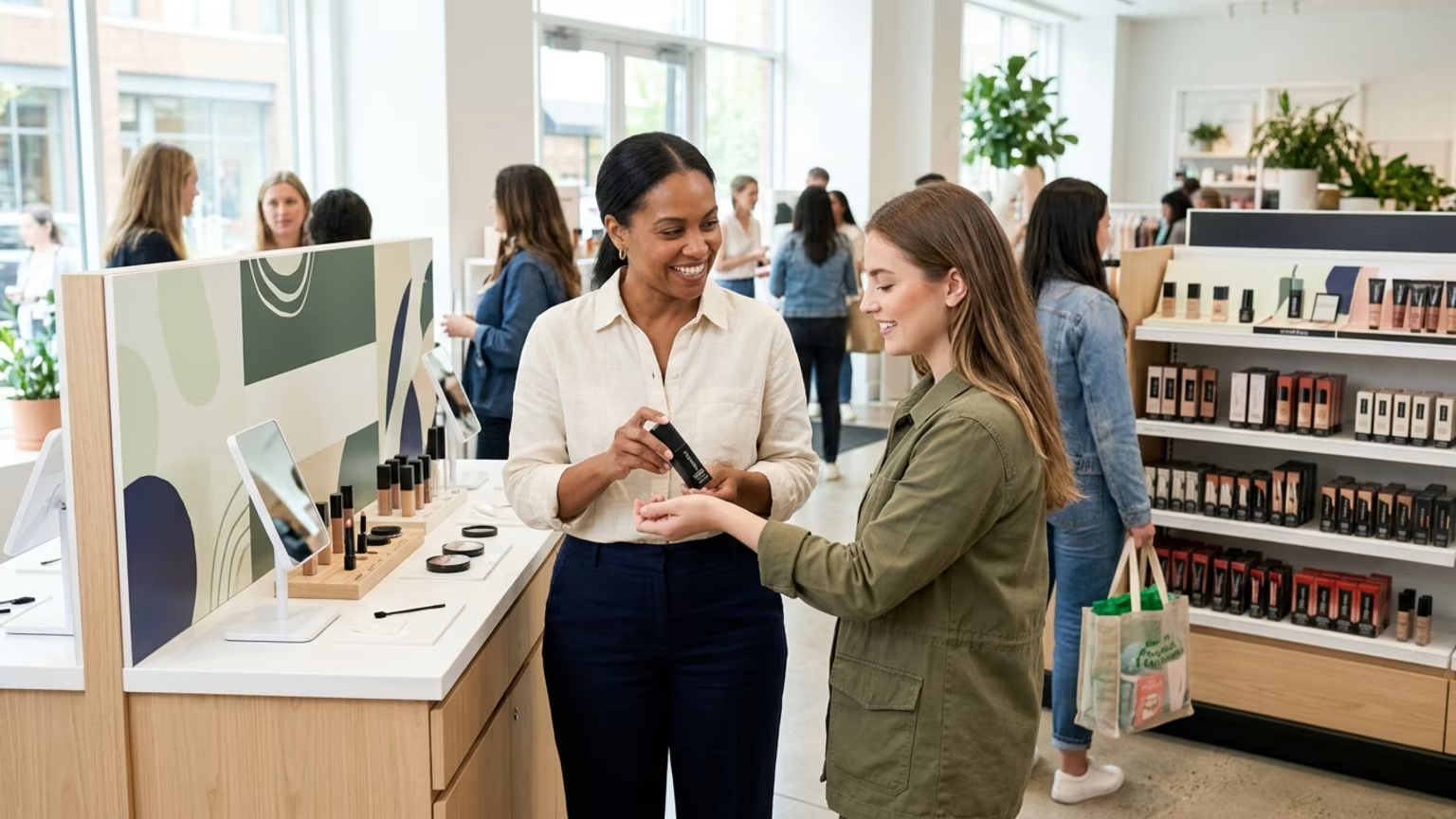
On September 24, 2026, Smashbox Canada launched a one-day pop-up event in Toronto for its Dual Filter 2-in-1 Concealer + Foundation. The activation took over Sam James Coffee on Adelaide Street West from 10:00 a.m. to 7:00 p.m. to generate immediate consumer engagement. Rather than building a standalone awareness stunt, the cosmetics company designed a physical product trial linked directly to a specific retail partner. The event established a clear timeline for testing a trial-to-retail pathway in a major global market.
The Toronto pop-up combined several traditional experiential elements into a single operating window. Visitors received personalized shade matching and a complimentary branded cold brew upon arrival. They also gained access to a Polaroid station and complimentary full-size Smashbox products while supplies last. The brand claims the new two-in-one complexion product provides up to 16 hours of wear, contains 98 percent naturally derived ingredients, and includes 71 percent skin-caring ingredients.
Smashbox launch materials describe the formula as buildable, lightweight, and crease-resistant. The company claims the product is designed to last while resisting sweat, humidity, and water. These features are difficult to convey through standard digital advertising alone. The physical pop-up allows consumers to test these claims directly on their skin before making a purchase decision.
The most significant operational detail is the direct connection to Shoppers Drug Mart. Smashbox tied the physical experience to a retail incentive by offering 20,000 PC Optimum points on purchases made at the pharmacy chain. This promotion runs through October 9, 2026. The activation moves consumers from a hospitality environment directly into a defined retail purchase funnel.
By naming a specific retailer, the brand gives attendees explicit instructions on where to go next. This structure removes the guesswork that typically follows a successful sampling interaction.
Experiential marketing fails when it stops at generating crowds without building a commercial handoff. The Smashbox activation works because it addresses a practical barrier to purchase through personalized shade matching. Beauty consumers often hesitate to buy complexion products due to color uncertainty. By using expert staff to solve this friction point, the brand turns a simple sampling event into a qualified retail lead.
We design mobile activations and roadshows that accelerate consumer trial, build trust, and boost retail velocity during 90-day product launch windows. Our structured approach transforms initial product trial into sustained consumer confidence and retail performance. When field teams focus on solving consumer friction, physical activations generate measurable pipeline instead of just social media impressions. Connecting the live event to a retailer creates a system for measuring product sampling effectiveness.
Industry data supports this structured approach to in-person engagement. A Harris Poll and Out of Home Advertising Association of America study cited by Digital Signage Today reported that 80 percent of respondents were more likely to consider a brand after experiencing it in person. The same report noted that 73 percent preferred products from retailers that engaged them through local outdoor events or in-person experiences. This data reinforces why linking physical footprints to specific retailers is highly effective.
Running a one-day activation with limited inventory creates immediate logistical pressures on field staff. The "while supplies last" condition applies directly to both the operating window and the complimentary full-size products. If the advertised products run out early, field managers must rely on queue management and fallback experiences to prevent consumer disappointment. The staff must pivot smoothly from distributing free products to guiding visitors toward the Shoppers Drug Mart promotional offer.
This pivot requires a highly trained street team capable of managing dynamic inventory situations. When the free full-size products disappear, the staff must maintain energy and focus on the shade matching service. They must ensure that every remaining visitor still receives a high-quality product trial. Consistent execution during these high-stress moments separates successful retail launches from chaotic public events.
Tying a physical event to a retail partner also changes how brands must measure success. The cited Harris Poll survey found that 51 percent of respondents viewed product samples or trials as a leading draw for live marketing events. Meanwhile, 45 percent of respondents cited free merchandise as their primary motivation for attending. Brands must strictly separate this initial hospitality participation from actual commercial metrics like retailer offer redemptions.
When executed correctly, the downstream retail impact of physical marketing is significant. According to the same source, 30 percent of consumers surveyed searched for more information after a memorable live brand experience. Another 30 percent looked for the product in stores, and 27 percent purchased the product later. Structuring a safe and compliant product sampling program ensures these conversions happen smoothly.
Furthermore, retail out-of-home advertising affected purchase decisions for 50 percent of consumers in the days before shopping. That influence rises to 59 percent immediately outside a store and 64 percent inside the retail environment. This data highlights the importance of matching the activation footprint to the consumer buyer journey. By building the pop-up near relevant retail locations, brands can capture that localized consumer intent.
Corporate leadership clearly views this physical footprint as a central component of their broader market strategy. Felix Backhaus, Senior Manager of International Commercial and Marketing for Smashbox, described Canada as a crucial market. He also noted that Toronto is one of several key global launch cities for this new campaign.
Company founder Davis Factor added that the product was intended to offer consumers desired coverage and smoothing with fewer steps. This positioning aligns perfectly with the hands-on nature of the pop-up event. When consumers can physically interact with a product, they quickly understand its functional benefits.
We understand the pressure of turning these high-stakes market entries into verified retail performance. We managed a four-week, multi-market Costco sampling program for Pulmuone's PlantSpired line. The program delivered more than 65,000 samples and recorded an 18 percent sold-to-sale rate, giving us a concrete example of how structured retail sampling can connect trial with purchase. Field marketing teams must treat every interaction as an opportunity to secure long-term retail velocity.
The coffee shop takeover on Adelaide Street West proves that modern sampling must look beyond simple brand theater. By linking a physical shade matching service directly to a pharmacy loyalty program, Smashbox built a measurable path to purchase. Brands that fail to build this bridge will continue to waste their experiential budgets on vanity metrics.
As you evaluate your own upcoming product launches, ask yourself one question. How will your next field activation capture consumer intent and route it directly into your primary retail channels?
After marketing teams launch limited-inventory pop-ups to drive retail trial, maintaining consistent field execution determines whether that initial consumer excitement actually translates into measurable sales. When low quality leads from crowded trade shows and unstructured sampling formats obscure the real impact of your physical marketing efforts, Makai designs memorable live experiences that bring brands and people together through interaction, emotion, and engagement.

30 Years Experiential & Retail Activation Partner for CPG & Beverage Brands | Multi-Market Demos, Roadshows & Costco/Club Programs That Actually Sell