Robbie Thain
Founder, CEO

Learn how to execute safe product sampling programs with strict temperature controls, allergen communication and compliant incident response protocols.
Executing a compliant physical campaign requires an operator-grade pre-brief before a single asset loads onto a truck. Brand teams often focus entirely on booth aesthetics and messaging. They ignore the unglamorous preparation that keeps a campaign running without interruption. Securing local health permits must happen weeks in advance. A national playbook establishes a baseline, but local county rules dictate your actual operating constraints.
Vehicle staging and product transport demand rigorous temperature planning. You cannot load perishable inventory into an unrefrigerated van and expect it to survive a multi-state roadshow. You must map out receiving logistics, cooler staging, and strict replenishment cycles. In our experience, failing to lock down these transportation details creates massive vulnerabilities upon arrival. Each specific stop requires an advance review of unloading procedures and designated storage areas.
Additionally, configuring proper lead routing ensures that consumer interactions are captured efficiently. A strict digital workflow prevents staff from writing contact details on paper clipboards near active food stations. Keeping data collection sanitized and separated from food handling is a core element of execution discipline. A solid in-store product sampling execution playbook must outline every logistical step. Operations managers must verify that technical setups never interfere with food safety perimeters.
Once the event goes live, field staff must execute a strict procedural routine. The CDC’s basic food-safety framework is clean, separate, cook and chill. This simple model provides an effective structure for training temporary teams.
The CDC advises refrigerating perishable food within two hours, or within one hour when temperatures exceed 90°F. Build these exact thresholds into your service plan. Require staff to use calibrated thermometers and document readings in a physical log. If a product falls outside the permitted temperature range, your team needs a clear procedure for immediate disposal. Do not allow field staff to attempt to rescue compromised products by simply returning them to the cooler.
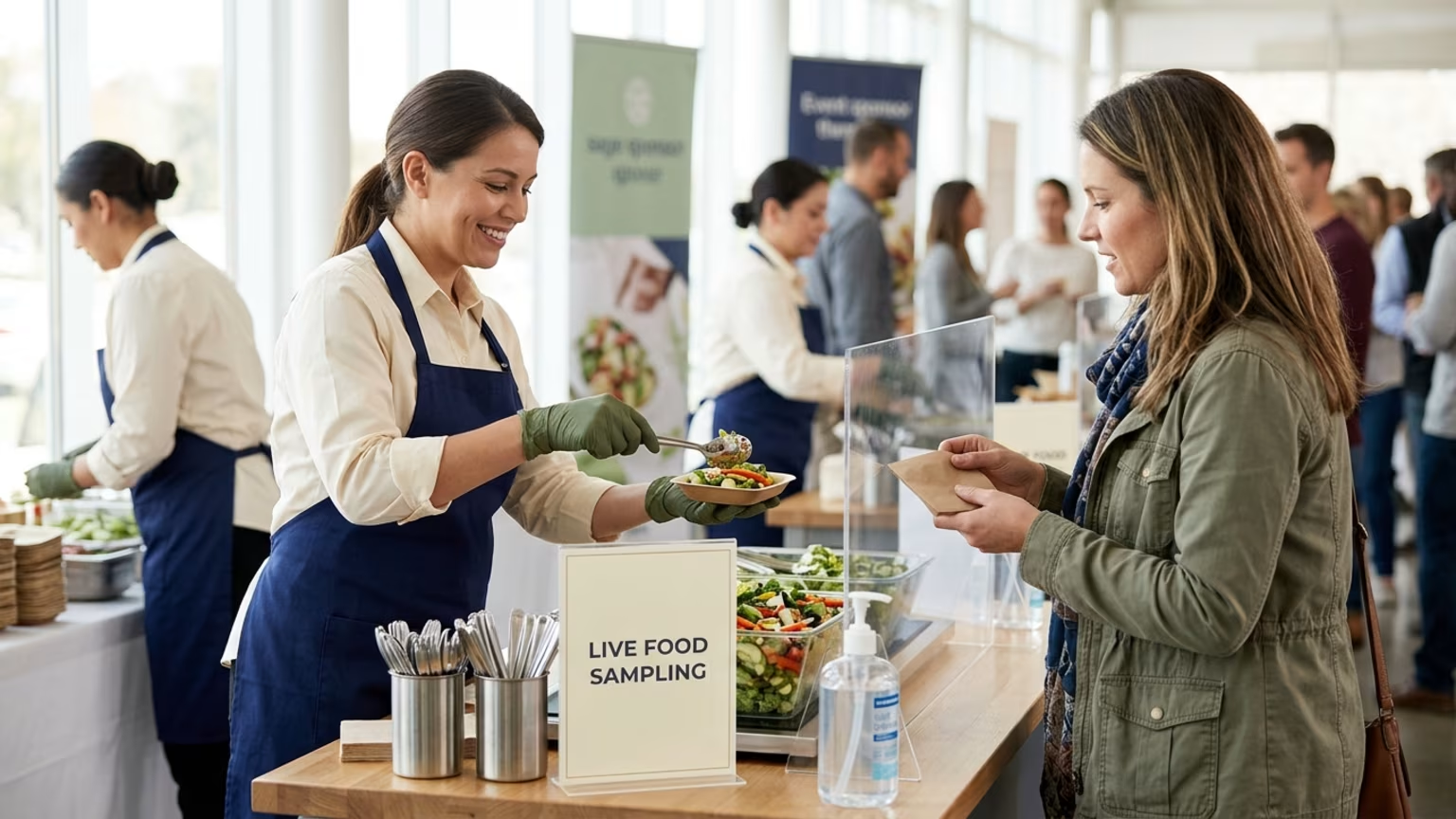
Field staff must have a clear procedure for maintaining clean food-contact surfaces. A dedicated handwashing station or an approved venue sink is non-negotiable. Gloves are not a substitute for washing hands after touching waste, phones, or contaminated areas. Our team mandates replacing dropped or contaminated serving equipment immediately. A low-touch service method significantly reduces the risk of unintended contamination during peak rush hours.
The United States recognizes nine major food allergens, including sesame. Your team must have a written product fact sheet available at the point of service. If a consumer asks about an ingredient, staff must check the approved documentation instead of guessing. A practical script is to offer to check the ingredient information directly. Keeping original compliant packaging nearby helps resolve complex questions efficiently.
Smaller servings reduce handling and limit ambient exposure. Establish a strict batch size and a defined replenishment interval for your activations. Never top off an old container with fresh product. You should maintain a clear distinction between open samples intended for immediate consumption and sealed inventory. Designing the station to keep bulk storage entirely separate from the active pouring area prevents cross-contamination.
Waste management should be designed into the activation footprint from the very beginning. The station needs clearly identified receptacles for ordinary trash, recyclables, food waste and required liquid disposal. Staff must remove waste frequently enough to prevent overflow, odors or contact with clean food surfaces. Unsold perishable samples should never be redistributed casually after the activation ends.
Alcohol and wellness sampling require an entirely separate control layer. Staff must verify age using the exact method required by the jurisdiction and the venue. Do not assume that an event’s general admission policy establishes the legal rules for serving restricted products. For nonalcoholic wellness items, staff should follow the approved label rather than improvising health claims.
Maintain precise logs of what was served, when it was held and which lot was used. The FDA also issued final guidance in 2026 for ready-to-eat fresh-cut produce operations under the preventive-controls framework. This is relevant background when an activation cuts or assembles produce onsite. Keeping organized records prepares you for any necessary post-event review.
The first major failure point is treating ingredient absence as a guarantee of safety. A may contain statement is not a substitute for understanding the actual handling process. When an activation portions unpackaged samples onsite, the risk of allergen cross-contact increases significantly. Untrained staff using a shared scoop can easily contaminate a previously safe sample. Real operator discipline requires treating shared utensils as primary hazard points.
The second fatal mistake involves poor incident and waste documentation. Amateurs discard unsellable product without recording the batch numbers or the reasons for disposal. CDC describes environmental assessments during foodborne-outbreak investigations as including food-sample collection and records collection. If a brand cannot produce organized logs showing precise temperature checks, they cannot effectively defend their field operations.
Furthermore, a CDC August 2026 investigation connected illnesses to alfalfa sprouts distributed by Everything Sprouts and advised against eating, selling, or serving the affected sprouts. Tracking exactly which ingredients reach which consumers is the only way to manage product recall scenarios effectively. Understanding why retail demos fail often comes down to these missing documentation practices. Brands that lose track of their supply chain in the field face immense exposure.
Lastly, amateurs fail to implement written stop-service procedures. Every program should specify who can pause the station and how to isolate affected product batches. Without an immediate consumer care plan, a minor incident can spiral out of control.
The true test of a sampling campaign happens after the station closes. Marketers must review the logs to ensure the operating model remains compliant across multiple markets. Reconcile the total units opened against the recorded samples served and product discarded.
Watch how consistently your field teams complete their end-of-day compliance checklists. A high-volume station is only valuable if it generates safe interactions and clean data. If field managers routinely skip temperature logs to serve more cups, the operational framework needs immediate correction. Following a comprehensive guide to retail product sampling programs helps maintain this standard. Ensure every future event builds upon the compliance lessons learned today.
Designing a compliant product sampling infrastructure dictates whether a live event scales safely across multiple regions. Makai solves the problem of navigating complex event logistics, permits, and staffing by meticulously managing your field execution. We deploy our Retail Demonstrations capability so trained brand ambassadors drive in store sales through real conversations and product trials. Request a proposal

30 Years Experiential & Retail Activation Partner for CPG & Beverage Brands | Multi-Market Demos, Roadshows & Costco/Club Programs That Actually Sell