Robbie Thain
Founder, CEO

Transform passive trade show booths into high-conversion mobile experiences. Learn how to use gamification and modular roadshow tactics to capture real leads.

A massive booth footprint is the fastest way to burn marketing budget without generating a single qualified lead. Real conversion happens when brands stop building passive monuments and start treating their expo space like an agile roadshow. By integrating mobile tactics into a static environment, marketing operators can turn fleeting booth visits into measurable sales pipeline.
You know the exact feeling of walking into a major convention center. The aisles are packed with tired attendees dragging rolling bags. Neon signs flash from every direction as aggressive reps thrust flyers into the hands of anyone who walks by. You spend six months planning a beautiful activation only to watch people grab a free pen and immediately walk away.
The issue is not your product or your brand messaging. The problem is that most brands rely on passive displays hoping that size alone will command attention. Exhausted buyers do not have the mental energy to figure out what you sell or why they should care. They just scan their badge to get the free sample and move on.
If your strategy relies entirely on badge scans, you are simply collecting expensive email addresses. We see teams return from national expos with thousands of scans but zero booked meetings. That disconnect creates massive friction when it is time to prove Return on Investment to the executive team. Event organizers design these spaces for volume rather than precision.
We create experiential marketing programs built to connect emotion with action. Our process blends creativity, strategy, and data to ensure every brand interaction drives measurable results. We craft experiences that engage all five senses, helping people not just see brands, but feel them, turning moments into meaningful business outcomes.
The shift requires stripping away the traditional mindset of a fixed booth and adopting the agility of a mobile roadshow. Interactive and mobile trade show experiences significantly outperform static booths. Research from industry analysts shows that gamification and social sharing activations can extend an event footprint three to five times beyond the physical attendees. People need a reason to stay in your space.
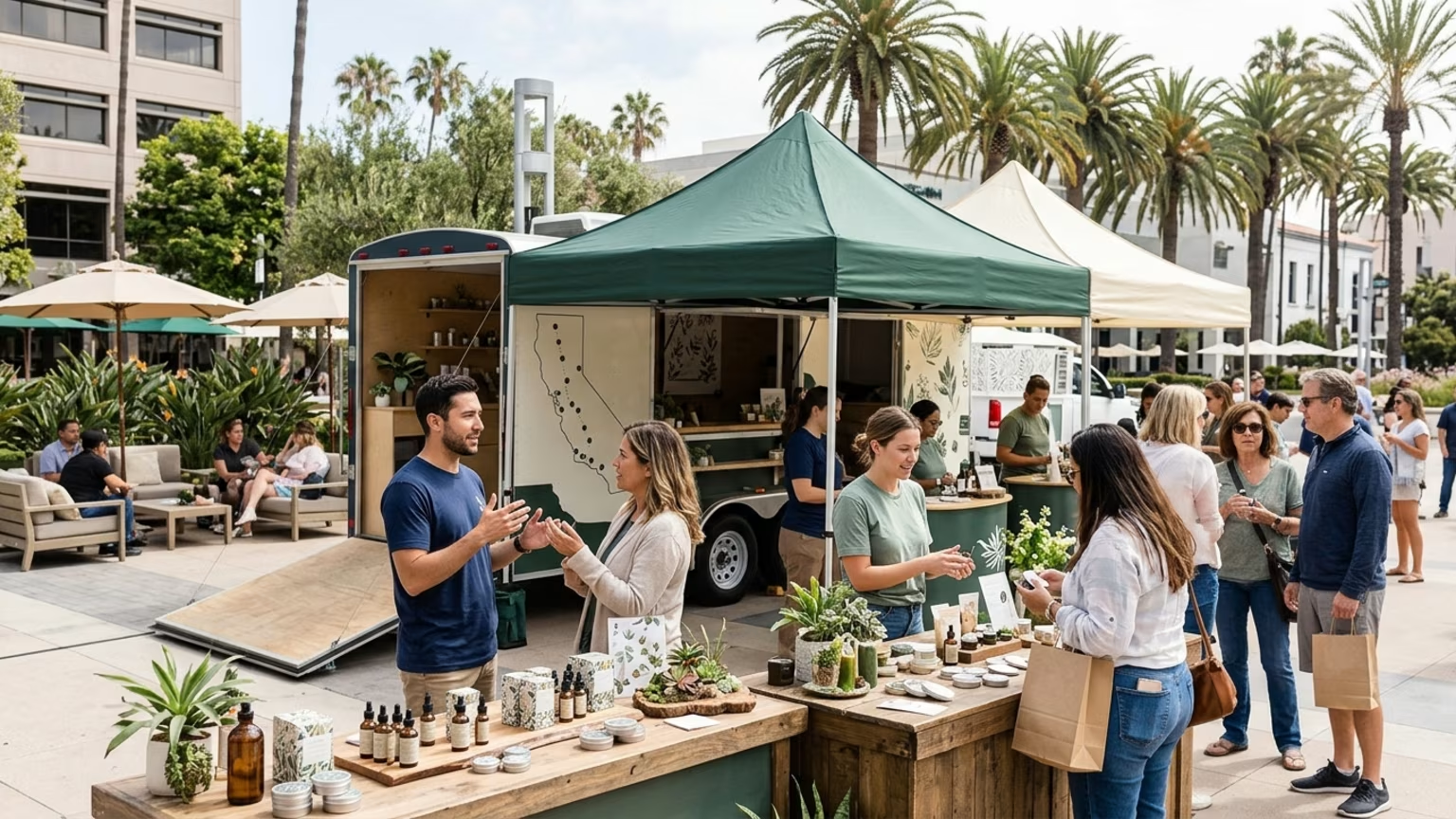
Instead of waiting for traffic to come to a central desk, a modular approach brings the experience directly to the edges of your footprint. Pop-up roaming carts and aisle demonstrations create multiple friction points for engagement. This format allows you to intercept attendees naturally and start real conversations before they even step inside your main area. Modular designs are highly cost-efficient and easy to reuse across different regional activations.
Adding intelligent technology to these mobile stations solves the staffing bottleneck. Recent case studies demonstrate that using AI holograms captures common questions and supports multilingual interactions instantly. Major technology and apparel brands use conversational AI to handle routine inquiries. This allows your human brand ambassadors to focus entirely on high-value conversations.
Your booth transforms from a waiting room into a highly efficient conversion engine. The focus shifts from merely surviving the floor traffic to actively directing it. Mobile experiences give your team the power to control the narrative at every entry point.
Transitioning to this agile model requires strict operational discipline on the show floor. You must engineer every touchpoint to capture intent rather than just passive awareness. Teams that fail to build structured engagement paths often waste their entire budget on novelty alone.
This approach eliminates the guesswork from your post-event follow-up sequence. When you connect gamified interactions to your customer relationship management system, you can send personalized communications immediately.
Vanity metrics will not protect your budget during the next marketing review. The only way to validate your strategy is to measure actions that directly impact retailer confidence and pipeline velocity. You must establish clear leading and lagging indicators before the first crate ships to the venue. Setting these standards early prevents the chaotic scramble for data after the event concludes.
The first critical metric is authenticated dwell time. You need to know exactly how many minutes a potential buyer spent interacting with your modular stations or sampling your product. Long dwell times correlate directly with emotional investment and higher conversion rates. You can measure this through app engagement durations or gamified interaction logs.
Next, track the volume of immediate next steps taken on the floor. This means counting the exact number of meetings booked, line reviews requested, and digital demos scheduled. When measuring the success of these programs, how you track pipeline over the long term determines the true value of your presence. A hundred scheduled meetings will always outperform a thousand passive badge scans.
Finally, monitor the post-event sales lift and qualified retail conversations. Sampling creates a strong psychological sense of reciprocity. But reciprocity only translates to revenue if your sales team executes a flawless follow-up sequence. To get this right, logistics playbooks for high-performing teams often require strict service level agreements between marketing and sales.
Consider the reality of launching a new beverage at a major national expo. The aisles are packed with competitors offering identical free sips from standard folding tables. Buyers are overwhelmed by the endless sea of generic presentations and predictable sales pitches. A premium beverage brand decided to ignore the traditional playbook and deployed three mobile sampling tricycles around their main footprint.
Instead of generic badge scanners, each tricycle featured a QR-coded gamification challenge. Attendees scanned the code to spin a digital wheel for premium merchandise. To spin the wheel, they had to answer two qualifying questions about their distribution volume. This simple barrier separated the serious buyers from the casual snackers.
The team routed all high-volume buyers directly to a private meeting area where senior sales leaders were waiting. In our experience, creating this kind of tiered engagement model changes the entire dynamic of the event. It shifts the power from the wandering attendee back to the brand. They walked away with forty confirmed retail line reviews.
This success proves that costco roadshows and mobile sampling tactics can dramatically improve static exhibition environments. If your brand needs to stop wasting money on passive visibility and start capturing qualified pipeline, it is time to rethink your event strategy. Book a strategy call to map out an agile, high-conversion approach for your next major activation.
The most memorable brands do not win by being the loudest in the room. They win by being the most intentional with the space they occupy. True connection happens in the quiet moments of genuine interaction amid the noise.

30 Years Experiential & Retail Activation Partner for CPG & Beverage Brands | Multi-Market Demos, Roadshows & Costco/Club Programs That Actually Sell