Robbie Thain
Founder, CEO

See how Monster Energy uses mobile truck tours to drive on-site sampling and measurable retail sell-through with precision logistics and geo-targeting.
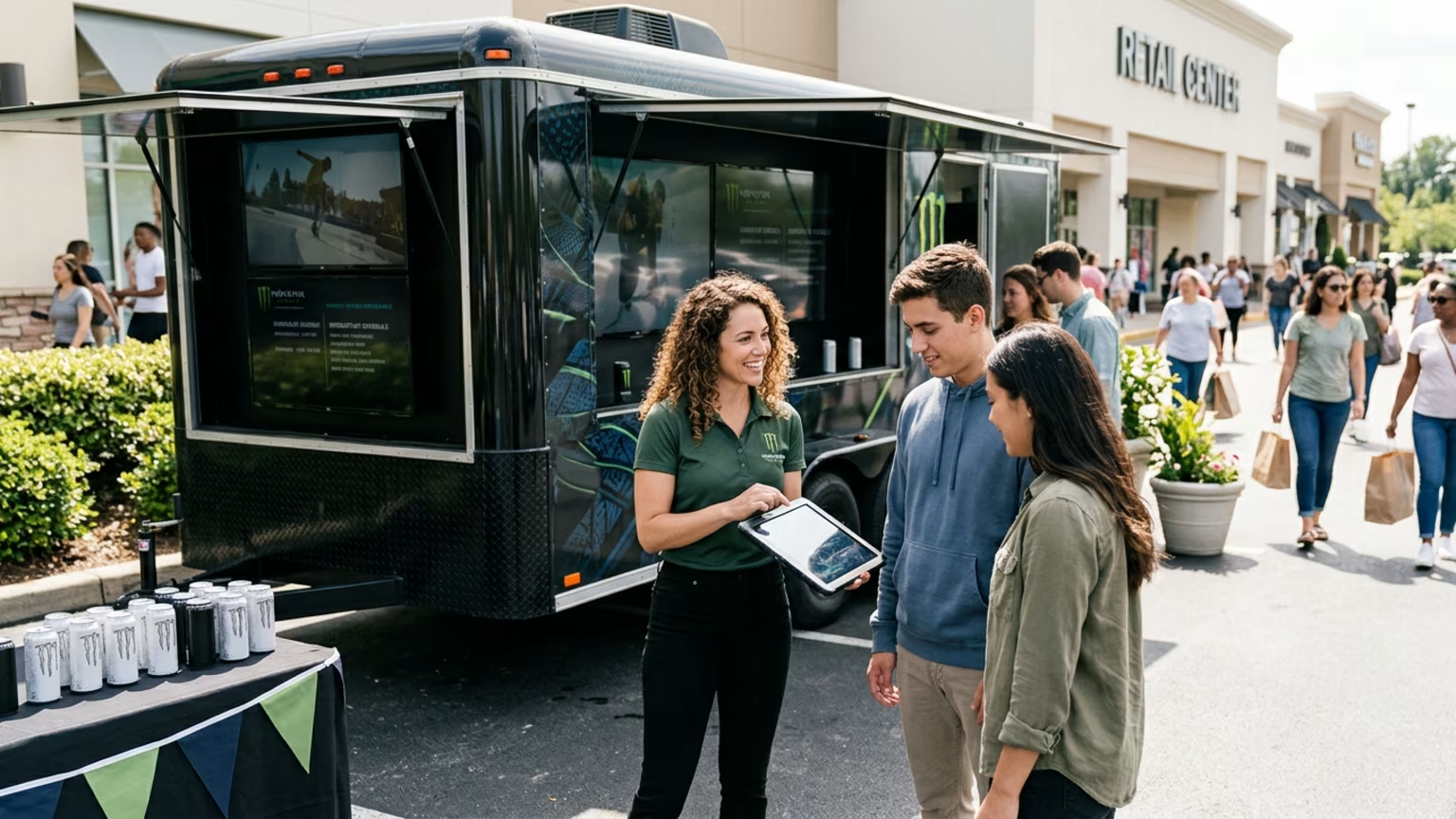
Most beverage sampling programs fail to capture actual retail conversion because they lack a connected tracking strategy. Monster Energy (part of Monster Beverage Corporation) recently announced a U.S. summer truck tour that aims to solve this operational gap. By placing physical activations directly in front of key stockists, the campaign connects brand trial to immediate retail pipeline. This approach provides a clear framework for turning scattered field marketing into profitable shopper action.
The reality of managing a mobile vehicle tour is often brutal and disconnected from corporate strategy. Field teams usually pull into a hot parking lot, set up a branded canopy, and start handing out free inventory. Consumers gladly accept a cold beverage, chat for a few seconds, and walk back to their cars. They never cross the threshold of the adjacent store to make a purchase.
Marketing leaders back at headquarters look at the activation report weeks later. They see high distribution numbers and hundreds of conversations logged by the field team. Yet the regional sales data shows zero lift at the target grocery locations. The entire effort looks like expensive theater instead of a targeted retail driver.
This is the exact problem that plagues premium consumer brands trying to win regional market share. Managing the heavy logistics of trucks, permits, and schedules consumes the entire budget. Field marketing directors become so focused on keeping the vehicles moving that they forget to engineer the actual retail conversion. The main priority remains moving inventory out of the truck rather than moving product off the shelf.
The solution requires treating the branded vehicle as an extension of the retail store itself. Instead of hunting for generic crowds at random festivals, operators must anchor their routes to specific retail partnerships. A mobile setup acts as a massive magnet that intercepts shoppers just moments before they make a buying decision. This proximity creates a behavioral bridge between trying a new flavor and buying a full case.
Adding interactive elements like gaming stations or live athlete appearances creates an anchor point for the activation. These features hold consumer attention longer than a simple product handoff. A longer dwell time allows brand ambassadors to build rapport and explain the product benefits. It also gives the field team an opening to present a digital coupon or direct the shopper inside.
Brands that invest in mobile tours and local retail strategy understand that location is the ultimate conversion tool. By coordinating the tour dates directly with local store managers, the brand guarantees adequate shelf stock. The retail partner benefits from increased foot traffic, and the brand proves its commitment to the account. This mutual benefit secures better shelf placement long after the truck leaves the city.
To achieve maximum volume, brands often adapt the truck tour model for wholesale environments. A branded setup in a club store parking lot serves as a powerful intercept for incoming shoppers. The field team engages families as they walk toward the main entrance. By providing a high energy interaction outside, the brand pre-sells the product before the shopper even grabs a cart.
Operating near a massive retailer requires an entirely different level of precision. Store managers will not tolerate blocked fire lanes, messy trash stations, or unorganized lines. The field staff must maintain strict operational discipline to keep the host retailer happy. A well executed parking lot takeover often leads to expanded shelf space inside the building.
A successful truck tour does not operate in a physical vacuum. The best operators broadcast the daily route across social channels to draw existing fans to the retail location. When followers see their favorite athletes appearing at a local store, they travel out of their way to participate. This planned foot traffic guarantees a baseline of retail activity before random shoppers even arrive.
Syncing digital notifications with physical stops requires tight coordination. If the truck breaks down or faces a permitting delay, the social media team must update the audience immediately. Disappointing a loyal customer who drove across town to meet a brand ambassador damages the relationship. The logistics manager must act as the central hub of communication for all departments.
Executing a high volume roadshow requires an operator grade playbook to prevent logistical failures. You cannot rely on local staff to figure out the flow on the morning of the event. Every movement from the vehicle parking angle to the trash removal process requires a strict protocol. The following steps dictate how a mobile activation actually generates retail demand.
Marketing executives face intense pressure to prove that physical activations generate a positive Return on Investment. Counting empty cans is a vanity metric that holds no weight in a board meeting. To measure true success, teams must track a specific set of lead and lag indicators. This rigorous tracking turns a subjective brand experience into objective sales data.
Lead metrics focus on immediate consumer actions happening within the activation footprint. Teams must track the total number of meaningful conversations, digital coupon downloads, and time spent playing interactive games. These early indicators show whether the on site engagement successfully captured consumer attention. If the lead metrics fall short, the field team must adjust their approach immediately.
Lag metrics measure the actual financial impact on the nearby retail environment. The most critical lag indicator is the same store sales lift during the week of the activation. Operators also look at regional volume velocity over the following four weeks to measure sustained momentum. Tracking attribution for experiential events provides the evidence needed to secure future marketing budgets.
Collecting this data requires tight integration between the field operators and corporate analysts. Ambassadors must record their shift numbers in a centralized digital dashboard every single night. The marketing team then compares those field inputs against retailer scanner data to find the exact conversion rate. This mathematical approach removes the guesswork from event marketing.
Accountability in the field determines the quality of the final data set. If brand ambassadors forget to scan digital coupons or fail to log their hourly interactions, the entire measurement model collapses. Field managers must conduct random site audits to guarantee the staff executes the tracking protocols perfectly. Clean data from the parking lot is the only way to prove the campaign actually generated retail momentum.
Using branded fleets to deliver product directly to consumers is a proven method for driving retail action. When a campaign links physical engagement to nearby retail stockists, the brand builds both awareness and immediate pipeline. Shoppers appreciate the entertainment value of gaming and athlete appearances, which builds deep brand loyalty. Retailers appreciate the massive influx of motivated buyers walking through their front doors.
Many emerging and legacy beverage companies are adopting this exact model to win shelf space. Brands consistently study how mobile sampling impacts energy drink retail pipelines to refine their own regional tours. Likewise, personal care operators track how mobile sampling trucks turn real world interactions into retail sales to validate the same methodology. The core mechanism remains the same across every product category.
Our team at makai specializes in creating retail demos, product sampling programs, and roadshows that bring brands face to face with their audiences. Each program is designed to drive trial, build consumer relationships, and accelerate retail velocity across multiple locations. We handle the heavy logistics so your marketing team can focus on the big picture. If you are ready to turn your next vehicle tour into measurable sales, book a strategy call with our operations team today.
When the branded truck finally rolls into the crowded parking lot, you should never have to guess if the activation is working. With the right strategy and relentless execution, you will know exactly how that first cold sip connects directly to the retail register.

30 Years Experiential & Retail Activation Partner for CPG & Beverage Brands | Multi-Market Demos, Roadshows & Costco/Club Programs That Actually Sell


Since 1995, Makai has been connecting brands with people through live experiences, retail programs, and national activations.