Robbie Thain
Founder, CEO

Remote experiential marketing jobs are surging. Learn how centralized operations and remote playbooks are driving field team success and measurable ROI.
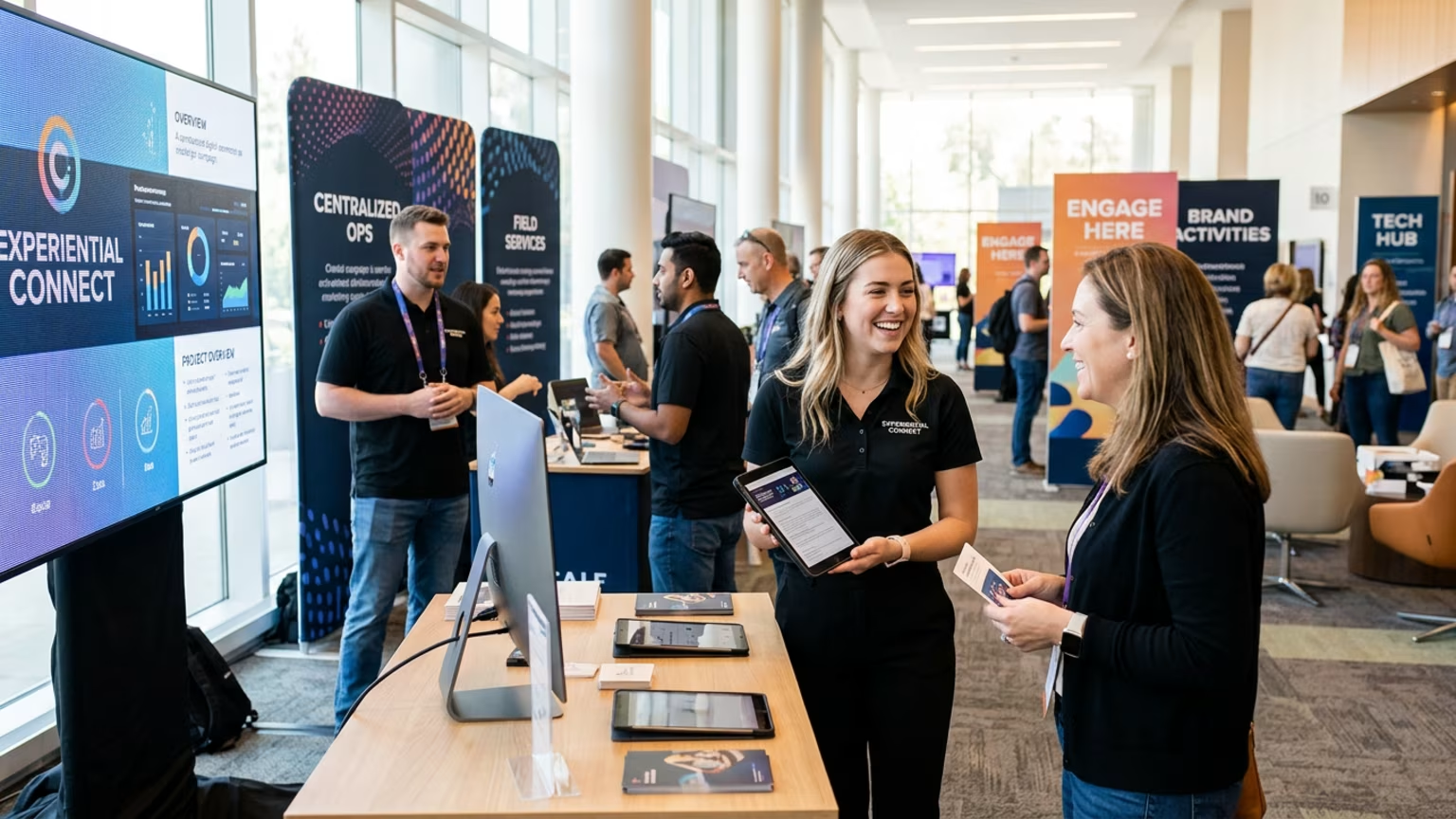
Local event execution is rarely improved by simply adding more local managers. The most successful field marketing programs are now orchestrated from hundreds of miles away. A massive surge in remote experiential marketing job listings proves a fundamental industry shift. Brands are centralizing their operations to turn fragmented trade shows into predictable revenue engines.
Remote experiential marketing jobs are surging as brands shift toward centralized operations to manage distributed field activations. This structural shift allows marketing leaders to deploy standardized playbooks from a corporate headquarters to drive predictable, measurable Return on Investment (ROI) across every local market.
The reality on the trade show floor is usually a masterclass in logistical friction. A national consumer packaged goods brand launches a multi-city sampling tour to boost retail sell-through. The operation begins with a frantic morning phone call from a regional demo manager. Half the promotional materials never arrived, and the temporary staffing agency sent completely untrained personnel.
These local representatives are reading off different scripts and ignoring the approved lead capture protocols. You spend the entire weekend fighting logistical fires instead of building genuine consumer trust. By Monday morning, your team possesses a pile of illegible lead forms and zero actionable data. There is no clear way to attribute the weekend expenditure to actual retail pipeline growth.
This fragmented execution acts as a hidden tax on live events. Without centralized control, local teams waste precious hours reinventing the wheel for every single activation. Poor data capture leaves marketing executives with blurry anecdotes instead of concrete evidence. Finding qualified personnel to manage your activations becomes impossible when regional directors operate in absolute silos.
The solution to this operational nightmare is not micromanaging the local floor staff. The correct approach involves building a centralized remote control tower. Job boards are currently reflecting a massive structural change in how brands handle live activations. A recent search on Indeed showed over 850 open remote experiential marketing roles in the United States alone.
The days of relying entirely on a single regional event planner are fading fast. Companies are actively hiring specialized data analysts and remote directors to sit in corporate hubs. These remote operations leaders focus heavily on building repeatable frameworks for field marketing excellence. They integrate event technology with existing corporate systems and mandate strict data standards.
They define the exact key performance indicators required before a single booth property gets shipped. The shift brings sophisticated technical talent into the experiential marketing fold. Brands that invest in a centralized operations model safely separate high level strategy from physical execution. Financial institutions and healthcare companies are now recruiting remote experiential marketing data analysts.
These analysts are tasked with connecting event strategy directly to enterprise priorities. They build unified data pipelines that show clear business impact across every territory. They utilize SQL and business intelligence platforms to monitor campaign health. This analytical firepower replaces gut feelings with hard mathematical proof.
This structure provides mid-market brands with a massive competitive advantage. A beverage brand in a secondary market can now access top tier experiential operations leadership remotely. Local partners handle the physical handshakes, product sampling, and local retail relationships. The remote headquarters handles the analytics, vendor contracts, and campaign consistency.
Transitioning to this hub and spoke model requires operator grade discipline and clear communication. You need a strict process to bridge the gap between a remote director and a local field coordinator. Follow these exact steps to implement a centralized experiential strategy effectively.
Centralized operations only matter if they produce clear financial outcomes for the business. The era of tracking soft impressions and vague foot traffic is completely over. Chief Marketing Officers face intense pressure to quantify the impact of physical experiences. You need a unified dashboard that links physical engagement to hard business results.
Lead metrics tell you if the activation is functioning correctly on the ground. Track the total number of physical samples distributed and the daily compliance rate of your staffing vendors. Measure the total digital opt-ins captured per hour and the cost per physical engagement. These operational numbers help your remote headquarters optimize the flow of the event in real time.
Lag metrics prove the financial value of the entire program to your executive leadership team. Measure the store level sales lift during the activation week and the subsequent repeat purchase rate. Calculate the cost per new buyer to compare experiential marketing against digital acquisition channels. You must track the percentage of event leads that convert into your final sales pipeline.
Advanced operations teams heavily utilize incrementality testing. They run physical activations in matched sets of retail stores and compare them against baseline control locations. This isolates the exact impact of the physical event from simultaneous digital promotions or seasonal retail trends. This level of rigor helps unify retail media and in-store experiential marketing into one cohesive revenue strategy.
It gives your sales team the exact proof they need to secure better retail placements. Armed with hard data, your brand becomes an indispensable partner to major retailers. This data defends your event budget against corporate cost cutting. When you can prove direct pipeline impact, experiential marketing becomes an untouchable investment.
A national beverage company was struggling to coordinate a massive retail sampling push across multiple states. They possessed a fantastic product, but their field execution was entirely decentralized and wildly inconsistent. Regional managers were using different staffing agencies, unique reporting spreadsheets, and varied product messaging. We implemented a remote operations model to completely standardize their reporting and staffing guidelines.
The local teams received crystal clear playbooks from our centralized operations hub. This structure allowed the field ambassadors to focus purely on consumer interactions and product trial.
A VP of Marketing in the CPG beverage category told us: 'Robbie, your leadership and vision turned our campaign into something truly special. The Makai team brought our new drink to life with energy, creativity, and flawless execution. Thanks to you, our brand isn't just tasted, it's remembered.' Our team's approach transformed their product launch into a memorable brand experience.
The centralized data pipeline immediately showed exactly which retail locations were driving the highest repeat purchases. We tracked the daily sample counts against regional sales data to prove a definitive sales lift. This hard evidence allowed the brand to confidently expand their retail footprint into new territories.
The remote headquarters optimized the staffing levels based on real time lead capture rates. Field teams felt supported by a strong corporate infrastructure instead of feeling abandoned on an island. The brand finally achieved predictable pipeline generation across every single target market. They stopped guessing about their return on investment and started scaling their successes.
The physical world will always demand local nuance and authentic human connection. Yet the architecture of those moments is increasingly designed from afar. The most powerful live experiences are built in quiet rooms long before the crowds arrive.

30 Years Experiential & Retail Activation Partner for CPG & Beverage Brands | Multi-Market Demos, Roadshows & Costco/Club Programs That Actually Sell