Robbie Thain
Founder, CEO

Unfamiliar ingredients generate curiosity, but only structured sampling experiences convert that curiosity into commercial intent on the trade show floor.
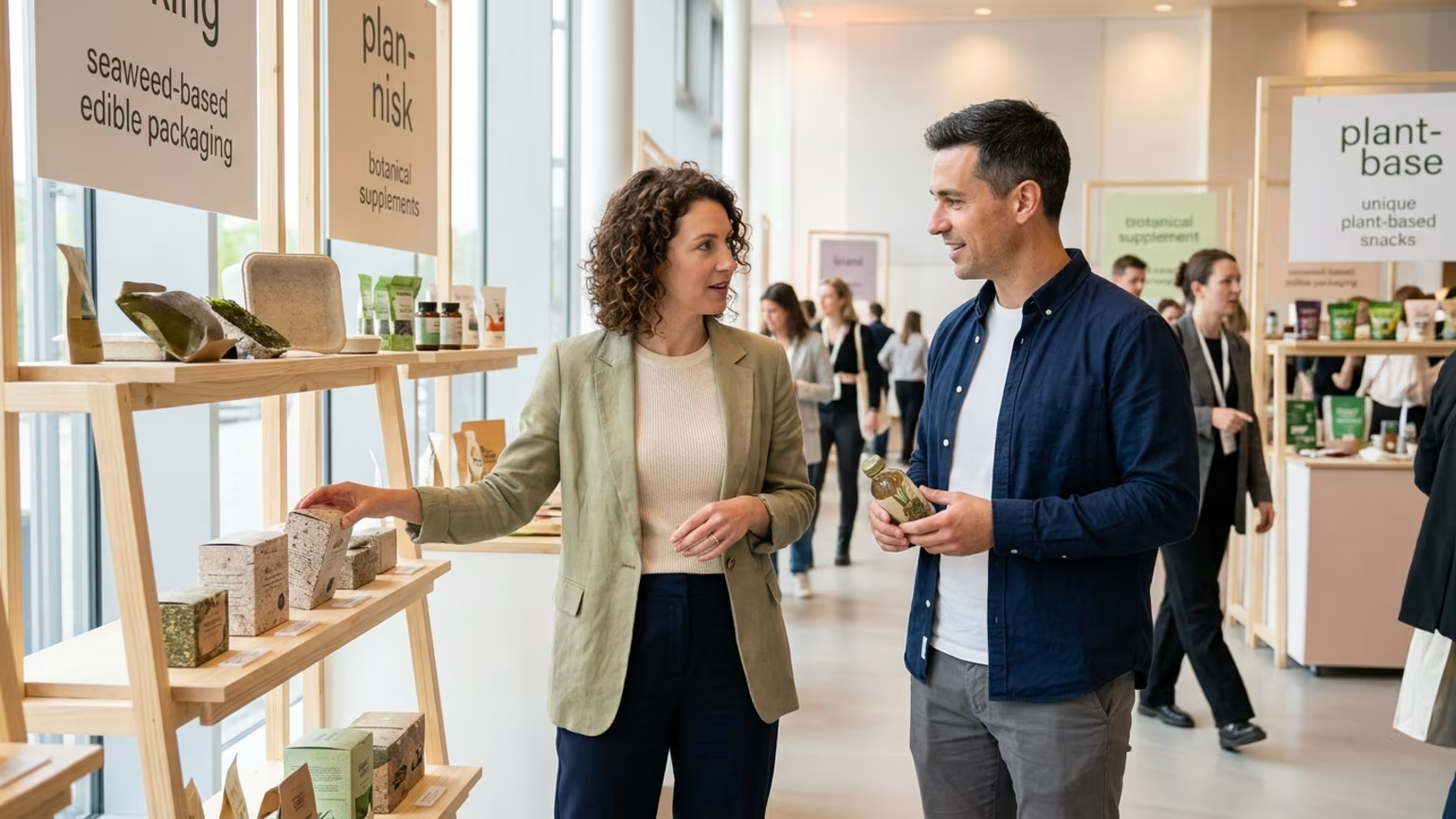
Myth: You can rely on product novelty to drive qualified retail pipeline at discovery trade shows. Truth: Unfamiliar ingredients generate curiosity, but only structured sampling experiences convert that curiosity into commercial intent. Brand marketing leaders frequently trust that launching a highly innovative product at a major expo will automatically generate retail interest. That assumption leads to crowded booths with zero follow through and missed commercial opportunities.
This trap is incredibly easy for smart marketing operators to fall into. Trade shows demand significant budget allocations and tight logistical timelines. Agencies often promise that simply showing up with a unique formulation will capture buyer attention naturally. When New Hope Network previewed the natural and organic CPG trends for Newtopia Now, the editorial excitement was palpable.
The event was held in Denver from August 18 to 20, 2026, with the show floor scheduled for August 19 to 20. New Hope Network noted that the event featured more than 400 exhibitors. They also stated that close to half of those participants were exhibiting for the first time. The official agenda described a gathering of industry leaders and purpose driven buyers looking for new vendor relationships.
New Hope’s broader summer product showcase featured 72 innovative natural products across beverages, dietary supplements, personal care and food categories. This showcase was actively positioned as a practical planning tool for buyers preparing their event visits. The central commercial value of the trade show is early exposure, allowing attendees to encounter emerging brands before they hit the mass market. However, simply appearing on a planning list does not guarantee any actual foot traffic once the doors open.
The preview highlighted emerging themes like second wave functional beverages, organic meat, Asian flavors and hormonal health products. For example, New Hope specifically mentioned beverages formulated for women’s hormonal health. They also called out CRIA haircare products designed for pre-, peri- and menopausal scalps. It is completely rational for a brand director to review these innovations and assume their item will sell itself.
Marketing leaders see the momentum behind categories like protein packed innovations and globally inspired flavors. Under pressure to prove Return on Investment, they often deploy their resources to maximize aesthetic appeal rather than operational precision.
The false assumption fails on the event floor because novelty inherently creates consumer friction. A functional beverage formulated with unfamiliar elements like kava, kanna or Ayurvedic botanicals requires immediate translation for a shopper. You cannot just put sea buckthorn juice or honey sweetened sodas on a pedestal and expect an audience to understand the benefit. If a consumer does not instantly grasp why a product exists, they will walk past the display.
Ingredient novelty can create a massive communication problem during rapid interactions. Shoppers unfamiliar with a botanical ingredient may feel overwhelmed without plain language education and clear trust signals. The industry context identifies multiple health positioning areas attracting investment, but financial interest does not prove that consumers will understand the benefit. Consequently, relying strictly on an ingredient label severely restricts trial rates.
Investment activity continues to show interest in functional products, better-for-you beverages, protein-rich foods and specialty ingredients. A 2026 industry update identifies digestive health and immune support as examples of functional product positioning attracting strategic interest. The same update lists cognitive function, metabolic health, hydration and healthy aging as additional areas attracting financial support. However, financial backing does not guarantee that buyers will understand a complex formulation at a noisy event.
The same industry update pointed out that better-for-you beverage development is concentrating on functional benefits and alcohol-free alternatives. Market value pressure makes clear communication even more critical for premium brands. Industry research reported that global FMCG prices have risen significantly over recent years. The same data noted that most surveyed consumers do not prioritize national brands over private labels as long as the product meets their core needs.
That data proves a premium natural product must tangibly demonstrate its value on the floor. If a shopper cannot taste the difference immediately, they will simply choose the cheaper alternative. Experiential programs must bridge the gap between abstract health claims and verifiable consumer satisfaction. The most effective trade show strategies convert initial curiosity into immediate product acceptance.
Brands must organize their field execution around clear proof points rather than vague trend labels. If a company introduces a beverage for hormonal health or a tallow based format, the booth staff must reduce the cognitive burden. You need to train ambassadors to guide tasting flights that compare familiar bases with emerging functional ingredients. This structured approach allows visitors to experience the flavor first before receiving plain language education about the formulation.
The cross category movement of health claims adds another layer of operational complexity. When New Hope mentioned beverages formulated for hormonal health alongside CRIA haircare products, they identified a growing focus on life stages. However, introducing hormone related messaging on a trade show floor requires rigorous claims review and disciplined staff training. An activation must clearly distinguish between a product’s permitted functional language and any claim resembling medical advice.
If ambassadors improvise therapeutic claims, they expose the brand to severe regulatory risk. Shoppers and retail buyers alike need plain language education that remains strictly within legal boundaries. Without a tightly controlled script, unfamiliar ingredients like kanna or kava can easily be misrepresented during rapid booth interactions. Protecting your pipeline means ensuring every spoken claim matches your documented product substantiation exactly.
Format innovation requires aggressive physical demonstration to secure retail confidence. The Natural List identified innovation in organic meat, including Ribbonwire Ranch’s 100% organic beef stick. Another example was Lil Melts’ beef-tallow cubes, which New Hope described as an innovative package format for a popular ingredient. When promoting items like these, brands should physically show how the product fits into daily cooking routines.
A popcorn or better-for-you bar brand should use interactive pairing stations to encourage repeat trial. Our team always focuses on connecting a specific physical benefit to a daily use occasion. In our experience, we build festival zones and pop-ups that turn viewers into fans. We design moments people want to share using music tie-ins and live stunts, while our crews manage execution and track reach metrics.
Color and visual distinctiveness also require controlled physical execution. Industry reporting recently noted that the FDA was considering petitions related to natural food colors. One petition sought authorization for safflower extract as a plant-based source for yellow color additives. Another sought to expand gardenia blue’s approved use into various new food categories, including beverages, cereals, yogurt and snack foods.
An additional petition addressed the use of acetone as a solvent in carrot-oil production. A brand using these natural alternatives should deploy side by side product displays to explain why their formulation looks different. Physical evidence builds trust far faster than a simple billboard claim. Shoppers who observe the color difference firsthand form stronger opinions about product quality.
Sustainability positioning demands similar operational rigor during live activations. The wider CPG investment context also points to environmentally friendly packaging, waste reduction, regenerative agriculture and responsibly sourced ingredients as areas influencing product development and capital allocation, although value and health remain important purchase considerations. Therefore, your field marketing team must demonstrate sustainability through packaging comparisons or waste reduction mechanics. Buyers respond positively when they can touch the actual material improvements.
Since trade shows attract purpose driven buyers, your activation must simultaneously serve everyday consumers and commercial decision makers. In addition to offering product trials, brands must present retail ready merchandising photographs and clear packaging information. A buyer tasting a sea buckthorn beverage will immediately ask how the product looks on a physical shelf. Providing these details upfront proves that your brand is prepared for immediate retail distribution.
Presenting historical conversion data is equally critical for securing distributor confidence. When a commercial buyer approaches the booth, your team should highlight velocity evidence and repeat purchase metrics where available. This commercial transparency demonstrates that your innovative format is already generating a predictable yield in targeted markets. Buyers want to see a concise explanation of claims substantiation alongside a clear retail support plan.
Connecting the activation to measurable outcomes is critical for building a predictable lead funnel. Teams prioritizing data capture often implement proven metrics for measuring trade show performance to separate qualified buyer interactions from random badge scans. Integrating real time feedback allows you to refine the sampling narrative throughout the trade show. Field staff can use short post sample surveys to measure taste appeal and purchase intent directly on the floor.
It is critical to secure these qualified interactions early to guarantee your pipeline remains full after the event concludes. When brands review recent data on event driven lead generation, they quickly realize that structured data collection outlasts temporary booth novelty. The most reliable pathway to scaling organic CPG growth requires treating every live engagement as a commercial test.
Managing national event operations requires flawless coordination before the team even steps onto the floor. Unpredictable foot traffic patterns can easily overwhelm unprepared brand ambassadors. Savvy field leaders deploy modern staffing tools for multi city execution to ensure their personnel remain focused on driving trial. Removing logistical distractions allows your staff to concentrate entirely on converting curious attendees into committed retail buyers.
A truly effective physical activation translates abstract product innovation into immediate commercial clarity.
Relying on product novelty without structured field execution creates inefficient post event follow up and CRM routing. Makai prevents this disconnect by deploying our flagship Costco Roadshows capability. We manage end to end Costco roadshows that bring brands to shoppers through live demos, real conversations, and measurable sales impact. By taking ownership of your campaign planning, we ensure every trial translates directly to validated pipeline.

30 Years Experiential & Retail Activation Partner for CPG & Beverage Brands | Multi-Market Demos, Roadshows & Costco/Club Programs That Actually Sell