Robbie Thain
Founder, CEO

Discover how to design field team training that translates brand strategy into measurable experiential ROI, standardizing data capture and pipeline growth.
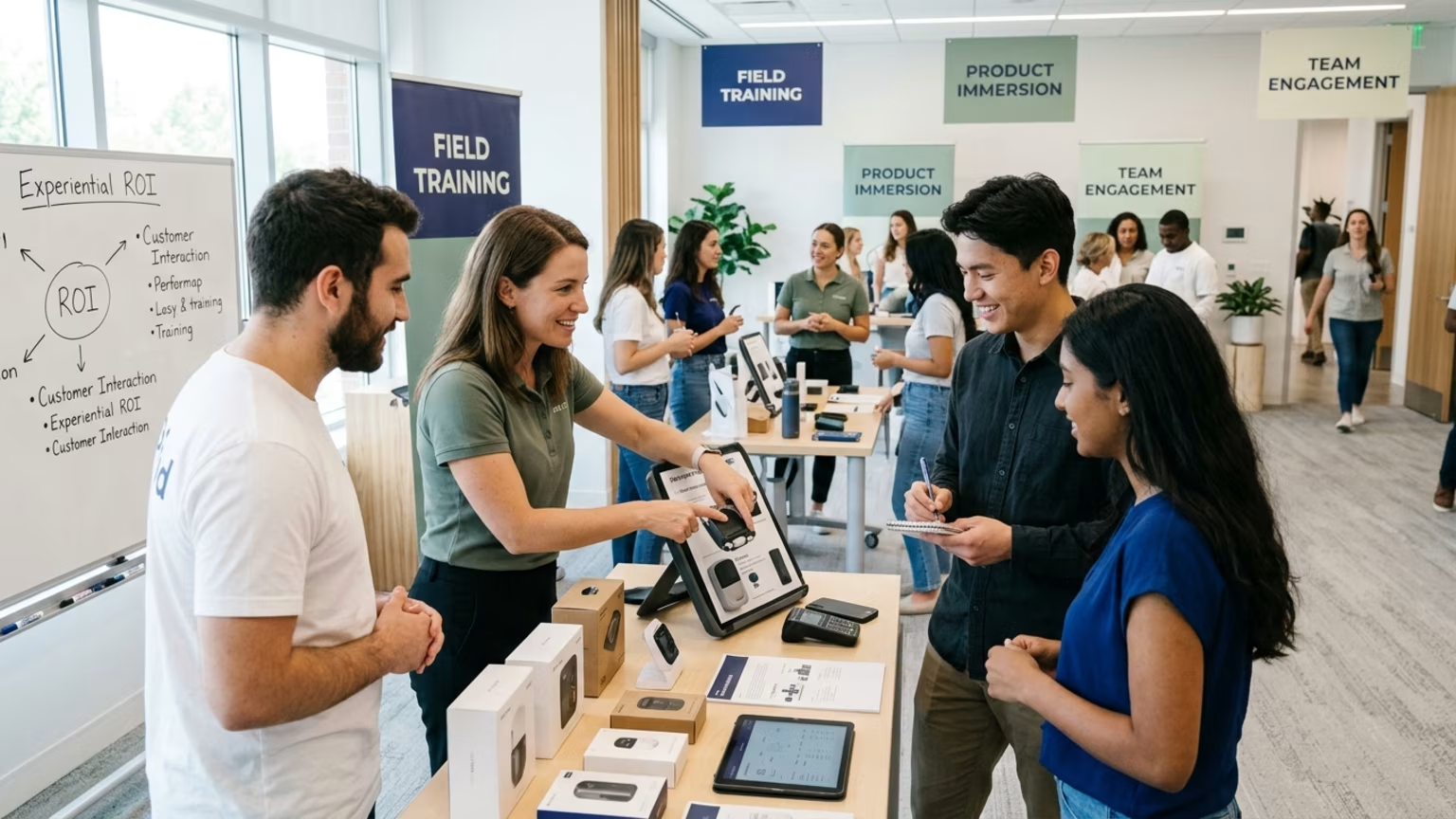
Retail demonstration programs often get judged on samples distributed rather than incremental pipeline generated. Field team training is the operational translation of brand strategy into observable behaviors that capture measurable sales and leads. It is the precise system that turns fleeting consumer attention into documented commerce. Without a structural training model, field staff generate noise instead of evidence.
What does field team training actually look like in the physical world of consumer packaged goods? It is not handing a temporary worker a fifty-page brand deck and hoping for authentic conversations. Effective training distills complex marketing campaigns into actionable strategies for the floor. A representative needs to know what to say first, how to handle a common objection, and what data to record before the interaction ends. This discipline separates high-converting commercial engines from vanity brand theater.
National Experiential, citing EventTrack's 2025 research, found that 74% of Fortune 1000 marketers planned to increase experiential budgets in 2026. This influx of capital demands operational maturity. Brands cannot afford inconsistent messaging when staffing national roadshows. Training must prepare staff to handle real pressure, from long queues to complex product questions.
When field staff improvise, they often misrepresent technical product details or skip the data collection step. This creates a black hole for reporting. A well-trained ambassador acts as an extension of the sales force. They use only substantiated product facts and approved evidence.
Objection handling is another area where brand theater fails. Untrained staff will argue with a consumer or invent answers to close a gap. Professional field operators use a structured acknowledgment process. They clarify the specific concern, use an approved response, and check if the issue is resolved.
Three fundamental components are required to manifest a training program that produces measurable pipeline. A strong protocol removes guesswork and gives representatives a clear path to conversion.
A field representative needs a repeatable sequence. The training should cover a straightforward progression. Representatives invite the consumer, diagnose their needs, and demonstrate the product. They then provide proof, ask for the conversion, and record the result. Staff learn to open with a question that earns attention without overpromising.
During the demonstration phase, staff show the product in the approved sequence rather than delivering a memorized monologue. They highlight the smallest number of steps necessary to make the value visible. By letting the consumer handle or taste the product directly, the ambassador builds immediate trust. The interaction ends with a specific prompt, like asking the shopper to scan a code or redeem a trial offer.
Live events generate unpredictable scenarios that require strict boundaries. Staff must understand exactly what claims they are permitted to make and which statements cross the line. An effective program maps out immediate escalation paths for safety incidents, unapproved claim requests, or serious complaints. This includes strict adherence to food allergen protocols and clear guidelines on when to involve a supervisor.
Health and wellness products require especially disciplined claim control. A representative should never turn a general product benefit into a medical claim unless the brand explicitly approves that language. Field staff need a simple visual guide that color-codes approved statements. Green indicates facts they may use freely, while red marks statements that require immediate escalation.
Field staff are the primary data collectors for any live activation. Training must prioritize exactly how and when to capture a qualified interaction. Representatives learn the difference between a passing glance and a measurable outcome. They record whether a consumer completed a trial, accepted an offer, or scanned a code. This is why investing in standardized instruction protocols must focus heavily on data capture.
Measurement planning should occur long before the first tent is pitched. When the activation begins, the field team should know what happens after a lead is captured. The data must flow seamlessly to the retailer or customer care team. This prevents lost opportunities and justifies the overall budget.
Effective field team training uses short modules and scenario drills rather than dense corporate presentations. The testing environment should resemble the actual floor conditions. Trainers introduce background noise, time limits, and skeptical consumers to see how staff react under pressure. A representative should not work independently until they can pass a demonstration certification.
Role-play scorecards offer a highly objective way to evaluate temporary staff. Managers score whether the ambassador asks a relevant question, uses correct product facts, and handles objections smoothly. This system removes bias and guarantees that only qualified individuals represent the brand. Staff practice the failed demonstration drill so they know exactly what to do when equipment malfunctions.
The responsibility of a brand ambassador extends beyond the physical footprint of the booth. True operational success requires a clean data handoff at the end of the shift. Field leads must document recurring consumer objections, inventory bottlenecks, and conversion friction. This intelligence feeds directly back into the marketing strategy.
Managers conduct short pre-shift huddles and end-of-shift debriefs to maintain alignment. The debrief identifies questions consumers asked that were not in the training materials. Those findings allow operators to update the coaching protocol for the next shift. Continuous refinement is the key to maintaining high conversion rates over a multi-city tour by deploying skilled regional managers.
After a recent national roadshow, a VP of Marketing reflected on our partnership: 'Robbie, it was a pleasure working with you and your team. You turned our launch into an experience that connected with shoppers and built lasting excitement for our brand. We're already looking forward to the next project together.' Our team created a launch experience that resonated with retail shoppers and generated momentum for future collaborations.
Many activations fail because brands over-script their field teams. When staff read from a memorized monologue, the interaction feels forced and unnatural. The solution is providing approved conversational building blocks. Ambassadors maintain a natural tone while preserving mandatory disclosures and technical facts.
Another frequent failure is neglecting the physical reality of the venue. Retail environments have strict rules regarding aisle clearance, signage, and sampling sanitation. Training must cover how to set up the station, verify inventory, and maintain a spotless presentation. If a representative ignores local venue rules, the entire activation can be shut down. Every sample distributed and conversation logged must connect back to the primary commercial goal through detailed site preparations.
Finally, teams often fail to define what constitutes a failed demonstration. Staff need approved language for dead batteries, unavailable flavors, or missing inventory. The escalation rule should be explicitly clear to every team member. An ambassador must never conceal a failure, invent an explanation, or make an unsupported promise to a shopper.
Proving the value of physical activations requires a framework that tracks success through concrete metrics. Smart brands measure sell-through rates, trial conversions, and post-event retail lift. They do not settle for attendance figures or vague impressions. A 2026 industry guide reports that 40% of event professionals still struggle to prove Return on Investment, down from 70% in the prior-year figure it cites.
Closing this measurement gap relies heavily on the field staff. When representatives consistently record qualified approaches and scanned offers, brands can calculate a true cost per lead. Integrated dashboards separate actual product trials from generic foot traffic. Reports cite rising spend, increased investment intentions, and continuing difficulty proving Return on Investment across the industry.
National Experiential, citing PQ Media, reports that global experiential spending reached $138.94 billion in 2025 and is forecast to grow 10.3% in 2026. Justifying this massive spend requires an airtight measurement strategy. Teams that master this data capture step produce the undeniable business case that executives demand when planning highly profitable mobile tours.
Brands should build a live event dashboard that distinguishes simple approaches from deep conversations. Tracking samples distributed against actual redemptions provides a clear view of campaign health. This granular tracking requires staff who are trained to log data immediately after every consumer interaction.
Field team training is a required measurement system that turns abstract marketing concepts into predictable and scalable commercial outcomes.
Untrained field staff often capture fragmented data that causes inefficient post event follow up and CRM routing. Makai prevents this disconnect through our core Guerilla Marketing capability. We launch creative, street level ideas that surprise, delight, and generate authentic word of mouth while seamlessly capturing structured lead data. This operational discipline translates attention into pipeline. Request a proposal

30 Years Experiential & Retail Activation Partner for CPG & Beverage Brands | Multi-Market Demos, Roadshows & Costco/Club Programs That Actually Sell