Robbie Thain
Founder, CEO

Learn how standardized training and role-specific simulations transform event staff into elite field teams that drive measurable sales at live activations.
Live brand experiences only generate pipeline when the people running them know exactly how to guide consumers from a sample to a sale. Standardized training programs rooted in role-specific simulations transform inconsistent event staff into elite execution teams that drive measurable conversion rates.
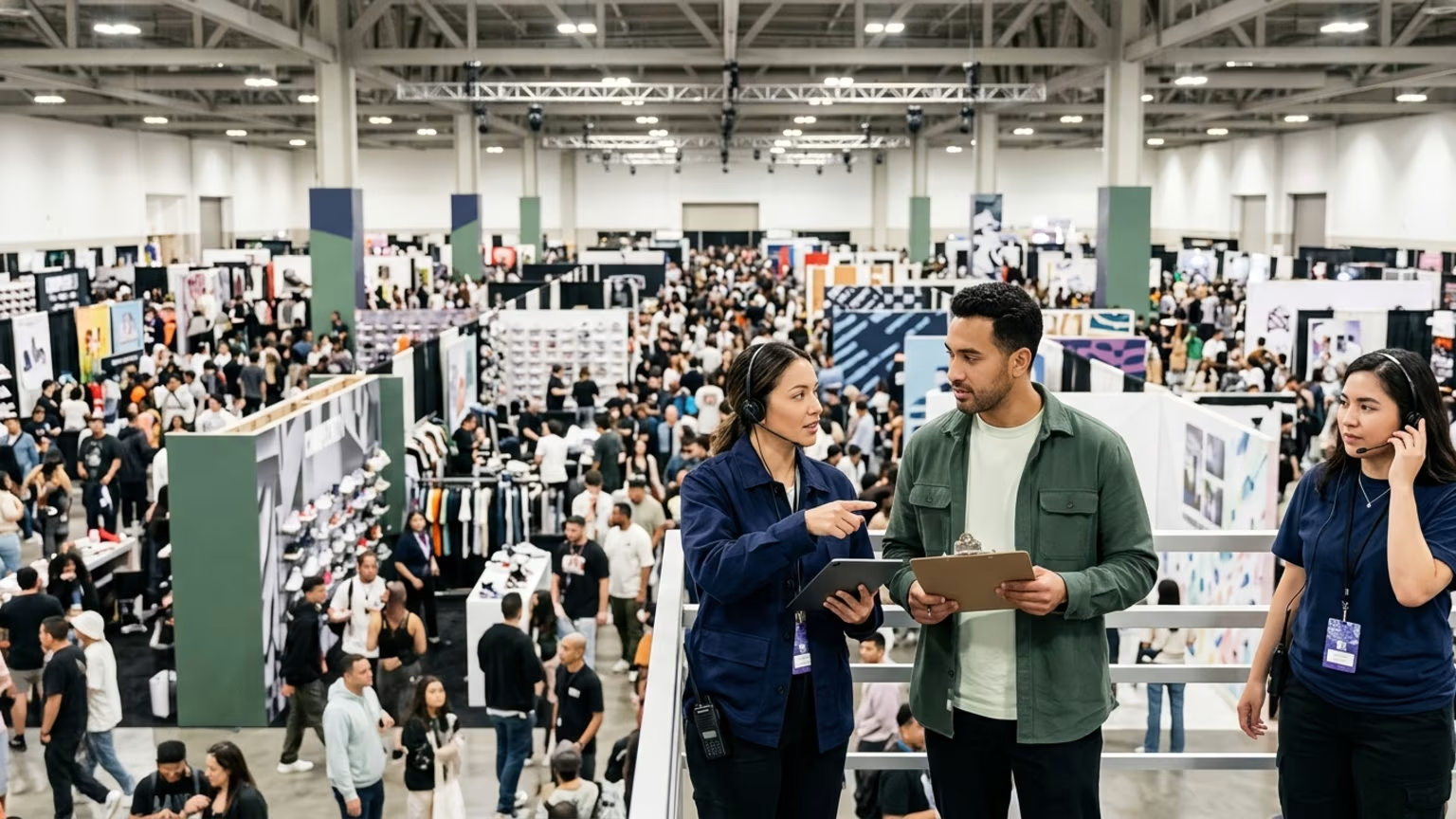
It is opening day at a massive industry expo. Your custom booth looks incredible, the product displays are fully stocked, and foot traffic is heavy. Then a key retail buyer approaches the sampling station. The brand ambassador fumbles the product pitch, forgets to scan the badge, and misses the core value proposition completely.
This scenario plays out daily across the country. Marketing leaders spend months planning logistics and designing beautiful environments. They assume reading a brief will prepare field teams for the chaos of a live floor. The result is a series of disjointed conversations that fail to capture usable data.
Untrained teams get overwhelmed by crowd density and noise. They default to handing out free items without starting meaningful conversations. Without muscle memory for the right questions, they let qualified pipeline walk away. The brand experiences a sharp drop in Return on Investment from these expensive activations.
When field teams lack standardized training, the fallout is immediate. You see poor in-store presentation and inconsistent messaging across regions. Brand directors are left staring at post-event reports filled with vague summaries instead of qualified leads. Creating complex trade show environments requires operators who know how to close the gap between brand theater and actual sales.
To fix this problem, marketing leaders must adopt a systematic approach to field training. Research from sports science highlights the principle of specificity, which asserts that training must replicate the exact demands of the environment. According to Gantry Kids, athletes improve efficiency by mimicking actual competitive conditions. This same logic applies directly to live brand activations.
You cannot expect field representatives to master product demos by simply reading a manual. Simulation-based training is the answer. ProProfs Training research confirms that simulated environments allow trainees to practice decision-making safely. It gives them the repetitions needed to build repeatable skills without risking real customer relationships.
The strategy relies on building role-specific paths that align directly with your core business goals. A supervisor running a mobile sampling tour needs different training than a brand ambassador working a retail floor. By deploying hybrid training models, teams can combine instructor-led sessions with on-the-job practice.
Generic programs fail when they do not align with daily operational realities. Leadership training succeeds only when tied directly to real activation strategies. By focusing on specific physical demands and exact brand messaging, you eliminate performance ambiguity. Brands that invest in staffing and preparing field personnel systematically see higher conversion and better data hygiene.
Moving from theory to live event execution requires a disciplined protocol. Field directors need actionable steps to build scalable modules that work across fragmented regional teams. Here is the exact playbook to train teams for high-pressure environments.
First, identify the core movements of your activation. Break down the entire consumer journey into specific actions. Map out the exact product demo flow, the opening question, and the data capture sequence. This clarity guarantees your team knows exactly what success looks like from the start.
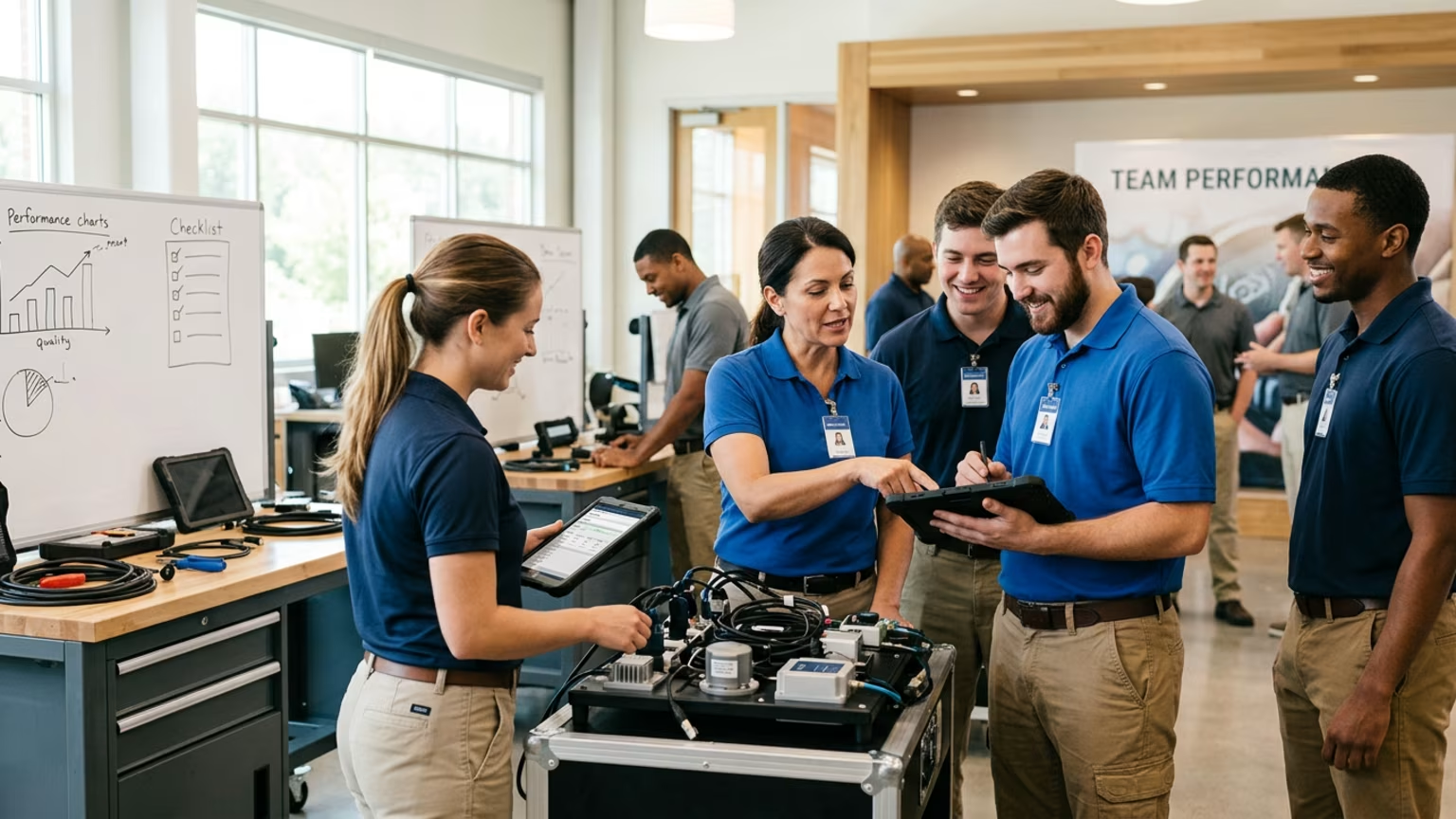
Next, design high-fidelity simulations. Create training scenarios that mirror the real environment with startling accuracy. Practice virtual trade show interactions and timed objection handling drills. This builds the muscle memory required to handle objections gracefully on the floor.
Third, deploy hybrid delivery methods. Use learning management systems to blend digital instruction with physical practice. Provide microlearning modules that field staff can review on their phones before a shift. Spaced practice is far more effective than one-off briefing sessions. Platforms like Training Orchestra reduce the administrative burden of scheduling these sessions for large rosters.
Fourth, establish continuous coaching loops. Do not assume a single training module will stick forever. Managers must provide ongoing feedback based on real-world observations. This approach corrects bad habits before they ruin an expensive activation weekend.
Fifth, schedule seasonal adjustments for your training intensity. Use the off-season to build foundational skills for new hires. During heavy activation periods, rely on lighter assessments to maintain sharpness. You must avoid disrupting live activations with overly strenuous training days.
Finally, prioritize team recovery. High-intensity simulations require mental downtime and structured team debriefs to counter fatigue. When you monitor progress and avoid overtraining, staffing remains consistent. These steps turn chaotic preparation into an organized, high-performing machine.
Training is only valuable when it produces measurable outcomes. Without concrete data, marketing managers cannot prove their preparation efforts improved the bottom line. You must tie every training module directly to your reporting frameworks for accurate tracking.
The first step is establishing clear baseline metrics before any new instruction begins. You need to know your historical conversion rates, average samples distributed per hour, and lead capture volume. Once the baseline is set, you compare it against post-training data. iSpring knowledge base research shows evaluating programs at multiple intervals, such as three, six, and twelve months, isolates the training impact from external market variables.
Leading indicators help you adjust the program in real time. Track the completion rates of microlearning modules and the average scores on simulated demo assessments. High scores in simulation often predict strong on-site execution. Watch for improved data hygiene and faster setup times during the first week of a campaign.
Lagging indicators confirm the true business value of your efforts. Measure the sales lift generated from specific retail demonstrations. Track the percentage of event leads that convert into retailer sell-through within a quarter. By analyzing these numbers, you transform a vague budget line item into a proven revenue driver.
For marketing directors, evaluating these programs provides actionable insight. They can spot weak execution early and deploy targeted coaching to specific regional teams. By blending leadership development with hard skills tracking, you build elite operational units. This approach shifts event marketing from a guessing game into a predictable science.
Consider a national beverage brand preparing for a massive summer product launch. They planned fifty regional activations and several major trade show appearances. Historically, their field teams struggled with inconsistent messaging and poor lead routing. The brand needed a new approach to guarantee every sample poured translated into measurable consumer response.
The marketing director implemented a simulation-based training protocol six weeks before the tour. Every regional manager participated in role-specific paths using a hybrid learning platform. They practiced managing heavy crowd flow, scanning badges, and pitching the product under strict time constraints. The brand incorporated spaced reinforcement to keep the messaging sharp.
The results were immediate and trackable. By practicing in simulated high-stress environments, the field staff handled the actual crowds with precision. The post-training evaluation revealed a significant improvement over their baseline metrics from the previous year. Lead capture volume increased, and post-event follow-up became seamless.
This disciplined approach completely changed the brand trajectory. They stopped hoping for good interactions and started engineering them. For marketing leaders running complex regional campaigns, executing large retail demonstrations requires exactly this level of preparation.
The difference between a disjointed event and a high-converting activation comes down to preparation. Standardized training protocols give your field representatives the muscle memory they need to succeed. When you remove the guesswork from their hands, they focus entirely on building consumer trust.
Start by auditing your current pre-event briefing process today. Look for gaps where a short simulation could replace a long document. Implementing just one structured practice drill will immediately upgrade your team execution on the floor.
Ready to build an elite field team that generates measurable pipeline? Book a strategy call with Makai Inc. today. Let us help you turn fleeting consumer interactions into concrete revenue.

30 Years Experiential & Retail Activation Partner for CPG & Beverage Brands | Multi-Market Demos, Roadshows & Costco/Club Programs That Actually Sell