Robbie Thain
Founder, CEO

Learn how predictive intelligence and demand-aware merchandising reshape retail operations, helping CPG brands optimize roadshows and forecast measurable lift.

AI will never replace human connection on the trade show floor, but brands using predictive intelligence will consistently outperform those relying on gut instinct. By integrating automated insights into live experiential strategies, you can optimize roadshow locations and forecast retail lift with absolute operator-grade precision.
The scene is painfully familiar across regional trade shows and massive expo halls alike. Your team arrives at a premium corner booth with perfectly chilled samples and fully briefed brand ambassadors. Hours pass by, and the foot traffic flows right past your activation toward the major anchor tenants. Millions of dollars evaporate when field marketers rely on historical anecdotes instead of real-time predictive modeling.
Event logistics force brands to commit capital long before the show opens. You pick a retail expo based on last year's crowd size or a compelling sales pitch from the organizers. The core issue is that consumer behavior shifts faster than traditional event planning cycles can handle. Teams arrive ready to execute, only to find their target demographic has entirely bypassed their activation zone.
This operational disconnect creates immense pressure on marketing operators. Field directors are expected to generate qualified leads and drive physical product trial at scale. When a high-profile activation fails to produce measurable retail lift, executives quickly question the value of live experiences altogether. The chaotic reality of the event floor makes it incredibly difficult to prove Return on Investment using traditional metrics.
Sales teams often feel the brunt of poorly planned marketing events. A brand might generate hundreds of badge scans that never convert into actual pipeline. The sales department wastes weeks chasing down unenthusiastic attendees who only stopped for a free pen. This friction destroys internal alignment and makes future event budgets harder to secure.
Premium consumer goods companies need a mathematically sound method to predict buyer presence. Relying on outdated event maps and generic attendance figures is no longer a viable strategy for market leaders. To win attention in physical environments, operators must adopt the same data-driven rigor used in digital campaigns.
You need a structured approach to integrate predictive data into your physical event strategy. Recent industry discussions from organizations like Newell Brands highlight a massive shift toward demand-aware merchandising. This approach uses artificial intelligence to analyze regional sales velocity, demographic shifts, and real-world foot traffic patterns. Teams can evaluate these complex datasets before committing a single dollar to an event space.
This strategic shift moves field marketing from a reactive discipline to a proactive science. Instead of hoping for a busy crowd, machine learning tools process local market indicators to identify high-probability zones. Your entire campaign becomes mathematically calibrated to guarantee exposure to your ideal buyer profile. Predictive models remove the guesswork from site selection and inventory planning.
When planning mobile pop-up tours for retail expansion, analytics engines can process thousands of geographical data points in seconds. This technology evaluates local retailer density, competitor presence, and historical seasonal trends. The resulting insights dictate exactly where your sampling trucks should park for maximum sales impact. You stop wasting time in neighborhoods that lack the purchasing power to sustain long-term sales.
A unified data strategy bridges the frustrating gap between field marketing and in-store execution. By connecting automated event insights with your retail media network, you build a closed-loop system of consumer engagement. If your organization is struggling to unify these channels, it is time to book a strategy call with our operations team. We can help you build an architecture that turns brief brand interactions into measurable customer loyalty.
Turning predictive theory into actionable field execution requires strict operational discipline. We have been connecting brands with people through live experiences, retail programs, and national activations since 1995. Over three decades, we have built a track record of creating meaningful brand moments across the country. Incorporating automated intelligence into our planning process has only sharpened our ability to execute flawless campaigns. Follow this clear sequence to optimize your next major activation.
Start by aggregating your last three years of regional retail performance data. Feed this information into a predictive model to identify specific markets where in-store purchases naturally spike. This establishes a firm mathematical baseline for your geographical targeting efforts. You want to activate in areas where the data already shows latent consumer interest.
Move far beyond basic registration numbers or generic audience demographics. Use data tools to evaluate the job titles, purchasing power, and specific product interests of pre-registered event attendees. This helps you understand exactly who is walking the floor before the doors even open. Knowing the audience allows you to tailor your entire visual presentation.
Run spatial simulations based on entrance locations, popular food courts, and main presentation stages. Select booth spaces that naturally intersect with the highest probability of target audience movement. Avoid dead zones that look appealing on paper but historically lack organic traffic flow. A smaller booth in a high-traffic intersection always beats a massive island in a quiet corner.
Connect your event sampling supply chain directly to local retail inventory levels in real time. This guarantees that a successful product trial at the booth translates to immediate shelf availability nearby. Stock-outs kill momentum faster than a poor product presentation. Buyers need to know they can purchase the item on their drive home.
Use automated crowd prediction models to schedule your brand ambassadors effectively throughout the event. You can dynamically adjust staffing levels based on anticipated peak hours and scheduled keynote sessions. This keeps your team energized and ready to engage when traffic is heaviest. Paying staff to stand around an empty booth is a massive drain on your activation budget.
Prepare multiple versions of your primary brand messaging based on real-time audience feedback. If early booth visitors respond better to a health-focused pitch, your team can pivot their script instantly. Supervisors can analyze these early interactions to refine the talking points on the fly. Adaptability is the ultimate advantage on a busy trade show floor.
Measuring experiential success requires clear separation between immediate actions and long-term results. Leading organizations no longer accept subjective feedback or vague crowd estimates as proof of a successful activation. You must track specific lead indicators during the event and lag indicators in the months that follow. This dual approach provides a comprehensive picture of how live experiences impact your bottom line.
Tracking the right lead metrics keeps your entire field team accountable during the execution phase. Cost Per Qualified Engagement is a primary operational metric to watch closely. This measures the total event spend divided by the number of meaningful conversations that end in a data capture. Lowering this cost while maintaining interaction quality is the mark of a highly optimized campaign.
Real-time offer redemption serves as another critical indicator of immediate purchase intent. You must track how many digital coupons or exclusive codes are scanned within a tight 48-hour window. A high redemption rate proves that your brand ambassadors effectively communicated the value proposition. It shows that the consumer was motivated enough to take immediate action post-event.
Lag metrics tell the true story of how your event influenced long-term purchasing behavior. Regional sales lift is the ultimate validation for any consumer goods field marketing strategy. You need to analyze the baseline sales velocity in the surrounding zip codes for thirty days following the activation. Any sustained increase in volume directly points to the effectiveness of your product trials.
Customer lifetime value expansion represents the final piece of the activation measurement puzzle. Monitor whether attendees who engaged with your brand make repeat purchases over a six-month period. Research from Bain & Company demonstrates that structured reward programs and personalized engagements significantly build valuable, long-term customer relationships. Incorporating first-party shopper data to optimize in-store engagement helps your team track these relationships accurately over time.
A premium sparkling water brand recently applied this predictive framework to overhaul their national summer sampling tour. Instead of booking space at generic music festivals, they used localized insights to pinpoint regions with high consumer demand but low product awareness. The data revealed three specific metropolitan markets that were statistically primed for a successful trial campaign. The brand ignored traditional event hubs in favor of these high-potential neighborhoods.
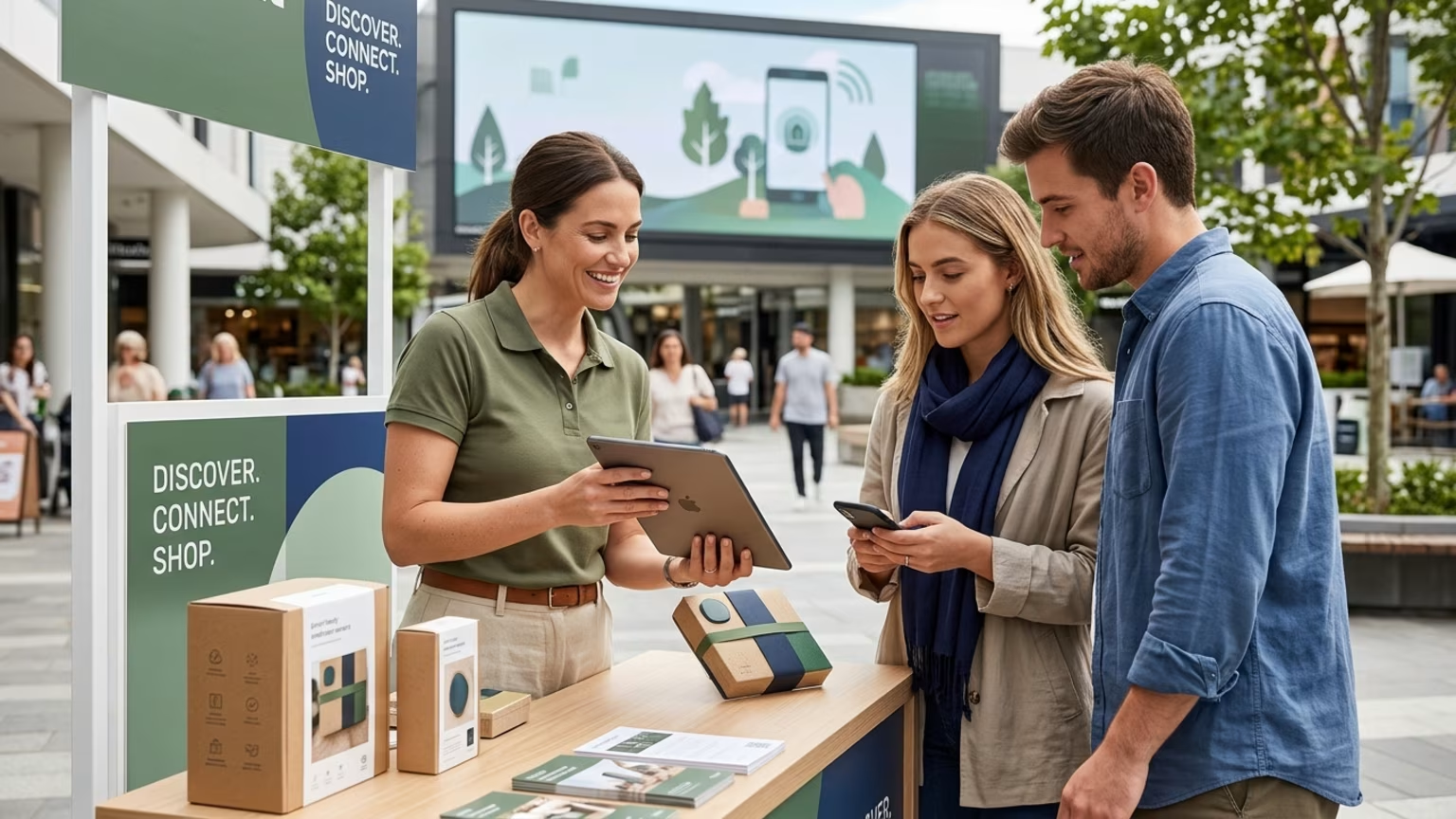
The marketing team deployed targeted Costco roadshows and hyper-local retail demonstrations in these specific communities. Their brand ambassadors were equipped with real-time inventory data from surrounding grocery partners. When a shopper tried the product, the ambassador could direct them to a fully stocked endcap just three aisles away. This eliminated the usual friction between product discovery and actual purchase.
This precision-driven approach generated an immediate and highly measurable spike in direct product trials. By prioritizing data over assumption, the brand turned a standard field marketing campaign into a highly profitable retail expansion effort. The activation achieved a massive lift in regional sales velocity that sustained well beyond the initial promotional period. This is exactly how smart operators own specific consumption occasions to drive retail sales.
When you strip away the technology and the complex algorithms, the core mission remains beautifully simple. You want to place a great product in the hands of someone who genuinely needs it. Data simply acts as the map that guides you to the right person at the exact right time.

30 Years Experiential & Retail Activation Partner for CPG & Beverage Brands | Multi-Market Demos, Roadshows & Costco/Club Programs That Actually Sell