Robbie Thain
Founder, CEO

Turn your indoor trade show sponsorship into measurable sales pipeline. Learn how to connect your booth to dynamic street team activations.

Industry analysts report that 70 percent of event sponsorships fail to build pipeline when restricted strictly to the exhibit hall. Spending massive sums on an indoor tier package only to ignore the surrounding city burns valuable marketing capital. Extending that indoor presence through coordinated outdoor street teams protects your bottom line. This approach turns static logo placements into a measurable consumer conversion engine.
Live engagements require more than just a big budget to succeed. They demand a tactical understanding of human behavior and pedestrian flow. Connecting indoor displays to outdoor interactions builds a cohesive brand story. This article outlines exactly how to build that powerful connection.
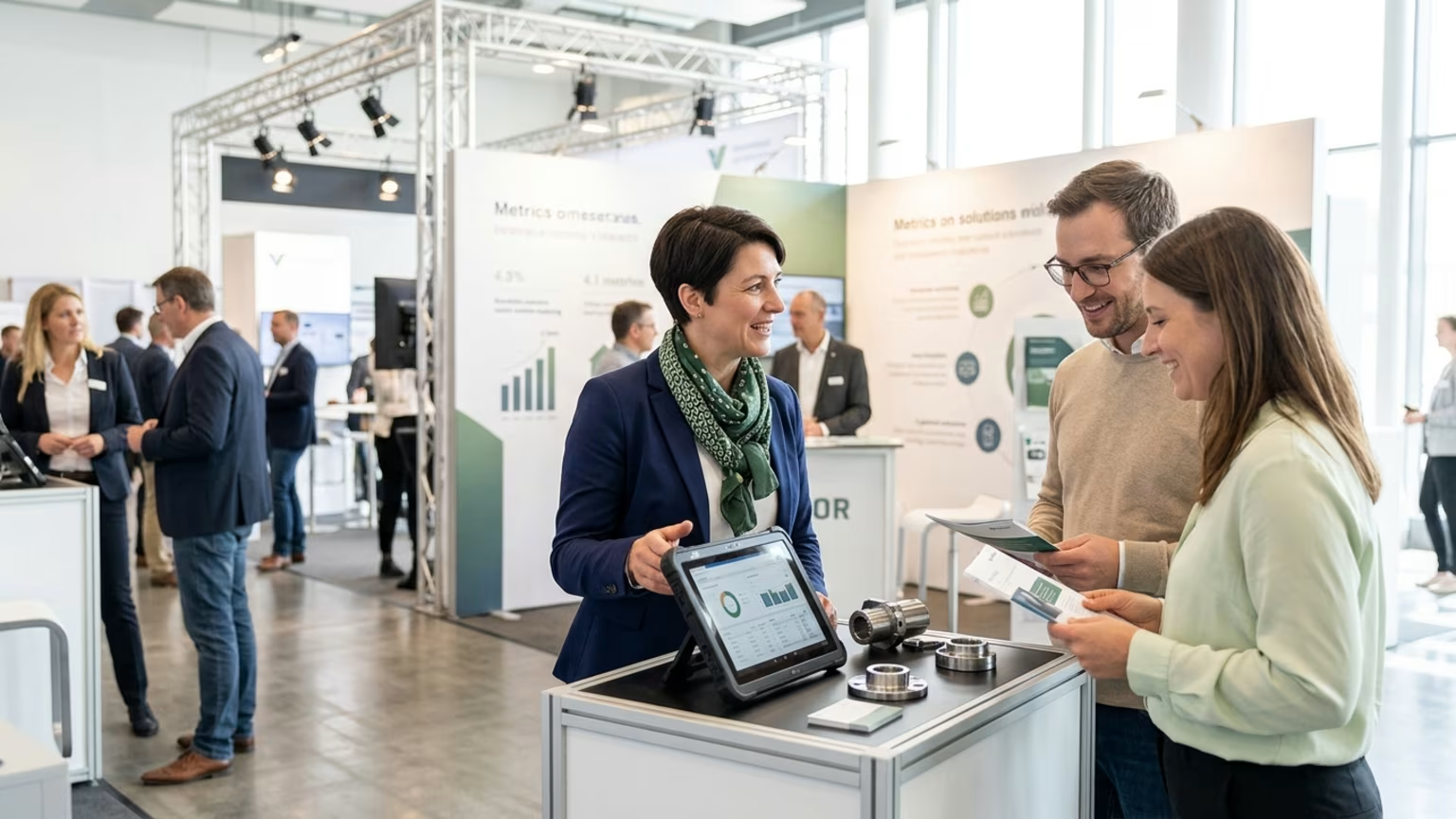
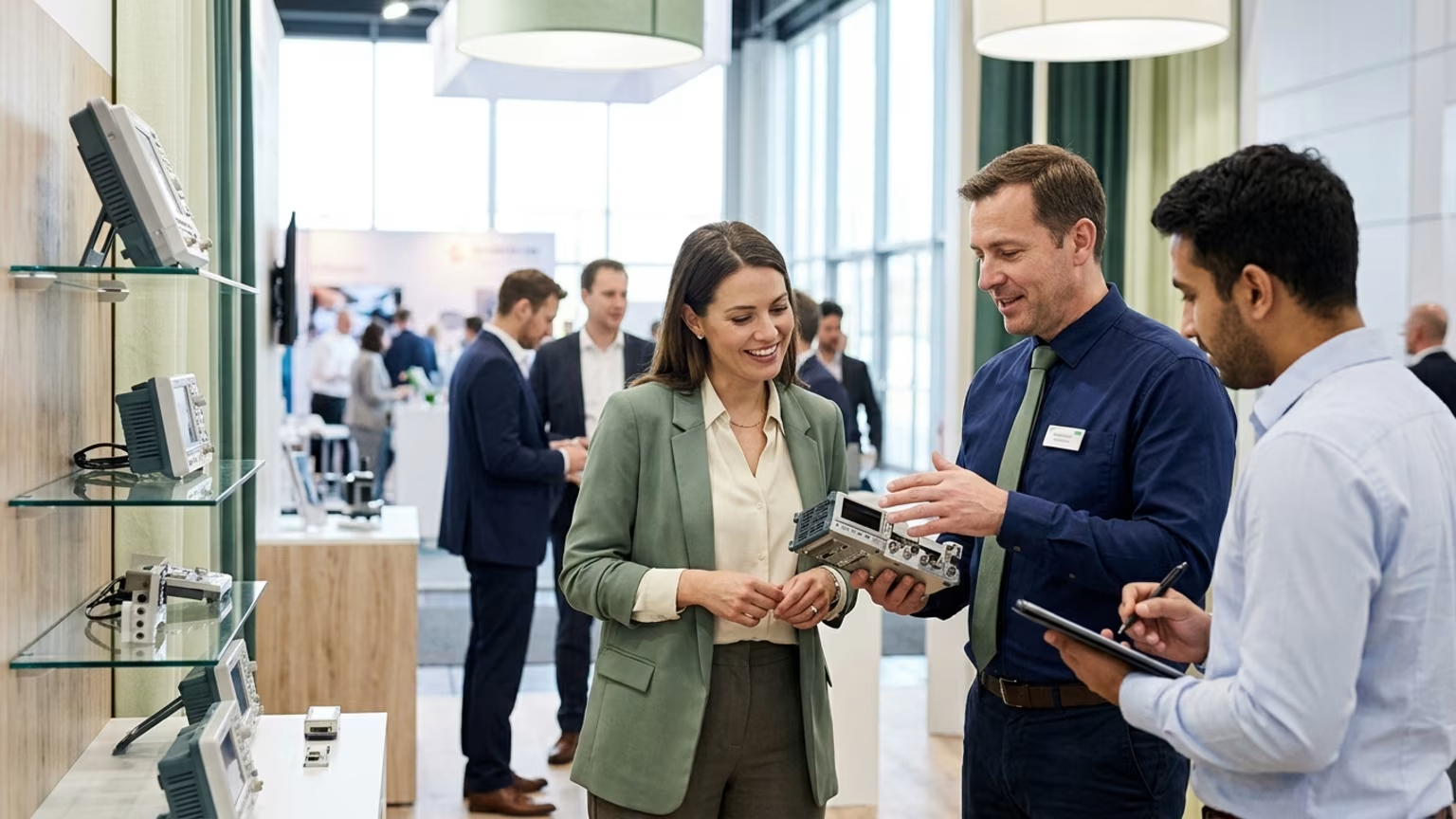
Imagine the primary hall at a major food expo right after the opening remarks. Aisles are packed with distracted attendees rushing past expensive booths to find the next keynote. You paid a premium for your logo on the lanyards and a prime corner spot. Your staff hands out samples at a frantic pace to people who barely look at your brand name.
The noise level on the floor makes meaningful conversations nearly impossible. Brands pour their budgets into the epicenter of this noise and hope for spontaneous connection. Buyers grab a free snack and instantly forget the company that provided it. The sponsorship package looked impressive in the media kit but feels remarkably invisible in practice.
This environment severely limits your ability to generate true retail velocity. You are competing against hundreds of other vendors for a tiny fraction of buyer attention. The typical expo setting forces you to play defense against constant sensory overload. Standing behind a folding table is no longer a viable pipeline strategy.
Vendors often feel trapped in a cycle of diminishing returns. They attend the same shows year after year without seeing a correlating bump in sales. They blame the event organizers or the quality of the attendees. The real issue is a failure to control the environment outside the four walls of the venue.
Escaping this trap requires shifting your activation footprint beyond the main convention center doors. You must treat your indoor booth as a mere anchor point for a broader city campaign. You capture the attention of attendees before they enter the building. You intercept them again when they leave for dinner.
This creates a multi-touch loop that makes your brand feel omnipresent throughout the host city. We specialize in creating retail demos, product sampling programs, and roadshows that bring brands face to face with their audiences. Each program is designed to drive trial, build consumer relationships, and accelerate retail velocity across multiple locations. You can apply this exact operational mindset to your trade show strategy.
Content analysts report that the best marketing assets retain their value long after the initial launch date. Your physical activations should operate on this exact same principle. You design street engagements that outlive the three-day expo schedule and build long-term brand equity. This method connects fleeting awareness to permanent sales lift.
You must treat the surrounding streets as an extension of your convention floor plan. You deploy trained brand ambassadors to intercept your target audience in a less chaotic environment. This allows for deeper product education and a much higher quality of interaction. Proper execution requires building reliable field teams capable of operating completely independently outdoors.
The transition from indoor static displays to outdoor dynamic movements changes the entire dynamic. You stop waiting for buyers to find you. You actively go to where the buyers are already congregating. This proactive methodology shifts the balance of power entirely in your favor.
Transitioning from an indoor booth to a street operation demands strict operational discipline. You need a coordinated playbook to turn outdoor foot traffic into measurable business growth. A documented process prevents your outdoor field teams from going rogue. Follow these exact steps to link your main sponsorship to your street engagements.
Step one involves securing your city permits early. Identify the heavy foot traffic zones between the convention center and major hotels months in advance. File for municipal permits early to secure legal sampling zones outside the main venue. This prevents local authorities from shutting down your operation on day one.
Step two requires deploying highly mobile physical assets. Use branded bicycles, mobile carts, or wrapped sprinter vans to create flexible activation points. These mobile units can relocate based on peak pedestrian flow during morning commutes. Agility is the defining trait of a successful outdoor street team.
Step three involves synchronizing your core marketing messaging. Your street team must echo the exact same value proposition featured at your indoor booth. Give them a strict script that connects the outdoor sample directly back to the main indoor sponsorship. Consistency builds trust and prevents consumer confusion.
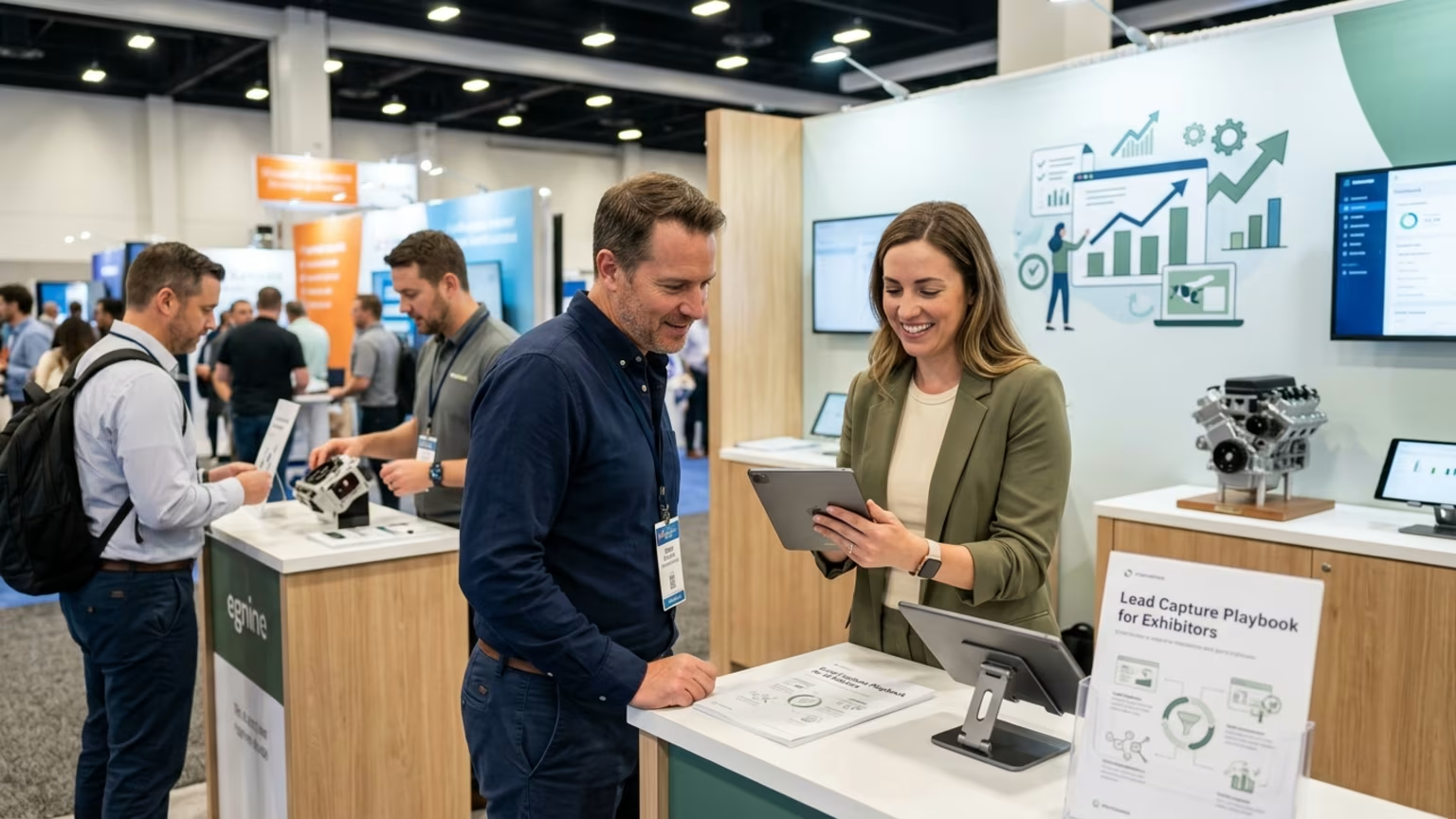
Step four dictates capturing consumer data digitally. Equip your outdoor teams with QR codes and mobile tablets to gather information instantly. Tie these digital capture methods directly into your central CRM system for immediate lead routing. You want to streamline event data collection to track every single interaction in real time.
Step five means incentivizing physical booth visits. Give street participants a compelling reason to visit your main exhibit space later. Offer an exclusive secondary experience or premium item that they can only redeem inside the hall. This effectively turns your street team into a highly targeted lead generation funnel.
Step six requires planning for smooth inventory management between locations. You need a reliable method for restocking your mobile units from your main convention supply. Designate a runner to transport extra samples and marketing collateral from the booth to the street. A stockout on the sidewalk instantly kills your momentum.
The success of this dual approach relies heavily on tracking the right numbers. You must prove Return on Investment to justify the added expense of an outdoor team. We judge a campaign entirely on the hard data it generates. You need a clear mix of lead and lag indicators.
Lead metrics give you immediate feedback during the live event itself. Track the total number of physical samples distributed by your street teams each hour. Monitor the exact scan rate of the QR codes worn by your brand ambassadors. Record the volume of attendees who mention the street team when they arrive at your booth.
Lag metrics tell the true story of your overall business impact weeks later. Analyze the final cost per acquisition by combining your sponsorship fee and street activation costs. Track the regional sales lift to prove roadshow impact in the host city during the following month. Measure the engagement rate of the follow-up email sequence sent to your newly acquired leads.
A solid reporting framework gives you the power to defend your marketing budget. It shows the executive team exactly how physical engagements drive retail velocity. You move away from vanity metrics and start reporting on actual pipeline velocity. Data transforms a simple sampling campaign into an undeniable financial asset.
Reviewing the analytics post-event allows you to refine your strategy for the next city. You can identify exactly which street corners yielded the highest conversion rates. You can determine which mobile assets pulled the most attention from pedestrians. This continuous improvement cycle turns your brand into an operational powerhouse.
You must continuously refine your tracking protocols after every event. This ongoing optimization guarantees that your field marketing efforts become more profitable over time. A static approach to measurement leaves money on the table. Rigorous data analysis is the backbone of modern experiential marketing.
A prominent plant-based snack brand recently tested this exact model during a major wellness expo. They purchased a mid-tier sponsorship package that included basic signage and a small booth. They knew the indoor space alone would not generate enough retail velocity. They deployed three branded street teams along the main walking paths leading to the venue.
The street teams handed out full-size product samples and scanned badges for an instant coupon. They actively directed excited consumers to the main booth to enter a premium giveaway. The indoor booth staff recorded a massive spike in qualified retail buyers. The brand generated a measurable surge in nearby grocery store sales within two weeks.
This case study proves the immense power of connecting indoor presence to outdoor hustle. The brand avoided the trap of passively waiting for foot traffic to find them. They controlled the narrative by engaging the audience on their own terms. This proactive stance separates amateur event planners from true revenue generators.
If you want to replicate this level of coordinated field success, book a strategy call with our operations team. We can help you design a deployment plan that matches your next major expo. A quick conversation can highlight exactly where your current event footprint is leaking revenue. Stop guessing and start building a verifiable sales pipeline.
Return to that packed food expo with the distracted attendees rushing past expensive booths. The noise level inside the hall is still deafening. The aisles remain hopelessly crowded with competitors begging for attention. The key difference now is that your brand is no longer trapped in the center of the chaos.
You have intercepted those key attendees on the quiet sidewalks long before they ever picked up their lanyards. You have turned the entire host city into your personal activation zone. Your indoor sponsorship simply acts as a final touchpoint rather than your only chance at a first impression. You are operating above the fray and letting your competitors fight for scraps inside the building.

30 Years Experiential & Retail Activation Partner for CPG & Beverage Brands | Multi-Market Demos, Roadshows & Costco/Club Programs That Actually Sell