Robbie Thain
Founder, CEO

When Kroger and Toshiba outlined plans for AI and computer vision in grocery, the standard for experiential ROI shifted. Learn to measure retail demo outcomes.
The days of justifying physical retail marketing with vague foot traffic estimates are effectively over. When giants like The Kroger Co. and Toshiba Global Commerce Solutions outline plans for artificial intelligence in grocery aisles, the standard for experiential Return on Investment shifts immediately. Trade marketing budgets can no longer hide behind raw store entry counts. Operators must now prove actual engagement at the sampling station.
The timeline for this structural shift is already moving forward. In a Retail Customer Experience video published on August 24, 2026, leaders from major retail and technology organizations detailed the connected grocery store. Kroger GVP and CIO Jim Clendenen and Toshiba Global Commerce Solutions President and CEO Rance Poehler discussed how computer vision could reshape store operations. The executives focused on associate enablement and creating more engaging shopping journeys.
These technological investments point toward a physical retail environment that measures behavior with digital precision. According to IGD, Kroger also formed a strategic collaboration with NVIDIA to develop an AI lab focused on reimagining the shopper experience. The goal is to build tools that support store associates rather than presenting technology as a simple replacement for human labor. For brand marketers, this means future measurement tools will likely emerge from core operational infrastructure.
The conversation highlighted that operational value often precedes marketing attribution in retail environments. Clendenen and Poehler framed computer vision as a tool that can transform both backend processes and customer facing moments. This suggests that early technological benefits might include faster issue resolution and better fixture maintenance. For experiential programs, a properly maintained store environment is a prerequisite for accurate campaign measurement.
Kroger has separately launched an AI Shopping Assistant across its websites and family of apps. Kroger positions this tool to help customers plan meals, discover products, and shop for value. The combination of digital assistants and physical computer vision points toward a highly integrated retail ecosystem. Brands will soon need to understand pre store digital intent alongside physical aisle behavior.
For a VP of Marketing managing a fragmented trade budget, this operational shift changes the definition of campaign success. A shopper merely walking past an endcap no longer counts as a meaningful brand interaction. Retail analytics systems increasingly distinguish between exposure opportunity and actual attention. Brands must understand that passive presence does not equal active participation.
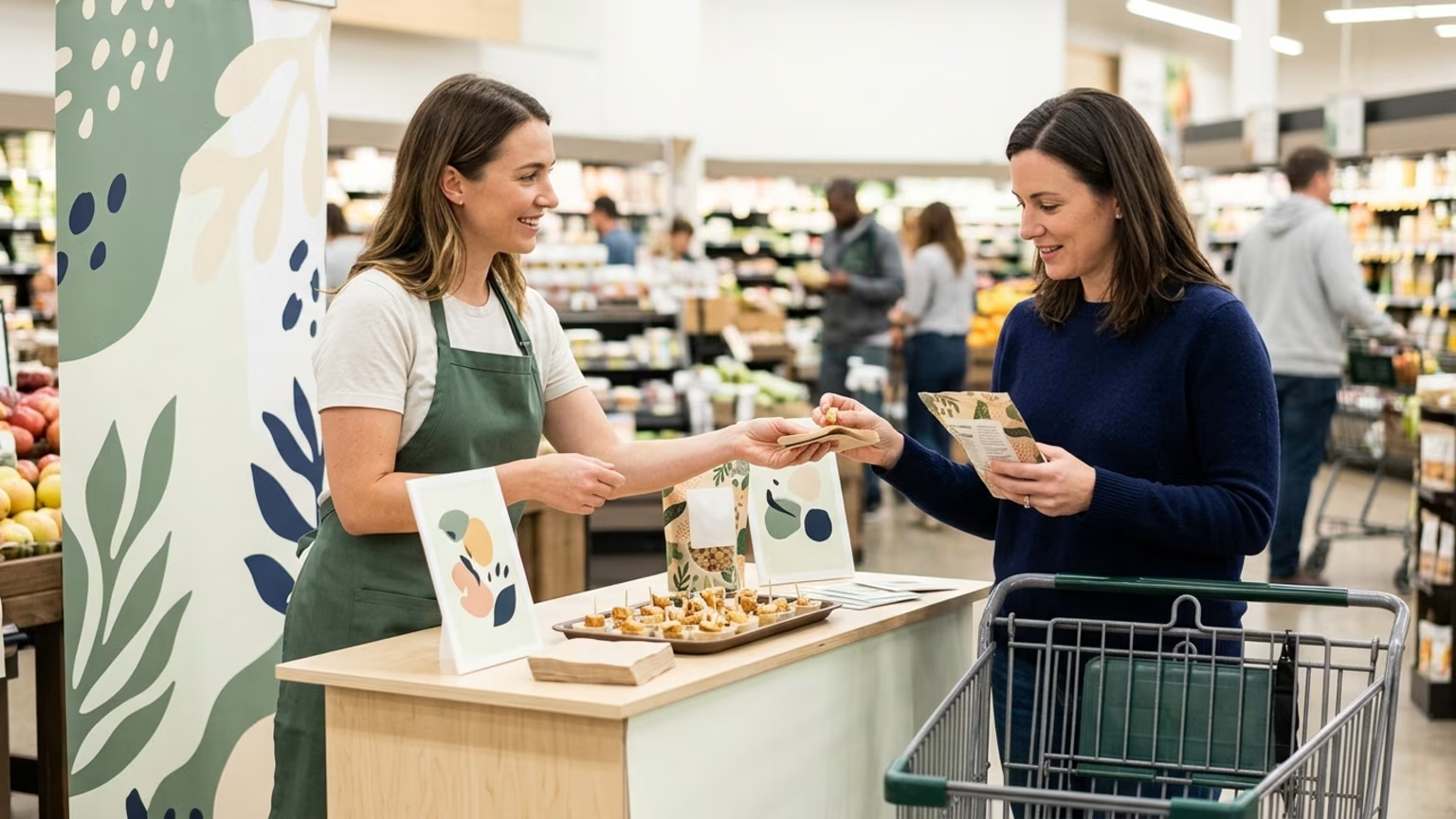
Measurement guidance clearly separates dwell time from the time a shopper actually looks at a display. Dwell time simply measures how long an observed person or device remains within a specified zone. If a grocery customer waits near a demo station because of a clogged aisle, they are not necessarily engaging with the product. Operators must demand clear best practices for grocery store sampling that prioritize verified attention.
A computer vision system can give a brand a much more structured view of an in-store demo. It helps answer whether people entered the activation zone or whether they actually approached the product. It can even show whether activity changed after a layout or staffing adjustment. However, these observation metrics do not automatically prove product trial or sales lift by themselves.
Privacy and governance also remain central concerns when deploying intelligent store technology. Marketers should not assume that anonymous tracking eliminates all compliance risks at the sampling station. Brands must understand how data is processed, where images are stored, and what consent models apply. Before using camera based measurement, operators need to confirm who controls the data and how shoppers are informed.
This operational reality forces a total rethink of how brands execute in-store activations today. Experiential marketing managers must replace basic passing traffic metrics with a rigorous measurement ladder. They cannot simply assume that high store footfall guarantees a successful campaign. Field teams must intentionally design beyond the booth in-store experiences to capture measurable behavioral data.
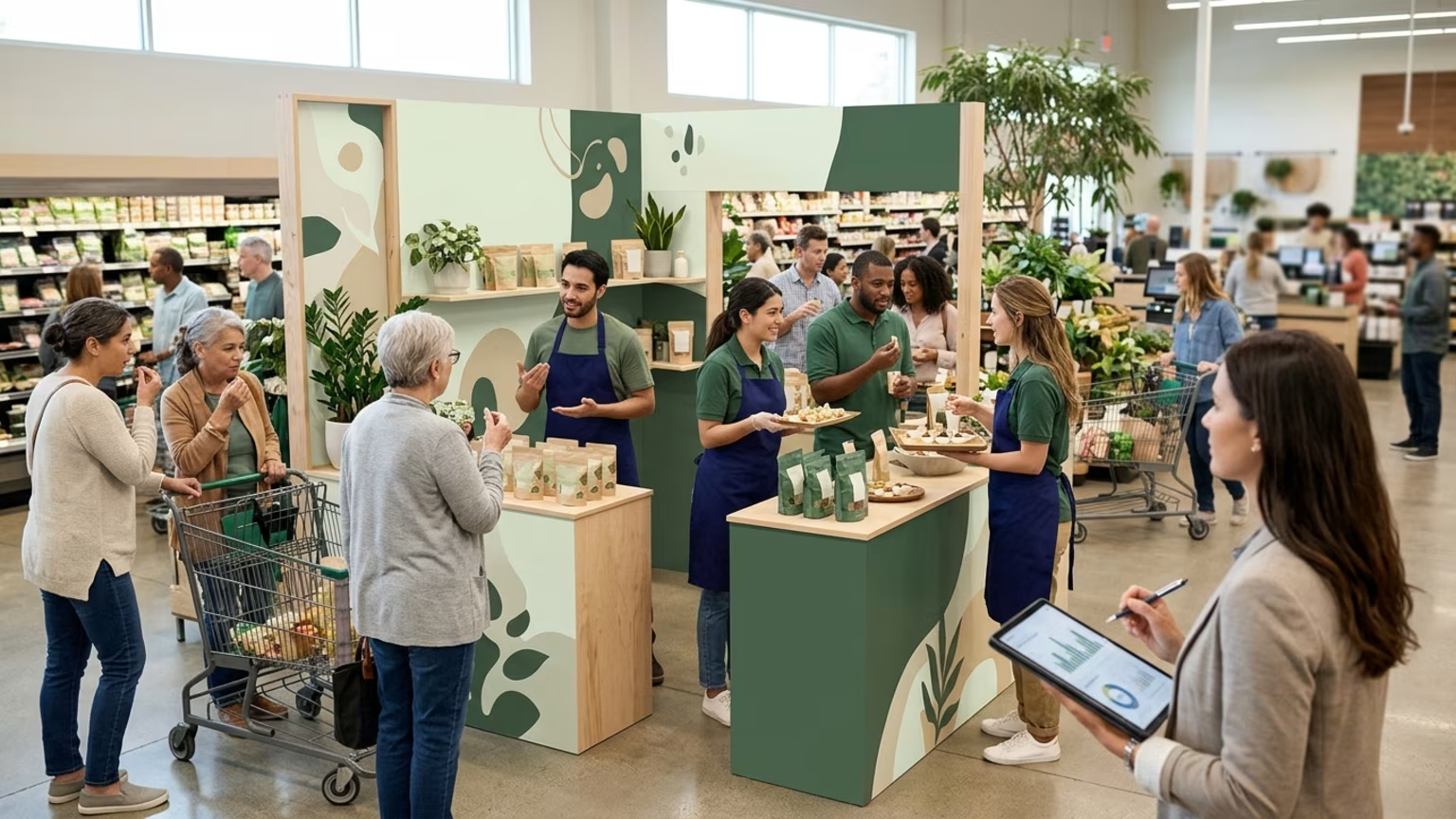
The first step of the new measurement ladder is establishing a clear baseline for reach. Field staff must count how many people actually enter the activation zone during a specific shift. Next, they need to measure the opportunity to engage by observing the immediate sampling boundary. This tells the brand how many shoppers came close enough to read a sign or smell a product.
The critical pivot happens when field teams start tracking actual attention spans. Third on the ladder is dwell time, which records how long visitors remain in the footprint. The fourth stage demands estimating whether the shopper looked toward the product or the demonstrator. A brand must know if the display actually captured focus or just stood in the way.
From there, teams must track active interaction at the physical fixture. This includes a customer asking a question, taking a sample, or touching the display. The final stages require measuring conversion events like a coupon redemption or a measurable sales change. Success ultimately depends on producing repeatable results across multiple stores and distinct market environments.
This technological shift means a sampling cart can no longer be treated as a standalone object. The fixture is simultaneously a service point, a product education environment, and a data collection touchpoint. Its performance must be evaluated through both attention metrics and commercial outcomes. Field teams should design physical layouts that make consumer actions observable without making shoppers feel monitored.
Brands must also recognize that retailer infrastructure is not automatically available as brand activation infrastructure. A retailer might have advanced cameras without granting outside vendors direct access to those feeds. The practical opportunity is often a retailer approved measurement layer rather than unrestricted surveillance access. Brands should favor aggregated counts and journey patterns over individual identity tracking.
Operating under this level of scrutiny requires flawless execution from the ground up. A poorly stocked sampling station will always produce terrible engagement metrics. Retailer stakeholders care deeply about whether the station was staffed and positioned correctly during scheduled hours. Building trust with retail partners requires consistent in-market experiences supported by transparent reporting.
In our experience, combining automated observation with trained field teams is the most reliable path to success. We have been connecting brands with people through live experiences, retail programs, and national activations since 1995. Over three decades, we have built a track record of creating meaningful brand moments across the country. Technology only amplifies the impact of a well executed physical interaction.
Operators need to adjust their KPI dashboards immediately to reflect the difference between passing traffic and validated participation. Store environments are becoming highly intelligent measurement zones. Field marketing teams must pair observational signals with concrete commercial outcomes like attributable purchases. A great strategy falls apart without rigorous operational discipline on the floor.
Brands that master both operational excellence and precise interaction tracking will dominate the grocery aisle. Artificial intelligence can identify patterns, but it cannot automatically explain why a shopper stopped to chat. The strongest operating model still relies on trained ambassadors to turn a physical pause into a qualified buyer. Marketing leaders must prioritize execution quality as heavily as they prioritize their analytics.
Shifting from vague foot traffic estimates to precise engagement tracking requires flawless execution from your field teams, which is where Makai steps in to take command. We solve the difficulty measuring real ROI from live events by managing end to end Costco roadshows that bring brands to shoppers through live demos, real conversations, and measurable sales impact.

30 Years Experiential & Retail Activation Partner for CPG & Beverage Brands | Multi-Market Demos, Roadshows & Costco/Club Programs That Actually Sell