Robbie Thain
Founder, CEO

Learn how to build a measurable experiential launch plan for a new CPG product by connecting field activity, retail readiness, and consumer follow up.
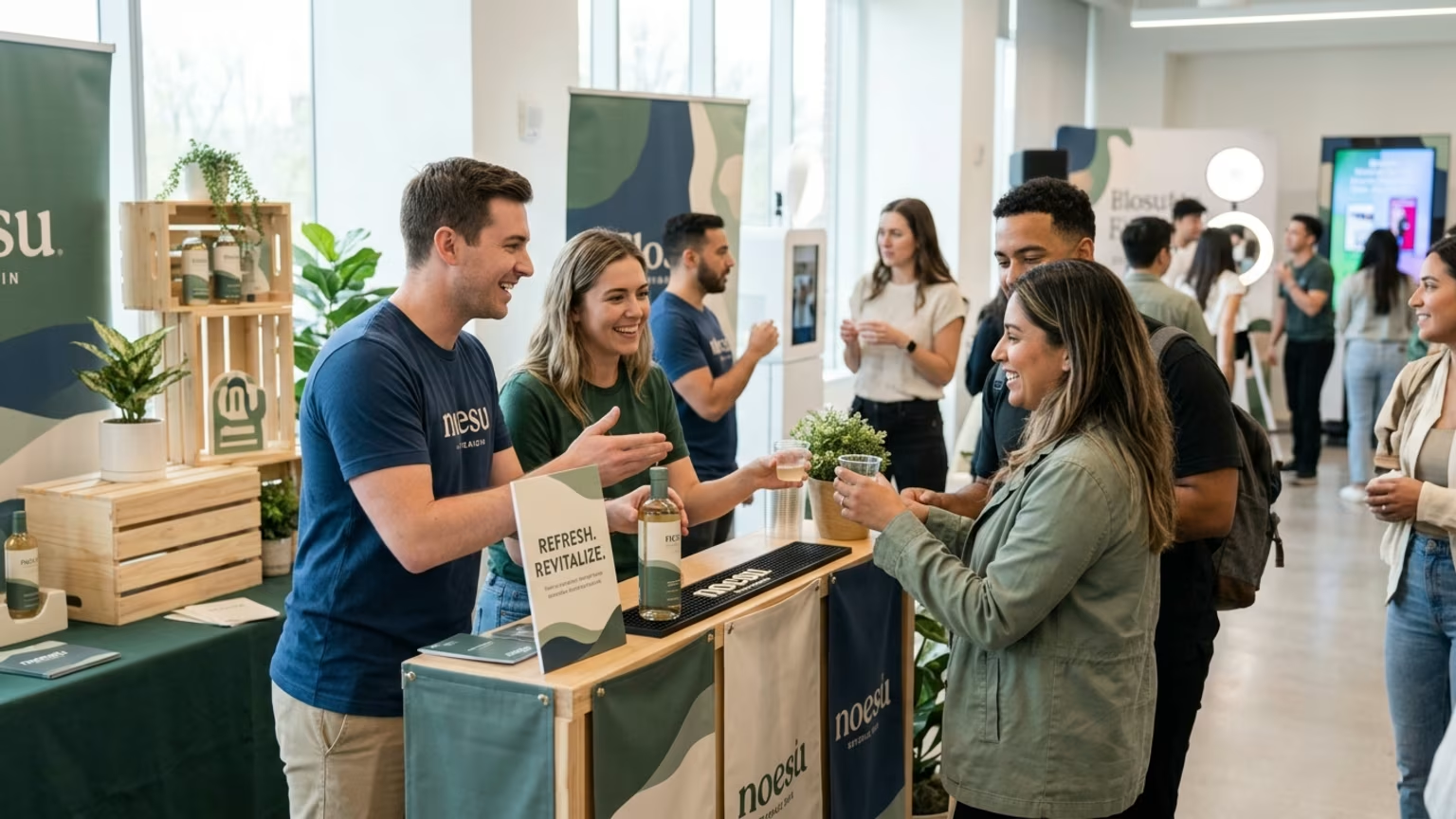
A retail demo program gets judged on cups poured, while incremental pipeline gets completely ignored. That mismatch is exactly why digital only marketing efficiency is dead for physical products. Counting distributed samples is no longer a viable way to measure Return on Investment. Launching a new consumer packaged goods item today requires treating the live activation as a connected operating system rather than a standalone party.
The reality of physical retail execution is harsh. Store displays and product availability are frequently assumed rather than physically verified. McKinsey reports that Reckitt saw United States display compliance hovering around approximately 50 to 55 percent before implementing a structured execution program. Following the rollout of their Smart Execution program, that compliance metric improved to about 70 percent or better.
Meanwhile, BCG notes that agentic AI systems are now required to detect out of stock trends. These intelligent systems generate replenishment recommendations before normal retailer cycles catch the issue. These figures show that physical product visibility requires aggressive, daily management. Brands cannot simply hope that a retailer executes a promotional display correctly.
For a Vice President of Marketing managing a fragmented trade marketing budget, these compliance figures are a massive warning sign. You can spend millions on creative brand activations, but if half of your target stores lack display compliance, the event footprint is largely wasted. Distribution creates an opportunity to sell, but it does not guarantee that a shopper will actually notice your product. This operational data means launch budgets must cover retail readiness before a single consumer is invited to interact.
Marketers must build a system where field activity, retailer inventory, and consumer follow up are strictly linked. A product can perform exceptionally well at a field event while underperforming at the retail register. This happens when the consumer cannot locate the item, the price is unclear, or the activation is disconnected from the purchase path. Every launch requires a unified framework that tracks the consumer from the initial physical touchpoint all the way to the final cash register.
This harsh operational reality forces a total rethink of how brands execute retail sampling campaigns. A retail product launch activation must move away from simply distributing free items to passive crowds. Instead, the field team must operate under a strict retail readiness gate. Before directing any foot traffic to a local store, field managers must verify that the product is actually on the sales floor.
If inventory is stuck in the back room, the launch team must reroute the activation or change the call to action immediately. The live experience itself must shift from passive sampling to active consumer qualification. Field staff must deliver a concise product story, address consumer objections, and provide a clear purchase path. Using unique promotional codes or geo targeted offers helps connect that live physical exposure directly to trackable retail behavior.
The Reckitt example cited by McKinsey illustrates this operational shift perfectly. By moving from blind assumptions to measured compliance, the company turned unpredictable store conditions into a controlled operational variable. Their Smart Execution program proved that better execution systems materially change what shoppers actually see on the shelf. When compliance jumps from 50 percent to over 70 percent, the baseline for trial and conversion naturally expands.
That specific level of discipline is what separates a successful launch from a chaotic sampling exercise. Execution discipline ensures that when a brand ambassador hands a consumer a sample, the product is waiting on the nearby shelf. A VP of Marketing reflected on our partnership: "Robbie, it was a pleasure working with you and your team. You turned our launch into an experience that connected with shoppers and built lasting excitement for our brand. We're already looking forward to the next project together." Our team created a launch experience that resonated with retail shoppers and generated momentum for future collaborations.
Start with the specific business result you want to achieve. A launch brief should answer one fundamental question for the entire team. What must be true in the market for this launch to be considered successful? Operators must define the target consumer, priority occasions, and the planned distribution strategy by market.
A useful launch brief should establish strict budget limitations, precise staffing requirements, and hard inventory constraints. Setting a rigid purchase or redemption goal ensures the field team understands their ultimate commercial responsibility. Without these strict operational parameters, the activation quickly devolves into unstructured brand theater.
Create a mandatory retail readiness gate before public activation begins. Distributors must confirm purchase orders, verify store coverage, and monitor local inventory. If the product is unavailable or the purchase path is unclear, the activation must pause. Never direct consumers to a physical store until product availability is strictly confirmed by a field representative.
The live interaction should follow a precise, repeatable sequence. Give the consumer a clear reason to stop, qualify their relevance, and deliver a short product story. Let the consumer taste or test the product while smoothly addressing their common objections. Provide a direct purchase path and close by telling the consumer exactly what to do next.
The physical footprint must make purchasing immediately possible for the consumer. Teams should utilize QR codes linking to store locators, digital rebates, or retailer specific coupons. The campaign needs to report on store distribution, physical availability, and sales velocity per point of distribution. Unique promotional codes can help connect that activation exposure directly with verified retail behavior.
The campaign should not end when the consumer leaves the event footprint. Data collection should be permission based and strictly proportionate to the incentive offer. Send usage guidance or recipes two to three days after the physical interaction. Follow up later with a second purchase offer or a retailer reminder to build repeat purchasing habits.
Deploying untrained temporary staff to manage a premium product launch is a guaranteed path to failure. Ambassadors must be heavily trained to execute a physical launch strategy with strict operational precision. They need to internalize a thirty second product pitch, a deeper sixty second explanation, and three pre approved objection responses. This level of preparation ensures the consumer receives a consistent brand message regardless of the physical location.
These ambassadors must be responsible for reporting daily retail execution metrics back to the central headquarters. They need to verify that shelf talkers are placed correctly, endcap signage matches the event message, and promotional pricing is active. If a store manager moves the product to a back aisle, the field ambassador must escalate the issue immediately. Turning certified field teams into active data collectors gives the brand a massive advantage during the critical launch window.
Retail execution is steadily becoming more data driven across the consumer goods industry. BCG describes agentic AI use cases where systems detect stores trending toward out of stock conditions. These tools can generate replenishment recommendations before the normal retailer cycle catches the underlying issue. Field level observation platforms can now analyze shelf images to trigger escalation workflows immediately at the point of capture.
These advanced tools do not eliminate the need for dedicated physical field teams. They simply make physical field observations far more actionable for the parent brand. The technology shortens the delay between identifying a missing display and taking corrective action. A fully integrated approach connects these live behavioral signals with actual retail inventory management protocols.
Measuring awareness requires looking at qualified reach, store footfall, and message recall. Measuring trial means evaluating the quality of the interaction rather than just the raw volume. Operators should strictly track samples completed, product education completion, and successful objection resolution. A large number of distributed samples might indicate broad reach, but it does not prove that consumers actually understood the product.
Retail conversion tracking evaluates whether the activation created a true purchase opportunity. Important metrics include store locator clicks, physical coupon redemptions, and the sales velocity per activated store. Retention metrics test whether the product earned a second interaction from the buyer. Operators should look at second purchase offer redemptions, product feedback, and referral activity to gauge lasting campaign impact.
Calculating accurate experiential Return on Investment requires a complete and honest cost model. Marketing teams must avoid treating all retail event sales as purely incremental revenue. A stronger measurement design directly compares activated locations with similar non activated baseline locations. Brand lift work should use exposed and matched control groups to calculate differences in product awareness or favorability.
A launch becomes operationally manageable when every internal handoff has a single assigned owner. Brand marketing holds responsibility for the product story and the approved field playbook. Trade marketing teams own the initial store list, campaign timing, and direct retailer coordination. Distributors and sales teams must monitor inventory, track rapid replenishment, and escalate stock issues immediately.
The field agency handles local staffing, event logistics, and in store execution audits. A daily field report must capture staff attendance, qualified product trials, and shelf display compliance metrics. The purpose is not to create more administrative paperwork for the street team. The goal is to allow the brand to take immediate corrective action while the launch is still fully active.
Collecting consumer data without a clear retention strategy is a massive waste of marketing resources. The post launch follow up should strictly reflect the specific physical interaction the consumer experienced. Someone who sampled a new beverage category may need a quick retailer reminder and a specific flavor recommendation. In contrast, someone who tested a complex health product might require setup support or deeper ingredient education.
Every data capture point must be completely permission based and clearly explained to the participant. The campaign should communicate exactly what consumers are signing up for, how their information will be utilized, and how they can opt out. A basic follow up sequence begins with a same day thank you message containing relevant retailer information. This structured approach turns a fleeting physical trial into a lasting commercial relationship.
Field marketing teams must abandon vanity metrics like total samples distributed this operational quarter. Operators need to adjust their dashboards to track qualified trial rates, out of stock incidents, and store level display compliance. Measuring true success requires comparing activated locations against non activated baselines to find actual incremental sales. Treat your next brand event as a connected commercial system, and the retail conversions will naturally follow.
Verifying retail readiness and orchestrating field launches requires turning complex logistics into a connected operating system, which is where Makai assumes full execution control. We solve the problem of difficulty measuring real Return on Investment from live events by deploying our Mobile Sampling Tours capability to deliver your brand directly to audiences through on the go experiences that drive trial and awareness. Request a proposal

30 Years Experiential & Retail Activation Partner for CPG & Beverage Brands | Multi-Market Demos, Roadshows & Costco/Club Programs That Actually Sell