Robbie Thain
Founder, CEO

Discover how Dunkin' and American Express Gold executed a high-traffic pop-up at Grand Central Terminal with sampling, precision games, and collectible packaging.
Slapping a corporate logo on a stadium wall is the least effective way to build customer loyalty. Experiential marketing actually connects products with real people. That is exactly what Dunkin' and American Express Gold accomplished by turning Grand Central Terminal into a tennis-themed sampling venue. Marketers constantly ask how to turn massive cultural events into measurable pipeline.
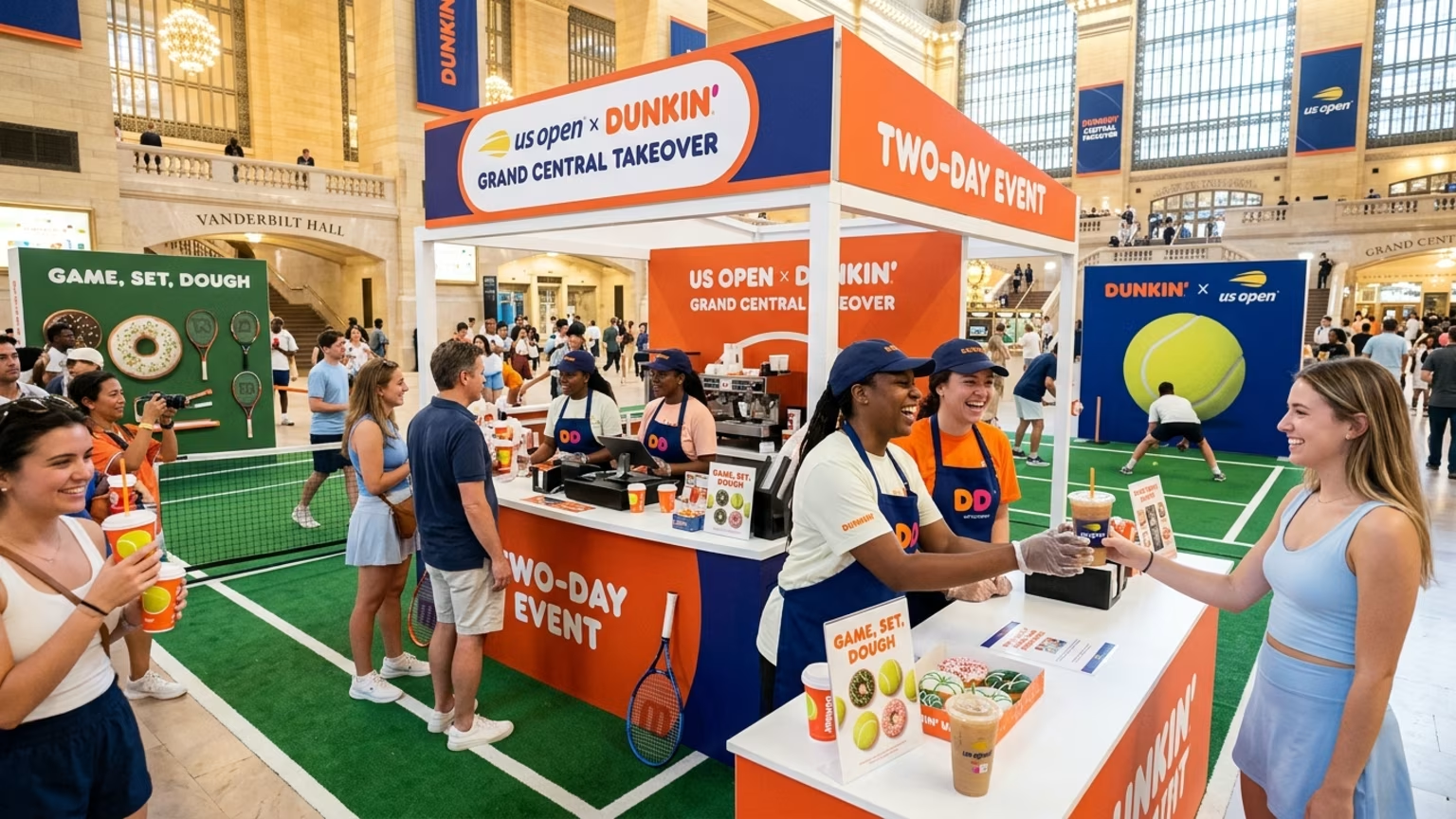
The answer lies in giving fans something to taste and touch. Dunkin' hosted the free Game, Set, Sip pop-up in Vanderbilt Hall on August 29 and August 30. The brand distributed samples of seasonal beverages between 9:30 a.m. and 5:30 p.m. each day. This activation linked a national menu launch with the broader cultural attention of the US Open.
Attendees sampled the Melon Deuce Energy drink, which combined watermelon-lime and raspberry flavors with lemonade. They also tried the Matcha Point beverage. According to Time Out, a medium serving of the Matcha Point drink contains 18 grams of protein. These offerings connected the physical event directly to the new menu rolling out nationwide on August 30.
The physical layout was designed to encourage immediate participation from commuters passing through the hall. Visitors encountered a Gold Court precision challenge that tested their hand-eye coordination. Tennis-themed surprises and designated photo moments provided a structured path through the activation space. The brand also drew inspiration from the famous Honey Deuce cocktail to create a relevant, nonalcoholic beverage.
Securing access to a major transit hub requires rigorous coordination before a single sample is poured. Building a venue inside Vanderbilt Hall means navigating strict municipal guidelines, venue regulations, and safety protocols. Teams must submit detailed site plans that account for massive commuter foot traffic. The goal is creating an engaging space without blocking daily train riders from reaching their platforms.
Field teams must understand the key metrics needed from pop-up activations to justify the complex permitting process. Every square foot of a major transit center is heavily regulated by local authorities. Planners must secure health permits for beverage sampling, fire marshal approvals for the physical footprint, and precise loading dock schedules. These administrative steps dictate the entire layout of the consumer experience from the ground up.
The US Open ecosystem generates more than $500 million in revenue, according to Forbes. The tournament distributes a record $108 million in prize money in 2026. While the Dunkin' event took place outside the main Queens venue, it tapped into this massive cultural footprint. Executing such off-site activations demands flawless logistical planning from start to finish.
Other brands deployed similar off-site strategies throughout the city during the tournament. Reported examples included a Brooklyn block party from Evian, cooling stations from Dove, and an artificial intelligence experience from IBM at Madison Square Park. Each of these setups required extensive advance permitting to operate legally in public spaces. They share a common structure by giving fans something to do, see, taste, and use.
A beautifully designed booth is useless without the right talent guiding the consumer journey. Field personnel must embody the brand while managing massive crowds. American Express Gold Card Members received access to a fast-pass line at this event. Staff had to verify cardholders quickly without alienating general visitors or causing severe bottlenecks.
We build festival zones, premieres, and pop-ups that turn viewers into fans and fans into advocates. We design moments people want to share, using music tie-ins, screenings, and live stunts to bring stories to life while our crews manage execution and track reach and response metrics. Our team relies on a human-centric aloha methodology to keep every interaction warm and precise. Trained ambassadors drive these real conversations to build lasting brand trust.
Fabien Paget, CEO and co-founder of 17 Sport, noted that the US Open attracts brands beyond traditional sports sponsors. Ishveen Jolly, founder and CEO of OpenSponsorship, added that brands are evaluating sponsorship assets based on audience relevance. This relevance is delivered directly by the frontline staff who hand over the product. Without strong human execution, even the best creative concepts fall flat.
Managing a high-traffic activation requires personnel who can think on their feet. Field teams must constantly balance sample distribution rates with the length of the line. Their energy dictates whether a visitor stays to participate or walks away out of frustration.
Marketing leaders must prove Return on Investment by converting physical interactions into qualified data. Measuring foot traffic is no longer enough for modern experiential campaigns. Forbes reports that sponsors are actively pursuing immersive experiences that generate first-party data and product trials. Teams must build a structured scorecard to capture reach, participation, conversion, and durability.
For the Game, Set, Sip event, Dunkin' integrated a physical giveaway with retail mechanics. Customers who purchased a three-count assorted Munchkins mix at participating locations received a limited-edition mini tennis can. This offer was valid while supplies last, with a strict limit of one can per transaction. The collectible packaging bridged the gap between a free sampling event and an actual retail purchase.
Tracking these redemptions provides clear data on product preference and intent. We know that linking physical touchpoints to digital platforms is critical for modern centralized lead capture. The data must flow directly from the activation floor into a centralized customer relationship management system. Clear visibility into this pipeline separates successful activations from simple vanity projects.
Oura utilized a similar integrated approach through product giveaways and personalized health feedback during the tournament. Gathering data from a physical interaction requires clear permission and immediate value for the consumer. When executed correctly, this transition turns a brief conversation into a long-term commercial relationship.
Every live event experiences unexpected friction points that require immediate operational adjustments. A two-day activation in a busy commuter hub creates intense pressure on product replenishment and line management. The Gold Court precision challenge likely required constant resets and equipment checks. Field generals must anticipate these bottlenecks before they cause severe queue abandonment.
The previous year's US Open drew a reported record 1.14 million attendees. While that figure applies to the tournament itself, it highlights the scale of public interest impacting related brand events. If the fast-pass line causes confusion, field staff must clearly redirect traffic without causing frustration. Contingency plans guarantee the activation continues smoothly even when crowds surge unexpectedly.
Chris Lucraz of RWS Global noted that the tournament creates an experience far beyond the matches themselves. Delivering that consistent experience requires backup equipment, extra inventory, and flexible staffing schedules. A proactive approach prevents minor technical failures from ruining the consumer interaction. Precision on the floor protects the overall brand reputation.
Teams must also prepare for rapid shifts in foot traffic tied to train schedules. Rush hour brings massive waves of commuters that can quickly overwhelm a poorly staffed booth. Maintaining composure during these spikes is the true test of a field team.
Experiential campaigns often offset costs or drive additional revenue through exclusive merchandise drops. Following the pop-up, Dunkin' plans to release a limited-edition Serve, Sip, Swing merchandise collection. This digital extension becomes available online at 10 a.m. on September 4. Connecting a physical event to an e-commerce launch extends the campaign timeline significantly.
The collection features specific pricing tiers for different consumer segments. Orange and pink HEAD x Dunkin' tennis bags are priced at $99 each. The collection also includes apparel and accessories priced from $15 to $50. These retail extensions help justify the upfront activation budget by driving direct sales long after the event ends.
Merchandise turns an ephemeral experience into a permanent physical reminder of the brand. Consumers who purchase a branded bag carry that marketing message into their daily lives. Tracking these online sales provides another vital metric for evaluating the overall campaign performance.
Marketers must view pop-ups as strategic product tests rather than simple brand displays. Evaluating queue flows and sampling throughput provides invaluable intelligence for broader retail rollouts. Designing the physical takeaway to drive a future purchase guarantees the campaign generates actual revenue. Teams need rigorous execution to capture these insights accurately.
Choosing between centralized or local operating models helps teams maintain strict quality control. Teams looking to execute massive multi-city strategies should consider mobile pop-up tours and roadshows to scale their operations effectively. Proper logistical planning turns a brief encounter into lasting consumer trust. The strongest campaigns leave behind a quiet confidence in the product itself.
Launching a multi-day commuter hub activation requires intense operational discipline from your field marketing director. Makai resolves the difficulty measuring real ROI from live events by executing Experiential Marketing campaigns that create hands on brand moments that connect emotionally and turn customers into ambassadors. Request a proposal

30 Years Experiential & Retail Activation Partner for CPG & Beverage Brands | Multi-Market Demos, Roadshows & Costco/Club Programs That Actually Sell