Robbie Thain
Founder, CEO

Brands like Sally Beauty and Sephora at Kohl's are transforming campus roadshows. Learn how field marketers execute multi-stop activations to drive retail sales.
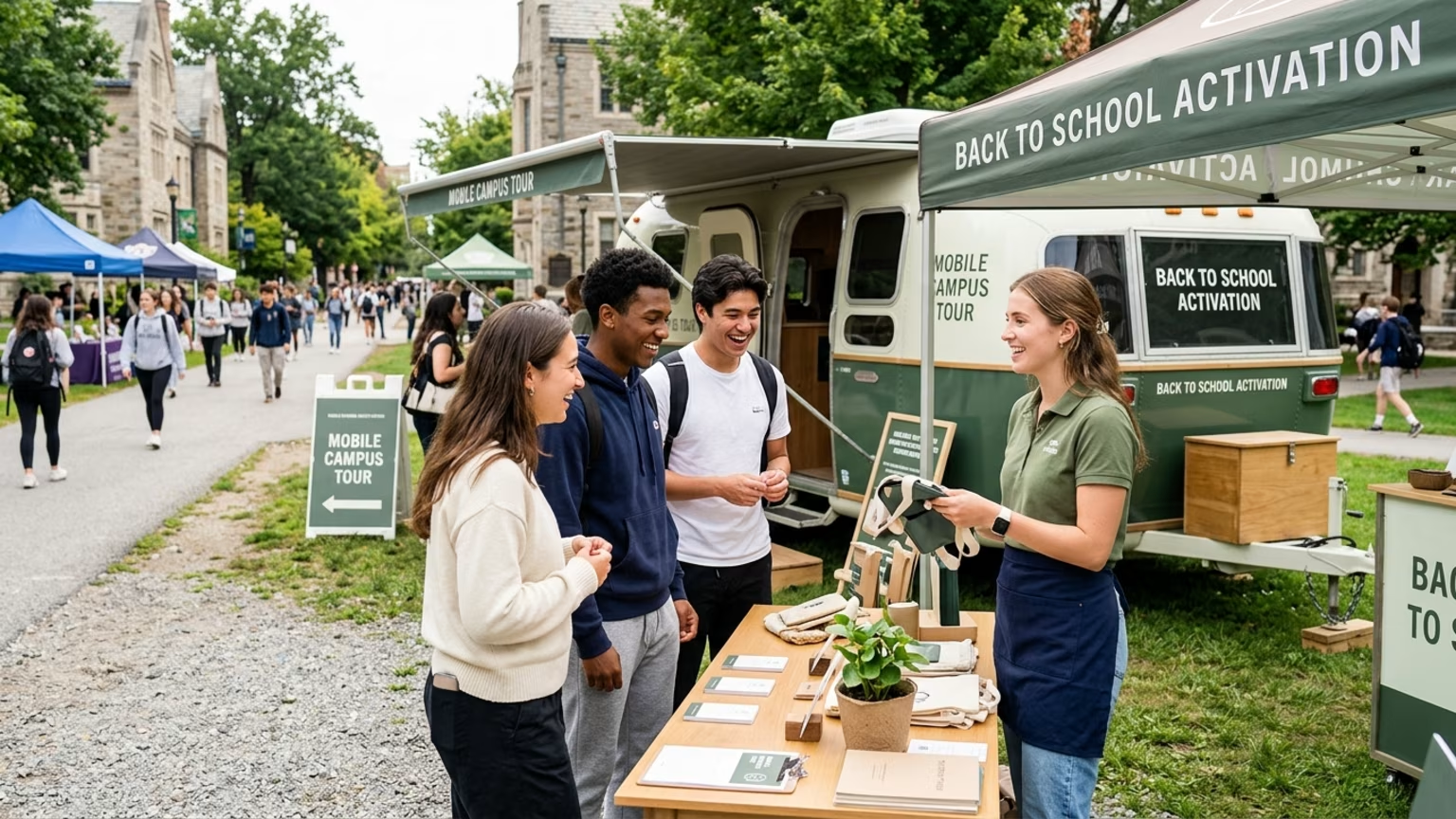
Campus marketing looks effortless on social media feeds. The operational reality involves grueling negotiations for permits, strict compliance with university rules, and flawless inventory staging. We design mobile activations and roadshows that accelerate consumer trial, build trust, and boost retail velocity during 90-day product launch windows. Our structured approach transforms initial product trial into sustained consumer confidence and retail performance.
Taking a broader beauty platform across several universities requires a heavy logistical lift. Sally Beauty first introduced COLORfest in March 2026 as a month-long celebration of hair and nails. This initial rollout included a consumer pop-up at The Grove in Los Angeles. Transitioning that single-location concept into a multi-state college roadshow introduces major operational complexity.
Her Campus Media partnered with Sally Beauty to bring COLORfest to college campuses. BizBash reported that COLORfest began at the University of Miami. It had successfully completed stops at Florida A&M University and the University of Alabama by August 26. The tour was also scheduled to appear at Texas A&M on August 26 and the University of Texas at Austin on August 28.
Moving a massive experiential footprint across state lines demands bulletproof field logistics and a highly standardized operating system. The production team must preserve core brand standards while adapting to each school’s permissions and student calendar. COLORfest showcased products across hair color, haircare, nails, and skincare. Managing this breadth requires disciplined merchandising and flawless inventory replenishment at every single stop.
The featured portfolio included exclusive and national brands like Arctic Fox, ASP, Beauty Secrets, and bondbar. Students could also sample items from CHI, China Glaze, Dashing Diva, and Gelish. The extensive activation featured hair color from IGK, Manic Panic, and Overtone. Skincare and nail products from Nailboo, OPI, and Wella completed the massive product lineup. Maintaining inventory for this many brands across a multi-stop tour multiplies the risk of stockouts.
A branded truck is only a delivery system. Field marketers must connect the experience to a specific student ritual or cultural moment. Sephora at Kohl’s returned for a second year with a “Beauty Corner” activation across three college campuses. They tied the experience directly to sorority recruitment preparation.
The activation visited Auburn University, the University of Georgia, and the University of Florida during August 2026. By focusing on the rush-ready occasion, the brand created immediate relevance. Students could receive quick hair, face, and lip touch-ups. This targeted approach aligns the brand with behaviors students are already engaging in.
Service creates a clear reason for a student to participate, while entertainment increases overall dwell time. The Beauty Corner combined quick beauty services with giveaways, treats, and stickers. Celebrity makeup artist Allison Kaye participated in the events. Sephora team members simultaneously conducted additional touch-ups in an experience called the “Beauty Barrage.” They also provided a dedicated fragrance refrigerator stocked with popular scents.
Sally Beauty similarly paired hands-on product trials with beauty-inspired sorbet and a spin-the-wheel prize mechanic. These strategic features give the tour multiple engagement points beyond a simple product display. Physical and digital photo strips allowed for highly shareable outputs at the Sephora at Kohl’s activation. This exact combination of utility and lighter engagement mechanics keeps students lingering longer.
Sometimes the strategy requires changing how students use a familiar social space entirely. CeraVe partnered with Tyler Cameron and dermatologist Dr. Chloe Goldman on a sun-safety-focused renovation of Tri Delta’s backyard at Florida State University. The renovated backyard added a patio, pergola, seating, and dining areas. Instead of relying only on a conventional product message about SPF, CeraVe placed the intervention in a setting where students were actually spending time.
This approach makes the physical environment part of the brand demonstration itself. Upgrading a social space creates a lasting brand association. The campaign addressed tanning culture directly within a collegiate setting.
Every footprint needs an explicit next action. Students at the Sephora at Kohl’s activation could send a postcard to friends and family. Each postcard included a 15% coupon for students, according to BizBash. A take-home element provides a bridge to support retail expansion.
The physical experience must seamlessly transition into shopping behavior. This requires meticulous planning before the event goes live. Coupons offer a potential path from an on-campus interaction toward a later purchase.
Treating the campus audience as a single, homogenous target creates immediate financial waste. Assuming what works in Florida will work in Texas ignores critical demographic differences. Campus organizations, local retail access, and seasonal calendars can materially affect field marketing results. A multi-stop roadshow model demands execution consistency without ever sacrificing local relevance.
Disconnecting engagement reporting from true business reporting is another critical error. Measuring photos or wait times without tracking downstream impact prevents teams from proving Return on Investment. You cannot evaluate field performance based solely on aesthetic appeal or temporary foot traffic. The BizBash reporting does not establish verified sales or financial results for these specific activations, which proves how often the industry ignores commercial impact.
A Forbes Business Council contributor recommends defining outcome-based measurement before an activation even starts. This framework should link the event to metrics like attributable revenue or changed sentiment. Without tracking coupon redemption or retailer sell-through, you cannot accurately judge commercial performance. Every program should be designed with the final business metrics in mind.
The real operational work continues long after the trucks leave the campus grounds. Field marketing teams must actively monitor inventory alignment at nearby retail locations. Successful hands-on trials create sudden demand spikes that local stores must be fully prepared to fulfill. Running out of stock after a massive campus event ruins the entire customer experience.
Tracking local redemption rates and post-event repeat purchases completely validates the activation strategy. Brands must continuously measure turning campus foot traffic into measurable beverage sales or cosmetic sell-through. Operational vigilance guarantees that temporary excitement converts into highly profitable, long-term customer loyalty. The true test of a pop-up tour is what happens at the register three weeks later.
Marketing decision-makers at premium CPG companies carry the heavy burden of converting fleeting college interactions into documented retail performance. Makai solves the problem of low quality leads from crowded trade shows by deploying our Promotional Campaigns capability. Our campaigns connect digital and real world touchpoints to boost visibility and spark brand conversations. Request a proposal

30 Years Experiential & Retail Activation Partner for CPG & Beverage Brands | Multi-Market Demos, Roadshows & Costco/Club Programs That Actually Sell