Robbie Thain
Founder, CEO

Match booth layout, demos, staffing and next steps to product trial, qualified buyer conversations and measurable business outcomes.
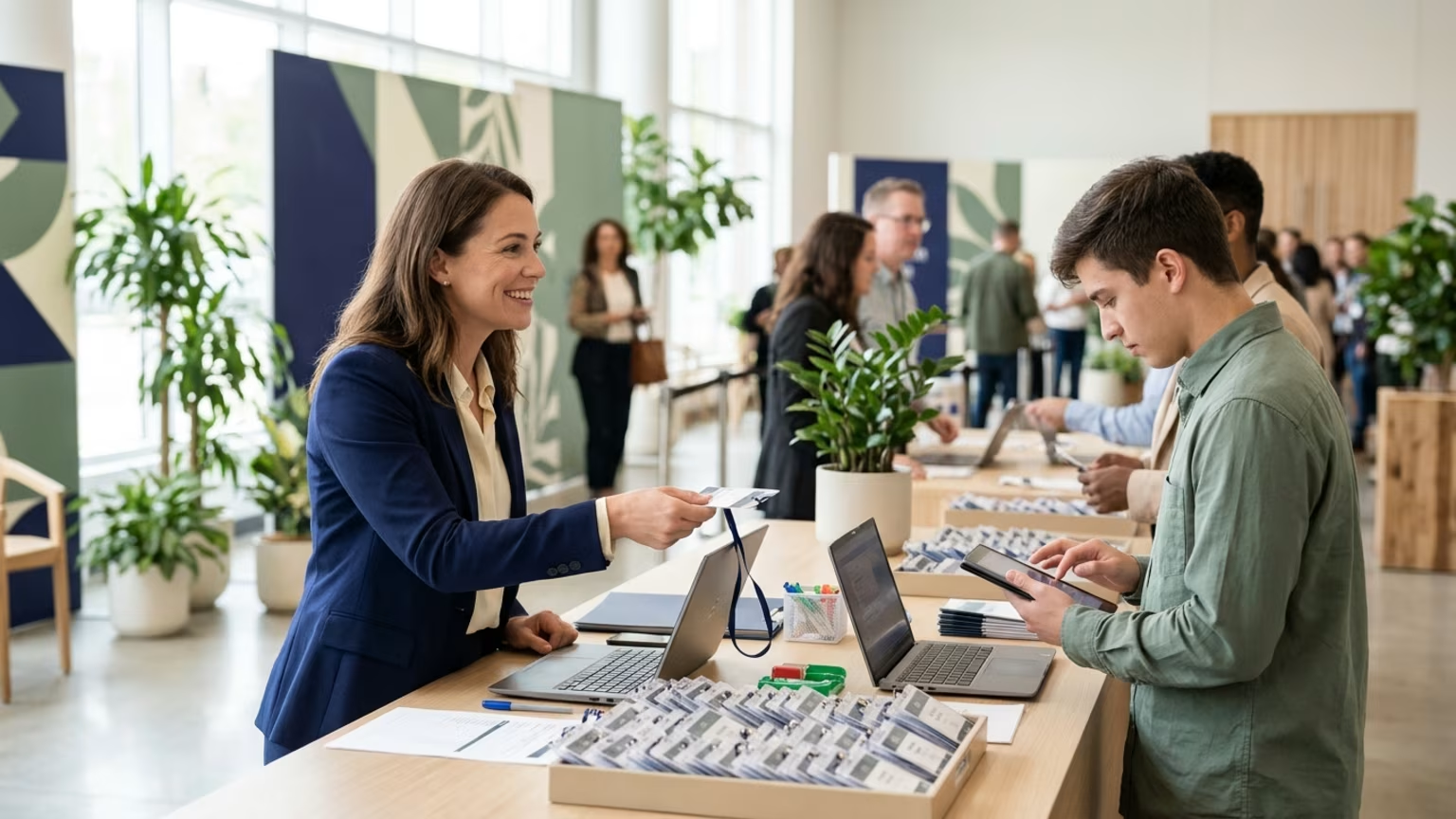
A show-stopping booth can be a terrible marketing investment. If the rendering gets approved before the business goal, you are buying an appearance before defining what the event must accomplish.
That is the sacred cow worth retiring: spectacle is not a strategy. A dramatic entrance might earn a glance without helping someone try the product or have a useful sales conversation.
The floor plan matters. But it should answer to the commercial brief rather than quietly become the brief. Before debating finishes or screens, the team needs to agree on what the activation should produce. Otherwise, a beautiful build can leave leadership asking what all that attention actually achieved.
For a CMO, the nightmare is a major event bill followed by a pipeline report with nothing qualified in it. The photographs look successful. The business case does not.
In our view, the mainstream failure starts when visual decisions become commitments before anyone resolves the commercial questions. The team approves a demonstration area without defining the interaction it must support. Lead capture becomes a device purchase rather than a decision about which relationships deserve further attention.
Freeman described its Q2 2024 report as examining exhibitor concerns and lead acquisition, including alignment between attendee and exhibitor objectives. Its later research offers a useful illustration of that tension.
A secondary summary of Freeman’s 2025 Commercial Trends Report reported that 63% of attendees rated samples or demonstrations as helpful to commercial interactions, compared with 34% of exhibitors. The same summary reported that 23% of attendees thought being scanned and emailed afterward would improve interactions, compared with 49% of exhibitors.
The figures are available here through a secondary summary and describe self-reported preferences among conference and trade-show participants. They do not establish sales effects or Return on Investment (ROI). They also do not identify a universally best layout or staffing model.
Our reading is straightforward: exhibitors should not assume their preferred collection mechanism is the visitor’s preferred experience. A booth brief needs to reconcile what the business wants with what makes participation worthwhile for the person standing there.
Makai’s alternative starts with a simple belief: warmth and discipline belong together. Aloha-style approachability is not permission to be vague about the job. It means treating the person in front of the brand as a person while keeping the commercial purpose clear.
Warmth without a clear job can become pleasant drift. Discipline without warmth can feel like a transaction the visitor never requested. We believe better trial and conversion begin with combining genuine conversation and rigorous execution rather than choosing between them.
Our retail demonstrations use trained brand ambassadors to drive in-store sales through real conversations and product trials. We also specialize in sampling programs and roadshows designed to build consumer relationships and support retail velocity across multiple locations. The product encounter is the point, not a decorative addition to the setting.
At Natural Products Expo West 2025, our team designed and managed a 40 by 20 foot trade show environment for Glanbia. The activation brought multiple brands into one coordinated space. We handled concept and operations along with staffing and breakdown. More than 14,000 recorded product samples were distributed across the activation stations.
The lesson is operational integration: concept and field delivery belong in the same assignment. The creative idea deserves attention, but so does the work required to put the product into someone’s hands.
Our mobile activations and roadshows also support consumer trial and retail velocity during 90-day product launch windows. That broader commercial horizon is the mindset we believe belongs in the booth brief. The experience should serve a business purpose beyond its moment on the show floor.
Start by naming the event’s primary job. Product trial is different from a qualified buyer conversation. Relationship-building is different from immediate lead acquisition. Awareness can be a legitimate objective without being presented as sales pipeline.
Our recommended framework is to connect the event brief to a business outcome before choosing the features. Then make layout and demonstration decisions serve that outcome. Staffing and the next-step prompt should support the same job.
When trial is the primary objective, the central design question is whether visitors can meaningfully experience the product. That might mean sampling it or seeing it used. The interaction should not be secondary to a structure built mainly to be photographed.
Plan space around that encounter and assign staff to support it. Give the visitor a clear invitation to participate. For a targeted trial objective, the reporting should distinguish samples distributed to the intended audience from general booth traffic.
The recorded sample total from our Glanbia activation is a concrete distribution output. Evaluating it means keeping that output in its proper category rather than relabeling it as qualified pipeline.
When the objective is a substantive buyer discussion, the booth should make that discussion practical. A demonstration that draws attention and a conversation that requires concentration do not automatically need the same setting. Plan for both without assuming one will naturally accommodate the other.
That is why separating high-traffic activity from serious buyer talks belongs in the commercial discussion rather than being treated only as a design preference.
The Freeman survey summary reported that 58% of attendees said access to subject-matter experts would improve interactions, compared with 26% of exhibitors. For an event centered on product understanding, that finding supports giving knowledgeable people a defined role. The staffing question becomes who can support the intended conversation, not simply who can occupy the booth.
If qualified leads or retail meetings are the goal, the interaction needs a clear destination. A contact record and an agreed meeting are different outputs. Report them separately rather than allowing the larger count to stand in for the more valuable outcome.
Define what makes a conversation relevant to the business objective before counting it as qualified. Then match the visitor prompt to the desired next step. That could be a substantive conversation or a scheduled follow-up rather than an automatic request to scan a badge.
The demonstration should give someone a reason to continue the relationship. Staff should know which action they are supporting. The capture method should record that action instead of becoming the purpose of the interaction.
We provide reporting on reach and trials alongside leads and sales to guide campaign optimization. Our measurement approach tracks awareness and engagement as well as conversion. Those categories answer different questions, so the event story should preserve those differences.
For a booth brief, a useful scorecard might distinguish:
Choose measures that fit the event’s actual objective. Do not require every activation to pretend it has the same job. But do not let an awareness measure quietly become evidence of a sales outcome either.
Build reporting around the next business decision. Leadership should be able to see what happened and decide what deserves further investment. A report that only celebrates activity leaves that decision unfinished.
Core takeaway: A booth should earn its design through the business work it needs to perform. Warm human interaction gives the experience meaning, while operational discipline keeps that interaction connected to an objective. Demand a clear relationship between the layout and the intended action. Then judge the activation by relevant trials and commercial progress rather than letting attractive photographs stand in for execution.
Booth accountability sits with trade show coordinators and CPG marketers; Makai plans and manages spaces designed to attract attention and start conversations. For teams facing low-quality leads, Makai focuses trade show activations on qualified leads and uses trained brand ambassadors in retail demonstrations to connect product trials and real conversations with in-store sales.

30 Years Experiential & Retail Activation Partner for CPG & Beverage Brands | Multi-Market Demos, Roadshows & Costco/Club Programs That Actually Sell


