Robbie Thain
Founder, CEO

An August 2026 readership roundup signals that event planners prioritize execution, on-site logistics, and vendor management over abstract trend pieces.
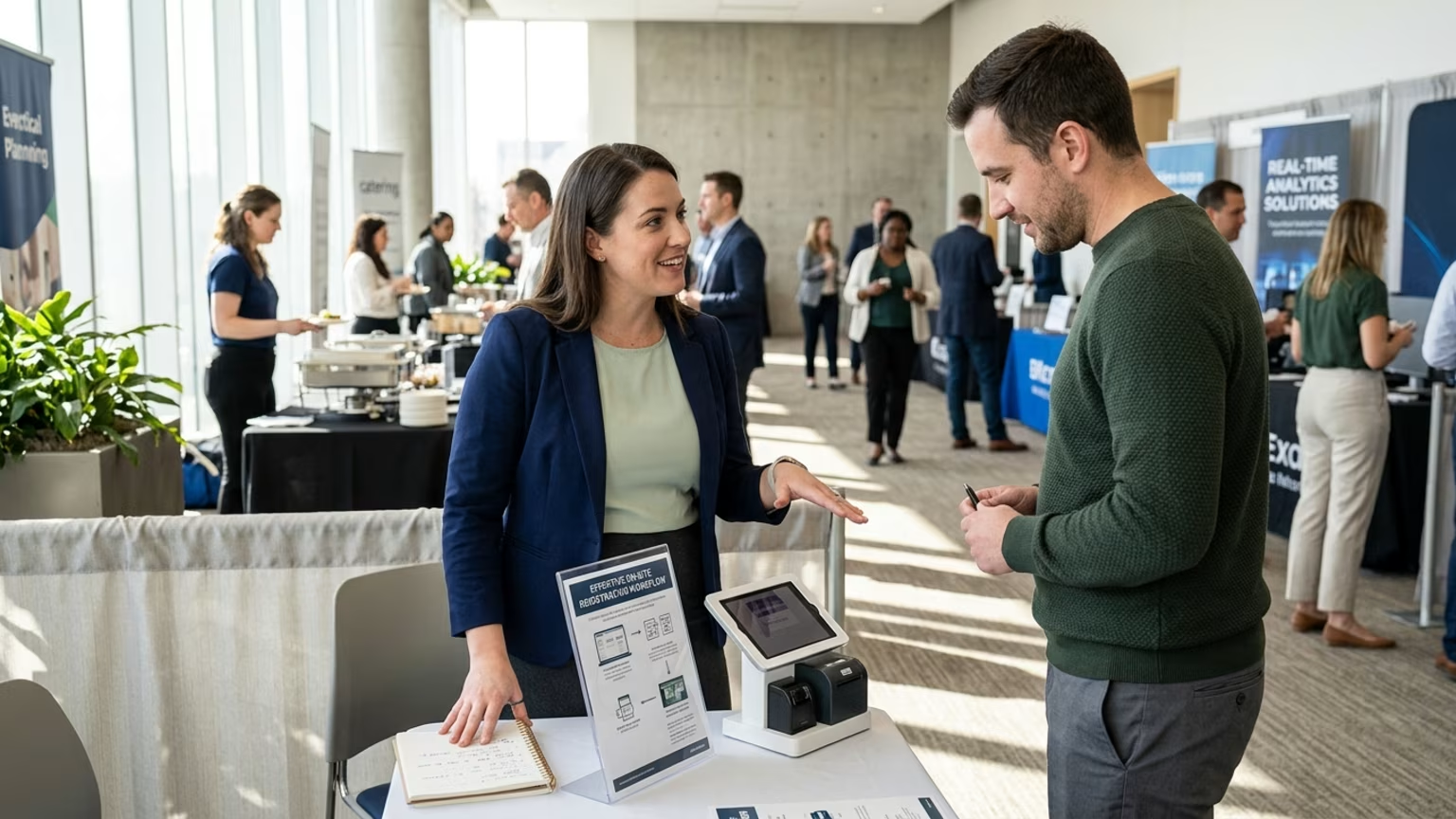
On August 29, 2026, Event Technology published an August readership roundup indicating a sharp shift in event industry focus. The platform reported that event professionals were more interested in execution-focused guidance than broad predictions about the future of events. The most-read themes included budget-conscious production, hybrid and in-person formats, and attendee experience. Brand-activation case studies, vendor management, and on-site logistics also dominated the platform's traffic.
The underlying readership data reflects reading behavior on a single trade media platform. It suggests an undeniable appetite for actionable guidance and adaptable examples over theoretical trend coverage. Event buyers are actively looking for tactics they can apply directly to their next activation. They want repeatable playbooks that can adapt across conferences, trade shows, and smaller brand experiences.
The August readership data should not be treated as a definitive survey of the entire event industry. The roundup reflects reading behavior on a single platform. It is better understood as an indicator of professional interest than as a statistically representative measure of planner priorities. Still, the signal is commercially relevant for experiential marketers navigating tight budget cycles.
Event Technology says event teams are refining in-person programs while retaining elements of hybrid design. The platform also describes interest in production approaches that can adapt across event sizes and formats. For experiential marketing teams, this indicates a pressing need for modularity and flexibility. A brand might need one activation to operate as a staffed booth during show hours and a demonstration stage during scheduled programming.
The same footprint might need to serve as a content capture environment during media windows. The core planning question centers on whether a format can perform multiple jobs without becoming difficult to manage. The readership pattern specifically highlights vendor management and on-site logistics as primary areas of professional interest. Marketing leaders are increasingly focused on how to brief a fabricator, manage load-in, and capture useful lead data.
Furthermore, the roundup highlights high-profile event and brand-activation case studies alongside scalable AV and staging techniques. It highlights tools that support audience engagement and streamlined workflows. Event Technology notes that providers of interactive technologies may benefit from showing how their tools work under real operating conditions. Novelty alone is no longer enough to secure budget approval from skeptical stakeholders.
Brands require evidence that a proposed technology can survive contact with a crowded trade show floor. This focus on pragmatism demands a complete rethinking of how brands approach their event vendor relationships.
This readership shift aligns completely with Makai's operational philosophy. A high-level trend article might explain industry shifts, but it will not help a team manage complex on-site staffing. For marketers in the food, beverage, and CPG sectors, live programs must accomplish multiple demanding jobs simultaneously. These activations must generate product trial, collect qualified leads, and support vital retail relationships.
Executing these multi-layered goals requires intense discipline and preparation. It demands meticulous planning to ensure teams prevent CPG experiential roadshows from becoming dumpster fires. A beautiful booth concept requires clear ownership across booth staffing, freight, lead capture, and follow-up. Practical logistics must take precedence over pure creative ambition.
The demand for practical guidance mirrors the rising operational complexity of major events. Recent CEIR benchmark reporting focused on B2B exhibitions with at least 200,000 net square feet of paid exhibit space. Those large exhibitions posted an average net profit margin of 55%. Furthermore, 80% of organizers reported profitability and median gross revenue reached $12.5 million.
While these figures represent a specific class of large B2B exhibitions, they illustrate the sheer scale of modern trade shows. CEIR's Nancy Drapeau attributes profitability largely to scale because large exhibitions can distribute infrastructure, service, and experience costs across a broader revenue base. She points out that larger events demand more staffing, operational coordination, and sophisticated technology infrastructure. Brands must match this organizer sophistication with their own field readiness.
Drapeau also says digital infrastructure becomes fundamental for the largest events because it helps organizers deliver value to exhibitors and attendees while managing the complexity created by scale. For exhibitors, that reinforces the importance of treating connectivity, registration data, lead systems, and technical support as part of the activation’s operating model. These elements can no longer be treated as last-minute add-ons.
This escalating complexity creates immediate downstream effects on field execution and staff management. A larger event footprint completely changes how a brand must manage visitor flow and data collection. The same CEIR report says that more than half of large-show organizers use Net Promoter Score. Meanwhile, adoption remains lower among midsize and small events.
This reliance on formal measurement highlights that teams cannot treat data capture as an afterthought. Marketing leaders need reliable metrics to prove trade show Return on Investment in post-event roadshows. A show brief should specify what counts as success, how it will be captured, and who owns the data. Teams need to combine sentiment data with operational and commercial measures to truly assess performance.
A high satisfaction score cannot compensate for weak lead quality, poor follow-up, or low product trial. Marketers must integrate these capabilities with real-time first-party data capture strategies at live events. Booth space alone may not accomplish every exhibitor objective. CEIR notes that sponsorships, branded experiences, and event-wide engagement opportunities can increase visibility while supporting attendee value.
The most effective opportunities must benefit multiple stakeholders simultaneously. CEIR identifies educational, networking, and interactive sponsorships as formats that improve attendee experience while providing measurable sponsor value. This reality forces brands to design their spaces around specific attendee actions. The goal is to facilitate a product demo, a qualified conversation, or a scheduled meeting.
Attendee behavior data further reinforces the need for purposeful experience design. A 2025 Freeman Trends Report cited by PCMA found that half of meeting participants said successful networking was the leading motivator for returning to an event. Among Gen Z audiences, the figure was 65%. The implication for marketers is not that every activation needs a networking lounge, but that interaction should have a clear purpose.
A brand could translate this data into a hosted introduction between a buyer and a product specialist. They might design a small-group tasting, a peer-led education session, or a scheduled distributor conversation. The experience must preserve the relationship after the show ends.
These behavioral signals require experiential marketers to rethink their floor plans entirely. Physical environments should facilitate meaningful interaction instead of treating attendees as passive viewers. Brands need proven booth traffic blueprints to scale pop-up roadshows effectively. A crowded booth is useless if it fails to convert visitors into measurable business outcomes.
Every vendor must also be held accountable for outcomes and handoffs. Vendor briefs should include a single point of contact, a detailed production schedule, and strict data reporting requirements. The August readership pattern specifically highlights vendor management and on-site logistics as areas of professional interest. This suggests these topics should be treated as core marketing infrastructure rather than mere administrative tasks.
Teams must translate their creative visions into rigid operating briefs. They must define the primary attendee action, the ideal interaction length, and the required staffing model by shift. Front-of-house staff should know the difference between a curious visitor, a retail partner, and a sales-ready prospect. The experience must route each person to the right next step seamlessly.
When evaluating an agency or technology provider, brand leaders must ask for evidence beyond final photographs. They need to understand the attendance patterns, the required staffing ratios, and the specific contingency plans deployed. This aligns perfectly with the reported readership preference for real-world case studies and adaptable examples. The brands most likely to benefit will be those that connect the physical experience to a measurable business action.
We know firsthand that operational discipline creates the necessary room for true consumer connection, as a Director of Brand Strategy in the CPG snack division shared: "The Makai team turned our product launch into a sensory event that shoppers still talk about. From creative storytelling to flawless in-store execution, they made snack time unforgettable. We couldn't have asked for a stronger partner." Our team created an in-store experience that left a lasting impression on consumers and became a memorable brand moment.
Will your next activation rely on assumptions, or is it built on a rigorous operational framework that consistently converts foot traffic into a qualified sales pipeline?
Navigating complex event logistics, permits, and staffing requires an agency that prioritizes meticulous operational execution over abstract trends. Makai eliminates this logistical friction so brands can focus entirely on revenue generation. We deploy our Promotional Campaigns capability to connect digital and real world touchpoints to boost visibility and spark brand conversations. Request a proposal

30 Years Experiential & Retail Activation Partner for CPG & Beverage Brands | Multi-Market Demos, Roadshows & Costco/Club Programs That Actually Sell