Robbie Thain
Founder, CEO

Sustainable retail velocity and repeat purchases develop when live activations align targeted sampling, frictionless trials.
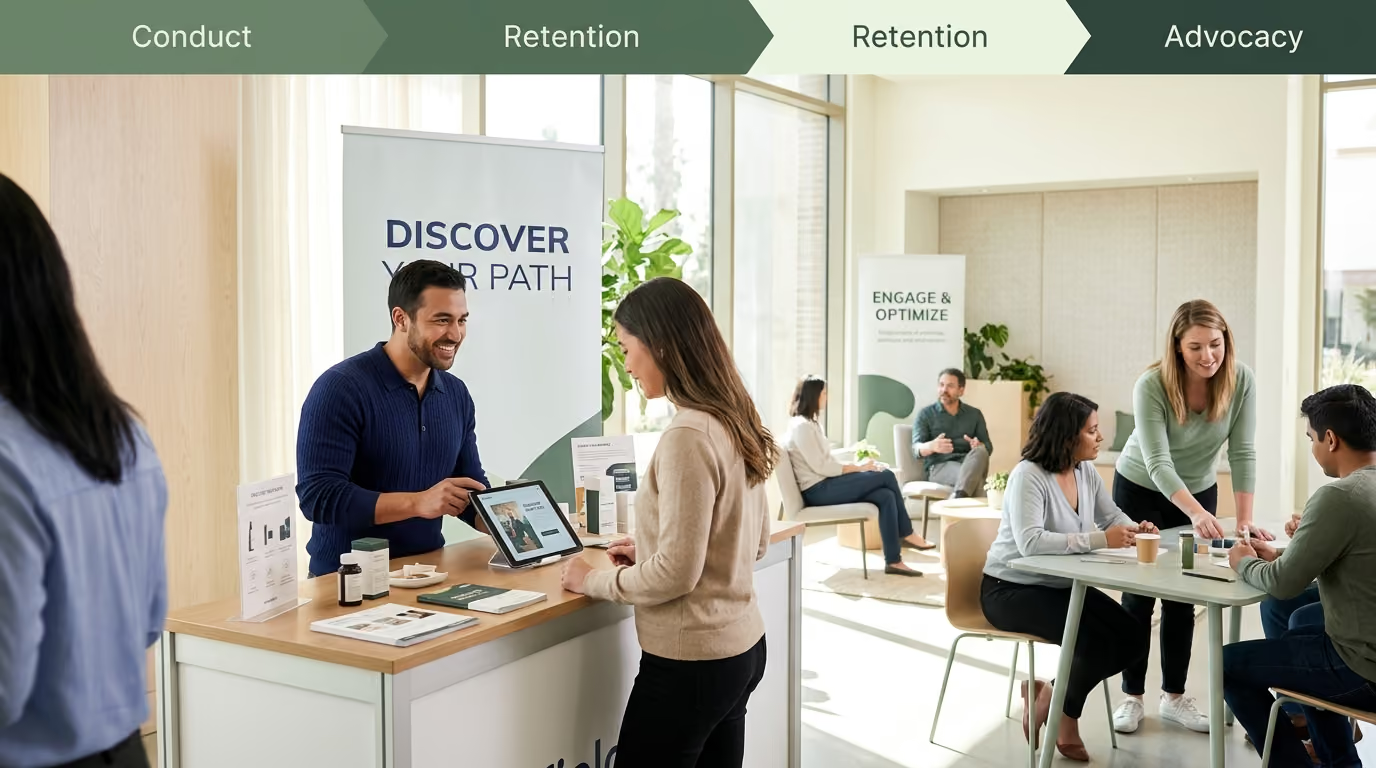
Most field marketing programs fail because they treat every footprint as a top-of-funnel discovery booth. This guide outlines how to align field marketing activations across every stage of the customer lifecycle to drive verifiable Return on Investment (ROI) and sustained retail velocity.
A Saturday morning inside a bustling warehouse club reveals the traditional flaw in field activation. Hundreds of shoppers walk past an unattended demo table, grab a bite in a paper cup, and walk away without ever glancing at the packaging. Meanwhile, brand leaders measure success based on the total number of cups distributed. The field team reports a successful day because five hundred samples left the tray. Back at headquarters, the sales reports tell a grim story: retail velocity remains flat, pantry abandonment is high, and customer acquisition costs climb.
This disconnect happens when live activations operate in an operational vacuum. High-performing field marketing is an integrated engine designed to guide a consumer through a deliberate progression. It moves prospects from initial awareness and unassisted trial to retail conversion, habitual replenishment, brand loyalty, and vocal advocacy.
Field marketing is often pigeonholed as an awareness tactic. Teams build footprints, distribute free product, and count foot traffic as their primary success measure. This approach ignores how consumers make buying decisions in physical and digital retail environments.
A trial event that fails to secure a retail purchase wastes marketing capital. A first-time buyer who never receives usage instructions will likely abandon the product in their pantry. An advocacy campaign directed at consumers who have not yet formed a repeat purchase habit produces shallow, unconvincing endorsements.
According to customer experience research published by the American Marketing Association, high-performing organizations map the customer journey, identify the distinct contribution of each touchpoint, and link physical interactions directly to commercial outcomes. The research advises brands to focus on touchpoints they directly control. In live marketing, your field footprint is the most controllable, high-impact touchpoint available.
When you design field activations for specific lifecycle stages, your operational priorities shift. You stop asking how many samples your team can hand out per hour. Instead, you determine the exact behavioral shift required at that specific moment in the buyer journey.
The goal of discovery is not to capture generic foot traffic. The objective is to earn qualified attention from consumers who have a high probability of product adoption.
Field teams often position themselves in high-traffic corridors and hand samples to anyone walking by. A comprehensive study of 433 grocery shoppers across multiple household product categories found that sample distribution often fails to reach the most profitable consumer targets. However, when samples reached carefully targeted households, the brand achieved strong commercial responses.
Unfocused sampling generates inflated distribution numbers while masking poor unit economics. When brand ambassadors hand energy drinks to children or dairy snacks to lactose-intolerant shoppers, the brand pays full cost for zero conversion potential.
Discovery footprints must use visual cues, physical architecture, and positioning to attract intended buyers while filtering out non-prospects.
The discovery phase must establish category context immediately. If a consumer cannot tell whether your product is a functional beverage, a cold-brew coffee, or a sparkling water within seconds, your activation creates confusion rather than interest.
Trial is the central engine of experiential marketing, but trial does not automatically lead to conversion. Your field strategy must separate raw product encounters from structured, friction-free product trials.
The New Zealand household grocery study revealed that while trial rates from sampling were consistently high, subsequent conversion rates were much lower. The data showed that sampling did not influence conversion unless recipients actually used the product correctly and experienced its functional benefit.
This finding carries massive operational implications for field marketing operators. Simply placing a sample into a shopper's hand does not constitute an effective trial. If the product requires chilling, specific preparation, or contextual consumption, an unassisted sample handed out in a parking lot will fail.
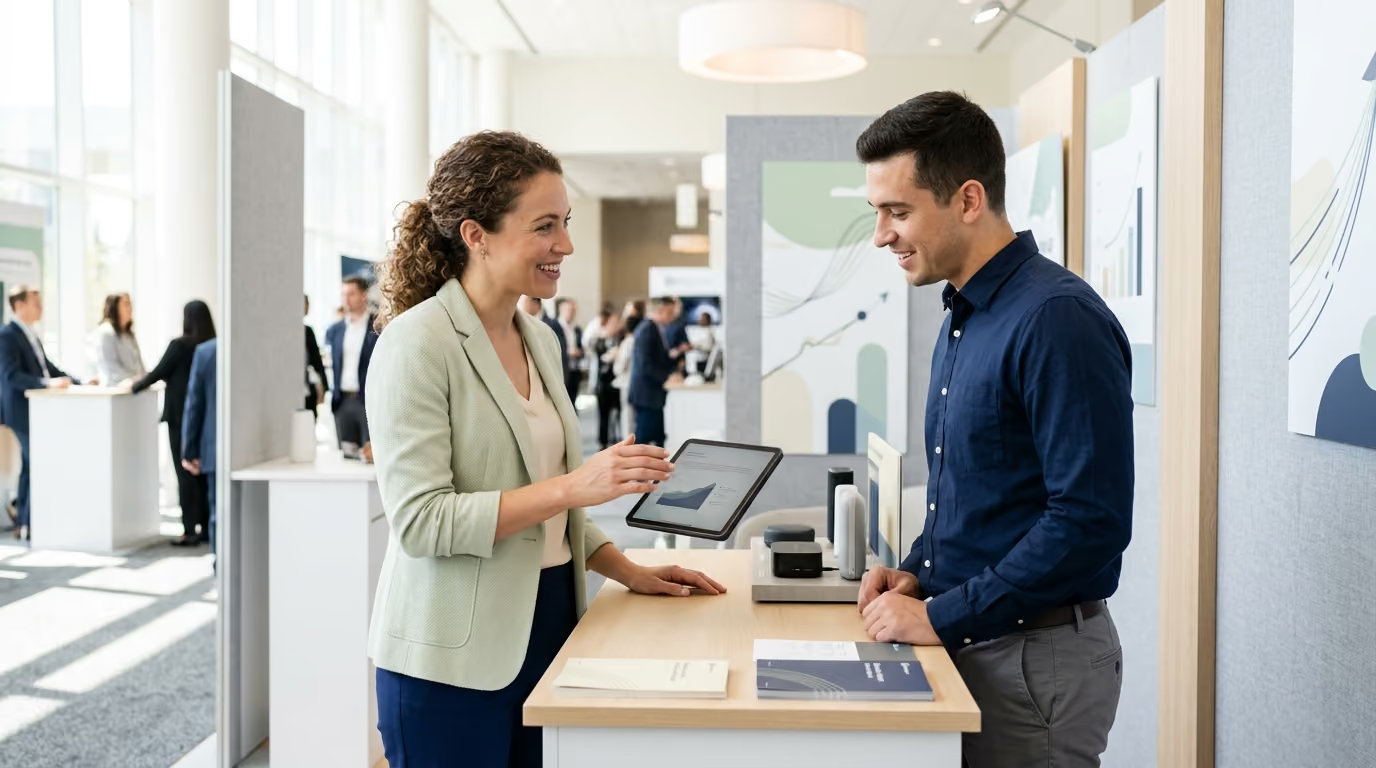
A field study conducted in a major U.S. grocery store chain across six product categories revealed another critical dynamic. Free in-store sampling was highly effective at driving immediate product trial across demographics. More importantly, the researchers observed that direct interpersonal interaction with the demonstrator significantly increased post-sample purchase rates.
When planning your field footprint, establishing clear operational standards is paramount. For teams looking to formalize these field standards, developing a structured field activation execution playbook ensures every ambassador understands their role in driving qualified trial rather than passive distribution.
To convert trial into commercial velocity, field teams must design trial mechanics that guarantee proper usage and highlight product advantages.
In our experience, direct engagement during the trial moment creates an emotional anchor that packaging alone cannot achieve. A Brand Manager in the CPG space shared: 'Makai transformed our test-drive activation into an emotional brand journey. They connected technology, lifestyle, and experience seamlessly, and turned casual visitors into loyal fans.' We successfully integrated multiple experience layers to convert casual participants into committed brand advocates.
Once a consumer completes a successful trial, the field program must immediately direct that interest into a completed transaction.
The U.S. grocery store field study uncovered two distinct conversion paths driven by live demonstrations. For consumers who already planned to purchase within the category, the live trial successfully triggered brand switching. For shoppers who had no intention of buying within the category that day, the sampling interaction created new category demand.
Your field marketing staff must be trained to recognize both buyer profiles and adjust their closing approach accordingly:
When interacting with a shopper who already uses a competing brand, the ambassador must emphasize product differentiation.
When engaging a consumer new to the entire category, the ambassador must lower the perceived risk of a new purchase.
Executing this handoff requires tight alignment with retail store operations. Ensuring that store shelves are fully stocked before an activation launches is non-negotiable. If your team drives fifty shoppers to an empty endcap, your marketing spend is lost. To avoid these breakdowns, leading brands build repeatable frameworks for field marketing operations that coordinate logistics, inventory verification, and retail staff communications well before the footprint opens.
The commercial viability of consumer brands depends on repeat purchases. Field marketing must not abandon the consumer after the initial register scan.
Many CPG brands suffer from high first-time trial combined with catastrophic pantry abandonment. A customer buys the product during an energetic field demonstration, takes it home, places it in a cupboard, and forgets to consume it.
Field teams must incorporate replenishment mechanics directly into the physical interaction. The goal is to build an immediate bridge from the first trial to the second purchase.
Tracking replenishment requires post-event discipline. By establishing clear geographic holdout zones and monitoring scanned loyalty data in target retail markets, brand managers can quantify the true long-term lift generated by regional field tours.
Customer loyalty represents both a behavioral habit and an emotional commitment. Live field marketing provides a powerful vehicle for cementing brand preference and insulating consumers against competitive promotions.
A comprehensive meta-analysis examining 535 correlations from 245 studies across more than 1.1 million customer observations confirmed strong positive links between customer satisfaction and retention, word of mouth, and overall corporate financial performance. Customer satisfaction generated during live brand experiences contributes directly to enterprise value.
At the loyalty stage, field marketing shifts from broad customer acquisition to high-value community engagement. You are no longer convincing a stranger to taste your product. You are rewarding existing customers and validating their purchasing choices.
When existing consumers experience tangible rewards for their continued patronage, brand affinity deepens. This relationship helps protect retail market share from aggressive competitive discounting.
Advocacy occurs when highly satisfied customers actively promote your product within their personal networks. Word of mouth cannot be forced through transactional marketing. It must be cultivated through remarkable real-world experiences.
Academic research on consumer behavior shows that customer loyalty and repurchase intention serve as essential bridges between customer satisfaction and positive word of mouth. A consumer rarely advocates for a brand after a single transaction. True advocacy develops after consistent, satisfying product usage over time.
Field activations designed for advocacy should target experienced users rather than uninitiated prospects. These activations provide passionate consumers with the tools, stage, and social currency to share their genuine enthusiasm.
When designing these peer-to-peer engagements, staffing quality makes the difference between authentic community building and awkward corporate posturing. Equipping your ambassadors with the skills to facilitate peer conversations is critical. Investing in high-performing brand ambassador recruitment and training ensures your field staff can guide consumer storytelling without sounding script-bound or artificial.
The final stage of the lifecycle model focuses on expanding customer lifetime value through cross-selling, upselling, and securing broader retail distribution.
Research published in the Journal of Retailing and Consumer Services demonstrates that retailer awareness, associations, and perceived quality directly reinforce consumer purchase intentions. When a brand demonstrates strong field velocity for an introductory product, it creates substantial leverage to expand its shelf presence across adjacent product categories.
Field marketing serves as a real-time proving ground for line extensions. By launching targeted roadshows for new Stock Keeping Units (SKUs) within existing retail accounts, brands provide retail category managers with undeniable proof of consumer demand.
To scale these complex programs across multi-market retail footprints without operational friction, brands must develop robust operational manuals. Reviewing the complete guide to building a field marketing playbook provides the strategic templates required to coordinate retail sales teams, field managers, and regional logistics providers.
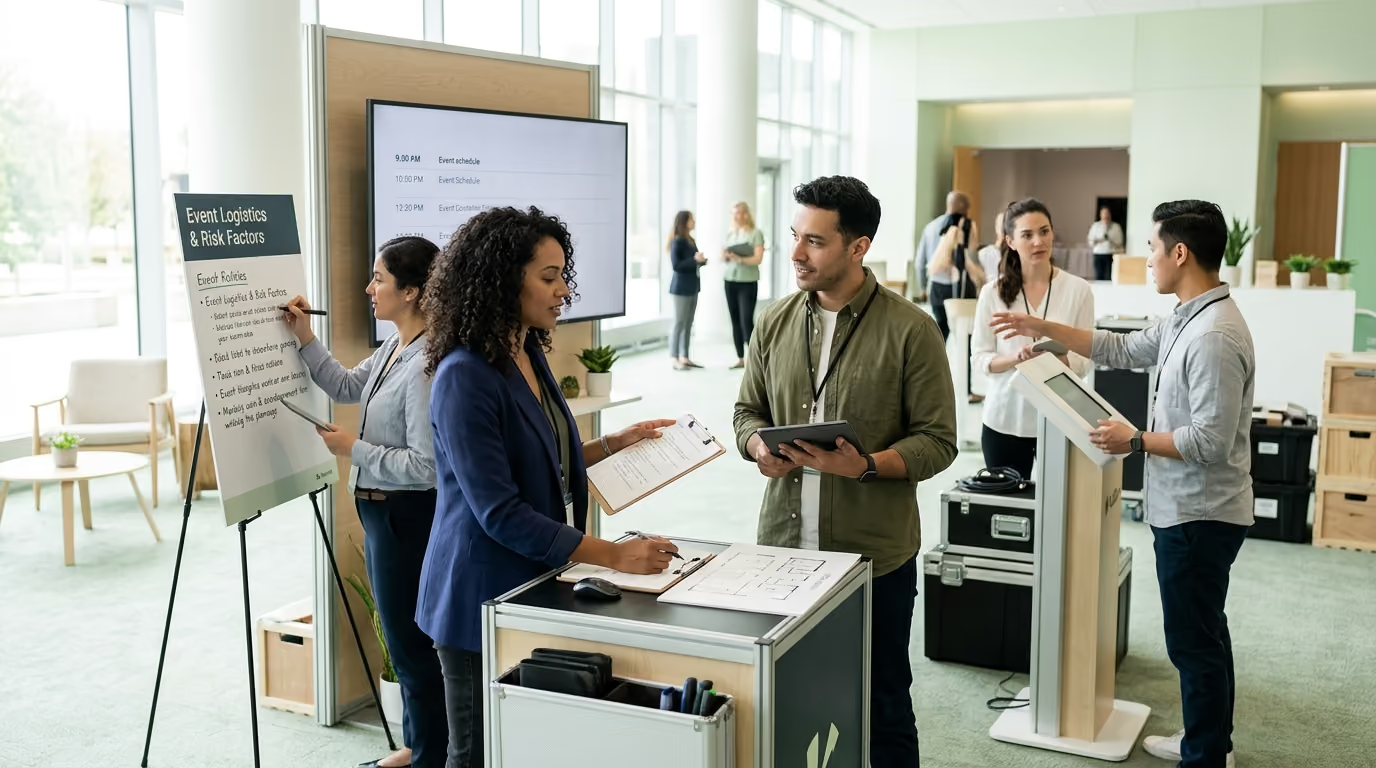
Executing a full-journey field program requires rigorous standard operating procedures. Every stage of the interaction must be mapped, staffed, and measured with precision.
Ensuring your field staff captures clean contact data and executes immediate digital follow-up is vital for commercial success. For a comprehensive review of operational lead routing workflows, consult our guide to field marketing lead generation and follow-up strategies.
Traditional event reporting relies on vanity metrics like total impressions, estimated foot traffic, and gross sample counts. A modern full-journey program tracks a rigorous hierarchy of leading, behavioral, and commercial performance indicators.
According to EventTrack research published by the Event Marketing Institute, leading brands evaluate event performance across three distinct tiers: on-site attendee evaluations, immediate direct sales, and long-term product lifecycle revenue. Measuring performance across all three dimensions prevents marketing teams from over-valuing raw attendance while under-valuing commercial conversion.
These metrics evaluate whether the field activation functioned properly as a live brand touchpoint:
These indicators track whether the live experience prompted immediate consumer action:
These metrics establish the true commercial Return on Investment generated by the field investment:
To measure these metrics accurately across complex multi-city campaigns, teams must track data consistently. Leaders can use our overview of five key metrics for pop-up activations to establish standardized field reporting across all active markets.
A fast-growing plant-based dairy brand faced stagnant retail velocity across seventy premium grocery locations in the Pacific Northwest. While digital ad campaigns drove respectable online awareness, shoppers inside the retail environment consistently chose legacy dairy brands due to price familiarity and habit.
The brand abandoned its previous strategy of untargeted weekend sample giveaways. Instead, it deployed a disciplined, full-journey field marketing campaign across thirty high-volume retail locations, maintaining forty matched stores as a control group.
The full-journey field program demonstrated substantial performance gains compared to the unactivated control markets:
By replacing passive sampling with an integrated journey framework, the brand transformed its live marketing from an unmeasured expense into a predictable retail growth engine.
Revisit this playbook whenever your brand prepares to launch a new product line, expands into a major national retail partner, or experiences declining unit velocity despite strong brand awareness. Aligning your field footprint with the full customer journey ensures that every live conversation, product demonstration, and sample tray drives measurable, long-term commercial value.

30 Years Experiential & Retail Activation Partner for CPG & Beverage Brands | Multi-Market Demos, Roadshows & Costco/Club Programs That Actually Sell