Robbie Thain
Founder, CEO

Outdoor mobile marketing footprints face severe crowd surges, weather hazards, and structural risks that require structured contingency playbooks.
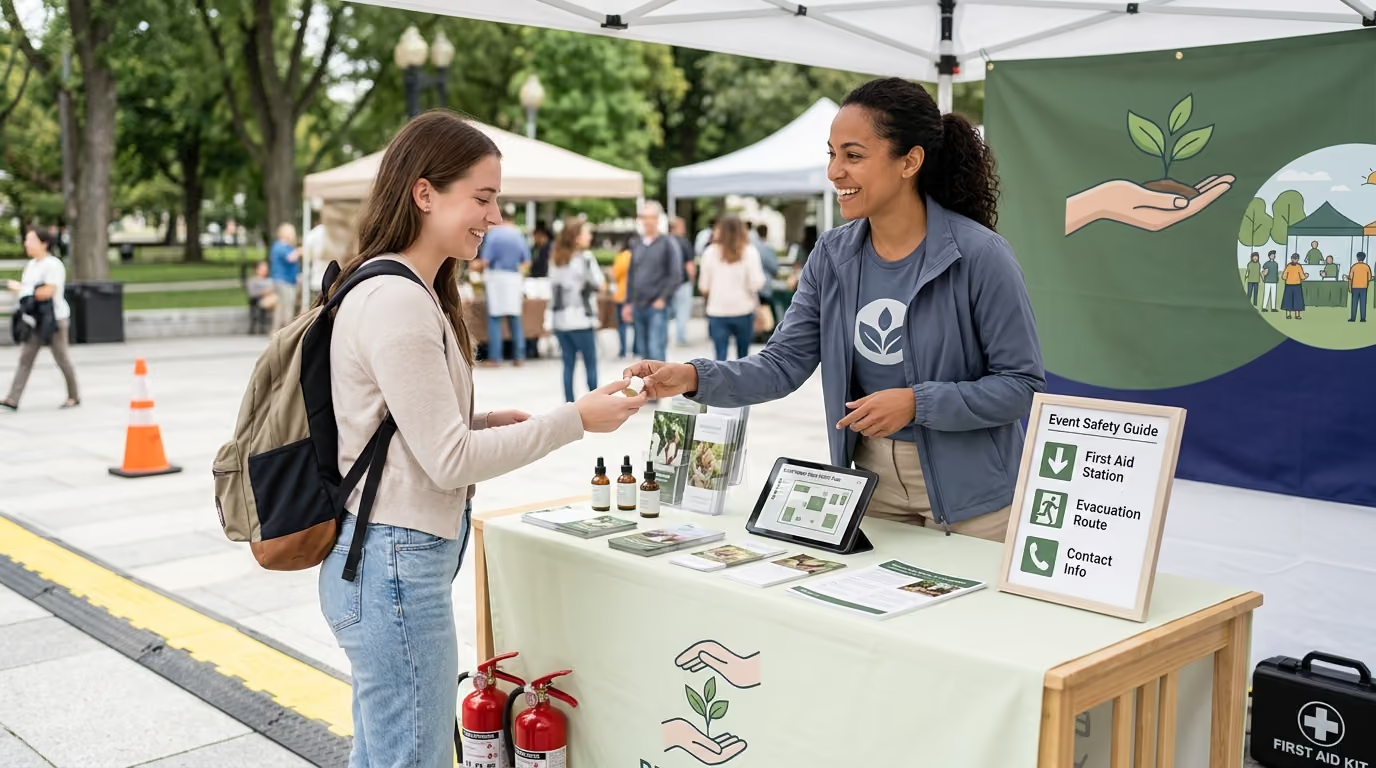
Most brand leaders treat mobile activations as marketing installations, yet their true operational reality mirrors a temporary industrial and public service facility. When hundreds of consumers crowd an outdoor footprint, the success of the campaign hinges entirely on rigorous life-safety controls and disciplined contingency planning.
This definitive resource provides marketing directors and field operators with a comprehensive safety framework to protect workers, visitors, and brand assets during live mobile activations. By integrating structural engineering, food hygiene, crowd management, and incident command protocols, brands ensure operational continuity while defending their Return on Investment (ROI) and public reputation.
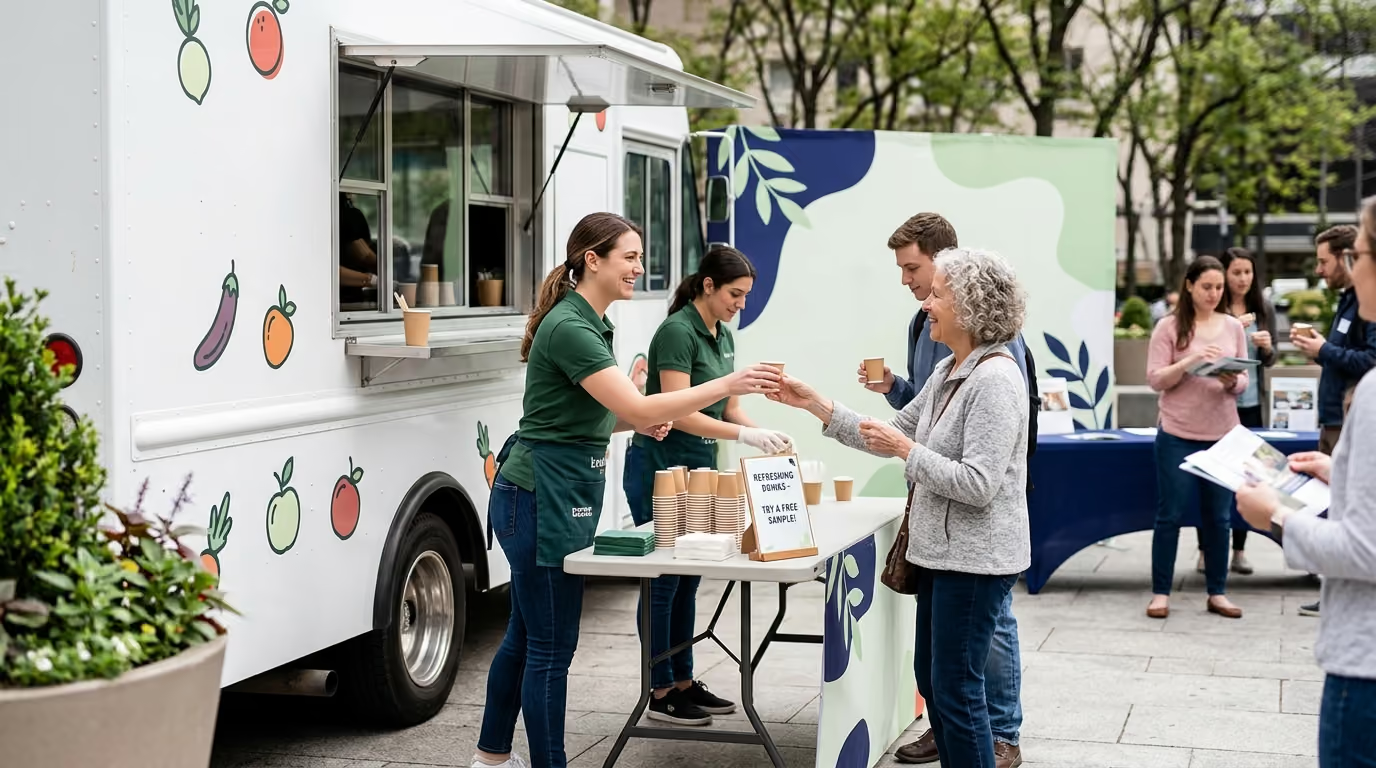
The field reality at high-volume activations is rarely neat. Picture a festival plaza where a branded sampling vehicle is surrounded by four hundred consumers pressing forward for a limited-edition product drop. Temperatures climb past ninety degrees, a sudden squall tests tent anchor lines, a child separates from their parent, and an unmonitored power cord creates an immediate trip hazard near the queue entrance. In that exact moment, creative messaging and graphic design cannot rescue the activation. Only pre-planned command structures, explicit stop-work thresholds, and rapid-response safety workflows will preserve human safety and operational integrity.
Field safety starts long before the promotional vehicle arrives on location. Treating mobile activations with operational discipline requires a centralized Activation Safety File for every tour stop, footprint, and city route. This documentation serves as the single source of truth for onsite managers, contractors, venue coordinators, and municipal authorities.
Every Activation Safety File must contain foundational operational records. These documents include the operating schedule, scaled site layouts, access routes, emergency evacuation corridors, staff briefing logs, and a complete emergency contact directory. The file must also incorporate written hazard assessments, vendor insurance certificates, local municipal permits, and daily equipment inspection records.
To govern field execution, operators should apply the Incident Command System (ICS) established by federal emergency response standards. According to the Federal Emergency Management Agency (FEMA), the Incident Command System provides a standardized, scalable approach to incident management across operations of any size. FEMA materials highlight that ICS applies directly to planned mass gatherings and public events.
On a mobile tour, the activation structure distributes clear responsibilities across key operational roles:
In our experience, safety protocols succeed only when communication systems remain clear and redundant. Teams must never rely entirely on cellular devices in dense public environments where cell towers frequently become overwhelmed. Operations require dual-channel two-way radios with assigned tactical channels for operational management and emergency response. Briefings before every shift must outline the physical assembly points, local hospital locations, fire extinguisher placements, and the exact street coordinates required for emergency dispatch.
Crowd dynamics represent one of the most volatile risks during high-footprint activations. Crowd safety is determined by density, arrival rate, spatial layout, and crowd emotional state rather than simple headcount. The U.K. Health and Safety Executive (HSE) event safety guidance outlines three core phases of crowd movement: arrival, circulation within the venue, and dispersal. Mobile activations must engineer physical controls for every phase to prevent crushing, bottlenecking, or blocked escape paths.
Managing queue physics requires calculating arrival rates against actual transaction speeds. If sixty visitors arrive per minute while brand ambassadors can only serve twenty, line density increases rapidly. When lines expand without physical containment, pedestrians spill into active roadways, block adjacent storefronts, or obstruct venue fire exits. HSE guidance specifically mandates that pedestrian walkways must remain clear of temporary structures, stalls, and activation hardware.
To maintain orderly flow, build a defined queue footprint using heavy-base stanchions, bike racks, or structural barriers. Establish a maximum queue capacity line. When lines reach this predetermined limit, line marshals must temporarily close queue entry points and direct new arrivals to open circulation areas. For comprehensive operational planning, teams should review the complete guide to planning and executing a mobile sampling tour to align line layout with municipal foot-traffic rules.
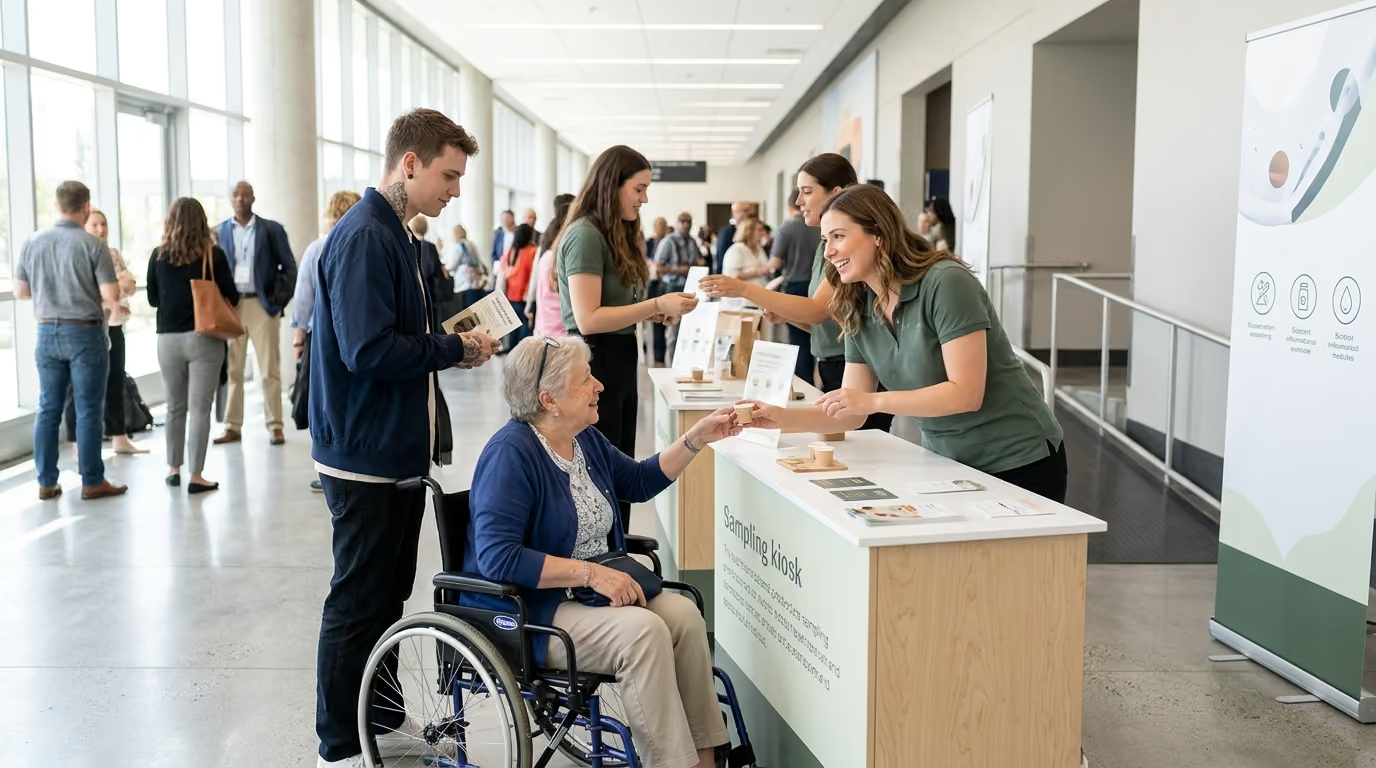
Physical accessibility is mandatory across the entire footprint. Queue lanes must provide adequate clearance for wheelchairs, mobility devices, and service animals. Flooring transitions across grass, gravel, or broken asphalt must feature secure, ADA-compliant bevels and ramps. Never route pedestrian lines over exposed electrical cables. All power lines crossing pedestrian walkways must be housed inside heavy-duty rubber cable protectors with high-contrast safety stripes.
Staff monitoring line safety must watch for early indicators of distress. These indicators include compressed physical space, pushing at service counters, consumer agitation, and individuals struggling with heat exposure. If density exceeds safe operational thresholds, the Safety Officer must execute an immediate service pause to disperse the line.
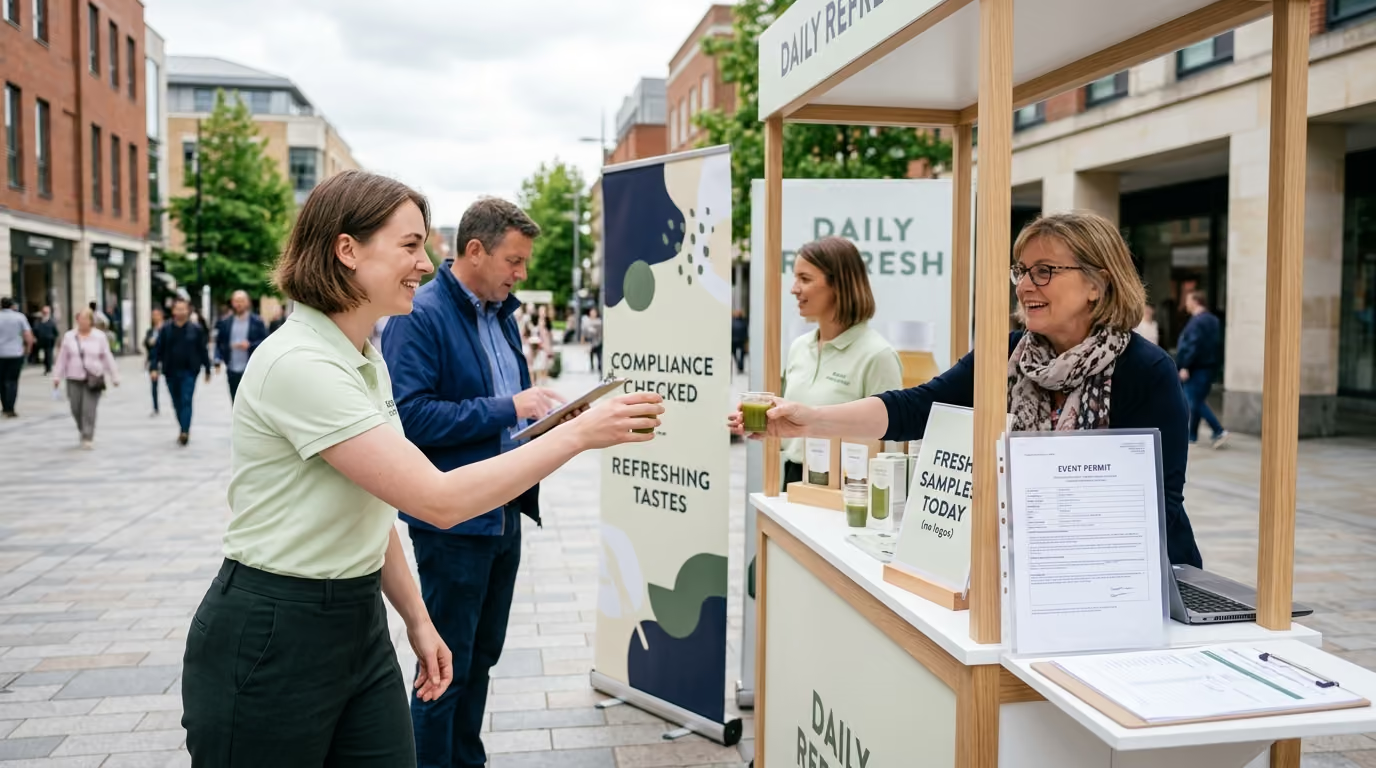
Food and beverage sampling carries significant public health liability. Mobile activations must treat sampling counters with the same hygiene standards as commercial kitchens. The 2022 Food and Drug Administration (FDA) Food Code defines a temporary food establishment as an operation running for no more than 14 consecutive days in conjunction with a single event. Brands must align field sampling procedures with both the model FDA Food Code and governing county health departments.
Temperature abuse represents the primary vector for foodborne pathogens. The FDA Food Code defines Time/Temperature Control for Safety (TCS) foods as products requiring specific temperature boundaries to limit pathogenic microbial growth or toxin formation. Ambient conditions fluctuate dramatically across outdoor tours. Field teams must maintain documented temperature logs with calibrated digital penetration probes every sixty minutes.
Hand hygiene protocols require rigorous infrastructure. Single-use gloves never substitute for proper handwashing. The FDA Food Code requires employees to wash hands and exposed portions of their arms for at least 20 seconds using designated handwashing facilities. Gloves accumulate surface contamination over time and can give staff a false sense of security.
Every mobile food or beverage activation footprint must feature an operational handwashing station:
Allergen management requires strict operational discipline. Under the Food Allergy Safety, Treatment, Education, and Research Act, sesame is recognized as the ninth major food allergen alongside milk, eggs, peanuts, tree nuts, wheat, fish, crustacean shellfish, and soybeans. Field marketing teams must maintain complete ingredient binders and clear allergen matrices at every service station.
Brand ambassadors must never guess or make verbal safety promises regarding product ingredients. If a consumer asks about allergen cross-contact, staff should present written product specifications directly to the consumer. For detailed compliance standards across municipal jurisdictions, consult the complete guide to permits compliance and risk management for mobile sampling before deploying teams.
If a consumer reports acute illness or an allergic reaction, staff must halt product distribution immediately. Preserve the remaining sample stock, record batch and lot codes, take photos of product labels, and log the exact time of consumption. Summon emergency medical personnel without attempting to debate causation or liability on the scene.
Vehicular movement in public event zones represents a severe physical hazard. According to the National Highway Traffic Safety Administration (NHTSA), 7,080 pedestrians were killed and over 71,000 pedestrians were injured in U.S. traffic crashes in 2024. NHTSA data shows a pedestrian was killed approximately every 74 minutes in traffic crashes nationwide. When heavy promotional trucks, custom trailers, and utility vans operate near pedestrian spaces, safety demands strict physical separation.
The primary operational standard for mobile tours is total vehicle isolation during active activation hours. All load-in operations must conclude before public access begins. Once public crowds enter the event footprint, promotional vehicles must remain stationary with engines off, emergency brakes set, and keys secured in a locked lockbox. Load-out operations must only proceed after public crowds have completely dispersed from the footprint.
When service vehicles must navigate tight festival grounds or urban sidewalks, strict safety rules apply. Drivers must never reverse a promotional vehicle without a dedicated, trained spotter. The spotter must wear a high-visibility safety vest and position themselves where they maintain direct, continuous eye contact with the driver through the side mirror. Spotters must never walk backward or position themselves directly behind a moving vehicle.
Field operators must enforce systematic vehicle safety controls:
Promotional vehicles often feature custom display stages, hydraulic pop-outs, and heavy interactive elements. Technicians must inspect mechanical locking pins, stage guardrails, and leveling jacks before allowing staff or consumers onboard. For broader operational guidance on fleet logistics and transport, review contingency planning frameworks for bulletproof field logistics across touring environments.
Outdoor activations expose staff and the public to fluctuating meteorological hazards. Environmental risk management requires pre-set operational thresholds rather than reactive real-time improvisation. Activation leads must monitor radar forecasts, local National Weather Service (NWS) bulletins, and ambient temperature indices continuously throughout each operating day.
Heat stress is a serious workplace and public health danger. According to the National Institute for Occupational Safety and Health (NIOSH), environmental heat exposure resulted in 423 recorded worker deaths over a fourteen-year surveillance window. NIOSH safety standards emphasize that heat-related illnesses require systematic hydration, mandatory work-to-rest rotations, shaded cooling zones, and formal acclimatization schedules for field teams.
When operating in high temperatures, provide dedicated shaded rest areas equipped with commercial misting fans, cold water dispensers, and electrolyte packets. Brand ambassadors must take mandatory water breaks before feeling thirsty. Staff rotation schedules must balance time spent on active sampling lines with rest time in air-conditioned vehicles or indoor break areas.
Severe convective storms and lightning demand zero-tolerance safety policies. The National Weather Service states that when thunder roars, people must immediately seek shelter inside a substantial building or an enclosed, metal-topped vehicle with windows closed. The NWS mandates that outdoor operations remain suspended for at least 30 minutes after hearing the last sound of thunder.
High winds represent an immediate structural hazard for pop-up tents, feather flags, inflatable arches, and freestanding truss displays. Temporary canopies act like sails when caught by sudden gusts. Commercial 10x10 pop-up tents require a minimum of forty to fifty pounds of certified weight securely attached to each leg. Never secure event tents using light water jugs or unsecured sandbags.
The Safety Officer must enforce clear wind thresholds:
Staff members must never attempt to hold down tent legs or structural frames during high wind events. Structural frames can bend, snap, or lift unexpectedly, causing severe blunt-force or crush injuries.
Medical emergencies during public brand activations require swift, organized intervention. HSE event safety regulations require event organizers to establish clear arrangements for moving people away from danger, summoning emergency services, and managing initial medical care. First aid infrastructure must scale based on attendance numbers, ambient temperatures, physical activities, and site layout.
Staff must understand the immediate medical response sequence. The first brand ambassador on the scene must ensure the physical area is safe, stay with the injured individual, and alert the Operations Lead via radio. The Operations Lead immediately dispatches first-aid personnel, designates an operational spotter to guide municipal paramedics through access gates, and establishes a physical crowd buffer around the patient.
Brand ambassadors must receive training to identify medical warning signs requiring immediate emergency medical dispatch:
Field safety plans must also accommodate vulnerable visitors, older adults, and individuals with sensory processing challenges. Keep wheelchair paths through the footprint unobstructed by inventory boxes or power cords. Service counters must feature lowered access sections for visitors using wheelchairs.
Establish a missing child and vulnerable person reunification protocol. If a lost child approaches an activation counter, the staff member must remain in an open, visible area with a second staff member present. Immediately notify the Activation Lead and venue security with a physical description, clothing details, and the child's name. Staff members must never transport a child in an activation vehicle or remove them from the public event grounds.
Field personnel operate in open public environments where they encounter volatile, unpredictable social situations. Brand ambassadors need actionable de-escalation protocols and clear boundaries regarding personal safety. Staff are hired to drive consumer trial and brand affinity, not to serve as security officers, crowd enforcers, or physical interceptors.
De-escalation training helps staff identify early behavioral warning signs and defuse tension before it escalates. When encountering an aggressive or intoxicated visitor, staff must maintain a calm tone, keep a safe physical buffer of at least five feet, and avoid defensive body language. If a visitor makes abusive comments or refuses to follow safety rules, staff must step back, end the interaction, and notify security.
Clear boundaries protect brand ambassadors from physical harm:
For active violence or hostile intruder events, brand teams must understand basic survival responses. The HSE emergency framework notes the "Run, Hide, Tell" model used across international safety planning. If an active threat occurs, staff must immediately run away from danger if an escape path exists, encourage others to follow, and leave belongings behind. If escape is blocked, hide behind substantial ballistic cover, silence mobile phones, and lock or barricade entry doors. Once safe, call emergency services and provide the exact location, suspect descriptions, and weapon details.
Contingency management turns complex decisions into simple, actionable steps during high-stress field incidents. When unexpected disruptions occur, on-site managers should execute these structured contingency workflows.
For additional field-tested staffing structures to support these operational playbooks, explore the complete guide to staffing mobile sampling and guerilla activations.
Evaluating field safety requires tracking concrete operational metrics alongside creative engagement data. Measuring both leading indicators and lagging metrics allows brand managers to evaluate field operations and defend Return on Investment. When experiential marketing teams track safety metrics, they can spot operational friction before it causes injuries, regulatory shutdowns, or costly insurance claims.
Leading indicators track proactive field habits that prevent accidents:
Lagging indicators track the ultimate safety and financial outcomes of an activation:
When an incident occurs, the Safety Officer must conduct a root-cause investigation. According to the Occupational Safety and Health Administration (OSHA), employers should investigate both injuries and near misses to find underlying systemic failures rather than simply blaming individual workers. OSHA guidance emphasizes that incident investigations must identify root causes, such as inadequate training, poor equipment design, or unrealistic scheduling, to prevent future accidents.
By conducting structured root-cause reviews, operations teams convert unexpected field challenges into permanent improvements for future tour stops. For comprehensive performance measurement models that connect operational metrics to marketing outcomes, review KPI blueprints for high-accountability mobile activations.
Examining how these safety principles work in the field shows the value of disciplined contingency planning. Consider a national refrigerated dairy brand launching a high-profile sampling tour across twenty major summer festivals. The footprint featured a custom thirty-foot sampling trailer, two commercial pop-up canopies, external power generation, and distributed sampling lines serving more than ten thousand visitors per day.
During a weekend festival stop in Chicago, ambient temperatures reached ninety-four degrees with eighty percent relative humidity. By midday, a line of four hundred visitors formed outside the footprint. The arrival rate spiked to eighty people per minute, while the staff of twelve could only serve forty people per minute. This throughput bottleneck pushed the queue into an adjacent cross-street used by festival supply vehicles.
The Safety Officer saw the vehicle-pedestrian hazard and used pre-authorized stop-work authority to pause line entry. The team extended tensile barriers to create a protected zigzag queue, keeping pedestrians out of the roadway. To speed up service, the Operations Lead opened a secondary service counter inside the footprint, doubling service capacity and cutting line wait times from twenty-five minutes to twelve minutes.
At two in the afternoon, the Safety Officer received a severe thunderstorm alert showing a squall line twelve miles away with thirty-five mile-per-hour gusts. The team executed their weather contingency plan immediately. Staff directed visitors to a nearby municipal pavilion, disconnected auxiliary power distribution boxes, and took down both pop-up canopies twenty minutes before the wind hit.
When the storm brought heavy rain and thirty-mile-per-hour gusts, the activation remained secure. Structural assets were protected, power panels stayed dry, and product inventory remained safely chilled below forty-one degrees inside the vehicle. Once the storm passed and the thirty-minute post-thunder window cleared, the team completed their post-event safety checklist and safely reopened the activation within forty-five minutes.
By executing structured safety protocols, the brand protected attendees, eliminated equipment damage, and completed over eight thousand safe product interactions.
Operational excellence is the bedrock of memorable brand experiences, turning live consumer engagements into safe, scalable, and measurable marketing campaigns.

30 Years Experiential & Retail Activation Partner for CPG & Beverage Brands | Multi-Market Demos, Roadshows & Costco/Club Programs That Actually Sell