Robbie Thain
Founder, CEO

Find the top food and beverage trade shows in 2026. Learn how growth-focused brands can turn live event sampling into measurable retail distribution.

Global business trade show revenue is projected to reach over $40 billion by 2026 according to industry analysts. This massive financial commitment proves that physical events remain a primary engine for driving pipeline, dictating that marketing leaders must align experiential budgets with expos that turn sampling into verifiable retail distribution.
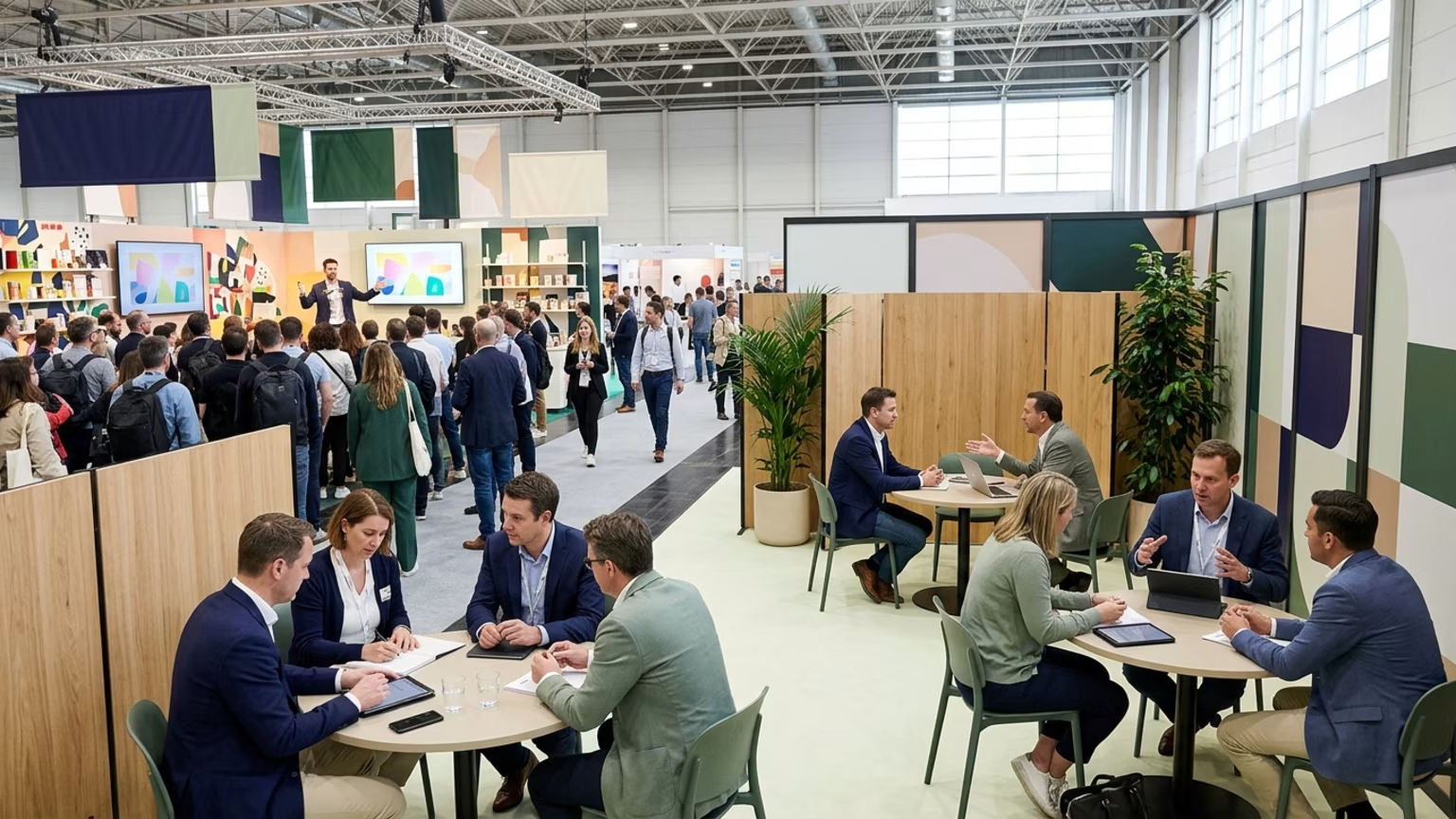
Imagine standing in the middle of a massive convention center. Fluorescent lights beat down on hundreds of elaborate booths. Music blares over the roar of thousands of conversations. You see a rival brand handing out full-size samples to attendees who grab the product and immediately walk away without speaking a single word.
The booth looks incredibly busy, but zero actual business is happening. These disjointed interactions create a beautiful dumpster fire instead of a reliable sales pipeline. We have all seen teams exhaust themselves passing out expensive inventory to badge scanners who lack buying authority. A crowded aisle does not equal commercial success.
Without a focused strategy, brands waste massive budgets on fleeting moments. Event ranking platforms highlight that trade shows are judged on deal quality and organization instead of raw foot traffic. The goal is to build physical interactions that secure retail buyer meetings and distributor confidence. To achieve this, your brand needs a highly targeted approach to finding the right venue.
Stop treating event selection like a popularity contest. A massive global expo wastes capital if your brand lacks the distribution network to support sudden demand. We evaluate candidate events through a strict commercial lens using a simple four-part framework. First, we analyze commercial fit to see if the attendee base matches top growth levers like retail buyers or co-manufacturers.
Second, we verify buyer density by reviewing past attendee lists and peer reviews on industry platforms. Third, we assess operational feasibility to confirm we can staff and execute to a high standard. Fourth, we design our measurement approach to define primary targets like new accounts opened. Identifying the right buyer density makes all the difference in commercial outcomes.
If you need retail buyer traction for a premium product launch, the Summer Fancy Food Show in New York City delivers high-density buyer environments. This particular expo functions as a magnet for specialty distributors and foodservice decision makers. Brands pushing ready to drink cocktails or functional beverages toward on-premise channels find superior traction at the Bar and Restaurant Expo in Las Vegas. That environment allows experiential activations to simulate cocktail programs and signature serves perfectly.
For ingredient innovation and back of house formulation, SupplySide Connect New Jersey concentrates R&D decision makers. Companies seeking cross-border retail expansion target ANTAD and Alimentaria Mexico to build distributor relationships. This retail-dedicated expo serves as a massive gateway for consumer packaged goods expansion into Latin America. Regional operators find their best Return on Investment at focused events like the Northwest Foodservice Show.
The right event compresses the sales cycle by putting your physical product into the hands of qualified buyers. Finding niche or regional shows aligned to specific segments provides a better fit for challenger brands. These smaller shows offer lower booth costs and a higher depth of conversation per visitor. Reviewing strategies on How Global Brands Master U.S. Trade Show Execution in 2026 helps field marketing teams map out a winning regional approach.
Choosing the right venue only sets the stage for success. You must pair event selection with operational precision to avoid on-site failures. We have executed over 1000 campaigns across all 50 states, bringing brands to life in every major U.S. market. From retail demos in Seattle to roadshows in Miami and events in Honolulu, our teams activate brands wherever our clients' audiences are located.
This deep experience dictates a rigid timeline for live event execution. Teams must prepare systematically long before they arrive on the floor. A structured approach turns a chaotic expo hall into a controlled environment for generating qualified leads.
Your on-site tactics must change depending on the specific venue. Retail-oriented shows demand a focus on category growth and velocity stories. Your team should present data-backed sell sheets and articulate margin benefits during live tastings. On-premise shows require menu-ready experiences where operators can see live demonstrations and review staff incentive programs.
Foot traffic and sample depletion rates offer very little insight into actual business growth. You must define exact leading and lagging metrics long before the booth opens. Event analysts note that attendees and exhibitors both demand clear outcome metrics over generic brand theater. We strongly advocate for tracking numbers that directly reflect sales pipeline growth.
Leading indicators track the immediate quality of your on-site interactions. Count the number of qualified buyer meetings held at the booth each day. Track the percentage of samples that convert into a formal contact capture or a scanned badge. Monitor the total number of post-event sampling requests generated by your field team. These metrics reveal if your on-site team is sparking the right conversations.
Lagging indicators measure the financial impact over the following quarters. Monitor the exact cost per new account opened in your target regions. Track the conversion rate from initial sampling to signed retailer commitments. Measure the post-show sell-through velocity in targeted regional accounts. Connecting these data points proves that your physical activations drive real revenue.
If you need help structuring these tracking systems, book a strategy call with our team. Clear reporting transforms experiential marketing from an unpredictable expense into a reliable driver of commercial growth. Incorporating 5 Metrics to Prove Trade Show ROI in Post-Event Roadshows keeps your field teams accountable throughout the entire year.
Consider a mid-sized functional beverage brand aiming for national grocery distribution. They bypassed the largest generic expos and anchored their year on the Summer Fancy Food Show. Their booth featured a tightly choreographed tasting experience that led directly into margin and shelf-fit discussions. The brand ambassadors qualified visitors immediately to separate random snackers from category buyers.
They captured data efficiently and triggered customized follow-up emails the very next morning. The sales team arrived at the venue with twenty pre-booked meetings with regional grocery buyers. They used live mixology demonstrations to show operators exactly how the product would perform in a retail setting. This strategic alignment between marketing and sales created a seamless buyer journey.
By focusing purely on buyer density and disciplined execution, they secured three regional distributor commitments within a month. This precision approach works for any consumer packaged goods brand willing to prioritize operations. You just need to ditch the vanity metrics and focus on targeted conversations. The roaring noise of a convention center floor does not have to mean chaos.
With the right strategy in place, that massive room becomes a highly efficient pipeline engine. Every handshake and sample can directly support retail sell-in objectives. Focusing on measurable outcomes turns fleeting consumer interactions into lasting business growth.

30 Years Experiential & Retail Activation Partner for CPG & Beverage Brands | Multi-Market Demos, Roadshows & Costco/Club Programs That Actually Sell