Robbie Thain
Founder, CEO

Discover how CPG brands connect physical activations to measurable revenue. Learn the exact framework to track event ROI and turn trade shows into sales engines.
The recent merger of performance agency Wpromote and experiential agency Giant Spoon signals a massive industry shift toward measuring the true business value of live brand building. Marketing leaders must now adopt rigorous frameworks to connect creative physical experiences directly to bottom line revenue.
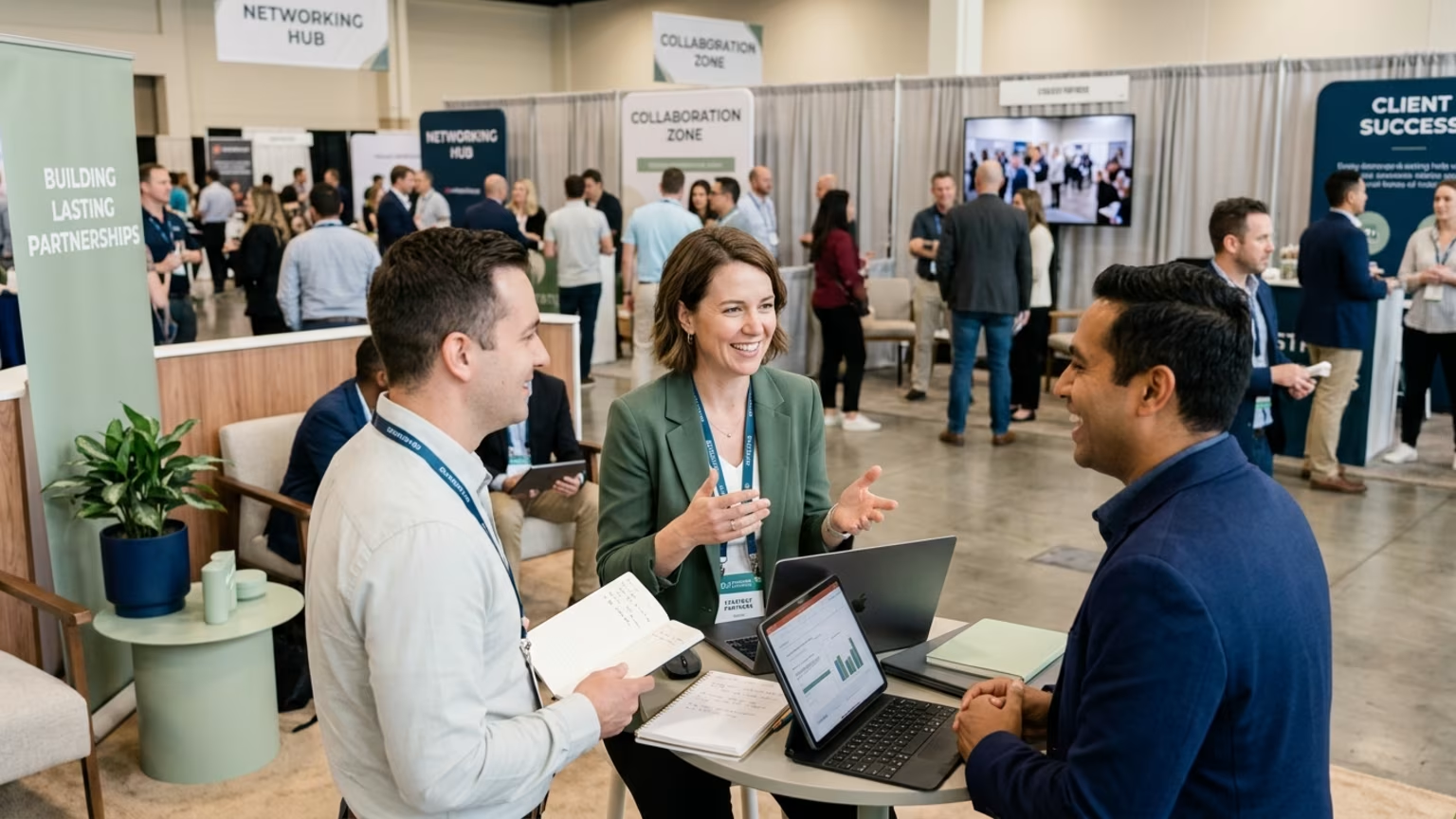
A field marketing manager stands at the edge of a crowded convention center aisle. Foot traffic is heavy, music is loud, and product samples are moving fast. The team scans badges and hands out merchandise at a rapid pace. It feels like a massive win in the moment.
The following week brings a difficult conversation with the executive team. Leadership wants to know exactly how those three days of activity translated into actual pipeline revenue. The answer is usually a vague mix of booth visitor estimates and social media interactions. The stark truth is that unmeasured foot traffic rarely justifies high logistical costs.
This disconnect explains why the experiential sector is changing rapidly. According to recent reports, the merger of Wpromote and Giant Spoon introduced a new valuation tool designed to link creative brand investments with measurable business outcomes. The mandate for CPG and marketing leaders is now very clear. You must prove how real life interactions drive measurable growth.
Without concrete proof of performance, physical activations risk becoming expendable line items. Finance departments demand exact figures, conversion rates, and clear financial returns from every event budget. A beautiful booth design simply cannot compensate for a lack of hard data. Marketing operators must bridge the gap between creative execution and financial accountability.
We create experiential marketing programs built to connect emotion with action. Our process blends creativity, strategy, and data to make certain every brand interaction drives measurable results. We craft experiences that engage all five senses, helping people not just see brands, but feel them, turning moments into meaningful business outcomes.
Achieving this level of precision requires a structured operational model. The very first step is aligning your live event goals with overall corporate financial targets. Every trade show or mobile tour must have a defined job within the larger sales funnel. You cannot treat physical activations as isolated events separated from your core digital campaigns.
A unified measurement model bridges the gap between field marketing and the sales department. The recent Wpromote and Giant Spoon initiative highlights the necessity of treating experiential touchpoints exactly like performance media. Brands must assign a concrete financial value to every physical interaction, sample distributed, and conversation started. This rigorous mindset transforms a standard booth into an active revenue engine.
Integrating technology at the point of contact is non negotiable for modern marketers. Utilizing intelligent data capture allows field teams to track consumer engagements in real time. This is exactly where maximizing event sponsorships becomes a central part of the planning phase. The objective is to capture high intent signals before the consumer leaves your physical footprint.
To do this successfully, marketing operators must rethink their internal team structures. Field representatives need direct lines of communication with digital marketing managers. When the physical team captures a lead, the digital team must process it instantly. This level of synchronization builds the foundation for a truly measurable event strategy.
Moving from theory to practical application requires strict operational discipline on the show floor. Field teams need clear instructions that prioritize data capture alongside brand representation. Merging these two priorities prevents the common mistake of prioritizing aesthetics over consumer acquisition. Here is a systematic guide to implementing a performance focused live activation.
Collecting data is useless if you measure the wrong performance indicators. Many marketers rely heavily on vanity numbers like total attendance or estimated booth visits. These figures look impressive on a presentation slide but fail to prove any real financial impact. To satisfy financial stakeholders, you must focus entirely on distinct lead and lag indicators.
Lead metrics provide immediate feedback on your floor performance during the actual event. These numbers include the total volume of qualified badge scans, samples distributed per hour, and direct survey completions. Tracking the dwell time of visitors in your activation space serves as another excellent early indicator. These immediate numbers tell your team if the strategy is working right now.
Understanding the difference between engagement and intent separates average campaigns from highly profitable ones. An attendee smiling at a brand ambassador represents basic engagement. An attendee giving their verified contact information in exchange for a product trial demonstrates clear intent. Your reporting must highlight intent metrics to demonstrate true value to the executive board.
Lag metrics reveal the true long term financial impact of your physical presence. You should track the conversion rate of event leads into actual sales over a ninety day period. Monitor the direct lift in retail sell through velocity within the target event market. Assessing trade shows as a growth channel requires analyzing these delayed financial returns very closely.
Connecting these varied data points creates a complete picture of your campaign success. It proves that live activations act as powerful customer acquisition tools rather than mere branding exercises. Measuring the cost per acquisition at a trade show gives executives a clear comparison against digital ad spend. When leaders demand proof, you will have a spreadsheet full of undeniable facts.
Proper reporting requires a centralized dashboard that combines both physical and digital inputs. Field managers should input daily shift reports that merge with overall CRM data seamlessly. This practice creates a unified view of consumer behavior across all brand touchpoints. Consistent measurement turns an unpredictable event schedule into a predictable revenue stream.
A rapidly growing ready to drink tea company faced this exact challenge at a massive food expo. They had previously spent heavily on elaborate booth design and high volume sampling pushes. The leadership team could never trace those aggressive efforts back to expanded retail distribution. They desperately needed a more structured approach to their national trade show strategy.
The marketing directors shifted their focus from sheer volume to targeted data acquisition. They replaced open sampling bowls with a gated digital interaction system. Buyers had to scan a code and answer two short questions to receive a premium tasting flight. This simple friction point filtered out casual grazers and easily identified high intent retail buyers.
The data collected at the booth provided the sales team with incredibly detailed buyer profiles. They knew exactly which flavor profile interested each individual retail buyer before making the first follow up call. This level of personalization dramatically shortened the typical sales cycle. It proved that a thoughtful physical interaction generates superior data compared to standard digital forms.
The results completely changed the way the company viewed their experiential investments. They collected fewer total leads, but the overall quality of the data improved drastically. Within three months, they attributed three major regional distribution deals directly to the expo data collection. The campaign achieved a positive financial return, fully validating their new operational model.
Any brand can replicate this success by treating physical events as strict data capture opportunities. It simply takes a willingness to prioritize strategic precision over pure spectacle. If your team is struggling to measure the impact of live activations, we can help build a better system. Book a strategy call to start building a measurable event framework today.

30 Years Experiential & Retail Activation Partner for CPG & Beverage Brands | Multi-Market Demos, Roadshows & Costco/Club Programs That Actually Sell