Robbie Thain
Founder, CEO

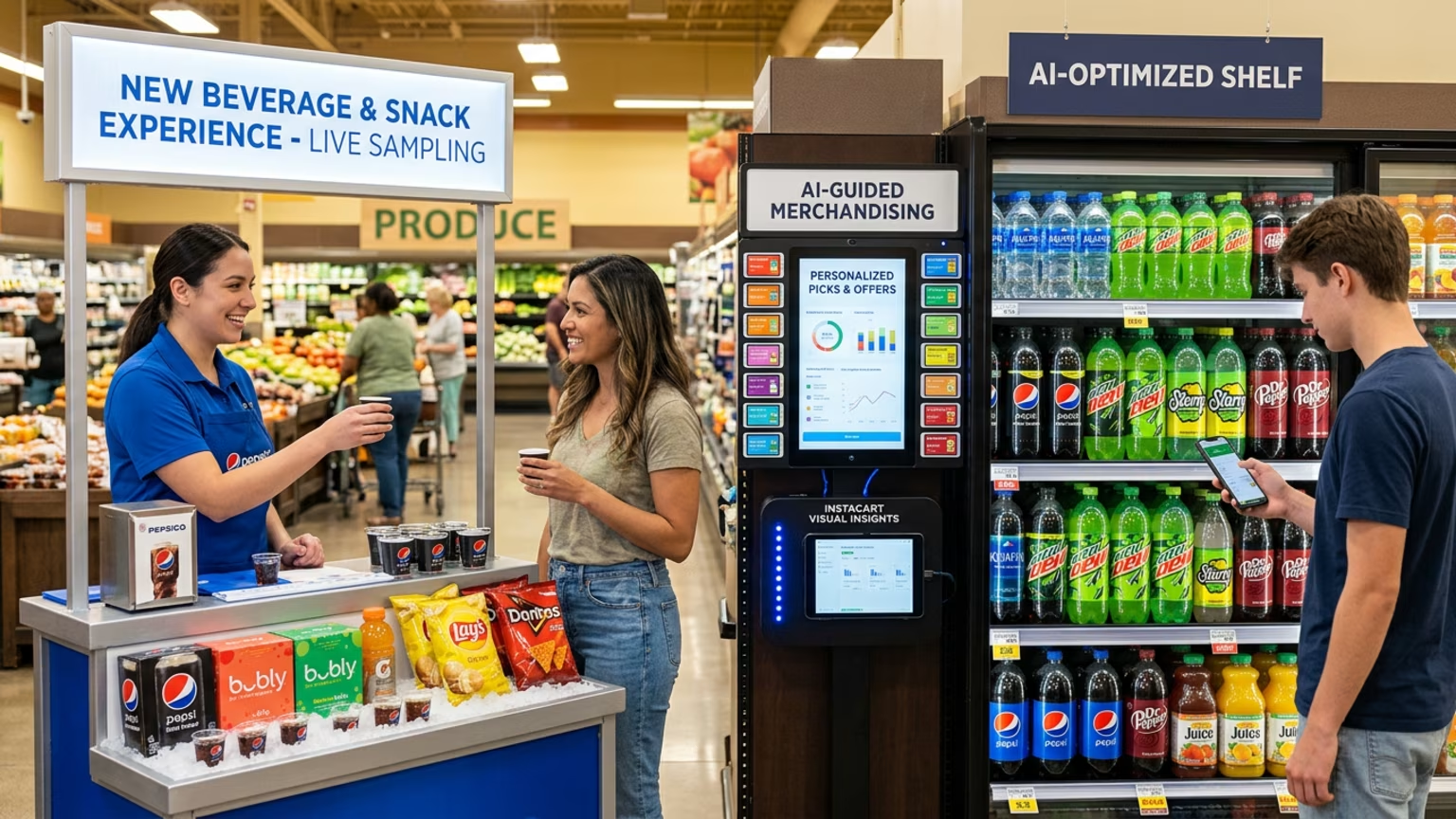
PepsiCo is testing AI-guided merchandising and in-aisle demos with Instacart. Learn how to tie retail sampling data to basket size and prove ROI.
Most retail sampling programs are beautifully executed blind spots. Brands spend millions handing out free product to consumers but they cannot prove if those smiles translate into repeat sales.
PepsiCo is changing that by testing in-aisle demos and artificial intelligence with Instacart. This move forces experiential marketers to rethink their entire operational approach. You must now tie real engagement data to basket size and repeat purchases.
The retail floor is often a beautiful mess during live events. A field team sets up a premium sampling station in a high-traffic supermarket. The brand ambassadors are well trained, the product is perfectly chilled, and eager crowds gather around the booth. Shoppers taste the new beverage and walk away with a positive impression.
The marketing director sits in a corporate office miles away with zero actionable data. The store manager has no idea if the secondary display is fully stocked. The field team tracks empty cups instead of actual product movement off the retail shelf. Operations become an expensive guessing game based entirely on vanity metrics.
Brands throw massive budgets at live activations without a reliable tracking mechanism. Experiential teams face intense pressure to stop guessing and start proving their financial impact. Retailers demand proof that your presence actually drives category growth. The old method of counting smiles and handshakes is completely obsolete.
Every retailer has different rules and union considerations for in-store demonstrations. Scaling a multi-chain pilot across national grocers is incredibly difficult. The biggest failure modes in live sampling are often logistical. Late arrivals, poor training, and inconsistent messaging will destroy an otherwise perfect marketing plan.
The solution is a highly integrated system that connects physical trials with digital tracking. PepsiCo is demonstrating this by merging retail media with physical in-store demonstrations. They use artificial intelligence to optimize shelf space and track real-time inventory levels. Marketing operators must adopt this exact mindset to protect their budgets.
You must treat demos and media as one unified machine. Digital advertisements drive targeted shoppers to specific stores on specific days. Once the shopper arrives, the physical sampling station closes the deal and secures the initial trial. Connected store technology and smart carts then track the complete path to purchase.
Instacart provides connected store technology that generates granular in-aisle data. Smart carts track dwell time and the exact path a shopper takes through the supermarket. This technology allows brands to see if a cart stopped at the sampling station before adding the product. It bridges the gap between a physical taste test and a verified digital transaction.
Industry analysts report that pairing in-store activity with retail media significantly increases incremental sales. Artificial intelligence helps field teams decide exactly which stores need sampling events based on predictive demand. This replaces the outdated mass sampling method with a highly disciplined operation. It builds immense trust with your retail partners.
Field teams must work in perfect coordination with media buyers. When a digital advertisement promises a new flavor, the physical display must match that exact messaging. This alignment turns a simple taste test into a measurable conversion event. Brands that master experiential marketing reporting see much clearer results.
You need a rigid operational playbook to launch an integrated campaign successfully. This framework works for standard grocery stores and high-volume warehouse environments alike. A disciplined approach prevents chaotic logistics and wasted marketing budgets. This is especially true for Costco roadshows where product volume is massive.
Define the primary objective for the live activation before you spend a single dollar. You must choose whether you want to increase household penetration or boost the average basket size. A clear goal dictates how your field team interacts with the consumer. Vague objectives lead to scattered execution and poor data collection.
Align your retail media spend with your live event schedule to maximize impact. Target digital advertisements to shoppers who are physically near stores with active sampling stations. This creates a cohesive loop between the digital impression and the physical trial. It maximizes the return on your media investment.
Deploy your field teams with very clear reporting mandates. They must track qualitative shopper feedback and report out-of-stock issues immediately. The physical sample must connect to a digital trigger for ongoing measurement. You can successfully blend physical sampling with QR codes to extend your pipeline.
Staffing fragmentation will ruin your campaign if you ignore it. You must partner with specialized agencies to eliminate staffing fragmentation across your sampling tours. Review the field data every single week to optimize your store selection. Drop underperforming locations quickly to protect your marketing budget.
Prepare for serious conversations with your retail partners about data sharing. Retail networks are eager to prove the value of their media and in-store technology. Come to the table with a clear experimentation plan and agreed success metrics. Ask your retail partner for unified reporting that shows sales lift and repeat purchase behavior.
Fluffy reporting metrics will ruin your credibility with senior leadership. You must track specific lead and lag indicators to prove your Return on Investment. Lead metrics show you exactly what is happening on the floor in real time. They give you the power to adjust the campaign before it ends.
Track the total number of active engagements and the immediate stock depletion rate. Monitor the qualitative feedback from shoppers to understand flavor preferences or price objections. This immediate data allows you to fix out-of-stock issues before they hurt your campaign. It keeps the retailer happy and the shelves full.
Beware of common attribution traps when analyzing your data. A store with a live sampling event and extra media money will naturally sell more product. You must rely on statistically sound test designs to prove true incremental effect. Over-emphasizing short term lift can blind you to long term brand equity.
Lag metrics prove the long-term financial impact of your physical activation. You need to measure the incremental units sold versus a designated control store. Track the average basket size for the shoppers who interacted with the sampling station. Monitor the repeat purchase rate over a four to eight week period.
This rigorous level of reporting separates amateur brand theater from professional experiential marketing. Retailers want to see that your brand drives measurable revenue. You need the right key metrics to prove retail sampling ROI beyond basic event headcount. If you need help building this measurement framework, you can book a strategy call with our team.
We see this integrated data approach work across multiple product categories. Brands that combine physical trials with strict measurement consistently win more shelf space. PepsiCo proves that artificial intelligence can completely optimize cooler placements and boost beverage sales. This integrated model is the future of consumer engagement.
One of our clients, a Brand Manager in the alcohol beverage space, shared their experience: 'Working with Makai was a game-changer. The activation blew past all our KPIs and created a lasting emotional connection with our customers. Simply outstanding work.'
This client saw their activation exceed all key performance indicators, building deep emotional connections with their audience. They did not just hand out cold drinks to passing strangers. They tracked the engagement data, optimized their store footprint, and proved that physical experiences drive immediate sales.
This is the high standard that every modern consumer brand must meet today. Major U.S. retailers reward the brands that bring data-backed foot traffic to their busy aisles. You can study the online discussions about Costco sampling culture to see how deeply these physical trials impact consumer loyalty.
The gap between digital measurement and physical experience is finally closing. The consumer brands that survive will be the ones that treat a simple taste not as a giveaway, but as the first verifiable data point in a long customer relationship.

30 Years Experiential & Retail Activation Partner for CPG & Beverage Brands | Multi-Market Demos, Roadshows & Costco/Club Programs That Actually Sell