Robbie Thain
Founder, CEO

Molson Coors uses a multi-city mobile bar tour to drive measurable sales. Learn how to turn passive seltzer sampling into immediate retail conversion.
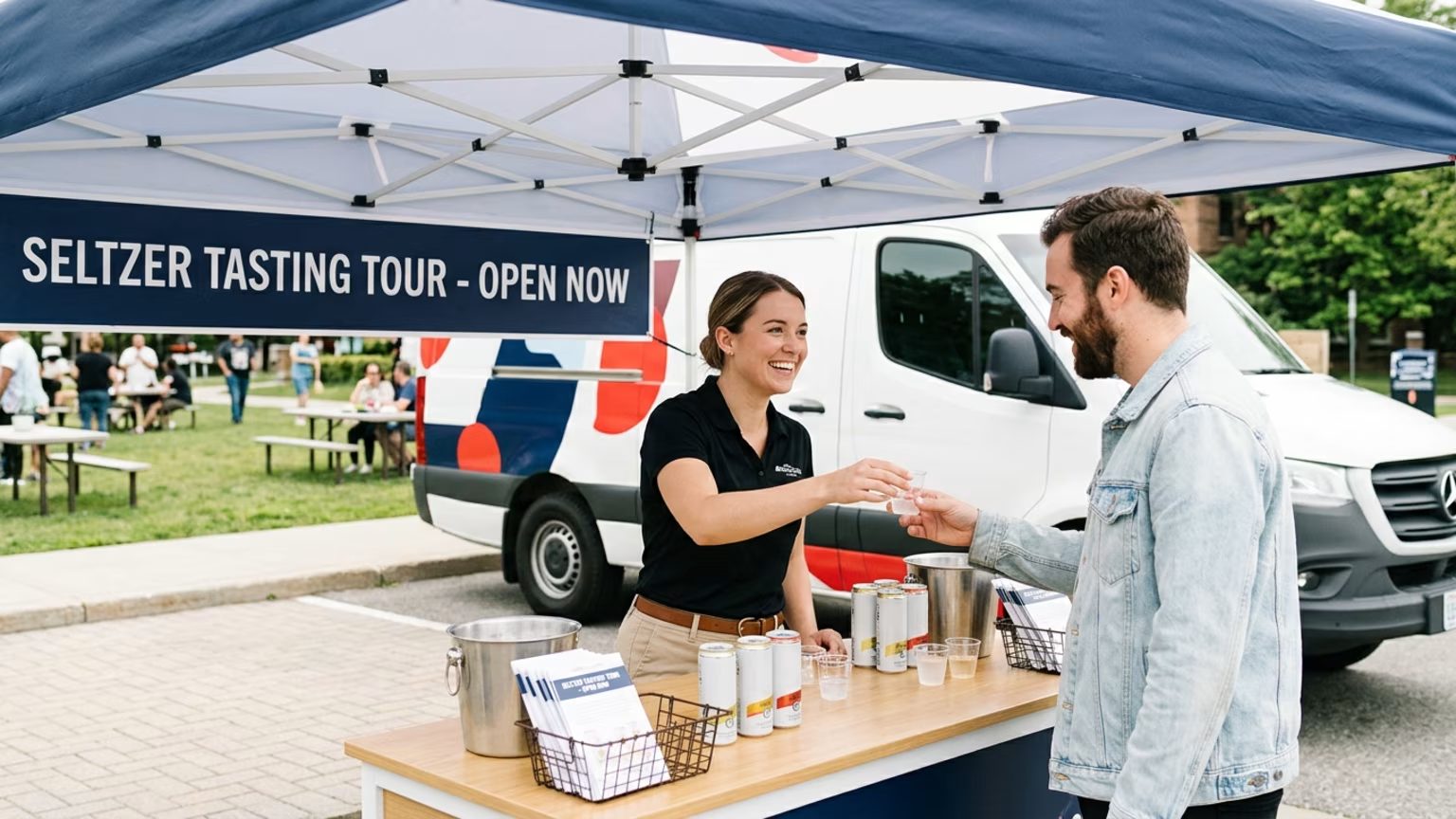
Molson Coors recently launched a multi-city mobile bar tour to turn passive seltzer drinkers into immediate buyers. This approach proves that combining retail-adjacent sampling with digital retargeting creates measurable sales velocity.
Most sampling events are just expensive noise. You park a beautiful branded truck outside a busy summer festival. Thirsty attendees grab a free can of your new flavored seltzer.
They smile, walk away, and never think about your product again. The field team reports a massive number of samples distributed across the weekend. Leadership exchanges high-fives over the impressive engagement metrics. Two weeks pass without a single spike in regional sales.
The disconnect between street-level excitement and actual retail sell-through is a massive leak. Brand managers invest heavily in driving consumer trial. They rent premium spaces and hire enthusiastic staff to hand out product. The operational execution completely lacks a clear path to purchase.
The festival crowd consumes the samples out of sheer convenience. The brand ambassadors fail to communicate where consumers can actually buy the drink. The event feels incredibly successful in the moment. The scanner data later reveals zero movement at the register.
The ready-to-drink beverage category presents unique challenges for field teams. Consumers face a wall of colorful cans in every grocery store. Shoppers default to their usual brands when faced with overwhelming choices. Digital ads simply cannot communicate taste.
A field team is dispatched to solve the awareness problem. The staff works tirelessly to hand out thousands of product samples. The line moves quickly, and inventory depletes faster than expected. The activation seems like a triumph of logistics and consumer interest.
The problem arises during the Monday morning reporting meeting. The marketing director asks for the regional sales data from the weekend. The numbers remain completely flat across all major retail accounts. The expensive sampling program functioned as a charity beverage service.
Molson Coors avoids this trap by treating their mobile roadshow as a commercial engine. The seltzer category is saturated with indistinguishable options. Taste differentiation requires live trial. A mobile bar acts as a focused flavor theater on wheels.
The strategy centers on parking these mobile units near high-traffic retail locations. This creates a closed-loop trial machine. Consumers taste the product and receive an immediate purchase incentive. They simply walk into the adjacent store to buy the product.
Industry research consistently shows the power of this model. Shopper studies indicate that product sampling remains an incredibly effective way to drive trial. In-store demonstrations can generate a median sales lift of nearly 475 percent on demo day. A meaningful halo effect often extends for weeks afterward.
The framework connects live brand experiences directly to commerce. Every tour stop maps precisely to specific commercial nodes. This requires tight alignment across sales, marketing, and retail teams. The brand transitions from creating buzz to building predictable pipeline.
Experiential marketing is now seen as a strategic revenue driver. Consumer data reveals that most shoppers are more likely to purchase a product after trying it. You must integrate your live events with your shopper marketing strategy. This alignment transforms a simple tasting into a retail conversion event.
The experiential industry is undergoing a massive shift. Brands are moving away from massive, unmeasurable stunt activations. They are building structured, retailer-linked roadshows instead. Every stop on the tour must map to nearby stores with specific sell-through targets.
Shopper marketing and experiential budgets are starting to blend together. Consumer packaged goods companies sequence mobile tours with in-store signage and retail media networks. This integrated approach guarantees the consumer receives a consistent message. The live event serves as the physical anchor for a broader digital campaign.
Transforming a mobile asset into a conversion engine requires operator-grade discipline. You need a structured operational approach to deploy a program of this magnitude. This systematic process guarantees every location delivers measurable financial results.
If your brand needs to build a scalable model like this, you can book a strategy call with our operations team. We help brands turn complex logistics into seamless consumer interactions. This level of execution protects your field marketing budget.
You cannot improve what you refuse to measure. Clear reporting separates a successful roadshow from an unmitigated disaster. Modern experiential programs demand rigorous data collection and analysis.
Lead metrics provide immediate feedback during the activation. Track the total number of unique consumers engaged at the footprint. Monitor the volume of samples distributed per hour. Measure the conversion rate of QR code scans or digital rebate opt-ins.
These indicators tell your team if the on-site experience is actually working. High sample distribution with low digital engagement points to a messaging failure. Staff might be handing out cans without explaining the purchase incentive. Real-time monitoring allows managers to correct these issues on the fly.
Lag metrics prove the financial viability of the entire campaign. Analyze the point-of-sale data at nearby retailers to find the Return on Investment. Look for the percentage of same-day sales lift for featured SKUs. Monitor the four-week sales halo effect to confirm sustained brand preference.
Evaluating these outcomes is standard practice when assessing how to measure Return on Investment on mobile tours. You should track display support increases from retail partners following successful activations. Retailers reward brands that actively drive store traffic with better shelf placement.
Proving the exact financial impact of a roadshow does present certain challenges. A natural lag exists between the sampling moment and the actual retail purchase. Some consumers might buy weeks later at a completely different retailer. Shared merchandising with other brands can obscure your specific impact.
You must implement mitigation strategies to capture the true value. Use control markets versus exposed markets to isolate the event impact. Run pre-event and post-event lift analyses at the specific store level. These comparisons strip away the background noise of regular seasonal sales.
Modern experiential programs utilize sophisticated data capture techniques. Brands deploy instant mobile rebates through retailer apps to track immediate purchases. Wi-Fi retargeting around event sites captures the digital footprint of attendees. Linking event participation to retailer loyalty programs creates a verifiable chain of custody.
Molson Coors uses this exact methodology to cut through the noise of the ready-to-drink market. They deploy mobile bars to locations where target consumers already gather. The team pairs these stops with nearby retailers to guarantee immediate product availability.
Brand ambassadors guide visitors through a curated tasting of new seltzer flavors. This interaction builds genuine product conviction. The consumer receives a digital coupon immediately after the tasting. They walk across the parking lot and purchase a twelve-pack.
The brand captures the sale, the retailer sees increased traffic, and the field team proves their impact. This seamless transition from experiential space to retail aisle defines operational excellence. The activation supports the broader goal of expanding national distribution.
The campaign proves that outdoor experiential formats offer scale and perceived safety. Blending shopper marketing with live experiences creates a powerful commercial lever. The mobile unit adapts to varying city regulations while maintaining strict brand standards.
This structured approach compresses the learning curve for national brands. A multi-city roadshow provides rapid feedback on flavor preferences and messaging resonance. Molson Coors can test whether consumers respond better to natural flavors or low sugar claims. The brand can adjust its packaging and channel strategy quickly based on this intelligence.
Using mobile experiences helps de-risk massive national rollouts. A brand can run an eight-week sampling program to gather data on repeat purchase intent. They only scale the winning flavors to nationwide distribution. This targeted approach prevents burning massive television budgets on unproven products.
A compliant, on-time roadshow builds immense internal confidence. It proves to leadership that the field marketing team can execute at scale without chaos. The program aligns marketing, shopper, and sales departments around shared metrics. Experiential marketing truly drives revenue when it integrates with field sales operations.
The best marketing does not just capture attention. It guides that attention gracefully toward a measurable outcome. A great brand experience leaves a lasting impression long after the final sample is poured.

30 Years Experiential & Retail Activation Partner for CPG & Beverage Brands | Multi-Market Demos, Roadshows & Costco/Club Programs That Actually Sell