Robbie Thain
Founder, CEO

Learn how DirecTV used out-of-home tactics and mobile roadshows to drive measurable pipeline, and how consumer brands can replicate this experiential strategy.
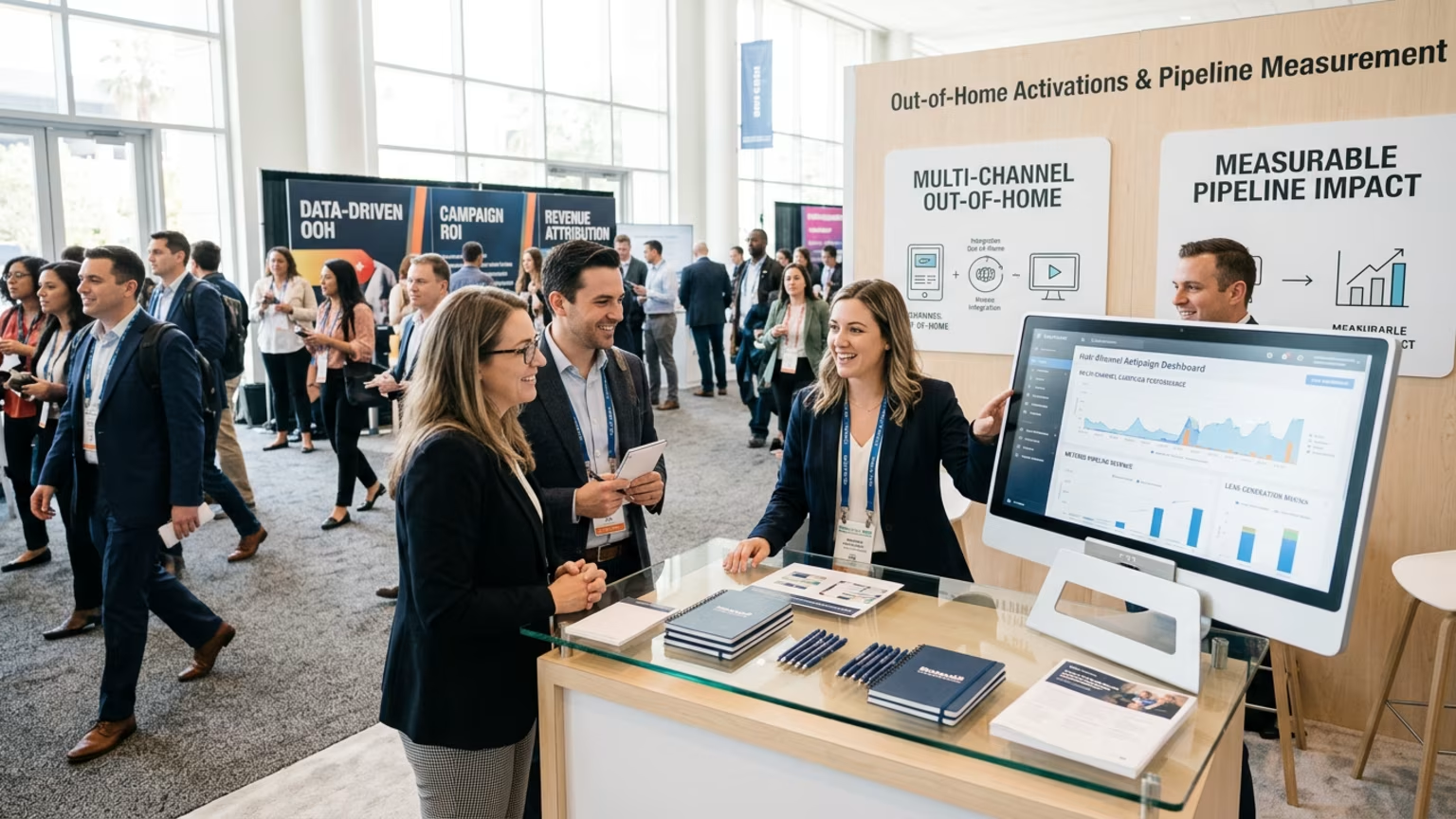
A brand manager stands on a crowded Manhattan sidewalk in mid-May. Taxis inch forward in heavy gridlock while thousands of media buyers rush past holding lukewarm coffees. Competing billboards blend into a wall of background noise.
DirecTV recently deployed a multi-channel experiential campaign that surrounded Upfront Week attendees with digital screens, wrapped vehicles, and branded swag. By treating the physical world as a trackable extension of their digital media, they proved that well-orchestrated mobile activations drive measurable pipeline.
Large industry gatherings look impressive on paper. The 2026 Upfronts expect over 15,000 attendees across more than 100 events. Brand leaders spend millions to secure floor space or set up street teams. They hope to capture a fraction of the heavy foot traffic.
Yet the actual execution often descends into chaos. Brand teams struggle with fragmented staffing models and disjointed vendor schedules. Street teams hand out expensive samples to people who never enter the sales funnel. Fragmented logistics cause 37 percent of these experiential activations to fail entirely.
Marketers are under intense pressure to prove that live events lead to sales lift. They worry about inconsistent staffing and activations that look busy but produce fog instead of evidence. A poorly planned mobile tour often results in low-quality leads and disconnected reporting. Real-world marketing requires strict operational control to avoid becoming a public failure.
The core issue often stems from treating experiential marketing as simple brand theater. Companies chase vanity metrics like total attendance rather than focusing on direct consumer engagement. This approach leaves money on the table and frustrates sales teams who desperately need qualified pipeline. Marketing directors need a concrete system to turn passive observers into active participants.
The solution requires a synchronized network of physical touchpoints. DirecTV Advertising demonstrated this strategy during their recent Upfront Week activation in New York. They launched a campaign called "A Week-Long Metaphor For DirecTV" to reach key media buyers. The company deployed digital screens, LED-equipped trucks, and branded swag carts near high-traffic venues.
They utilized custom-wrapped SUVs with trained brand ambassadors to offer free rides. These rides directly targeted 500 daily lifts for event attendees. This approach turns a scattered crowd into a captive audience. Rideshares and pop-ups boost engagement by 40 percent over static billboards.
Integrating these physical touchpoints requires a deep understanding of human behavior. People ignore generic billboards, but they actively seek out immediate value like a free ride or phone charger. DirecTV recognized that buyers and executives value their time and comfort above all else. They solved a real problem for attendees while naturally integrating their message into the solution.
The real power of this framework lies in data integration. DirecTV became the first multi-channel video distributor to plug into the LiveRamp CAPI Hub. This technology connects real-world exposures to digital attribution models. Attendees interact with physical elements, and the brand tracks the resulting digital outcomes in real time.
Combining physical trials with digital amplification gives operators the hard data they need to satisfy the executive board. Forty-two percent of Upfront ad buys now demand cross-channel attribution. Treating physical activations as measurable media channels solves this attribution problem permanently.
Moving from a strategic concept to street-level execution demands relentless precision. You cannot rely on hope to manage complex event permits and logistics. A multi-touchpoint activation requires a strict operational playbook.
Live events must move beyond vanity metrics to secure ongoing budget approval. Marketers need exact lead and lag indicators to prove true performance. Lead metrics track the immediate physical actions taken during the event. These include the total number of rides completed, daily scan rates, and swag distribution volumes.
Lag metrics reveal the long-term financial impact of the campaign. The ultimate goal is to measure direct sales lift and customer acquisition cost reductions. Sixty-eight percent of consumer packaged goods marketers report a 15 to 30 percent sales lift from trial events. Live activations deliver 2.5 times higher brand recall compared to standard digital ads.
Promotional items under five dollars yield a massive 22 percent purchase intent uplift when distributed correctly. This data point proves that strategic giveaways are not wasted expenses. The secret is tying that physical item back to a trackable digital action. When a customer scans a code to receive their item, the brand gains a permanent direct communication channel.
You must connect the physical interaction to a digital action to prove field activation Return on Investment. Use unique identifiers to match offline engagements with online purchases. Truthset technology now powers a significant portion of out-of-home buys by matching human IDs for higher accuracy.
This level of reporting transforms a street team deployment into a predictable revenue channel. Rideshares during events cut acquisition costs by 35 percent via direct handoffs. When field marketing teams track both immediate interactions and long-term conversions, they secure unquestionable executive buy-in.
Consumer brands can adapt this exact framework for product launches or retail expansions. A snack company can deploy wrapped vehicles and branded carts outside a major retail partner. This creates an immediate surge in foot traffic and drives instant product trials.
Brands with something to sell physically need to win attention in the real world. A beverage company cannot rely solely on digital ads to convince someone a new flavor tastes great. They need people to try, experience, trust, and buy their product in physical environments. Real-world consumer engagement creates an authentic bond that digital noise simply cannot replicate.
Trigger moments like a new retail expansion or a heavy Costco push require intense local awareness. Deploying mobile showrooms and brand ambassadors near these locations generates a trackable halo effect. This model builds massive retailer confidence by providing shared data that proves localized demand.
Our team has spent over thirty years managing complex national execution programs. We specialize in turning fleeting consumer interactions into qualified leads for premium brands. We know that a well-staffed pop-up can drive massive immediate sell-through when tied to precise data tracking.
One of our clients, a Brand Manager in the alcohol beverage space, shared their experience: 'Working with Makai was a game-changer. The activation blew past all our KPIs and created a lasting emotional connection with our customers. Simply outstanding work.' This client saw their activation exceed all key performance indicators while building deep emotional connections with their audience.
The integration of mobile roadshows and strict measurement produces undeniable pipeline growth. You can replicate the success of major media companies by treating physical activations as strategic revenue drivers.
Winning attention in the physical world requires discipline, rigorous tracking, and flawless execution. Treat your next live event like a performance channel and watch your pipeline grow. Book a strategy call with our team to turn your next brand activation into a measurable success.

30 Years Experiential & Retail Activation Partner for CPG & Beverage Brands | Multi-Market Demos, Roadshows & Costco/Club Programs That Actually Sell