Robbie Thain
Founder, CEO

Mondelez leadership stresses the need for third-party data capture. Learn how CPG brands can apply this exact rigor to measure trade show and event ROI.

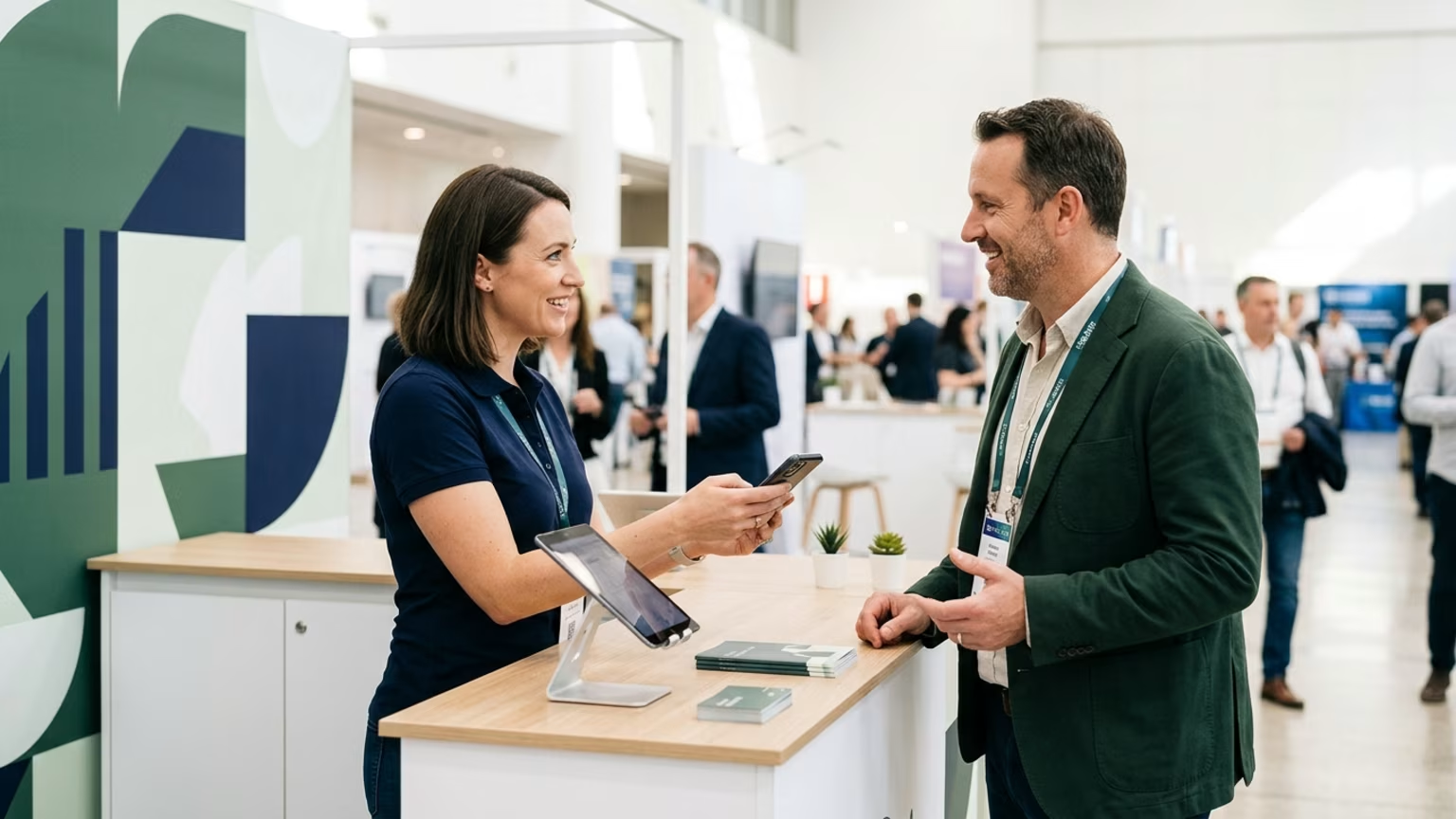
The trade show floor hums with the noise of ten thousand attendees rushing past your massive booth. Your brand ambassadors hand out premium samples at a frantic pace, smiling and pitching the new product line. The pallets empty by noon, and the field team high-fives over a supposedly successful day. But when Monday morning arrives, the sales pipeline remains completely bare.
For years, experiential marketing has relied on smiling photos and empty promises to justify large expenses. Field teams submit subjective recaps claiming the crowd was highly engaged and the energy was great. These qualitative reports do absolutely nothing to help the sales team close deals or move inventory. The gap between a busy activation and a profitable campaign has never been more glaring.
Mondelez leadership recently stated that marketing networks need sophisticated third-party data capture to measure true performance. Event marketers must apply this exact rigor to live physical activations to stop wasting budgets and start proving clear Return on Investment.
Andrew Lederman from Mondelez recently stressed a critical reality about modern advertising networks. He noted that retail media cannot build brands alone without sophisticated measurement and open third-party data integration. According to industry reports from The Drum, marketers are deeply frustrated by closed reporting ecosystems that grade their own homework. Brands need independent verification to know if their marketing spend actually drove a real purchase.
Retail media networks often operate as closed systems that restrict access to granular consumer information. When brands buy ads within these closed loops, they must blindly trust the retailer's success metrics. Mondelez is pushing back against this standard by demanding better integration with external measurement platforms. Experiential marketing faces a similar crisis when event organizers refuse to share transparent attendee behavior data.
This exact same standard applies aggressively to experiential marketing and live trade shows. When you run a live retail demo or field event, you are operating a temporary media channel. If you rely solely on foot traffic estimates or the raw number of samples distributed, your strategy is severely flawed. Physical activations demand the same analytical scrutiny as any sophisticated digital campaign.
We provide clear reporting on reach, trials, leads, and sales to guide next steps in campaign optimization. Our measurement approach tracks awareness, engagement, and conversion, turning brand moments into actionable data that demonstrates business impact. You need a strategic framework that connects a physical product trial directly to a digital data footprint. This requires integrating independent lead capture software directly into your daily field operations.
By making this shift, you build a verifiable bridge between a casual event conversation and a future retail transaction. The integration of solid data collection fundamentally changes how you view live events. You stop seeing them as pure expenses and start treating them as measurable growth engines. When marketing teams own their data, they control their ongoing narrative with retail buyers.
Deploying a reliable tracking system in a chaotic live environment takes intense operational discipline. You cannot wait until the morning of the expo to figure out your data collection flow. Field operators need a meticulous plan to guarantee every consumer touchpoint is recorded accurately. Proper preparation prevents the typical disaster of missing contacts and broken digital forms.
This process begins weeks before your staff ever sets foot on the actual event floor. You must align your field marketing software with your broader corporate database systems. Missing this step often results in isolated spreadsheets that sit unread on a manager's desktop. Here is how to execute a flawless data capture protocol during your next major activation.
Many brands fail when they treat data capture as an annoying administrative task for field staff. You must position data collection as the primary objective of the entire live activation. When brand ambassadors understand that their core job is acquiring leads, their operational focus shifts dramatically. They transition from passive sample distributors into proactive brand representatives who qualify their audience aggressively.
Your field staff represents the front line of your data collection strategy. You cannot simply hand them a tablet and expect flawless execution on a busy floor. Managers must conduct rigorous roleplaying sessions to teach ambassadors how to pivot from a product pitch into a data request. When the staff feels confident in their transitions, the entire lead generation process feels completely natural to the consumer.
The speed of your follow up determines the ultimate value of your captured data. If a lead sits in an isolated spreadsheet for a week, that potential buyer will completely forget about your brand. Connecting your scanning devices directly to your corporate database via an API eliminates this dangerous delay. Automated systems can trigger personalized email sequences before the attendee even leaves the trade show venue.
Executing these steps consistently protects your brand from the most common reporting failures. When your ambassadors know exactly what to measure, they focus their energy on high quality interactions. The goal is to capture fewer random scans and secure more highly qualified potential buyers. This discipline forms the backbone of a successful live retail strategy.
Counting the sheer volume of conversations at a booth provides zero value to senior leadership. You must define clear numerical indicators that map directly to your primary revenue generation goals. We separate these critical numbers into specific lead indicators and reliable lag indicators for maximum clarity. This structural approach gives your executive team the exact metrics required to approve future event budgets.
Lead indicators tell you immediately if the live event is functioning well in the current moment. You should rigidly track the cost per qualified scan and the overall data capture rate. If you distribute one thousand samples but only secure fifty validated emails, your process needs fixing. These immediate numbers allow your on site team to adjust their messaging and improve collection mid shift.
Lag indicators prove the actual financial outcome of the physical activation weeks or months later. You must monitor the explicit conversion rate of those captured leads into verified retail sales. Reviewing the right metrics to prove retail demo impact keeps your brand focused on real outcomes. The ultimate objective is tracking verifiable sales lift in the precise regional markets where you activated.
Collecting the data is only the first phase of a proper measurement strategy. The true power lies in analyzing that information to identify hidden regional purchasing patterns. If a particular activation generates significant interest, you can deploy targeted regional market entry campaigns to capitalize. This approach guarantees your marketing budget is strictly allocated to areas with proven consumer demand.
Advanced marketing teams take this numerical analysis one step further by comparing multiple events simultaneously. They evaluate the performance of a local pop up against a massive national trade show. This comparative data reveals exactly which activation formats yield the lowest cost per acquisition. Executives can then eliminate underperforming event structures and double down on the strategies that actually generate retail pipeline.
Brands must connect their physical event data to their broader digital advertising networks. This alignment is what experts project will dominate retail media in 2026. When you combine physical trial data with online retargeting, your overall marketing efficiency skyrockets. The combination of live experience and independent data validation creates an unstoppable commercial advantage.
Consider a premium beverage company that recently launched a new flavor at a national food expo. Historically, their marketing department judged event success strictly by how fast they depleted their sample inventory. They modernized their entire approach by mandating independent data capture software at every single tasting station. The staff used custom QR codes to track exactly who tasted the product and where they shopped.
This fundamental adjustment shifted their entire post event executive review completely away from vanity numbers. They discovered that forty percent of their engaged booth visitors were primary buyers for regional grocery chains. The marketing director used this exact verified data to build a solid business case for expanded distribution. They completely stopped guessing about their consumer impact and started securing new retail accounts with factual evidence.
The brand then used the collected emails to track post event retail purchases accurately. They sent a highly specific digital offer code to the consumers they met on the expo floor. Over the next three months, they matched those redeemed codes directly back to the live event. This simple process proved definitively that their physical activation drove a positive return on their marketing spend.
Rigorous third party measurement strips away the emotion and leaves only the undeniable facts. Mondelez understands that transparency is the only way to build lasting trust with retail partners. You must adopt this exact same mindset for your experiential marketing and trade show appearances. If you cannot measure the outcome independently, you simply cannot manage the investment effectively.
Your field marketing strategy deserves the exact same analytical respect as your largest digital campaigns. It is time to replace the guesswork of live activations with the certainty of captured data. When your pipeline data is organized and clear, your next strategic steps become incredibly obvious. Book a strategy call with our expert team today to build a highly measurable plan.
Precision always drives superior performance, and verifiable consumer data consistently wins the annual budget. Make your next event count.

30 Years Experiential & Retail Activation Partner for CPG & Beverage Brands | Multi-Market Demos, Roadshows & Costco/Club Programs That Actually Sell