Robbie Thain
Founder, CEO

Learn how adopting industrial supply chain and material planning tactics can eliminate event chaos and turn experiential logistics into measurable pipeline.
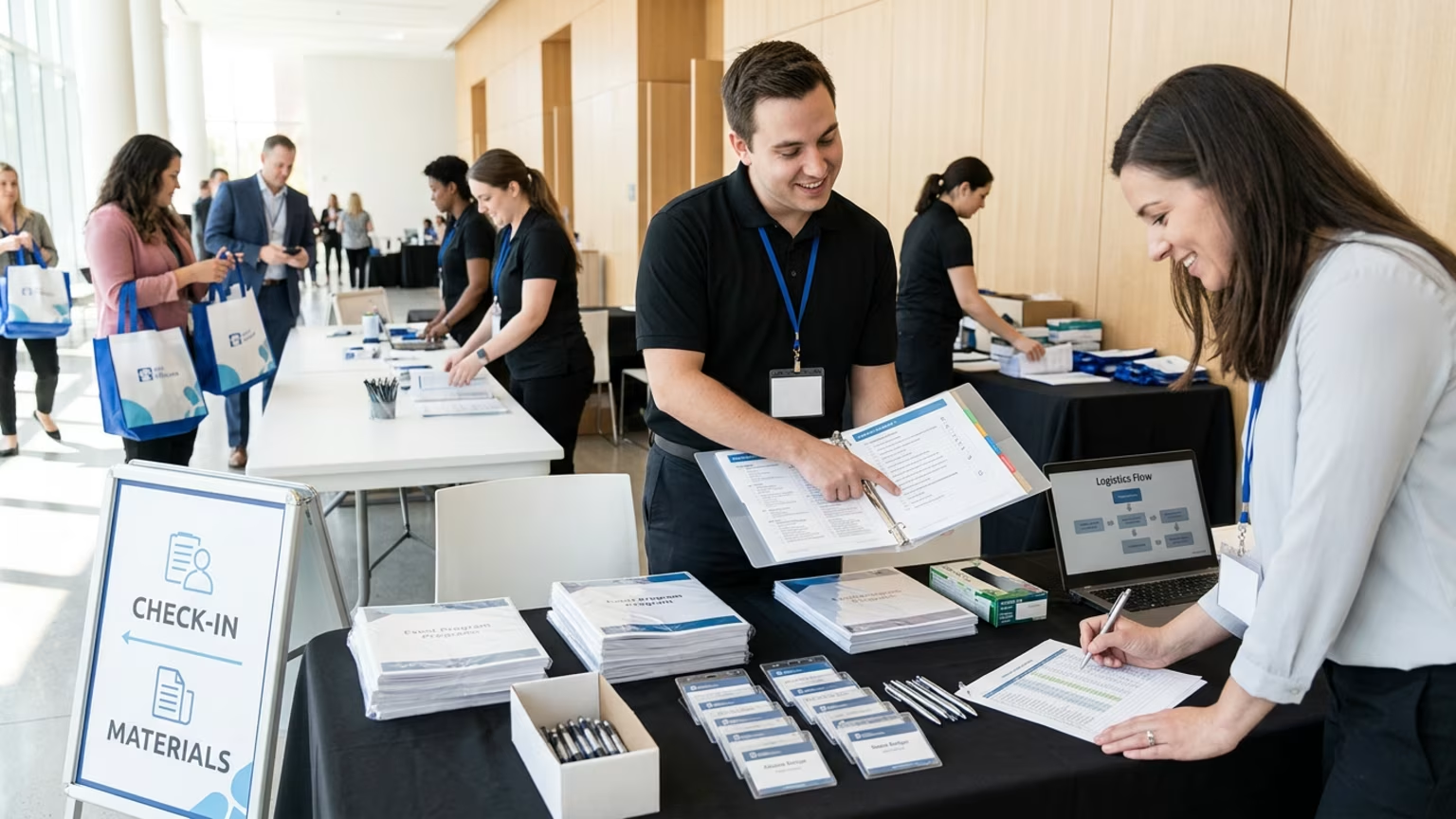
Industrial supply chain discipline is the secret weapon for scaling live brand experiences without operational failures. By adopting strict material planning strategies, marketing leaders can eliminate missing assets and turn unpredictable event logistics into a measurable pipeline engine.
It is six in the morning on the very first day of a massive national food expo. The booth structure looks pristine. Your trained brand ambassadors are smiling in their branded gear. The refrigerated freight truck carrying your product samples is nowhere to be found.
This scenario plays out across trade show floors every single week. Marketing teams spend months developing brilliant creative concepts. They design beautiful graphics, craft perfect messaging, and secure prime real estate at the venue. Then, the execution falls apart during the final mile of physical logistics.
Many experiential programs operate without a centralized point of operational control. Teams rely on fragmented email threads, verbal agreements, and blind trust in third party shipping vendors. When a single element goes missing, the entire activation is compromised. Brand leaders scramble to find local printing shops.
Operations managers pay exorbitant fees for emergency overnight shipping. The mental energy meant for engaging customers is wasted on putting out logistical fires. Integrating strict supply chain strategies into brand event planning protects your marketing investments from on site disasters. You cannot leave physical execution to chance.
A beautiful booth without product samples is just expensive wallpaper. The solution is not working harder on the show floor. The solution is moving the discipline upstream into a formalized planning function.
The manufacturing sector has long understood that physical operations require relentless planning. We can learn a massive amount from industrial job listings. Caterpillar recently posted a Material Planner role demanding rigorous oversight of material procurement, production, and delivery. The company placed this position inside an Inbound Supply Excellence team.
This specific framing proves that precision supply is a continuous discipline rather than a one off task. Thales is actively seeking a senior planner to own materials forecasting and align supply plans to customer demand. Their stated goal is achieving on time delivery alongside optimal inventory levels. The posting adds that the planner is the central point of coordination between procurement, manufacturing, quality, and external vendors.
For experiential marketing leaders facing chaotic trade shows, the message is loud and clear. Material planning must become a strategic marketing capability. Event kits, pop up displays, and retail assets need the exact same operational discipline.
In our experience, we handle every step of activation execution with precision and purpose, from initial concept through final logistics. Our comprehensive approach guarantees that each program is designed to spark curiosity, drive action, and leave a lasting impression on consumers. When you treat your marketing logistics like an industrial supply chain, the chaos disappears. The operational logic of having the right item in the right location at the exact right time applies perfectly to field operations.
Conagra requires material planners to determine exact order quantities and timing for raw materials. This directly supports their master production schedule. Marketing teams need their own master activation schedules to prevent execution failures. BorgWarner frames the role around coordinating with production planning to optimize inventory and support plant operations.
In the marketing world, the actual event venue acts as your operational plant. The material planner is strictly accountable for service outcomes, not just internal administrative efficiency. Industrial planners must master complex data systems. Thales requires experience with item masters, routings, and advanced software systems.
This proves that precision now depends on data quality as much as physical coordination. Experiential teams must adopt this exact mindset immediately. Your inventory lists cannot live in outdated spreadsheets. You need a single source of truth for what is needed, where it is stored, and when it must arrive.
Strong planning systems do not automatically produce better activations if the underlying input data is poor. Data integrity is an absolute prerequisite for planning success in both manufacturing and marketing.
Marketing leaders must build a comprehensive activation supply chain. You can adopt the exact same rigor used by industrial manufacturers. Thales specifies that modern planners must develop three, six, and twelve month materials forecasts. This long range vision completely prevents last minute scrambling.
Here is a step by step guide to implementing this methodology in your experiential programs.
Experiential marketing is often judged on foot traffic or social media impressions. Those vanity numbers do not reflect the true cost of execution. Operational leaders must focus on metrics that reveal the efficiency of their event supply chain. By tracking these specific data points, you can prove the true Return on Investment of your field programs.
Lead metrics show you the health of your operational planning before the event begins. You should monitor your Kit Readiness Score constantly. This is the percentage of event kits fully packed and verified before the shipping deadline. Next, track your On Time Delivery Rate.
This measures the exact frequency that materials arrive at the venue before load in begins. Finally, measure your Exception Resolution Speed. This is the average time it takes your team to solve a missing asset problem.
Lag metrics demonstrate the financial impact of your logistical discipline after the event concludes. Track your total rush freight costs closely. Tighter planning dramatically lowers the amount of money spent on emergency overnight shipping. Every dollar saved on logistics can be reinvested into better consumer experiences.
Monitor your event consistency ratings across different markets. This is a standardized score measuring how closely the actual booth matched the original rendering. Finally, measure the direct impact on product sales. You can use these exact data points to prove how mobile programs lift sales during major product launches.
Improved execution creates a better brand experience, and that translates directly into consumer trust.
Consider a national beverage brand launching a new sparkling water across twenty cities. The marketing team designed a beautiful mobile sampling tour. They relied on multiple regional vendors for graphics, product delivery, and staffing. Without a centralized material planner, the first three stops were absolute logistical nightmares.
The product arrived completely warm, the branded tents were missing parts, and the brand ambassadors wore the wrong uniforms. The brand paused the tour and implemented an industrial supply chain model. They assigned a dedicated operations lead to coordinate with customer service and production planning, mimicking the structure seen at industrial companies like BorgWarner. This central point of coordination rapidly synchronized the vendors.
The operations manager tracked daily inventory levels, implemented strict vendor lead times, and required photo verification of all kits before shipping. The remaining seventeen stops ran perfectly. Executing multi stop brand activations requires avoiding logistical pitfalls through centralized operational control. The brand captured thousands of qualified leads and saw a massive spike in retail sell through.
The operational discipline directly enabled the creative vision to succeed. A strong plan turns chaotic ideas into measurable pipeline growth. Scaling experiential marketing requires a massive shift in perspective. Your operating model must transition from a loose collection of event teams into a mature activation supply chain.
High performing organizations expect planning rigor, not just good execution on the actual day of the event. They demand operational excellence long before the trade show doors ever open. If you are ready to stop managing chaos and start driving real revenue, book a strategy call with our team today. We will help you build an activation supply chain that delivers perfect execution every single time.
At Makai Inc., we turn complex physical logistics into clear, actionable, and repeatable brand victories.

30 Years Experiential & Retail Activation Partner for CPG & Beverage Brands | Multi-Market Demos, Roadshows & Costco/Club Programs That Actually Sell