Robbie Thain
Founder, CEO

Levi’s launched a Tokyo pop-up with ROSÉ featuring product customization. See how brands turn temporary physical events into measurable retail conversion.
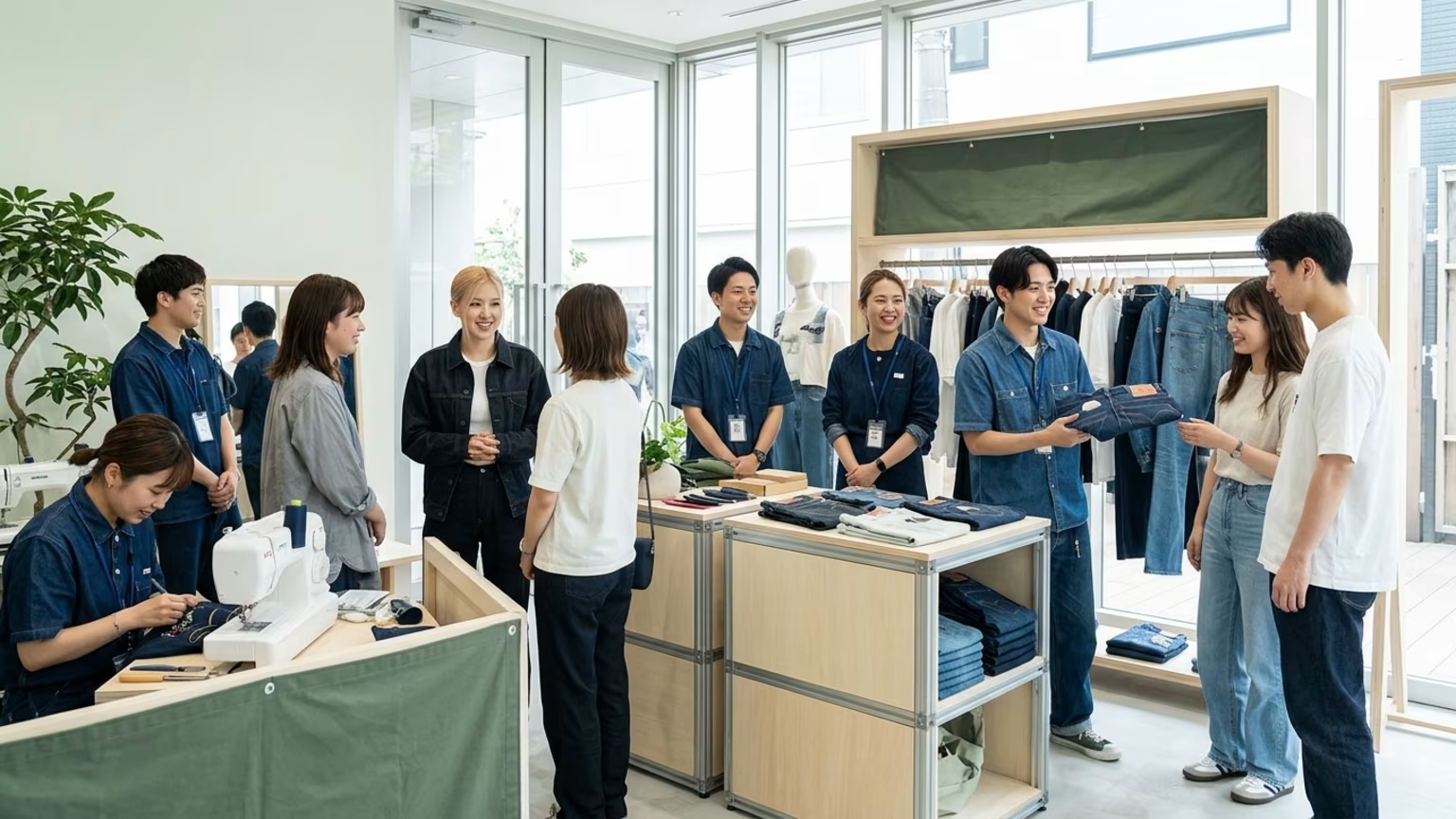
On September 15, 2026, Levi Strauss & Co. (Levi's) launched its "Levi’s Women’s Experience FOR EVERY ORIGINAL" in Shibuya, Tokyo. The six-day pop-up event runs through September 20, 2026. The brand positioned BLACKPINK member ROSÉ as the global ambassador and the central figure for the physical activation. This Tokyo venue marks the first operational stop in a broader Asia-Pacific rollout.
The event operates as a portable retail format rather than a standard passive advertising campaign. The experience is built around the brand's extensive history in women's denim. It features historical references to the Levi's 701, which the brand introduced in the 1930s as the world's first women's jeans. The footprint includes an archive area with decades of denim looks alongside a space inspired by the 2026 "Behind Every Original" global campaign.
Visitors move through interactive stations designed to connect physical participation with immediate on-site commerce. A Spotify-linked music experience allows guests to create original audio playlists. Another station lets visitors build a personalized zine using curated words, music and visual elements. These interactive stations give consumers a compelling reason to spend time with the product before reaching the checkout zone.
The product launch itself relies heavily on physical customization to drive high-intent conversion. The Levi’s x ROSÉ collection became available on September 15 across the broader Asia-Pacific region. Distribution spans pop-up locations in Tokyo, Seoul and Beijing, alongside Levi.com and selected retail stores. Those permanent stores cover markets including Greater China, Singapore, Japan and Australia.
At the Tokyo pop-up, visitors receive exclusive access to customization services and limited-edition event items. The venue offers specific purchase benefits that remain entirely unavailable in standard retail channels. One of these venue-only items is a denim spray created exclusively for the experiential event. This scarcity model forces immediate purchase decisions on the floor and increases the average transaction value.
Additionally, the event incorporates daily workshops and talk sessions focused on stories of originality. These scheduled sessions create predictable traffic spikes that the field operations team must manage carefully. The activation also includes interactive content designed to encourage visitors to examine their own creative identity. Integrating these engagement layers transforms a simple merchandise stall into a comprehensive brand environment.
In our experience, celebrity partnerships fail when they lack a structured path to purchase on the retail floor. The Shibuya activation succeeds because it integrates fame directly into an operational conversion system. We specialize in creating retail demos, product sampling programs, and roadshows that bring brands face to face with their audiences. Each program is designed to drive trial, build consumer relationships, and accelerate retail velocity across multiple locations.
This approach is highly relevant for CPG and beverage brands aiming to build pipeline through physical events. You cannot just drop a famous face on a promotional banner and expect measurable retail lift. The physical environment must guide the shopper from initial curiosity to hands-on product interaction and final checkout. The Tokyo pop-up demonstrates this principle by embedding customization services directly into the venue layout.
We ran the Little Debbie Share a Smile Tour as a 21-market mobile activation using a branded truck, a trailer and Cupcake Smart Cars. Across the tour, we distributed 224,534 cupcakes and generated more than 2.4 million brand impressions. We captured 9,500 photos and 340 videos, earning coverage from three local television stations. While that scale drove massive brand awareness, the operational control over our sampling inventory made the campaign functional.
Every physical touchpoint must be tracked and replenished to maintain consumer flow during high-traffic periods. When brands move into occasion-based retail roadshows, operational command determines the true Return on Investment. We manage end to end Costco roadshows that bring brands to shoppers through live demos, real conversations, and measurable sales impact. Flawless logistical tracking ensures that limited-edition items and trial products are always ready for the consumer.
We managed a four-week, multi-market Costco sampling program for Pulmuone's PlantSpired line. The program delivered more than 65,000 samples and recorded an 18 percent sold-to-sale rate. This gives us a concrete example of how structured retail sampling can connect trial with purchase. Managing these moving parts is critical for teams evaluating the core metrics needed from mobile pop-up events.
We also manage nationwide programs that require strict inventory control at every stage. You cannot capture true buyer intent if the physical materials run out halfway through a promotional weekend. The Costco roadshow model forces brands to treat their temporary footprints as active retail branches rather than passive marketing billboards. Our teams secure the necessary floor space, build the structural displays, and guarantee that product levels remain perfectly stable.
Moving a multi-city activation from Tokyo to Seoul and Beijing requires absolute precision in storage and logistics. We store your sampling product and event gear, then ship, track, and coordinate delivery nationwide so every activation stays on schedule. Managing an exclusive item like a venue-only denim spray means inventory levels must match daily attendance forecasts perfectly. A stockout on the trade show floor instantly breaks the conversion funnel and frustrates high-intent buyers.
Field staffing protocols must also adapt to manage multiple interactive zones within one consolidated footprint. Brand ambassadors must facilitate archive tours, guide Spotify playlist creation, and oversee zine production without creating operational bottlenecks. If the customization station backs up, the entire event footprint flow grinds to a halt. Teams must continuously monitor throughput and queue abandonment to keep the physical environment moving efficiently.
Permitting and venue compliance become exponentially more complex when crossing regional borders during a product launch. Launching a six-day pop-up in a dense commercial area like Shibuya demands strict adherence to local capacity regulations. Operational leaders must secure proper clearances for retail sales, music broadcasting, and temporary structural installations. Without those exact permits, the most creative physical idea will be shut down before the doors open.
Integrating multiple sales channels into a temporary physical location creates unique point-of-sale challenges. The Levi’s x ROSÉ collection became available through pop-up locations, Levi.com, and selected retail stores simultaneously. Field teams must ensure that their on-site inventory systems communicate perfectly with broader e-commerce platforms. If a venue-only item sells out in Shibuya, the local staff must manage expectations without damaging the overall brand experience.
The physical layout of the venue must reflect the expected traffic patterns during peak hours. If a brand introduces a highly desirable limited item, the resulting lines can easily overwhelm neighboring retail spaces. Planners must map out queue systems that keep visitors engaged without blocking standard pedestrian traffic. Proper spatial design ensures that high foot traffic translates into actual sales rather than logistical chaos.
Data collection must extend far beyond basic attendance to justify the heavy operational expense of a roadshow. Newbridge Marketing reports that mobile activation measurement can evaluate participation, data quality, purchase behavior and retail lift. Field managers must connect physical event data to commercial outcomes by tracking store-level sales. They must also monitor e-commerce sessions among exposed audiences to capture the full commercial impact.
This rigorous data capture separates profitable roadshows from expensive marketing theater. Teams designing similar programs should consult our framework for scaling booth traffic into full roadshows to streamline their own floor operations. Without a structured playbook, regional marketing managers will struggle to maintain consistency across multiple cities. True operational command means the final consumer experience feels identical whether the activation sits in Tokyo or Seoul.
The integration of individual identity into the physical product serves as a core conversion mechanic for the campaign. ROSÉ said she wanted the collection to preserve Levi’s classic character while making it feel deeply personal. She described the desired aesthetic as feeling "like something out of my own closet." She also said that details such as the number 11 represent pieces of her identity that consumers can make their own through the collection.
This framing turns a standard retail transaction into an interactive customization event that builds brand loyalty. When consumers engage with the product directly, the perceived value of the merchandise increases significantly. This principle is critical for brands designing participatory in-store experiences that actively improve retail sell-through. Customization requires dedicated floor space, trained staff, and specialized equipment to execute efficiently during peak attendance hours.
Without proper operational support, a highly publicized customization offer can quickly become a logistical bottleneck. Brands must balance the desire for personalized products with the physical realities of temporary pop-up infrastructure. Staff must be trained to guide consumers through the customization process without slowing down overall venue throughput.
The Shibuya activation proves that a six-day pop-up can function as a high-volume retail channel when operations align with the creative vision. As you plan your next regional tour, are your physical logistics robust enough to support multiple interactive stations while driving immediate retail conversion?
Deploying limited-edition merchandise across international pop-up locations requires flawless inventory oversight to prevent mid-event stockouts. If difficulty measuring real ROI from live events obscures your regional expansion, Makai steps in to secure the execution. We store your sampling product and event gear, then ship, track, and coordinate delivery nationwide so every activation stays on schedule. Request a proposal

30 Years Experiential & Retail Activation Partner for CPG & Beverage Brands | Multi-Market Demos, Roadshows & Costco/Club Programs That Actually Sell