Robbie Thain
Founder, CEO

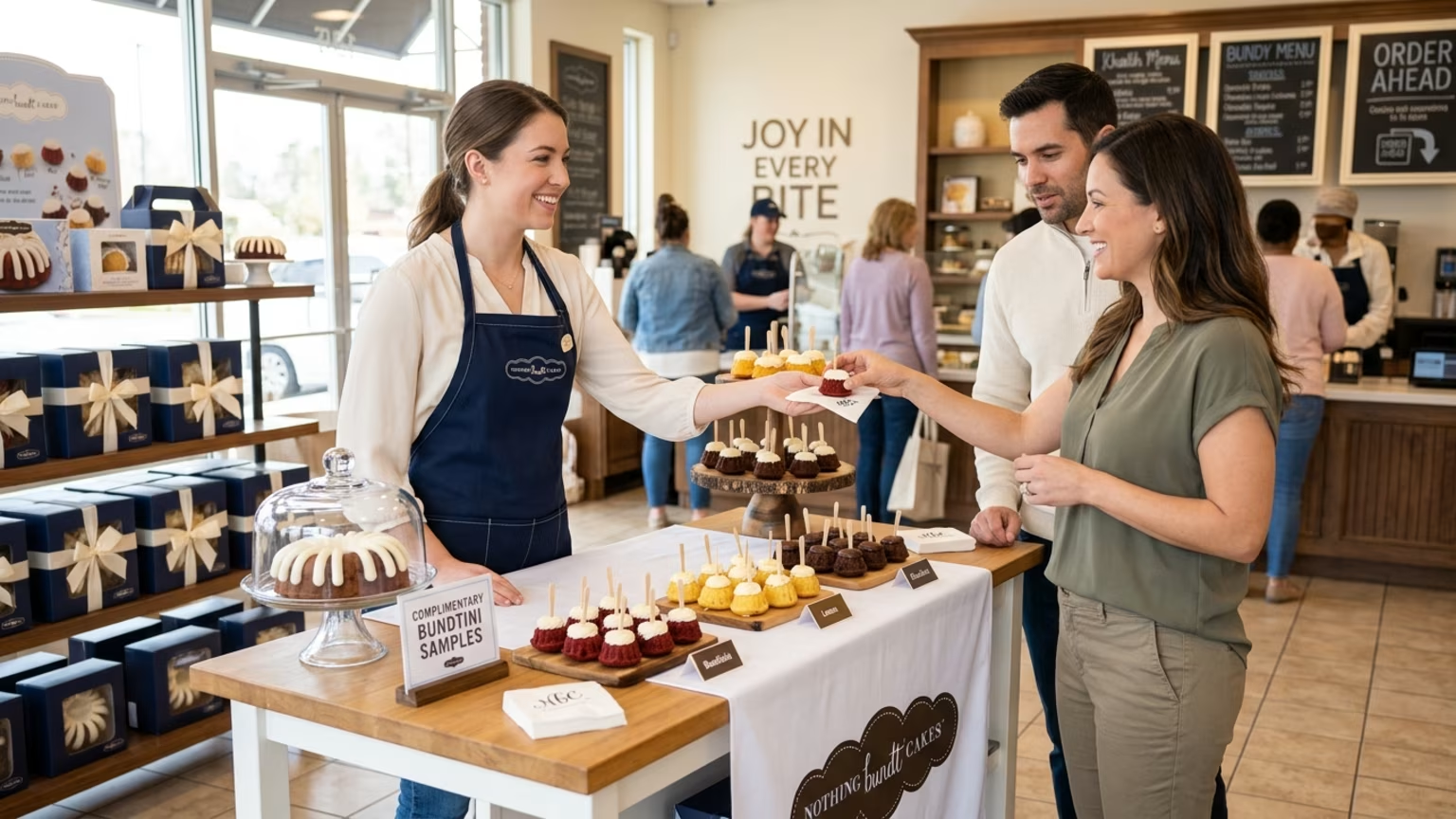
Major grocers recently confirmed that live retail demos act as the primary engine for store traffic and product trial in physical retail environments.

A regional brand manager stares at an endcap display. She wonders why premium packaging fails to move units.
Major U.S. grocers recently confirmed that live retail demos act as the primary engine for store traffic and product trial. This signals a clear shift where physical sampling operates as a measurable sales driver rather than mere brand theater.
The modern grocery aisle presents a highly chaotic environment for any new product launch. Brands spend massive budgets on slotting fees and premium shelf placement to capture fleeting shopper attention. Most consumers push their carts with a strict list and very little patience for unfamiliar items. A static display simply blends into the background noise of the brightly lit store environment.
When a CPG company relies entirely on packaging, they surrender control of the final purchase decision. Store aisles lack the human element required to break a busy shopper out of their routine. Products sit on shelves collecting dust as aggressive private label brands steal valuable market share. The disconnect between a brilliant marketing strategy and poor retail execution becomes painfully obvious in these moments.
We see this reality play out during high volume weekend shopping hours across the country. Busy stores create an intimidating space where consumers stick to products they already know and trust. A brand needs a physical intervention to stop a shopper and invite them into a meaningful conversation. Without this active engagement, even the most innovative food or beverage product will fail to gain retail traction.
The dynamic shifts slightly when brands enter club environments, but the core challenge remains exactly the same. Shoppers walk through massive warehouses filled with towering pallets and endless product options. Without a live demonstration to anchor the experience, premium items become completely invisible to the passing consumer. A well executed retail demo forces a pause, creates an interaction, and actively drives the product into the shopping cart.
Fixing this retail disconnect requires treating physical activations as a highly disciplined performance channel. Every retail interaction must connect a genuine human experience with a very clear path to purchase. Brands must train ambassadors to actively sell the product rather than just hand out free cups. This methodology transforms a passive sampling event into an aggressive and measurable conversion mechanism.
We build our approach around clear operator discipline and focused consumer engagement. The strategy begins with selecting the right retail locations where foot traffic perfectly aligns with the target demographic. Teams then deploy trained personnel who deeply understand the brand story and the specific product benefits. This intense focus on flawless execution guarantees that every activation dollar builds measurable retail pipeline.
Major grocers have recently highlighted product demonstrations as a primary method for driving new item awareness. In recent investor communications, top retail leadership called out retail sampling as a major driver of traffic. They explicitly position these live demos as a core strategy to grow product penetration and overall basket size. Retailers clearly want to see brands invest in strategies that turn a first taste into repeat sales.
A VP of Marketing in the CPG beverage category told us, 'Robbie, your leadership and vision turned our campaign into something truly special. The Makai team brought our new drink to life with energy, creativity, and flawless execution. Thanks to you, our brand isn't just tasted, it's remembered.' Our team's approach transformed their product launch into a highly memorable brand experience.
This level of precision separates serious CPG operators from brands that simply dabble in experiential marketing. You must build a framework that anticipates shopper objections and neutralizes them with immediate product trial. When you align your field strategy with the traffic goals of the retailer, you win the shelf. We invest heavily in this preparation phase since it directly dictates the final conversion rate on the floor.
Moving from high level strategy to live execution requires strict adherence to operational standards. A successful retail activation leaves absolutely nothing to chance on the busy store floor. Field teams must follow a clear sequence of steps to successfully capture attention and drive product trial. A poorly executed demo will actually harm your brand reputation and irritate the retail management.
Here is the field playbook for running high impact retail demos that convert:
This highly structured approach completely eliminates the guesswork from weekend sampling events. You can read more about how retail demos drive product trial when executed with this exact level of rigor. Discipline on the store floor translates directly to confidence in the corporate boardroom. Brands must guarantee that their logistics and supply chain can support this aggressive field activity.
Running out of stock during a highly successful sampling event is a catastrophic failure for any marketing team. You must coordinate closely with store managers to guarantee adequate inventory levels before the first sample is ever poured. Proper preparation prevents the painful scenario of generating heavy demand with no product to sell. Every major retail chain maintains strict guidelines regarding booth sizes, sampling protocols, and acceptable waste management procedures.
Store managers appreciate field marketing teams who operate with total self sufficiency. A great brand ambassador never burdens the retail staff with questions about trash disposal or product location. They arrive fully prepared with their own supplies and an exact plan for execution. This level of professionalism builds trust with the retail partner and secures prime placement for future events.
Experiential marketing teams often struggle to justify their budgets tracking the absolute wrong data. Counting the sheer number of samples distributed provides zero actual insight into real business impact. Brands must measure Return on Investment through a smart combination of leading indicators and lagging outcomes. This fundamental shift in reporting separates professional marketing operators from amateur event planners.
Lead metrics focus on the live performance during the actual retail demonstration. Teams should track the total number of qualified engagements against the natural foot traffic of the specific aisle. The conversion rate of interactions to immediate on-site purchases provides the most critical health check for the activation. These data points tell you immediately if the brand ambassador successfully closed the sale in the moment.
Lag metrics reveal the true long term value of your retail sampling investment. Brands must monitor the documented sales lift at specific store locations over the four weeks following an event. Measuring repeat purchase rates helps validate that the initial product trial created genuine consumer loyalty. Tracking these five key metrics to prove retail sampling performance gives marketing leaders the exact data they need for future budget approvals.
Modern experiential marketing requires sophisticated field reporting software to capture these critical metrics accurately. Ambassadors must log every single interaction, the amount of product sampled, and the number of units sold during their shift. This real time data stream allows marketing leaders to make immediate adjustments to their strategy if a particular location underperforms. You no longer have to wait weeks for a post event wrap report to understand your campaign performance.
Retail buyers increasingly demand this level of data transparency from their CPG partners. When you can present a clear report showing how your activations drive category growth, you become an indispensable partner. This data driven approach completely changes the conversation during your annual retail line reviews. Buyers reward brands that can prove their investment brings net new shoppers into the store.
A national health beverage company faced totally stagnant sales during a major regional expansion effort. Their marketing team heavily funded digital ads but saw minimal lift at their physical grocery locations. The premium price point of the new drink created hesitation among shoppers who had never actually tasted the product. They desperately needed a physical intervention to overcome this significant barrier to consumer entry.
We deployed a highly coordinated series of weekend retail demonstrations across sixty high volume store locations. The brand ambassadors focused entirely on communicating the unique health benefits as they poured ice cold product samples. This direct engagement broke through the heavy retail noise and gave shoppers a compelling reason to switch from their usual brands. We monitored inventory levels continuously to guarantee every single store remained fully stocked during the peak weekend rush.
The final results completely validated the entire strategy and delivered a massive increase in weekend unit sales. Participating grocery locations saw a sustained sales lift that lasted well beyond the initial activation dates. The beverage brand successfully secured additional permanent shelf space from the retailer based entirely on this documented performance. This outcome perfectly illustrates why grocers view live sampling as a critical driver of overall store traffic.
By treating the retail floor as a direct conversion channel, the brand transformed an expensive launch into a highly profitable campaign. They stopped guessing about digital ad attribution and started measuring actual product movement in real time. This is the exact type of performance that major investors now look for in retail growth strategies. The ability to directly influence shopper behavior at the point of purchase remains an unbeatable competitive advantage.
The recent focus on product sampling by major retail investors proves that physical engagement remains highly effective. Brands that rely solely on passive shelf placement will continue to lose ground in competitive physical retail environments. A highly disciplined approach to live sampling creates immediate sales and builds lasting consumer trust. To start building your own measurable retail conversion engine right now, simply book a strategy call with our expert team.

30 Years Experiential & Retail Activation Partner for CPG & Beverage Brands | Multi-Market Demos, Roadshows & Costco/Club Programs That Actually Sell