Robbie Thain
Founder, CEO

Learn how Fresh Fizz used strategic retail demos and digital integration to drive product trial, secure the #1 spot, and boost measurable in-store sales.

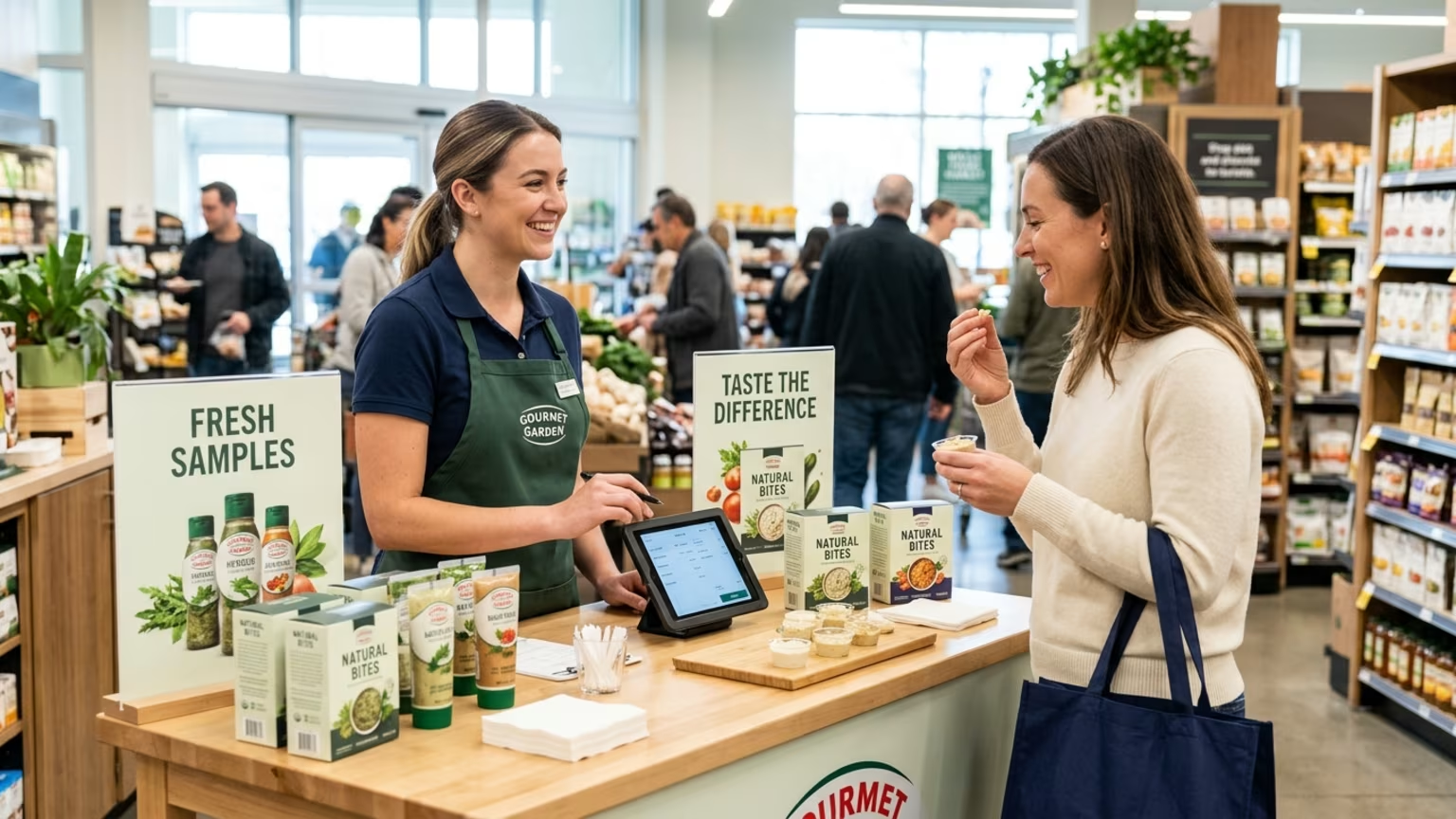
In-store product sampling drives an average 76 percent increase in consumer purchase intent. Shoppers trust what they can taste right in front of them over a fleeting social media ad. This physical interaction builds immediate brand confidence and forces an instant purchasing decision.
CPG brands that connect live retail demonstrations with digital retargeting capture measurable market share and undeniable sales lift. This playbook details the exact operational framework required to turn expensive floor traffic into reliable pipeline and repeat retail buyers.
The modern grocery aisle is a crowded battleground for consumer attention. You send ambassadors to the store with premium product and high hopes. The harsh reality hits when your activation yields high traffic but zero measurable sell-through. Thirty percent of retail activations fail to break even from poor location selection or inconsistent staffing.
You are often paying five thousand to twenty thousand dollars per store day for these activations. Relying on sheer foot traffic without a deliberate conversion mechanism burns through your marketing budget fast. Economic pressures amplify this scrutiny as recession fears prompt companies to cut experiential budgets by 15 percent for unproven tactics. Marketing operators face immense pressure to prove that live events generate actual retail sell-through.
Purely physical demos underperform without proper digital follow-up mechanisms in place. Brands see a 40 percent trial drop-off when they fail to retarget samplers after the event. Reporting gaps plague 45 percent of programs in fragmented retail environments like independent grocers. These missing data points turn busy events into unprovable efforts that frustrate stakeholders.
Data shows that 65 percent of shoppers make an unplanned purchase after experiencing a well-executed product demonstration. Brands miss this massive revenue opportunity when their field operations lack structure. Contributors to Event Marketer Magazine state that standalone demos lag in complex sectors without proper integration. The gap between a busy activation and a profitable one comes down to strict execution.
A successful retail demo program requires a systematic approach to consumer engagement. You must blend in-store sampling with digital capture mechanisms to prove Return on Investment. Research from NielsenIQ indicates that demos outperform social ads by 40 percent in conversion for food and beverage launches. Consumers trust the physical taste of a product much more than digital hype.
The VP of Retail Insights at NielsenIQ confirms that in-store demos remain the gold standard for CPG trial. These live experiences cut through digital fatigue effectively. The executive notes that consumers trust what they taste over what they scroll on their phones. This fundamental psychological shift is what makes live sampling so powerful for new product launches.
Experiential teams are shifting to hybrid demo models that blend physical trials with digital touchpoints. Sixty-two percent of top CPG brands now utilize these hybrid methods for measurable trial. Deciding on the proper CPG sampling strategy dictates your operational requirements moving forward. You need trained brand ambassadors who understand product education and data capture.
Predicting foot traffic patterns used to rely entirely on guesswork and outdated store logs. Modern AI-optimized staffing tools now process historical store data to place your best ambassadors exactly when the rush happens. This shift addresses the staffing execution woes that plague disorganized sampling campaigns. Fresh Fizz integrated this precise forecasting model for their scalable retail pushes.
The resulting efficiency allows field teams to handle massive consumer engagement without experiencing fatigue. Your strategy must map every touchpoint from the first sip to the final checkout scan. Sustainability-focused sampling methods are up 35 percent and align perfectly with modern CPG demands. This comprehensive approach fixes the attribution problem that plagues most independent grocery store programs.
Executing a profitable retail activation demands strict operational discipline across all channels. Your field teams must follow an exact sequence to capture attention and drive trial in physical stores. The following steps outline how to convert floor traffic into measurable sales pipeline.
You must deploy trigger-tie activations for new product launches or regional retail expansions. Setting up pop-up demo tours right before your product hits the shelf builds immense local anticipation. This pre-launch buzz yields 30 percent faster sell-through once the items are officially stocked. This operational sequencing creates immediate momentum and proves to retail buyers that your brand drives foot traffic.
You avoid in-house disasters by outsourcing logistics to experiential firms specializing in the CPG sector. This operational shift provides two times more consistency in staffing and presentation. Your field marketing managers can then focus on strategy rather than tracking down missing sample cups. This systematic execution completely transforms how your brand performs in the physical retail environment.
Brands ignoring live retail experiences risk seeing shelf velocity drop by fifty percent. Proving ROI requires tracking specific lead and lag indicators systematically. Experiential retail activations in the CPG sector deliver a 4:1 return on average. Beverages and snacks average twelve dollars in sales per demo interaction across national campaigns.
To achieve these numbers, you must track both immediate action and trailing revenue. Lead metrics include total samples distributed, active QR code scans, and immediate footprint traffic. Your teams need to monitor retail demonstrations for real-time engagement data on the floor. Lag metrics focus heavily on actual sales lift via retailer scan data after the event concludes.
Beverage demos at retail events yield up to a 30 percent sales lift during the activation week. Brands then see a sustained 10 to 15 percent uplift post-event from repeat purchases. You should track this 15 percent repeat purchase rate over the following month. Post-demo surveys and geo-fenced reporting provide the final layer of undeniable proof for your stakeholders.
You must deploy advanced measurement tools to track these numbers accurately. Platforms like Upside or Fielddrive offer geo-fenced reporting that connects floor traffic directly to register scans. This level of data integration provides your marketing team with four times more proof of your event impact. It removes all doubt about the financial viability of your physical event marketing campaigns.
Fresh Fizz recently proved the power of operational discipline in a highly crowded market. The beverage brand executed a massive demo blitz across more than 500 retail doors. Progressive Grocer recognized Fresh Fizz among the best new products of 2026. The publication noted the brand used strategic demos, digital marketing, and promotions to top competitive categories.
According to the Progressive Grocer editors, this physical trial strategy propelled the brand to the number one spot. Demo-equipped brands saw two and a half times higher trial rates than digital-only campaigns. The brand successfully paired their physical activations with QR-code digital capture. This generated a 50 percent better attribution rate compared to standalone sampling methods.
The Fresh Fizz approach demonstrates exactly how physical retail demos build immense retailer confidence and consumer loyalty. Their strategy proves that you do not have to choose between digital tracking and live engagement. You can capture first-party data and still deliver a memorable sensory experience in the aisle. This level of execution is what separates leading beverage brands from the rest of the pack.
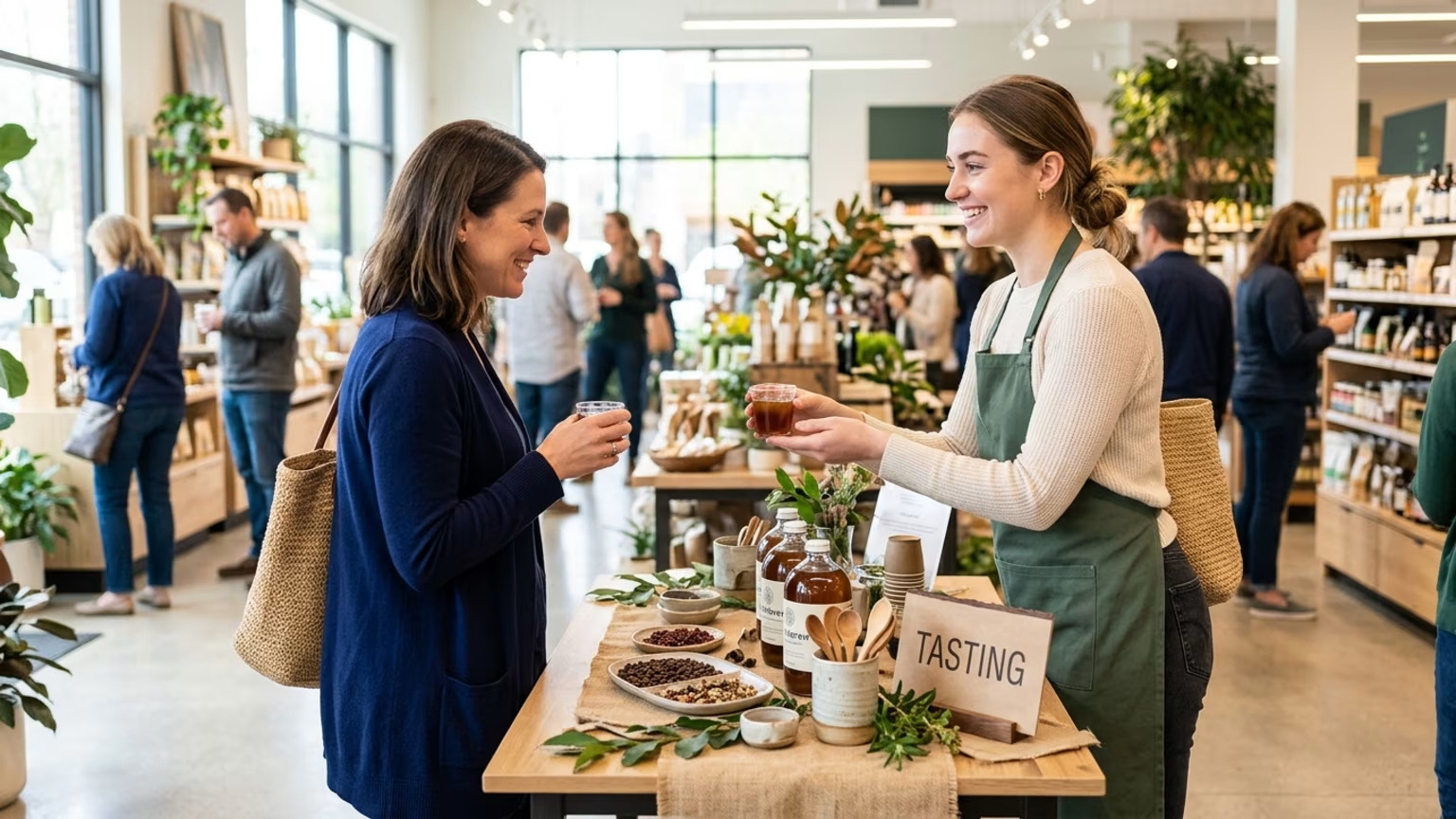
This approach is a prime example of turning a standard tasting into a measurable business outcome. Costco and Sam's Club reported 25 percent growth in demo-driven beverage sales in early 2026. Securing and executing high-volume Costco roadshows helped brands like Fresh Fizz establish undeniable market presence. This strategy proves why live retail is the missing link in retail media strategy for modern consumer goods.
That initial 76 percent increase in consumer purchase intent is never an accident. It is the direct result of putting real product into the hands of real people with total operational precision. You turn passing shoppers into paying customers when you treat the physical aisle with the same rigor as digital channels. Book a strategy call with our experiential marketing team to transform your retail activations into predictable revenue generators today.

30 Years Experiential & Retail Activation Partner for CPG & Beverage Brands | Multi-Market Demos, Roadshows & Costco/Club Programs That Actually Sell