Robbie Thain
Founder, CEO

Kimberly-Clark warns AI shopping agents will soon manage routine CPG purchases. Learn how experiential marketing can lock in your brand's default status.
The future of consumer packaged goods will not be decided by digital ads. It will be decided by who wins the physical world before the algorithm takes over. As digital commerce accelerates toward automation, human memory is becoming your only reliable moat. If you lose the real world, you will simply disappear from the digital shelf.
AI shopping agents are poised to handle routine household purchases. This shift leaves brands with a shrinking window to lock in consumer preference. To survive this transition to algorithmic buying, experiential marketing must evolve. It must change from basic sampling into the primary engine for securing default status.
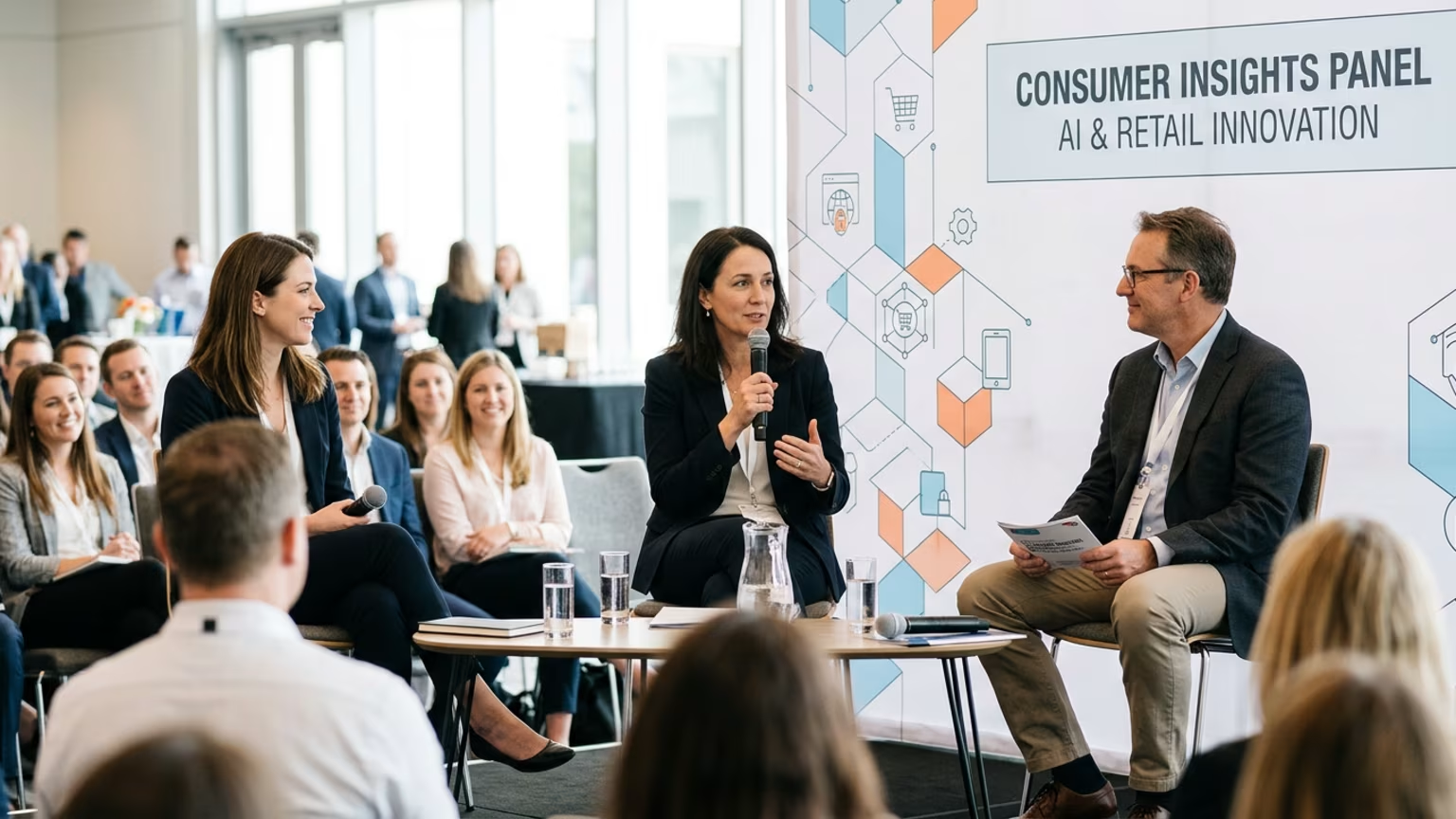
At a recent industry conference, Kimberly-Clark executive Jeff Long highlighted this exact threat. He noted that AI agents will increasingly manage routine household purchases. This creates a narrowing window for brands to build human recognition. You must establish preference before buying habits harden inside algorithms.
Lizo Marcus from FCB expanded on this reality during the same session. He pointed out that Amazon and Google are already adopting agentic commerce protocols. These systems will allow purchases directly from chat interfaces in the near future. This means the point of sale is moving away from human control.
Walk onto a massive convention center floor where hundreds of brands fight for retail attention. Booth staff are handing out samples of low sugar energy drinks, scanning badges frantically, and tossing promotional items into bags. Most of these teams are measuring success by foot traffic and depleted inventory. They are missing the bigger picture entirely.
Field marketers track how many people stopped for a free pen. At the same time, major platforms are building automated systems. These tools will soon make those chaotic floor interactions obsolete. If a consumer does not remember your brand, tomorrow's automated systems will simply choose a cheaper substitute.
We have been connecting brands with people through live experiences, retail programs, and national activations since 1995. Over three decades, we have built a track record of creating meaningful brand moments across the country. What we see today is a fundamental shift in how those live interactions must translate to sales. Brand theater is no longer enough to win the market.
Instead of building memorable connections, many brands are just creating temporary noise. They treat trade shows and retail demonstrations as isolated events rather than data collection points. When the show ends, the leads go cold, and the algorithm wins. Many organizations struggle to connect live event leads to measurable revenue. They simply lack operational discipline.
The strategy to combat agentic commerce is building unbreakable offline preferences. You must secure the default status in the consumer's mind before algorithms take over. If your product is just another option on a screen, the AI will optimize for price and push you out. Brand strength must become data strength to survive.
Industry analysts report that roughly fifty percent of consumers are perfectly fine handing their household shopping lists over to a digital assistant. This is a massive behavioral shift. If a machine makes the choice, it evaluates substitute risk, quality signals, and complaint rates over flashy packaging. You must turn brand strength into data strength. The strongest brands will bake in their advantages by using physical events to drive up digital ratings.
Consumer packaged goods already see high repeat rates in routine categories. Shoppers treat things like paper goods and cleaning products as set and forget purchases. AI agents will step directly into these high frequency, low involvement routines. The battle shifts from winning every cart to winning the default slot.
In person experiences become the front door to an algorithmic future. Live sampling, retail demonstrations, and sponsorships are where consumers encode their brand preferences. This is where they implicitly tell their future AI agents what to buy. You must design campaigns that turn live food brand demonstrations into retail sales.
Every live activation must act as a data engine. AI agents and retail algorithms rely on hard signals like purchase history and basket composition. You have to connect physical tasting to digital tracking. Teams that unify retail media strategy and in store experiential marketing build stronger consumer behaviors.
To implement this strategy in a live event setting, you need absolute precision. Follow these steps to build an activation that survives the AI shift.
Measuring success requires looking past the noise of the show floor. Experiential campaigns must prove clear Return on Investment through hard data. Vanity metrics will not protect your brand from an AI shopping assistant. You need exact lead and lag indicators for clear reporting.
For leading indicators, track the percentage of booth visitors who explicitly add your item to a digital cart. Count the number of structured micro endorsements collected on tablets during the event. Monitor immediate scan rates on exclusive show floor discount codes. These early signals prove that your physical activation is creating digital momentum.
For lagging indicators, measure the conversion to actual purchase in the weeks following the activation. Track repeat purchase lift among the cohorts engaged at your live events. Evaluate basket expansion to see if attendees are buying your item alongside other premium products. This data proves real business impact.
Supply chain operations are already feeding these systems with complex data. Industry analysts report that CPG leaders use AI for network optimization and inventory placement to reduce stockouts. This same data pipeline will soon feed consumer facing agents. If you want to integrate these tactics into your next campaign, book a strategy call to build an event program that converts.
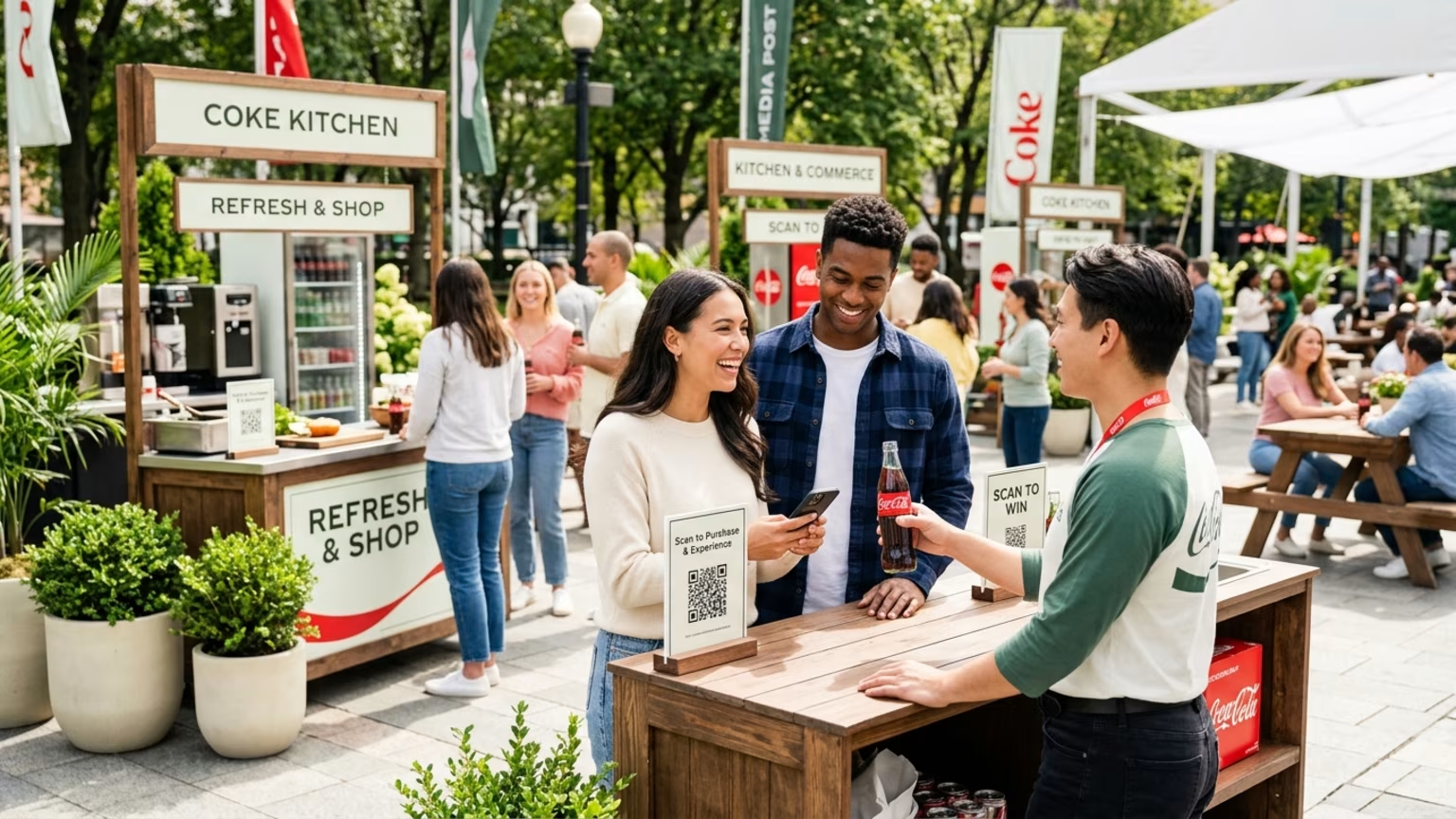
Consider a premium sparkling water brand launching a new functional beverage at a major food expo. Instead of just stacking cans on a table, they built an activation centered around the mid afternoon slump. Brand ambassadors asked attendees to taste the product and immediately scan a code. This code set the drink as their preferred afternoon pick me up in a major grocery app.
The field team tracked exactly how many users initiated a recurring subscription directly from the show floor. They turned a fleeting sip into a programmed digital habit. This approach locked the brand in as the default choice before the consumer ever interacted with an automated shopping agent. They did not leave the outcome to chance.
By the time the AI took over the grocery list, the preference was already coded into the system. The brand did not have to fight for attention on a crowded digital search page. They had already won the battle in the physical world. This is how you future proof a physical product.
As screens handle more of our mundane choices, the moments we share in person carry heavier weight. The brands that survive this transition will not be the ones with the smartest code. They will be the ones that left the deepest mark in the real world, long before the machine was ever asked to choose.

30 Years Experiential & Retail Activation Partner for CPG & Beverage Brands | Multi-Market Demos, Roadshows & Costco/Club Programs That Actually Sell