Robbie Thain
Founder, CEO

Learn how precise in-store retail media screen placement turns ambient digital noise into measurable grocery sales. Maximize ROI with targeted shopper zones.
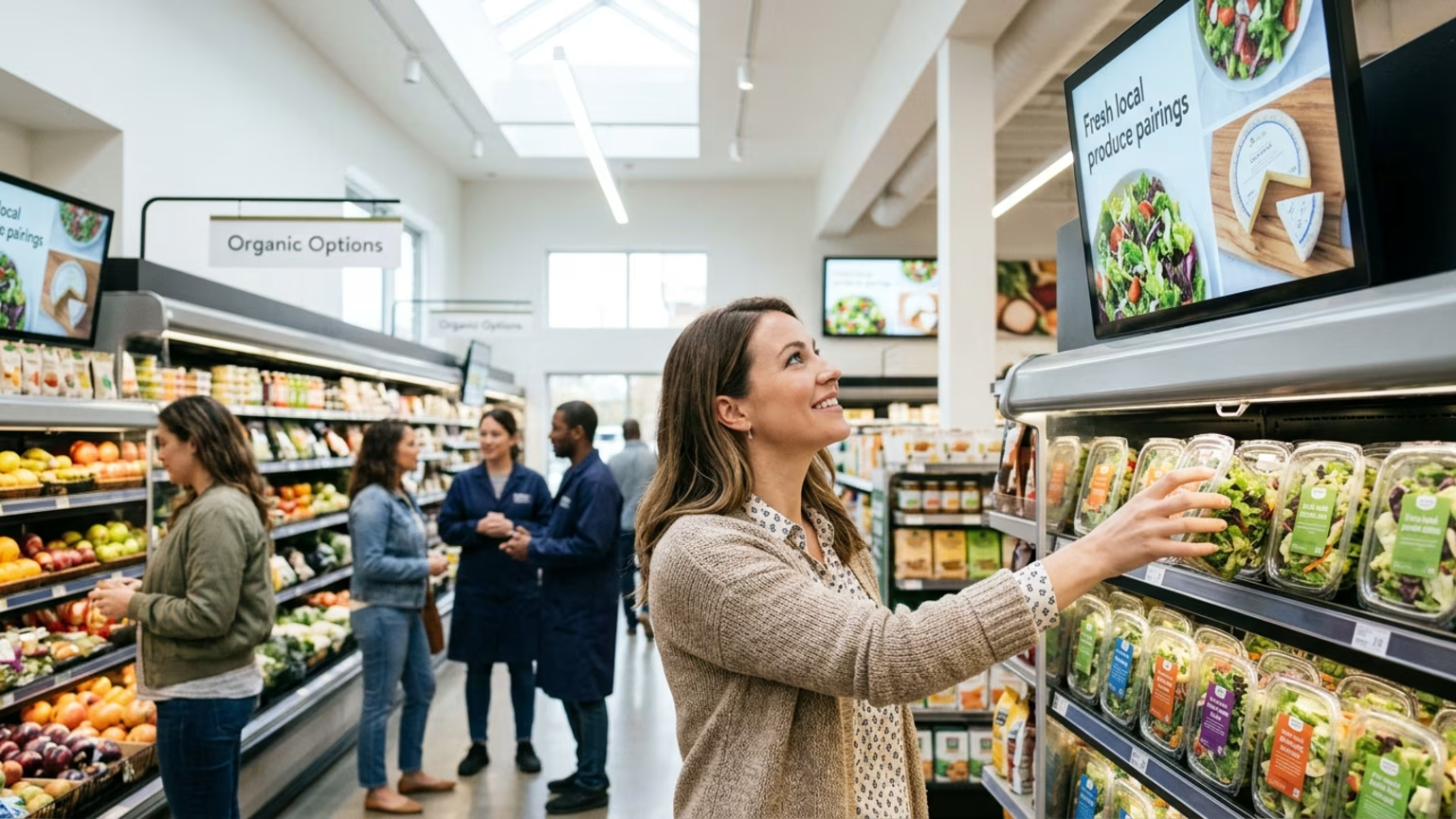
Retail media screens convert highly when brands place them in the correct physical zones with proper context. This guide outlines how to use precise placements to turn ambient digital noise into measurable sales lift.
You walk into a major grocer on a Tuesday evening. Carts rattle past endcaps. Fluorescent lights beam down on thousands of products competing for a single glance. Shoppers are tired, distracted, and moving fast.
Many brands respond by throwing money at screens in the aisle. They assume more digital real estate automatically equals more sales. In reality, poorly placed monitors just become expensive wallpaper that busy shoppers ignore. We see operators struggle with fragmented execution and weak reporting from these scattered investments.
Our team knows this struggle firsthand. We have been connecting brands with people through live experiences, retail programs, and national activations since 1995. Over three decades, we have built a track record of creating meaningful brand moments across the country. We know that physical retail requires operator-grade discipline to produce real results.
Shoppers reject aggressive messaging that interrupts their physical path to purchase. They demand seamless integration between the digital screen and the surrounding physical environment. Brands need a systematic approach to stop wasting money on unmeasured brand theater. You must map your media to actual shopper behavior on the floor.
Retail buyers demand proof that your marketing drives sell-through at their exact registers. They have zero patience for vanity metrics that fail to move physical inventory. Field marketing teams often operate in silos separated from the digital media planners. This disconnect leads to beautiful creative that completely misses the mark in a live store setting.
The pressure to prove financial returns forces modern marketers to rethink their entire physical approach. Shopper marketers must unite digital impressions with real-world product availability. You cannot afford to run isolated campaigns that generate fog instead of clear sales evidence. Every activation must clearly contribute to the bottom line.
The solution requires treating physical screens as point-of-decision media instead of background branding. Recent research from eMarketer reports that 62 percent of shoppers have purchased an item directly after seeing it on an in-store screen. This high conversion rate happens when brands match their creative message to the exact physical zone. Most shoppers tolerate screens provided the hardware does not block the aisle.
Context dictates performance on the physical retail floor. Shoppers are two and a half times more likely to consider a brand when the ad fits the surrounding environment. A generic commercial playing by the pharmacy will fail. A highly targeted message about hydration near the cold medication shelf will convert.
Shopper favorability shifts drastically based on where you place the monitor. Research shared by MarTech Pulse shows entrance, checkout, deli, and pharmacy zones all secure over 84 percent shopper favorability. Brands must align their retail media strategy with these exact, high-intent locations. Entrance screens frame the mental agenda for the entire trip.
Different zones serve entirely different shopping missions. Checkout monitors capture impulse purchases for single-serve items and small snacks. Deli screens prompt basket-building behavior by suggesting complete meal solutions. This zone-based approach turns random screen impressions into highly relevant shopper interactions.
Generational myths often cloud media planning decisions in the grocery sector. Data indicates strong acceptance of grocery screens across all age groups. EMarketer found that Gen Z shows 74 percent acceptance for grocery screens. Shoppers aged thirty to forty-four show an even higher 81 percent acceptance rate.
This broad demographic acceptance proves that physical screens are no longer just a gimmick. Older shoppers aged sixty and above still show a 72 percent acceptance rate for grocery screens. Marketers can confidently deploy broad campaigns across multiple demographics without fear of alienating core buyers. The key remains matching the message to the physical reality of the store.
Brands must adopt a targeted mindset for every single digital placement. You are buying exact shopper moments rather than generic ad inventory. This shift in thinking separates the seasoned operators from the amateurs. Precision in placement dictates the entire trajectory of the campaign.
Winning on the retail floor demands exact coordination between your digital assets and physical product placement. You must sequence every step to align with the actual shopper route. We rely on a disciplined playbook to turn screens into profit centers.
These steps require rigorous attention to detail from your entire field team. You cannot set and forget a physical retail campaign. Continuous monitoring guarantees that the investment translates into actual shopper engagement. Discipline separates a successful rollout from a disorganized failure.
Brands need concrete proof that physical media drives real revenue. In-store retail media advertising uses first-party purchase data to target shoppers and deliver closed-loop measurement of performance. This capability allows marketing operators to link screen impressions directly to the cash register. We measure success by tracking distinct lead and lag indicators.
Lead metrics tell you if the execution is functioning properly on the floor. You should track screen uptime, ad play completion rates, and physical foot traffic past the monitor. If you pair the screen with a live demo, track the number of product samples distributed. These early signals show whether the in-store experiential program is reaching the right people.
Lag metrics prove the financial impact of your campaign. You must monitor unit sales lift in the targeted stores running the screens compared to control locations. Look closely at basket size expansion and category share growth during the active window. You can calculate a true Return on Investment when you tie these sales figures back to the initial media spend.
You must demand operational excellence from your reporting partners. Insist on clear methodologies for defining exposed versus non-exposed shoppers. Ask for store-level and zone-level reporting to allocate future spend intelligently. Clean data provides the confidence needed to scale these programs nationally.
Marketers must scrutinize attribution windows carefully. A screen impression might drive a purchase immediately or influence a return trip next week. Set realistic baselines before the campaign begins to isolate the true incremental lift. Accurate measurement prevents executives from viewing the program as an unproven expense.
The ability to prove incremental lift secures future budgets from the finance department. Marketing leaders must speak the language of revenue when discussing physical retail deployments. A well-measured campaign provides the exact evidence needed to justify a broader rollout. Numbers silence the skeptics inside your organization.
A premium snack brand recently faced a massive challenge during a national retail expansion. They needed to drive immediate trial for a new line of protein bars. Instead of buying scattered digital billboards, they focused entirely on high-favorability zones. They committed to a rigorous zone-based strategy.
They placed context-driven screens right at the store entrance and near the deli perimeter. The entrance creative announced the new flavor and directed shoppers to an exact aisle. The perimeter screens offered a meal solution that paired the protein bar with a fresh salad. The messaging matched the physical reality of the shelf.
They reinforced these screens with trained field teams handing out samples on weekend afternoons. This coordinated physical and digital push generated massive product trial. Sales velocities spiked in the activated stores compared to the silent control locations. The brand proved that precise placement turns fleeting attention into measurable profit.
This success did not happen by accident. The brand aligned their digital media buyers with their field marketing managers months in advance. They demanded flawless execution from their agency partners and retail counterparts. The resulting sales lift secured permanent shelf space for the new product line.
Physical retail demands flawless execution to move the needle. If you want to stop burning budget on unmeasured brand theater, book a strategy call with our team today. We know how to turn live brand experiences into measurable pipeline.

30 Years Experiential & Retail Activation Partner for CPG & Beverage Brands | Multi-Market Demos, Roadshows & Costco/Club Programs That Actually Sell


