Robbie Thain
Founder, CEO

The recent IAB PlayFronts recap shows why consumer action must dictate activation planning. Read how this mandate impacts your field logistics.
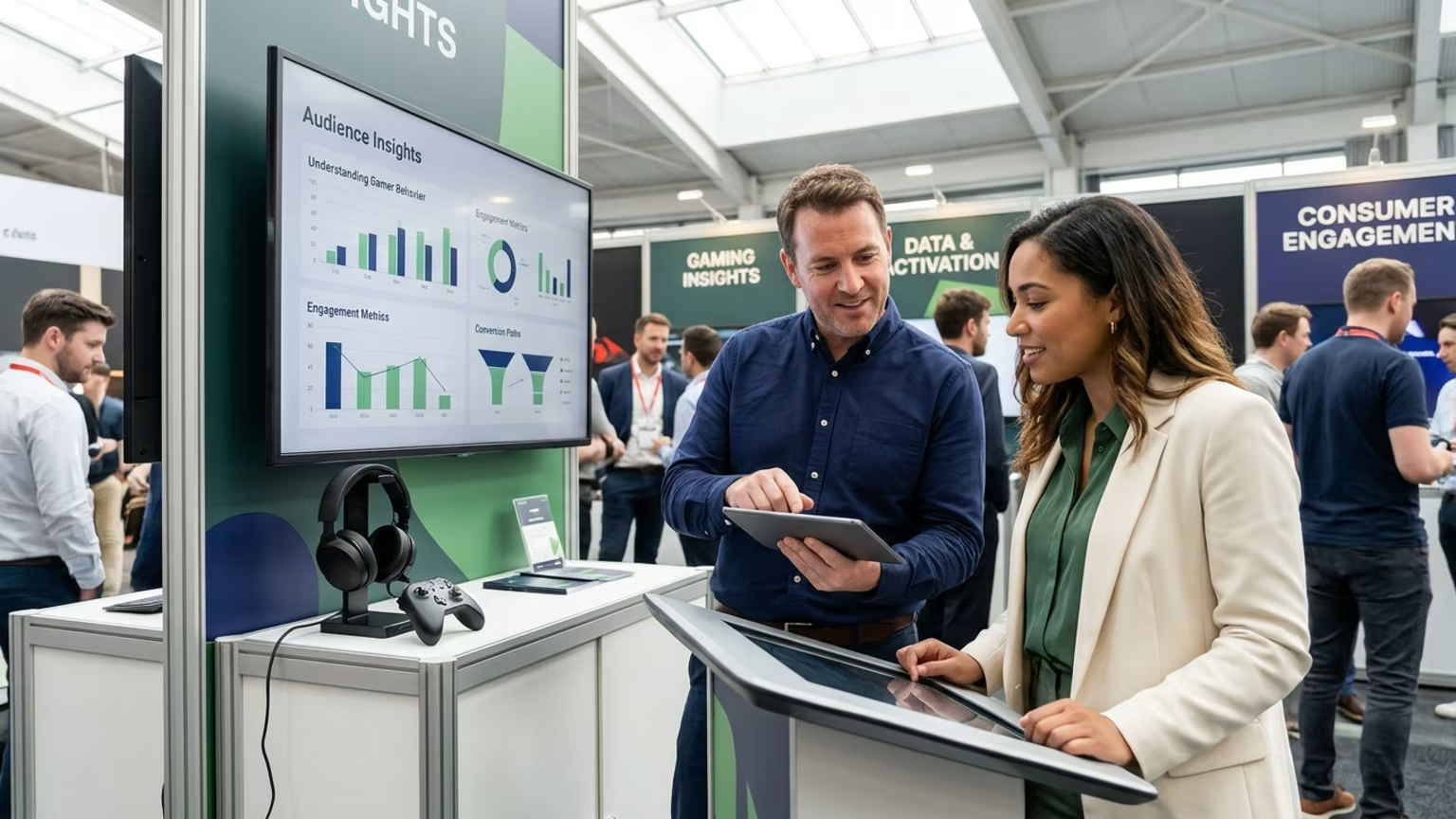
On September 17, 2026, the Interactive Advertising Bureau held its PlayFronts games marketplace event. Shortly after, IAB’s Director of Experience Center Michael Arzt published the official event recap on September 25. The core directive from the event focused heavily on business outcomes rather than raw audience size. The recap instructs marketers to define specific consumer actions before they ever begin building an activation plan.
The IAB recap requires planning teams to identify exact behaviors like watching, engaging, buying, and advocating upfront. It explicitly states that objectives, measurement plans, formats, and KPIs must guide the planning process before selecting a platform. IAB describes campaign outcomes associated with prominent gaming campaigns as including watch time and engagement. These campaigns also drive brand lift, site traffic, membership acquisition, and purchase intent.
Additionally, they are associated with sales conversion and repeat participation. To govern these campaigns effectively, IAB recommends establishing a clear business objective and assigning an accountable brand-side owner. Teams must also dedicate specific budgets, define rigid KPIs, and agree on thresholds to scale or hold investment. The report makes it clear that activity does not automatically equal commercial value without this structural discipline.
The recap identifies transparency, age and privacy protections, moderation, and creator vetting as critical governance considerations. It also lists brand suitability as a necessary factor when mapping out campaign guidelines. The organization highlighted its Gaming Measurement Framework to help marketers bring clarity, consistency, and confidence to gaming-ad measurement. While the recap reports that 212.3 million Americans play games regularly, it warns against relying on mere audience volume.
The report states that 67% of U.S. residents aged 5 to 90 play at least an hour per week. However, IAB describes gaming as a cross-platform attention ecosystem. Marketers should plan around specific consumer behaviors and mindsets instead of assuming a single gamer profile exists. Building a campaign around raw demographics will fail if the underlying consumer behavior is ignored.
The subject of the PlayFronts event is gaming advertising, not mobile roadshows or physical brand activations. However, the directive to demand behavior change instead of passive attention translates directly to experiential marketing. When consumer packaged goods brands launch live marketing efforts, they often pay for crowded environments and vague impressions. If they fail to define a target action before the event, they experience poor booth flow and scattered attention.
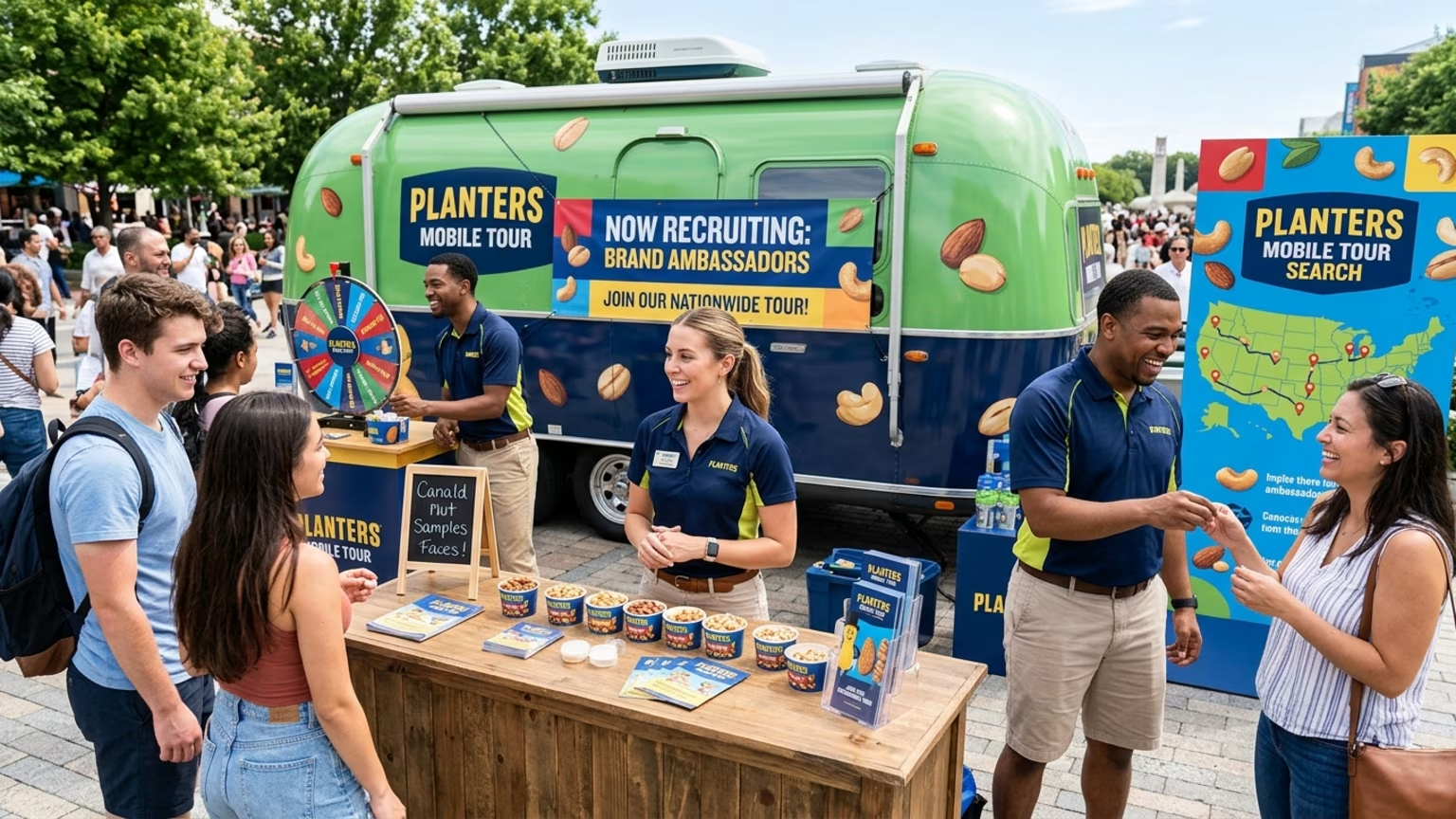
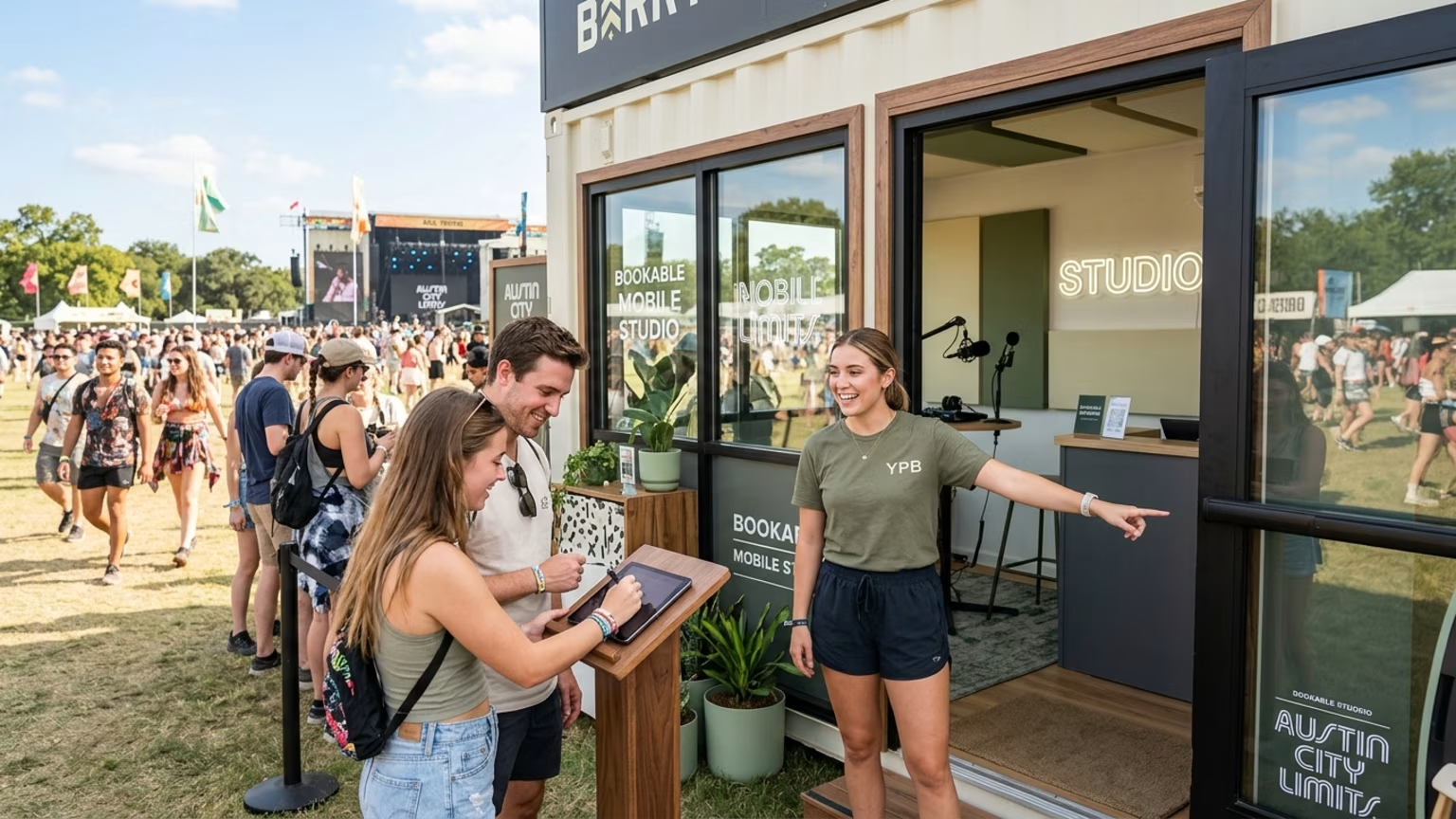
At Makai, we specialize in creating retail demos, product sampling programs, and roadshows that bring brands face to face with their audiences. Each program is designed to drive trial, build consumer relationships, and accelerate retail velocity across multiple locations. We do not judge a physical activation by how many people merely walked past a display. We measure success by how many consumers took a specific step that contributes to measurable sales pipeline.
We design mobile activations and roadshows that accelerate consumer trial, build trust, and boost retail velocity during 90-day product launch windows. Our structured approach transforms initial product trial into sustained consumer confidence and retail performance. Applying the logic from the IAB event to live environments requires a hard shift in planning. You must specify the intended participant action and define exactly how your field team will record it.
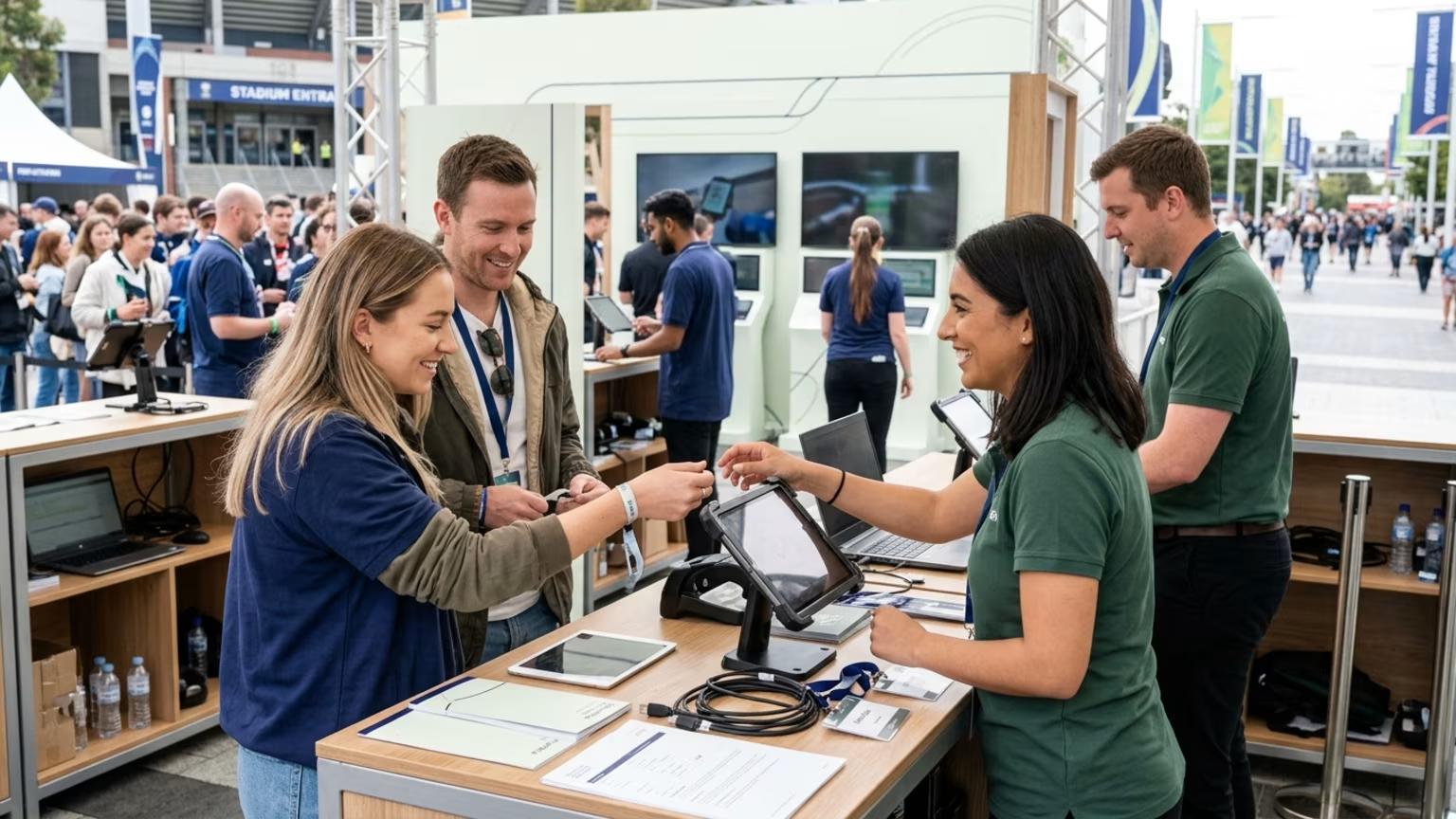
This approach demands robust retail activation measurement planning before a single piece of equipment ships. Food and beverage brand managers face intense pressure to prove event Return on Investment through qualified pipeline. They can no longer rely on vanity metrics like generic badge scans or estimated foot traffic. They need to turn fleeting consumer interactions into qualified leads.
When you define your consumer action before designing your footprint, the downstream operational requirements change immediately. Field staffing can no longer rely on unguided brand ambassadors simply handing out free products. Your personnel must be trained to navigate conversations that prompt visitors to engage, advocate, or buy. They become responsible for moving a consumer from initial curiosity to a documented, measurable conversion event.
Learning how to properly staff your brand activation field team is a non-negotiable part of this process. The physical flow of a trade show booth or mobile tour must also support these new commercial targets. If your goal is capturing qualified leads, your floor plan must guide visitors directly toward interactive data-capture points. Scattered attention and poor booth flow directly harm your Return on Investment.
We plan and manage trade show spaces that attract attention, start conversations, and convert visitors into customers. Requiring strict measurement also forces brands to standardize their physical logistics across every single activation site. If your reporting relies on specific digital kiosks or mobile sampling carts, those assets must arrive on time. We store your sampling product and event gear, then ship, track, and coordinate delivery nationwide.
This ensures that every activation stays on schedule and your field teams always have the tools needed to perform. Navigating complex event logistics, permits, and staffing requires meticulous advance planning. If your field teams are distracted by missing permits or broken displays, they cannot focus on driving product trials. The physical infrastructure must be bulletproof to support a data-driven campaign.
Inefficient post event follow up and CRM routing will ruin a campaign, even if the on-site engagement was high. If the mandate is tracking action, your data collection systems must sync flawlessly with your CRM. Tracking field activation metrics is impossible if the required physical infrastructure is sitting in a delayed freight truck. Operational precision is the only way to protect your marketing investment.
Consider the strict commercial environments required for large-scale retail demonstrations. We manage end to end Costco roadshows that bring brands to shoppers through live demos, real conversations, and measurable sales impact. In these environments, the retailer demands strict accountability for the physical footprint. The consumer action is directly tied to the immediate point of sale.
There is no room for vague brand equity plays when operating within a high-volume warehouse setting. Every square foot of the activation must guide the shopper toward trying the product and placing it in their cart. If the field team fails to secure the desired consumer action, the activation loses its retail placement. This is the exact type of accountability the IAB recap advocates for digital campaigns.
Another major hurdle is difficulty measuring real Return on Investment from live events. When brands deploy mobile sampling tours without a clear objective, they collect disjointed data that cannot prove value. We deliver your brand directly to audiences through on the go experiences that drive trial and awareness. However, that awareness must be tracked through designated consumer actions like coupon redemptions or digital opt-ins.
The IAB Gaming Measurement Framework attempts to bring clarity, consistency, and confidence to digital ad measurement. Physical marketers need a similar framework for their own field operations. We create brand activations that turn attention into action by tying the physical experience directly to a requested consumer behavior. You must define what constitutes a successful interaction before you train a single brand ambassador.
You must plan the measurement and operating model alongside the physical experience. You must assign an accountable owner and decide how field teams will capture the next step consistently. These are practical recommendations for experiential marketers, while IAB’s explicit owner and KPI guidance is for gaming. Without a clear mechanism to capture consumer behavior, your campaign is just expensive noise.
The IAB guidelines make it explicitly clear that advertisers must demand proof of impact. When CPG brands shift their budgets from digital platforms to in-person events, they must bring that same rigorous expectation with them. The days of accepting anecdotal feedback from a weekend pop-up are over. Brands that invest in physical marketing must build systems that document the buyer journey.
This is why assigning an accountable brand-side owner is a critical first step. That owner must ensure the field operation aligns with the larger business objective, whether that is membership acquisition or direct purchase intent. They must define the key performance indicators that the field team will be judged against. When ownership is clear, the activation shifts from a marketing expense to a revenue driver.
Before you finalize your budget for your next trade show or product launch roadshow, review the project brief. Look for a clearly assigned brand-side owner and a defined threshold for scaling the investment. If those elements are missing, halt production until you establish exactly what you want the consumer to do.
Are your physical activations designed to generate verifiable sales pipeline, or are they simply paying for unstructured foot traffic?
When marketing leaders define clear consumer actions before designing a physical footprint, executing those behaviors reliably becomes the primary operational test. To eliminate scattered attention and poor booth flow, Makai takes complete ownership of your event environment. We plan and manage trade show spaces that attract attention, start conversations, and convert visitors into customers.

30 Years Experiential & Retail Activation Partner for CPG & Beverage Brands | Multi-Market Demos, Roadshows & Costco/Club Programs That Actually Sell