Robbie Thain
Founder, CEO

Over half of marketing teams struggle with event logistics and staffing. Learn how to build a rigid playbook that turns operational chaos into real revenue.

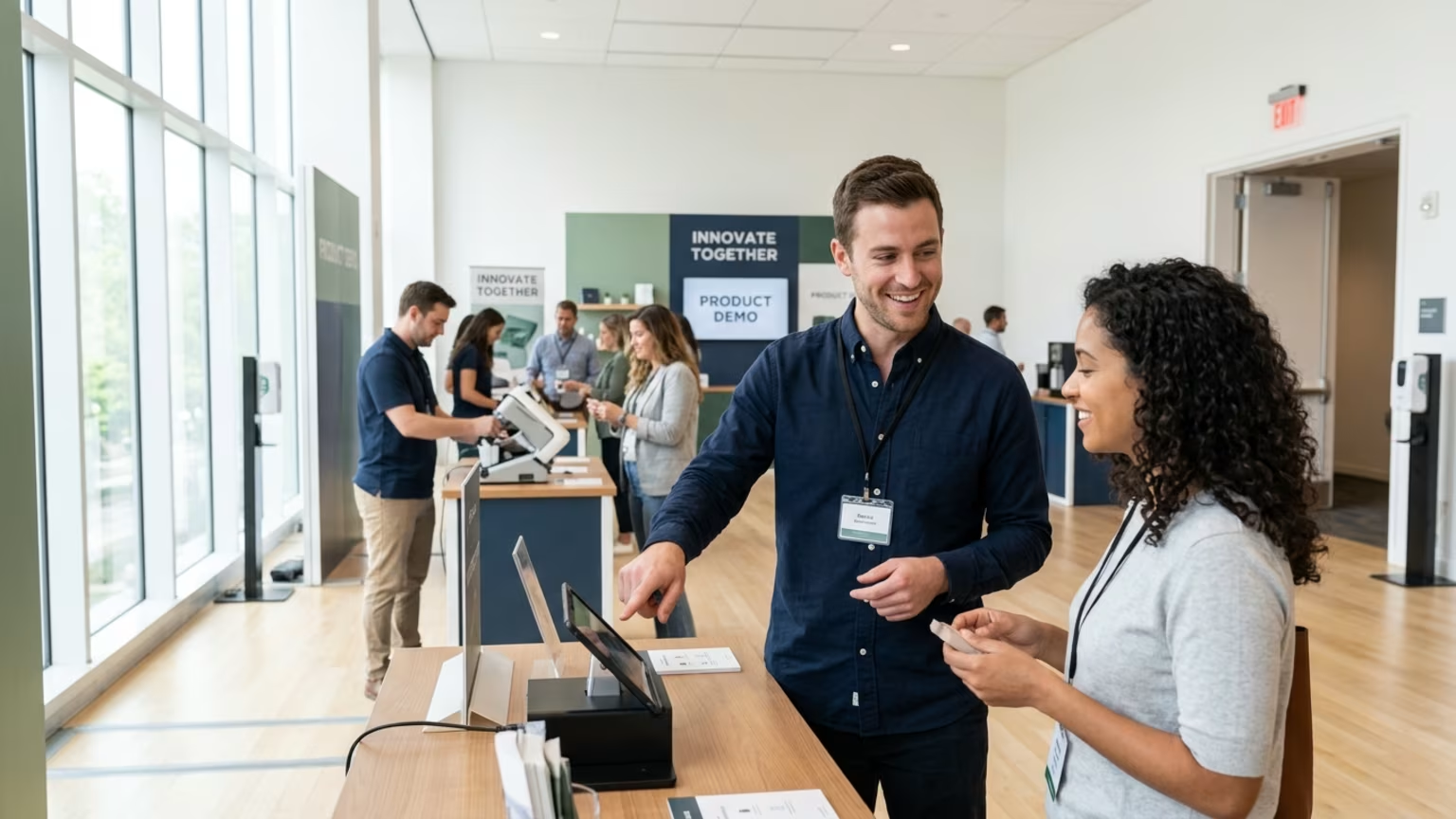
Sarah stared at the empty demo station at eight in the morning. Two brand ambassadors were absent, the sampling product was locked in a distant loading dock, and the expo doors opened in ten minutes. The painful reality of live event logistics had just hit hard.
A recent global marketing events study reveals that over half of field teams struggle with staffing, training, and on-site logistics. We will break down how to conquer this operational chaos with structured playbooks, clear roles, and tight execution strategies.
Experiential marketing has always been a high-stakes balancing act between creative vision and physical execution. When brand leaders invest heavy capital into live consumer experiences, they expect flawless brand representation. Reality often delivers a much harsher outcome on the trade show floor. Missing inventory, confused staff, and slow check-ins can destroy a campaign before the first sample is even poured.
Marketing leaders frequently face a wide gap between their marketing goals and physical reality. The recent global marketing events study highlights this exact tension point on the physical floor. Industry analysts report that a lack of on-site coordination creates severe bottlenecks at live activations. Marketing teams are struggling most with attendee flow and vendor management at regional trade shows and local brand events.
Staffing remains the sharpest pain point for these brands. According to recent industry surveys, over half of respondents cite field staffing and training as their top operational hurdles. You can design a beautiful booth, but unmotivated or absent staff will ruin the consumer experience. Brands need reliable people who can intercept shoppers, communicate value, and drive trial without needing constant supervision.
A beautiful physical setup means nothing if the execution fails on the floor. Poor vendor management leads to delayed shipments, missing health permits, and chaotic load-in schedules. When field teams spend their morning chasing pallets of product, they miss prime opportunities to engage early foot traffic. This logistical friction directly reduces the total Return on Investment for the entire experiential campaign.
Operators must adopt a more rigorous approach to fix these glaring issues. Relying on hope or last-minute text messages is a failing strategy for national roadshows or high-volume sampling tours. The smartest brands build scalable operational models that remove guesswork and enforce accountability at every consumer touchpoint.
Trade show floors are chaotic environments filled with endless sensory distractions. When marketing teams fail to plan for proper attendee flow, they create physical bottlenecks that frustrate potential buyers. Visitors will simply walk past a crowded demo station if the line looks disorganized or confusing. You lose valuable qualified leads simply from bad spatial planning.
Effective attendee flow requires deliberate spatial architecture and clear signage. Your activation footprint must guide people naturally from an initial hook to a deep product conversation. Do not block natural walkways with bulky displays or massive sampling tables. You want a smooth path that invites people in and gives them space to experience the brand comfortably.
Fixing these operational pain points requires a fundamental shift in field planning. You must replace loose guidelines with operator-grade discipline across your entire experiential marketing calendar. A solid strategy starts with defining exactly who owns each part of the event lifecycle. There should be absolute clarity regarding who handles local permits, freight shipping, and on-site staff management.
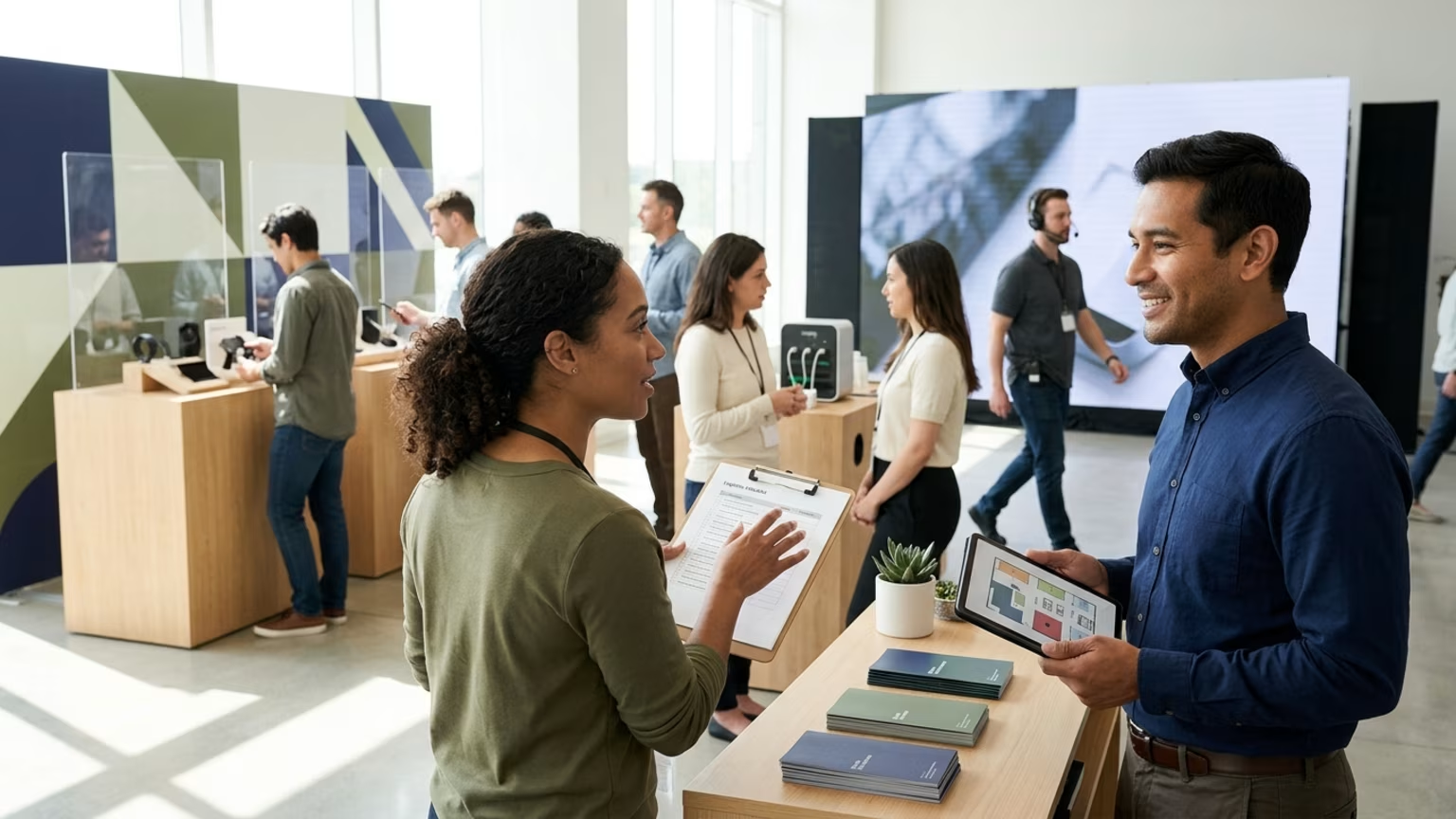
Clear role definitions prevent the familiar scramble when something inevitably goes wrong. The local field manager should focus entirely on consumer engagement and team motivation. A central logistics coordinator should handle the heavy lifting of freight tracking, vendor negotiations, and booth storage. This deliberate division of labor keeps your front-line team fresh and ready to sell.
Integrated technology is the next pillar of a strong field operations strategy. Relying on paper sign-in sheets or casual text messages for staff management creates massive operational blind spots. You need digital tools for instant check-in, schedule adjustments, and real-time performance tracking at retail demos. This visibility allows marketing leaders to spot absent staff instantly and deploy backups without missing a single beat.
You must treat field training as a continuous process rather than a single brief. Briefing documents should be highly visual, easy to read on a mobile phone, and focused entirely on key talking points. When recruiting reliable field staff, look for people who understand the product deeply and adapt quickly to different consumer questions. This preparation turns average temporary staff into highly effective brand advocates.
Staffing issues go far beyond basic attendance and punctuality. The study data shows that inadequate training leaves field teams unprepared for real consumer interactions. Brand ambassadors often memorize a basic script but panic when asked detailed questions about ingredients or sourcing. This lack of deep knowledge destroys consumer trust instantly.
You must build training programs that focus on conversational agility rather than rigid memorization. Teach your team the core brand values and empower them to answer questions naturally. Role-playing different consumer scenarios during onboarding builds massive confidence. A confident ambassador can turn a passing glance into a meaningful brand connection.
Execution is where strategies survive or fail on the physical trade show floor. You need a step-by-step playbook that removes friction and keeps your team focused on driving product trial. Every successful activation follows a rigid sequence of physical actions. Following these precise operational steps will streamline your next live brand activation.
The era of counting business cards and calling an event successful is entirely over. You must track metrics that prove your physical activation generated real revenue or pipeline momentum. Clear reporting is the only valid way to justify future event budgets to your executive team.
Start by tracking your primary lead indicators directly on the floor. Pay close attention to the raw number of qualified conversations and the total volume of physical product sampled. These numbers tell you if your staffing strategy and booth positioning actually attracted the right target demographic.
Lag indicators will eventually tell the true story of your overall event success. Measure the retail sell-through rates in the specific zip codes around your activation over the following month. For business-focused trade shows, track the conversion rate of event leads into scheduled sales meetings.
Cost per acquisition is the final metric that bridges marketing and finance departments. Divide your total event spend by the number of new qualified customers or wholesale orders acquired. If this number is too high, you either overspent on logistics or your field staff failed to convert foot traffic.
Quantitative data provides the hard numbers for your Return on Investment calculations. Qualitative feedback gives you the proper context to understand exactly why those numbers look the way they do. Your field team is having hundreds of conversations with actual buyers every single day. You need a system to capture these insights before they fade from memory.
Require your staff to log common objections or recurring questions at the end of their shift. If multiple consumers complain about the packaging, you have uncovered a major product insight. If a specific feature consistently delights shoppers, your marketing department needs to highlight that feature in digital ads. This real-time feedback loop makes your entire marketing ecosystem significantly smarter.
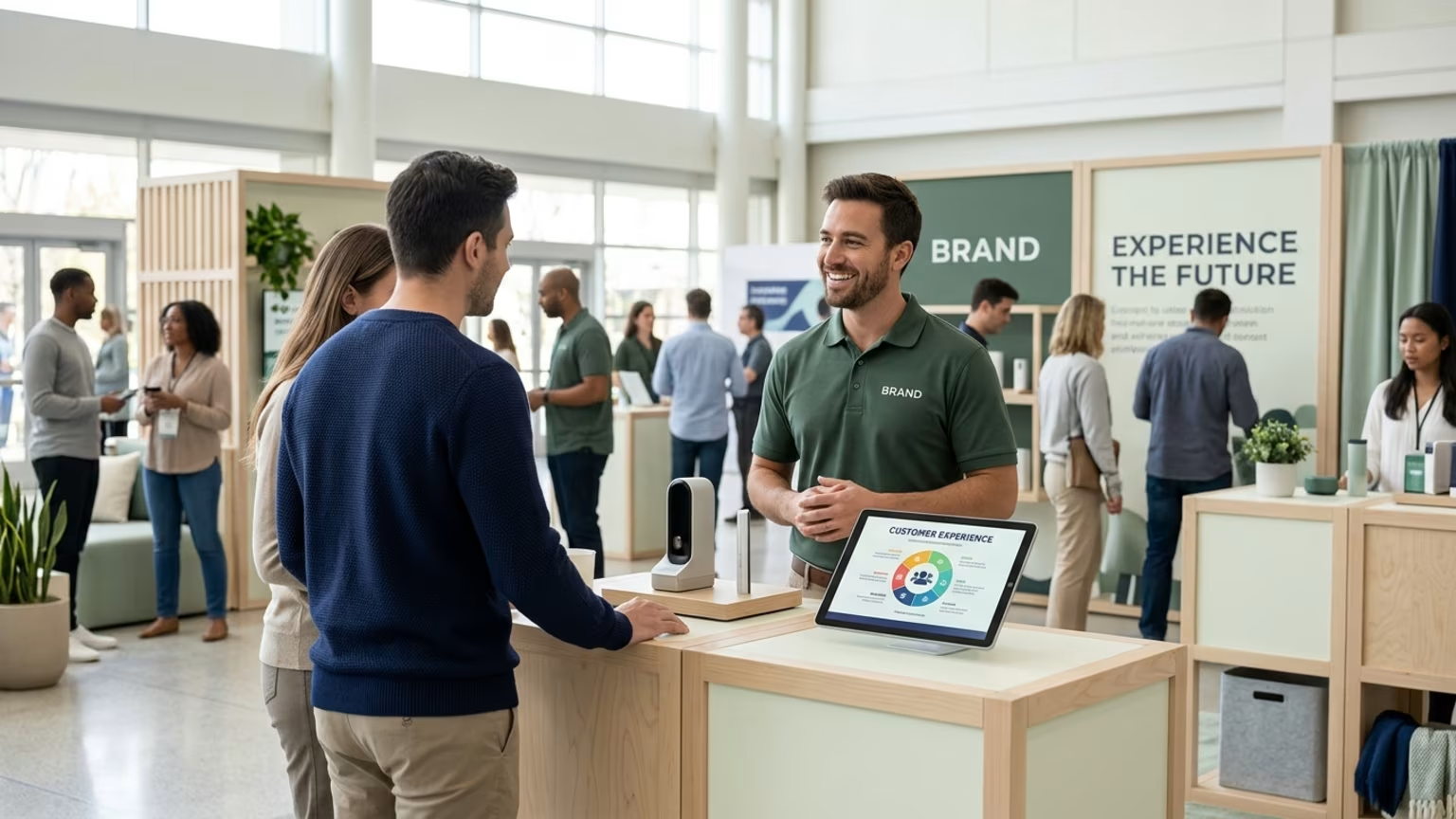
Great experiential marketing combines emotional resonance with flawless operational mechanics. When you remove the logistical friction, your team can focus entirely on creating memorable human moments. Consumers can always sense when an event staff is stressed, disorganized, or poorly trained.
A VP of Marketing in the CPG beverage category told us: 'Robbie, your leadership and vision turned our campaign into something truly special. The Makai team brought our new drink to life with energy, creativity, and flawless execution. Thanks to you, our brand isn't just tasted, it's remembered.' Our team's approach transformed their product launch into a memorable brand experience.
This level of success requires taking total control of the entire field process. You can not outsource the responsibility for your brand reputation to disconnected third-party event vendors. You need a cohesive unit that treats your physical product with the exact same urgency as your internal team.
Our team has spent decades perfecting the exact operational mechanics that this global study highlights. We understand that a brilliant creative concept dies quickly if the freight truck gets lost. We handle the brutal complexities of permits, staffing, and logistics so your team can focus on growth. We build resilient systems that anticipate failures and correct them instantly.
Stop letting poor logistics ruin your live event performance. Reach out and book a strategy call with our operations team today.
Build a rigid pre-event checklist this week to catch logistical gaps long before your next trade show load-in.

30 Years Experiential & Retail Activation Partner for CPG & Beverage Brands | Multi-Market Demos, Roadshows & Costco/Club Programs That Actually Sell