Robbie Thain
Founder, CEO

A recent wave of executive job postings shows brands demanding measurable revenue from field events. Learn how to track experiential marketing ROI.
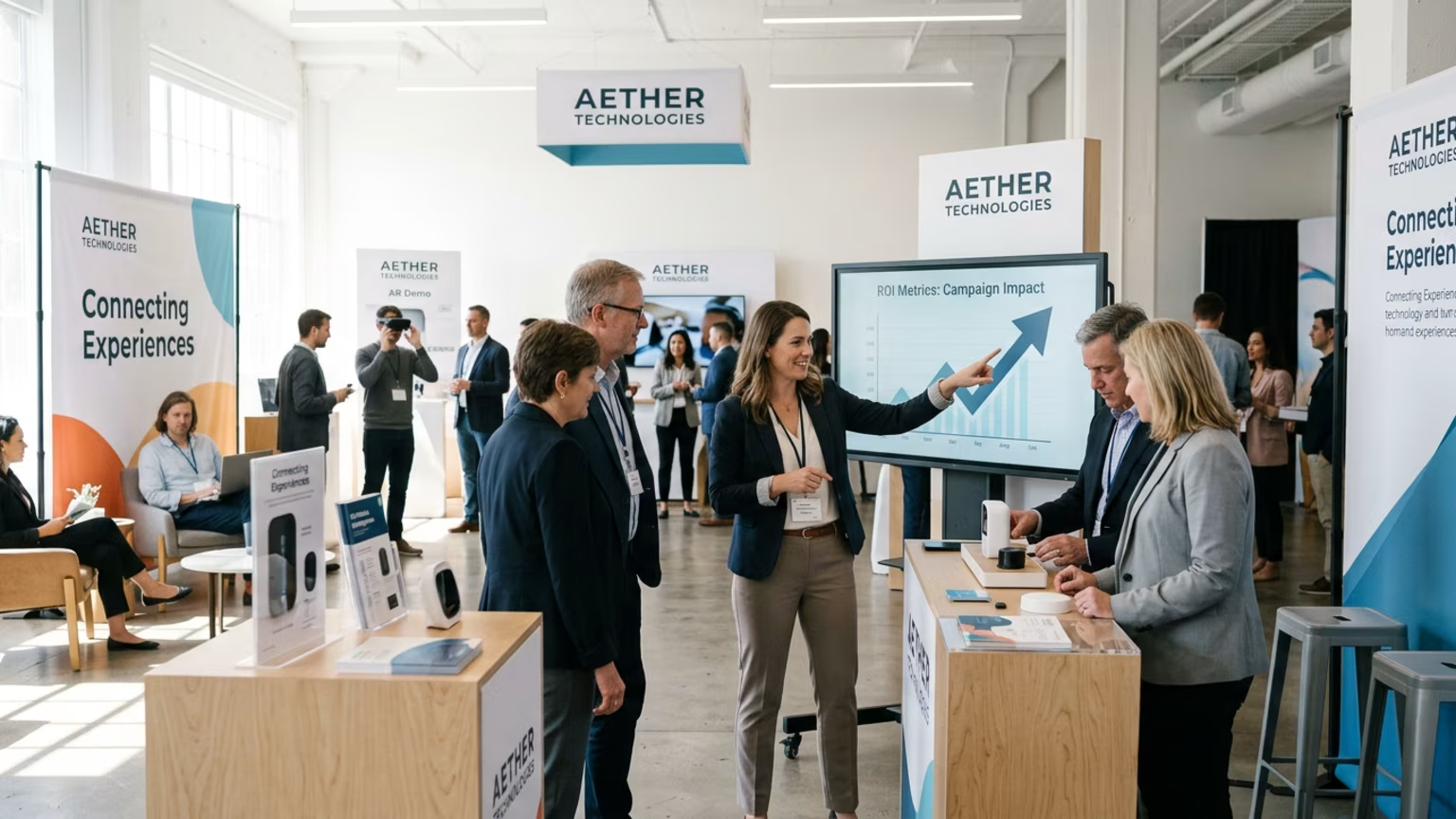
A senior field marketer stands in the middle of a massive trade show booth at closing time. Empty sample cups cover the counters. Stacks of business cards sit unorganized in a glass fishbowl. The executive team will ask for the sales pipeline report by Monday morning.
A recent wave of executive job postings highlights a decisive shift where brands expect field events to generate measurable revenue. We outline a systematic approach to turn live interactions into hard data and proven sales pipeline.
Brands often invest a massive portion of their annual marketing budget into live physical events. The planning process takes months of internal meetings, agency calls, and vendor negotiations. Marketing teams obsess over booth aesthetics, custom lighting, and premium giveaway items. The physical presence looks like a massive success to anyone walking past the activation space.
Trade show floors become crowded battlegrounds for consumer attention. Competitors set up massive displays right across the aisle to distract your target audience. Your field team must fight for every single conversation amid the noise. The breakdown happens the moment the doors close and the tear down crew arrives.
Teams return to the office with fragmented data and vague stories about great conversations. Executives ask for the Return on Investment (ROI) data at the next leadership meeting. Marketing leaders struggle to connect all those sample cups and brief chats to actual business outcomes. The gap between expensive field execution and measurable sales lift creates serious tension in the boardroom.
CFOs want to see a clear line between the event budget and the generated pipeline. Recent job market data reflects an urgent demand to fix this operational disconnect immediately. Companies are aggressively hiring executive leaders who treat private client events and trade shows like strict performance channels. A recent posting for a VP of Experiential Marketing explicitly requires the ability to build go to market plans backed by meaningful financial returns.
Brands are tired of funding beautiful brand theater without seeing a clear path to revenue generation. They want seasoned operators who can track every dollar spent back to a closed deal. The modern event marketer must think like a sales director and execute like a logistics expert.
Building a predictable experiential marketing system requires moving away from hope as a strategy. You must design every physical interaction to capture data naturally and securely. The framework starts by aligning the event goal directly with a precise business outcome before you sign a venue contract. You cannot build a tracking system on the final day of event prep.
The data architecture must dictate the physical layout of your brand space. If you want consumers to register for a digital coupon, you need dedicated scanning stations built into the primary counter. If the goal is retail sell through, every single product demo must push the consumer toward a precise retail partner. We call this approach intent aligned execution.
This means your brand ambassadors are not just passing out free items to anyone with a pulse. They are trained to qualify interest and guide visitors toward a designated digital or physical conversion point. The physical booth layout should physically direct traffic toward these precise interaction zones. Every element of the physical environment serves a deliberate operational purpose.
When brands integrate seamless data capture tools on the floor, the whole dynamic changes immediately. The broader industry shift toward quantifiable field marketing success is clear, similar to the strategy driving recent major agency acquisitions focused on CPG execution. You stop guessing about event impact and start reporting on actual consumer intent. This unified approach turns a chaotic expo hall into a highly controlled environment for lead generation and pipeline velocity.
The strategy removes the guesswork from field marketing. Executives can finally see exactly how consumer engagement translates into quantifiable business value. A solid framework prevents the team from getting distracted by flashy event gimmicks that fail to produce pipeline. Recent updates in enterprise software reflect this exact trend.
Event teams are restructuring their data capture methods to align with major CRM architecture changes, like the upcoming Salesforce software updates impacting field teams.
Moving from high level theory to actual field execution requires extreme discipline and clear operational standards. A beautiful strategy means nothing if the local staffing team fails to capture the right information. You need a rigorous process to guarantee every interaction supports the broader financial goal. The following steps outline how to deploy a high performance event team flawlessly.
You cannot prove the value of a live activation without a strict measurement hierarchy. Executive teams do not care about foot traffic estimates or the number of brochures distributed. They need to see leading and lagging indicators that mirror standard sales performance data. A modern experiential marketing dashboard should look identical to a digital marketing analytics screen.
You need hard numbers that prove consumer intent and pipeline growth. A rigorous tracking system separates true experiential leaders from amateur event planners. Leading metrics tell you if the activation is functioning correctly in real time. You should track the cost per qualified interaction and the sample to lead conversion rate.
Another key leading indicator is the volume of first party data captured per hour of event operation. These real time numbers act as an early warning system for your field director. If a brand ambassador passes out five hundred samples but captures zero leads, the manager can intervene. These numbers allow your field manager to adjust staffing or messaging on the second day of a multi day expo.
If the data capture rate drops, the team can pivot their approach immediately to fix the issue. Lagging metrics provide the final proof of financial performance for your executive team. These numbers take weeks or months to finalize after the activation concludes. The patience required to track these lagging metrics pays off during annual budget reviews.
The most significant lagging indicator is the pipeline generated directly from the event contacts. You must track the percentage of event leads that convert to actual sales within a ninety day window. Tracking retail execution success through post event store lift provides another layer of quantifiable proof for consumer brands. The push for measurable results explains why many CPG brands are adding specialized market development roles to oversee retail execution.
Many teams utilize geofencing to measure the percentage of event attendees who visit a target store location afterward. This data creates a very clear picture of consumer movement and purchasing behavior. Hard metrics turn experiential marketing from a cost center into a proven revenue driver.
Applying this disciplined approach changes the trajectory of a major product launch. Consider a premium beverage company preparing to enter a highly competitive regional market. They needed to move beyond standard grocery sampling and create a memorable presence that drove immediate retail sales. The executive board demanded a clear tracking mechanism to justify the regional field marketing spend.
We needed a campaign that delivered high energy engagement without sacrificing operational control. We designed a targeted mobile sampling tour that hit specific high traffic zones near their key retail partners. Every brand ambassador used a localized QR code system to track engagement and push consumers toward a precise store promotion. The field team captured real time feedback and built a highly localized database of verified buyers.
A VP of Marketing in the CPG beverage category told us: 'Robbie, your leadership and vision turned our campaign into something truly special. The Makai team brought our new drink to life with energy, creativity, and flawless execution. Thanks to you, our brand isn't just tasted, it's remembered.' Our team's approach transformed their product launch into a memorable brand experience.
The data validated the strong emotional connection the consumers felt during the local activation. The brand saw a direct spike in sell through at the targeted retail locations within forty eight hours. Store managers reported a surge of informed consumers asking for the product by name. The field data perfectly matched the inventory depletion rates at the regional distribution centers.
They could map the exact cost of the field activation against the regional sales increase. This level of clarity gives marketing executives the total confidence to scale their experiential budgets for the next quarter. If you are ready to stop guessing and start measuring your event impact, book a strategy call with our team.
The era of unmeasured event spending is over. Brands require field marketing operations that generate actual business value and clear financial returns. Live experiences remain the most powerful way to build brand trust, but only when executed with absolute operational rigor.

30 Years Experiential & Retail Activation Partner for CPG & Beverage Brands | Multi-Market Demos, Roadshows & Costco/Club Programs That Actually Sell