Robbie Thain
Founder, CEO

Explore how G-Star 2026 and Hyundai Motor are using a pre-event retail pop-up to drive early ticket sales, capture attention, and transform exhibition models.
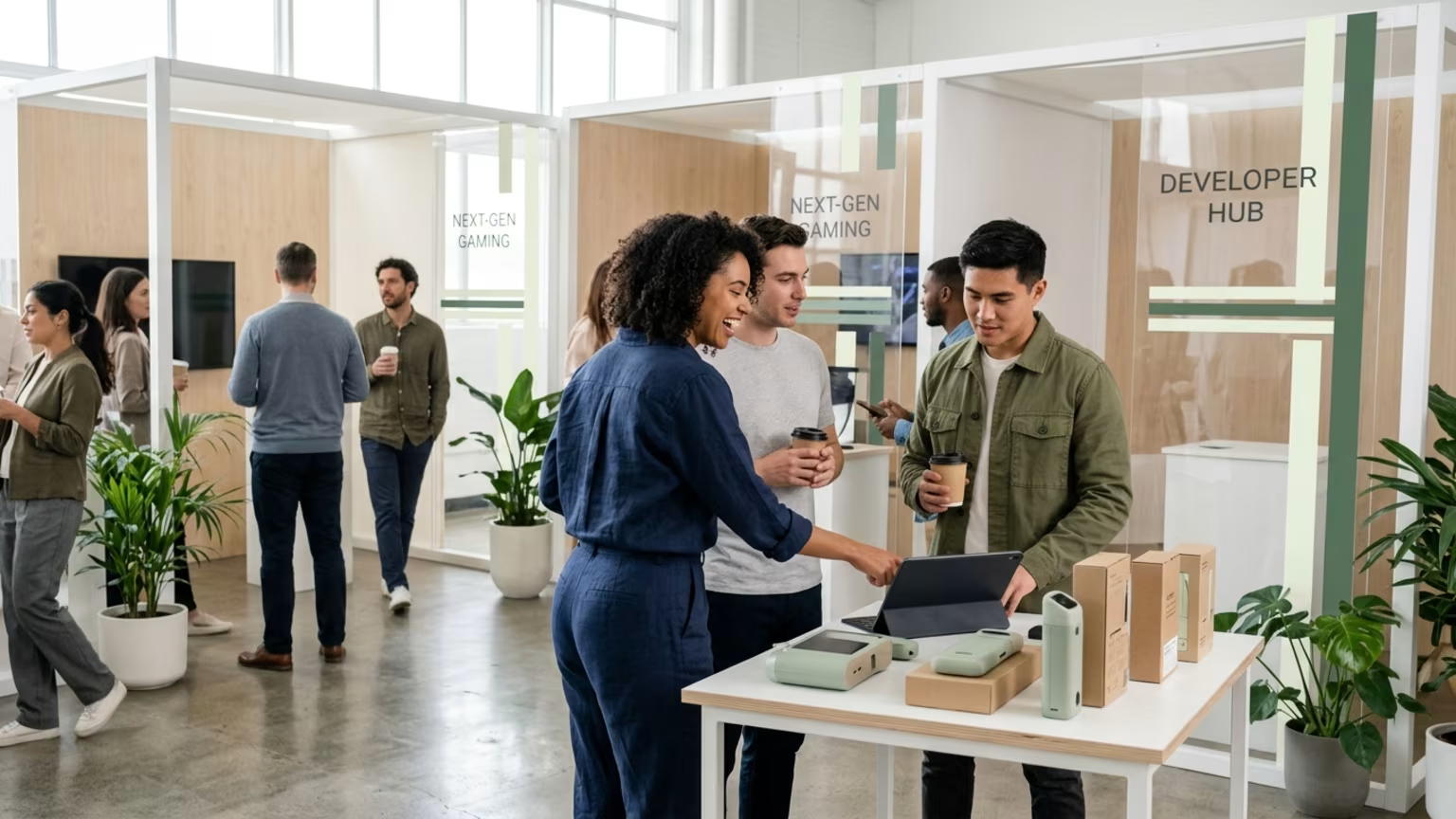
A 33 percent early-bird ticket discount might look like a simple retail promotion. In reality, it signals a massive operational shift for experiential marketers managing complex campaigns. At an active fourth-floor activation inside Hyundai Department Store Pangyo, the organizers of G-Star 2026 and partners like Hyundai Motor are rewriting the exhibition playbook. They are building a physical pre-event funnel instead of waiting for attendees to arrive at the main exhibition hall.
The conventional trade show model treats the exhibition floor as a single destination. G-Star 2026 is scheduled for November 19 to 22 at BEXCO in Busan. In this traditional setup, brands rely entirely on the main event dates to engage consumers. Regular BTC admission reservations for the main show will begin September 29 under a fully advance-booked system.
This approach condenses all customer acquisition into a few chaotic days. Event operators must secure prime floor space to stand out among hundreds of exhibitors. Marketers face intense pressure to capture leads and drive product trial while attendees rush past. Logistics are highly centralized, which simplifies certain venue planning aspects.
However, the competition for consumer attention remains fierce. Brands often struggle to secure meaningful Return on Investment when the entire activation is confined to a crowded hall. The constraints are largely tied to strict time limits and inevitable audience fatigue. You have one weekend to make an impression and close a sale.
The traditional model also demands precise inventory management over a very short window. Supply chain teams must forecast exactly how many samples or premium giveaways will be consumed in a compressed timeframe. If a brand underestimates demand, they run out of stock on day two and lose crucial conversion opportunities. If they overestimate, they face high shipping costs to return excess materials back to their warehouses.
The alternative approach decentralizes the experience by launching an advance retail footprint. The organizing committee is staging its first reported pre-event G-Star pop-up at Hyundai Department Store Pangyo from September 1 to 6. This activation functions as a physical teaser that combines commerce with hands-on engagement. The package promotes a new Special Pass developed with KREAM, which is a Korean trend and resale platform.
This KREAM collaboration bundle combines a BTC admission ticket, Yumi’s Cells merchandise, promotional cards, and a KREAM voucher. At the pop-up, the early-bird prices are KRW 20,000 for adults and KRW 10,000 for teenagers. These promotional prices offer discounts of up to 33 percent off the regular rates. The pass is scheduled to move to KREAM sales on September 7 at KRW 25,000 for adults and KRW 15,000 for teenagers.
Crucially, partners provide active value rather than static logos. Hyundai Motor is contributing a hands-on sim-racing zone that connects gaming with mobility esports. Visitors can directly try a driving simulation instead of simply looking at a parked vehicle. This model turns a standard ticket sales desk into a multi-layered brand experience that drives early brand awareness.
A mall-based activation also changes the fundamental staffing requirements for an experiential campaign. Instead of hiring temporary trade show ambassadors for a single weekend, brands need trained retail staff who can manage sustained daily traffic. These teams must handle complex point of sale transactions, merchandise fulfillment, and technical troubleshooting for elements like the sim-racing setup. It requires a rigorous retail mindset rather than just a promotional approach.
The centralized exhibition model remains the undeniable winner for specific operational scenarios. Brands with strict budget constraints often prefer a single physical build rather than managing multiple activations across different cities. A consolidated trade show presence allows teams to focus their staffing resources on one critical weekend. When your primary goal is maximizing target audience density, a specialized venue is highly efficient.
Regular admission for the main event is listed at KRW 18,000 for adults and KRW 8,000 for teenagers. These standard ticket formats appeal directly to core fans who already plan their travel around the main dates. Regular admission prices remain unchanged from the previous year according to Korean coverage. This stability helps dedicated attendees plan their schedules and budgets effectively.
The single destination approach also excels when brands need tight CPG shelf proximity or controlled wholesale environments. Buyers and hardcore loyalists congregate in one place, making it easier to manage high volume demonstrations. Consolidating logistics means event coordinators do not have to split their attention across regions. For organizers trying to minimize variable regional costs, the traditional convention hall is still a fortress.
Specialized industry events provide a filtered audience of qualified buyers and dedicated enthusiasts. Everyone walking the floor has already invested time and money to be there. This pre-qualification process means field marketing teams spend less time explaining the basic value proposition of their product. They can immediately transition into deeper product demonstrations and business development conversations.
Deploying a pre-event pop-up dominates when campaigns require early funnel data capture and broader consumer reach. A department store setting exposes specialized intellectual property to everyday shoppers. Separate reporting shows Pangyo’s department-store space is also being used for a gaming-culture pop-up involving ASUS ROG, Pokémon Korea, and G-Star. Placing an activation in a lifestyle environment attracts casual foot traffic that might never visit a dedicated gaming convention.
This tactic is vital for major brand launches that need sustained momentum. Integrating a partner experience, like the Hyundai Motor sim-racing setup, turns a simple ticket transaction into a memorable event. It allows sponsors to secure physical interactions weeks before their competitors even set up their booths. Brands can focus on designing in-store experiences that improve retail sell-through without the pressure of a massive convention.
This method is particularly effective for multi-brand collaborations. By bundling event access with exclusive merchandise and a retail voucher, marketers create overlapping consumer incentives. The pop-up generates immediate revenue through physical merchandise sales while securing downstream attendance for the main exhibition. When early market penetration is the goal, this dispersed strategy outperforms a static booth.
The mall environment also provides excellent opportunities for contextual marketing. Shoppers are already in a buying mindset when they encounter the pop-up. Offering a tangible discount on admission while providing immediate gratification through merchandise creates a powerful purchase loop. Marketers can operationalize in-store experiences to turn passive window shoppers into active ticket holders.
In our experience, these multi-touchpoint campaigns fundamentally change how consumers view a product. One of our clients, a Brand Manager in the alcohol beverage space, shared their experience: "Working with Makai was a game-changer. The activation blew past all our KPIs and created a lasting emotional connection with our customers. Simply outstanding work." That level of emotional connection requires meeting consumers where they already shop and play.
Choosing between a centralized exhibition and a dispersed pop-up strategy comes down to measurement and operational control. The traditional single destination offers logistical simplicity and concentrated audience access. The retail pop-up model offers early engagement and broader visibility. An advance activation must actually drive commercial outcomes to justify the added expense.
Pop-ups require intense field discipline to ensure visitors do not just play a simulator and walk away. Marketers must define their success metrics before opening the doors. These metrics should track pass sales, qualified leads, product trials, and downstream event attendance. Without rigorous tracking, an active activation is merely a costly form of temporary entertainment.
It is crucial to remember that experiential value does not automatically equal purchase intent. Giving visitors a relevant hands-on activity is only the first step in the conversion journey. The strongest event programs connect physical participation directly to measurable retailer transactions or verified pipeline growth. This allows brands to capture first-party shopper data cleanly.
We see the hybrid approach taking the lead for major properties navigating modern event marketing. Returning to that active fourth-floor activation in Pangyo, the true value is capturing consumer commitment early. The organizers secure revenue and engagement before the competition even turns the lights on. A strategic pre-event footprint transforms passive anticipation into active physical participation.
Choosing between a centralized exhibition floor or a pre-event pop-up footprint requires strict measurement controls to ensure physical traffic actually converts. Makai assumes full operational command of these programs, eliminating the problem of scattered attention and poor booth flow through our Brand Activations capability. We create high energy activations that turn awareness into participation and drive measurable consumer response. Request a proposal

30 Years Experiential & Retail Activation Partner for CPG & Beverage Brands | Multi-Market Demos, Roadshows & Costco/Club Programs That Actually Sell


