Robbie Thain
Founder, CEO

FMI's 2026 U.S. Grocery Shopper Trends report proves physical retail remains critical. Learn why brands must prioritize tactile, mission-based in-store experiences.
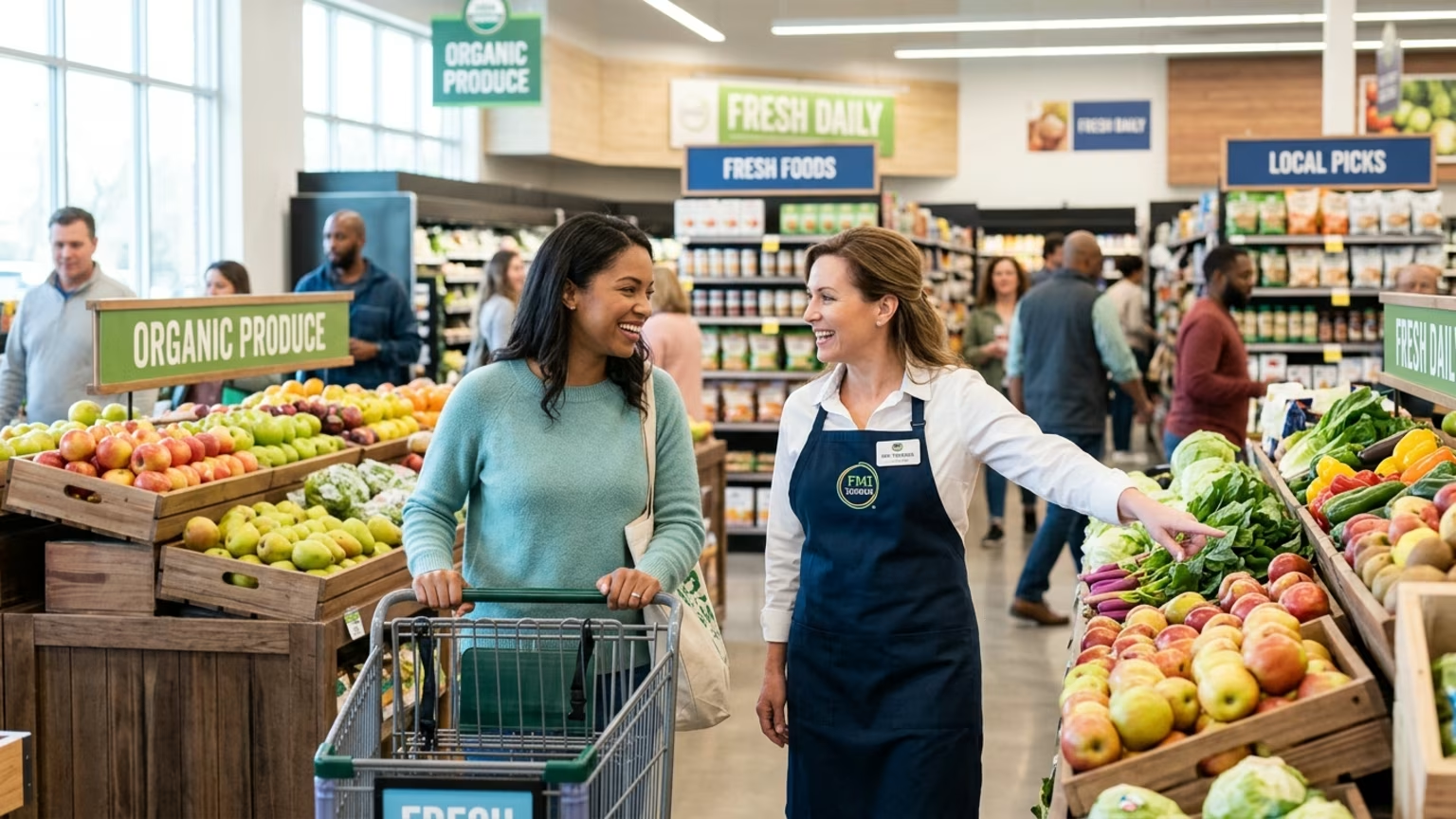
A shopper stands in the center aisle of a regional grocery chain holding a phone in one hand and a shopping basket in the other. Flashing displays, QR-coded shelf tags, and smart screens push algorithmic recommendations from every angle. Instead of engaging with the brand activation, the shopper leaves the aisle because the sensory load is simply too high.
Myth: The modern grocery activation must replicate the digital e-commerce experience with heavy screens and algorithmic targeting.
Truth: Shoppers are actively rejecting digital overwhelm in favor of tactile, mission-based physical engagement.
Brand leaders often fall into this trap for very logical reasons. Digital retail media budgets have grown substantially over the last few years. Marketing directors feel intense pressure to prove Return on Investment through trackable digital interactions. It is easy to assume that shoppers want the exact same algorithmic curation in the aisle that they get online.
That assumption breaks down completely on the actual retail floor. Digital convenience cannot replace the fundamental human need to see, touch, and evaluate physical products. FMI reports that 54% of shoppers always shop in-store at their primary grocery store. Another 20% mostly shop in-store, while 15% split shopping between channels about equally.
Shoppers are actually fatigued by constant digital prompting. JLL’s survey found that 72% of respondents said they had left a store early because the environment felt overwhelming. That figure rises to 81% among neurodivergent consumers. Adding more flashing screens to an activation does not automatically increase sales conversion.
Many retail strategists assume that younger demographics demand entirely digital experiences on the floor. JLL reported that 53% of its Gen Z and Millennial respondents preferred browsing physical stores without algorithmic influence. This data proves that younger shoppers view the physical store as a refuge from their highly curated digital lives. They do not want an algorithm telling them what to buy while they are actively trying to make an independent choice.
This means that pushing heavier screen integration often backfires. It frequently drives the most valuable foot traffic away from your product.
Field marketing teams must stop building activations that compete with the shopper's primary goal. The modern grocery trip is highly mission-driven. FMI’s 2026 research found that 44% of shoppers say they are having more family meals at home. Furthermore, 35% say they are cooking more often.
Seventy percent say their income has not kept pace with inflation, helping explain why shoppers are looking for value as well as convenience. Your in-store activation must solve a real problem for these specific shoppers. A well-placed sampling station should help a parent figure out an affordable Tuesday night dinner. It should not just hand out a free item without clear context.
FMI reports that home-prepared and food-retail options account for 68% of lunches among people working away from home. That number jumps to 79% among people working from home. Positioning your CPG product as a direct solution to these specific meal occasions builds instant relevance. Brands aiming to improve their physical execution often look for ways of designing in-store experiences that improve retail sell-through.
The most creative activation concept will fail if the operational fundamentals are weak. Intouch Insight’s study reported an 82.4% overall in-store execution score across its evaluated locations. Product availability was identified as the lowest-scoring category at 72.2%. You cannot drive trial or conversion if the product is out of stock on the shelf behind your sampling table.
Experiential teams must coordinate inventory checks, staffing levels, and replenishment plans before any event begins. Smart field marketers treat digital integration as a selective utility rather than a constant interruption. Intouch Insight reported that 43% of respondents first use a retailer website or app for specific product information. Six percent said they already use an AI assistant for grocery recommendations.
Brands should use digital tools to help shoppers check inventory, access a coupon, or find detailed nutritional facts. Digital should remove friction instead of replacing the human interaction at the activation table. Integrating these strategies successfully requires an operator-grade approach to field management.
A Director of Brand Strategy in the CPG snack division shared: "The Makai team turned our product launch into a sensory event that shoppers still talk about. From creative storytelling to flawless in-store execution, they made snack time unforgettable. We couldn't have asked for a stronger partner." Our team created an in-store experience that left a lasting impression on consumers and became a memorable brand moment.
Physical retail provides a tactile advantage that digital channels simply lack. JLL’s survey found that 83% of respondents enjoy unexpected product discovery. Shoppers actively want to find new items, taste new flavors, and interact with knowledgeable brand ambassadors. This is why human-centric sampling programs consistently outperform static cardboard endcaps.
A trained ambassador can read a shopper's hesitation, ask about their dietary preferences, and offer a tailored recommendation. Brands must evaluate their experiential strategies through the lens of sensory clarity. A loud footprint with complex digital entry mechanics will alienate shoppers who are already fatigued. By contrast, a clean and approachable footprint invites immediate participation.
This practical alignment directly impacts how consumers perceive your product value. When an activation feels helpful rather than intrusive, shoppers are much more likely to complete the trial and put the item in their cart. Many teams struggle to measure this physical engagement accurately on the floor. Marketers must define clear success metrics before deploying any field staff to a retail location.
These metrics should include qualified interactions, distributed samples, trial completion rates, and immediate add-to-basket rates. Tracking these specific data points provides the necessary proof of Return on Investment. It also gives brand managers the concrete data they need to secure future retail partnerships. Evaluating shopper psychology and in-store activation insights helps brands design spaces that work with human behavior rather than against it.
A successful experiential campaign requires total alignment with the host retailer's operational realities. The Intouch Insight-led 2026 Grocery Value Study evaluated 302 in-store and 175 digital-curbside mystery shops across selected chains and five U.S. hub markets. The study showed that price and savings received a 95.7% score. Store environment scored 95%, while fresh quality scored 86.6%.
These high scores mean that shoppers expect a premium environment when they walk through the doors. If a retailer maintains a 95% score for store environment, a messy sampling table will stand out negatively. Brand ambassadors must maintain pristine activation zones, follow all food safety protocols, and reflect the retailer's aesthetic standards. This level of operator-grade discipline builds trust with store managers and guarantees future activation opportunities.
Furthermore, the activation must clearly communicate the product's value proposition. A compelling event cannot compensate for an unclear price or a confusing offer. Brand teams must ensure that shelf tags, promotional signage, and ambassador talking points all highlight the same value message. This operational consistency turns a fleeting conversation into a concrete retail sale.
Leaders looking to connect these physical interactions to broader data strategies should prioritize using first-party shopper data to optimize in-store engagement. The goal is to build a unified strategy where the physical event drives the relationship and the digital layer captures the lasting connection.
The most effective grocery activations do not force consumers to look at another screen; they help shoppers make confident physical choices in the aisle.
Balancing the modern shopper's need for physical discovery against their digital fatigue demands strict operational discipline on the retail floor. Makai solves the difficulty measuring real ROI from live events by utilizing our Mobile Sampling Tours capability to deliver your brand directly to audiences through on the go experiences that drive trial and awareness.

30 Years Experiential & Retail Activation Partner for CPG & Beverage Brands | Multi-Market Demos, Roadshows & Costco/Club Programs That Actually Sell