Robbie Thain
Founder, CEO

Learn how the Experiential Marketing Summit 2026 redefined live events with AI, deep personalization, and strict ROI metrics for CPG and national brands.
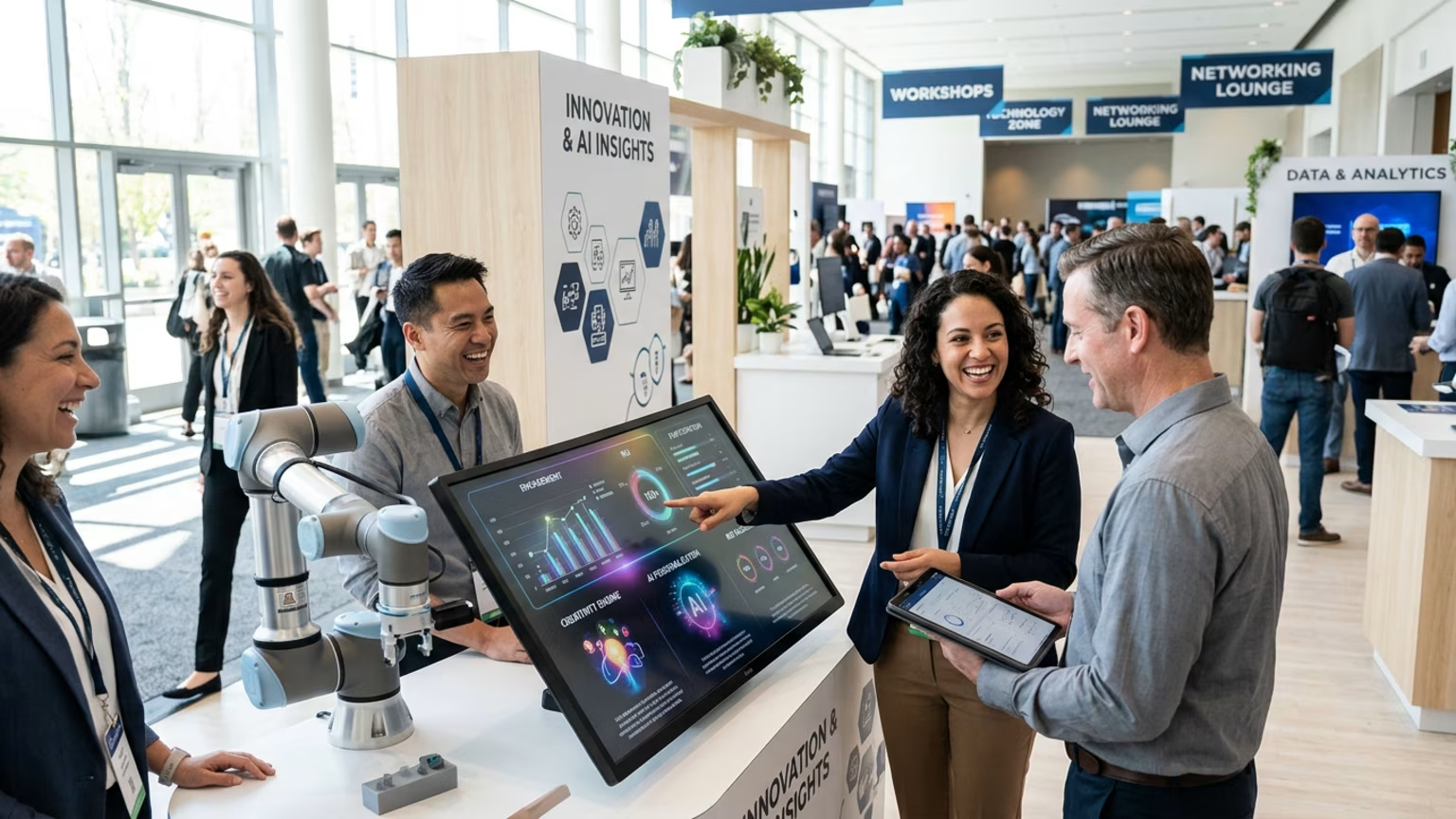
A field marketing director stands near the exit of a busy convention center. She watches hundreds of attendees leave her massive interactive booth clutching free samples. She checks her phone for lead captures and sees a staggering discrepancy. The activation was visually stunning but completely failed to capture the data her retail partners demanded.
The Experiential Marketing Summit 2026 signaled a permanent shift where immersive brand theater must now deliver hard financial numbers. Brands that merge artificial intelligence, deep personalization, and strict performance metrics will dominate real-world consumer engagement moving forward.
Many marketing teams invest massive budgets into live events that look brilliant on social media but fall apart on the trade show floor. Staffing is often inconsistent. Brand ambassadors hand out thousands of expensive product samples without capturing a single usable email address. The venue is packed with foot traffic, but the actual flow of engagement is a beautiful dumpster fire.
When the dust settles and leadership asks for the Return on Investment, field marketers often scramble. They present vanity metrics like impressions or total samples distributed. These numbers hold little weight when sales directors need to prove retail sell-through or pipeline growth. Exhibition Globe coverage highlighted this exact friction point at the summit, emphasizing the urgent need to merge creativity with measurable business outcomes.
Industry reports indicate that a major barrier to increasing experiential budgets is the inability to prove financial returns. Marketers know that physical interactions are highly persuasive for consumers. Shoppers are far more inclined to purchase a product after participating in a brand experience. The failure happens when teams do not build the tracking infrastructure to connect that positive emotion to a final sale.
Event marketers face immense pressure to justify their spatial investments to skeptical finance departments. Executive boards want to see clear alignment between field marketing activities and broader corporate revenue goals. Without rigorous data capture protocols, live events are treated as disposable promotional expenses rather than strategic growth engines.
We create experiential marketing programs built to connect emotion with action. Our process blends creativity, strategy, and data to guarantee every brand interaction drives measurable results. We craft experiences that engage all five senses, helping people not just see brands, but feel them, turning moments into meaningful business outcomes.
The days of choosing between creative storytelling and analytical rigor are over. Live experiences must be architected backward from targeted sales and data goals. Planners should establish cost targets per qualified lead and expected sales lift long before finalizing any booth design. Award-winning footprints that fail to move product are rapidly losing funding.
Artificial intelligence is now the operational spine of event execution. Planners are routing mobile tours using predictive analytics to find high-propensity consumer zones. Algorithms process location data and historical foot traffic to optimize staffing schedules and prevent costly product stockouts. Consumers expect these deep personalization frameworks when they step into a physical brand footprint.
Industry analysts report that companies utilizing intensive customer analytics drastically outperform competitors in customer acquisition. Modern execution requires designing modular footprints that adapt dynamically to different audience segments. A single question on a digital tablet can direct a visitor toward a tailored product sampling track. This friction-free interaction builds trust and scales data capture effectively.
Artificial intelligence transforms how marketers select locations and deploy their physical assets. Predictive models analyze past consumer behavior to identify the exact neighborhoods where product trials will yield the highest conversion. This eliminates the guesswork that previously dominated roadshow planning. Brands can now deploy their assets exactly where their target demographics naturally congregate.
Machine learning also transforms inventory management during high-volume consumer events. Smart systems can forecast expected foot traffic spikes based on time of day and local weather patterns. This allows managers to right-size their staffing levels and guarantee adequate sample inventory. These operational efficiencies dramatically reduce waste and lower the overall cost per interaction.
AI-driven engagement orchestration platforms are completely changing post-event follow-up. These systems trigger customized communication flows depending on how an individual interacted with the brand footprint. A visitor who scanned a barcode receives a different text message than someone who completed a full product demonstration. This hyper-segmented approach maximizes conversion rates long after the physical event concludes.
A structured approach transforms crowded event floors into predictable conversion engines. Teams must align every physical interaction with a defined data capture point.
Measuring success requires tracking both leading indicators on the floor and lagging business outcomes. Vanity metrics like sheer footfall no longer justify million-dollar event budgets. Teams must analyze the cost per qualified lead against digital acquisition channels. They must measure incremental revenue generated in the weeks following a regional roadshow.
The Experiential Marketing Summit 2026 Exhibitor Services Manual explicitly emphasized human connection. This theme centers on proving how in-person experiences drive tangible business outcomes. Brands must categorize their metrics into reach, lead quality, consumer behavior, and final financial return.
Forward-thinking teams utilize test and control store clusters to measure local sales uplift. They compare retail locations near an activation to similar non-activated stores. Unique promotional codes distributed by field staff offer another clean layer of attribution. The goal is building a bulletproof report that sales directors and CFOs can immediately trust.
Retailer alignment is another critical metric for modern brand activations. A successful experiential campaign should provide clear traffic drivers to your primary retail partners. By proving that your physical activations increase basket sizes at specific grocery chains, you secure better shelf placement. Our team regularly works with brands to establish these reporting frameworks.
You can review our brand activation services to see how data integrates into live environments.
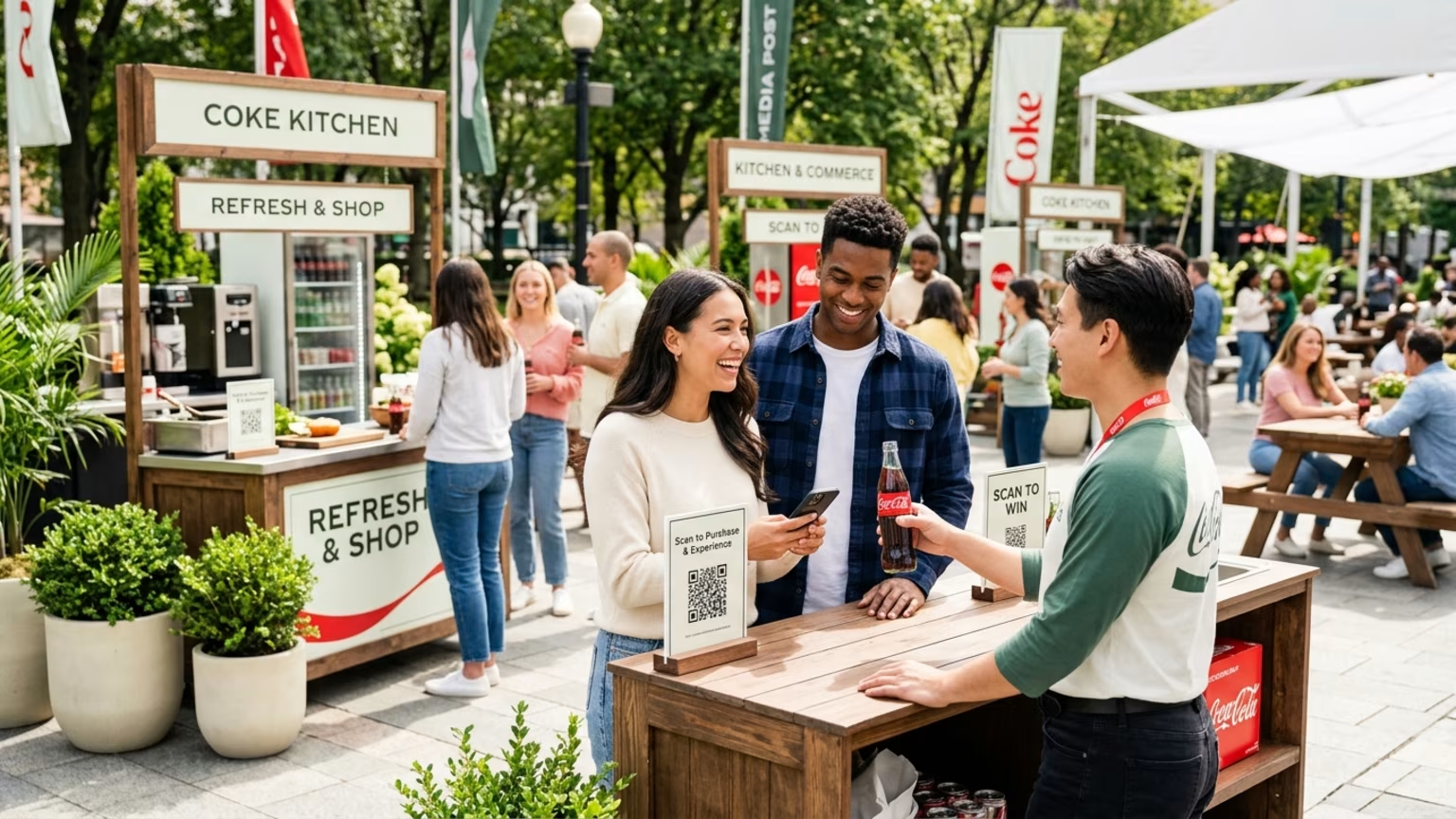
Brand activations are no longer isolated marketing tactics. Live experiences now feed directly into retailer media networks to create closed-loop attribution. When field teams capture a consumer email during a live trial, that data instantly enriches the retail media profile. This allows brands to retarget that exact shopper with digital coupons across the retailer ecosystem.
Forward-thinking teams use this physical-to-digital pipeline to negotiate better trade marketing terms. Grocery buyers are far more receptive to brands that bring their own high-quality traffic. Demonstrating a proven ability to drive in-store footfall gives sales directors a distinct negotiating advantage. We detailed this exact playbook in our breakdown of CPG retail media integration.
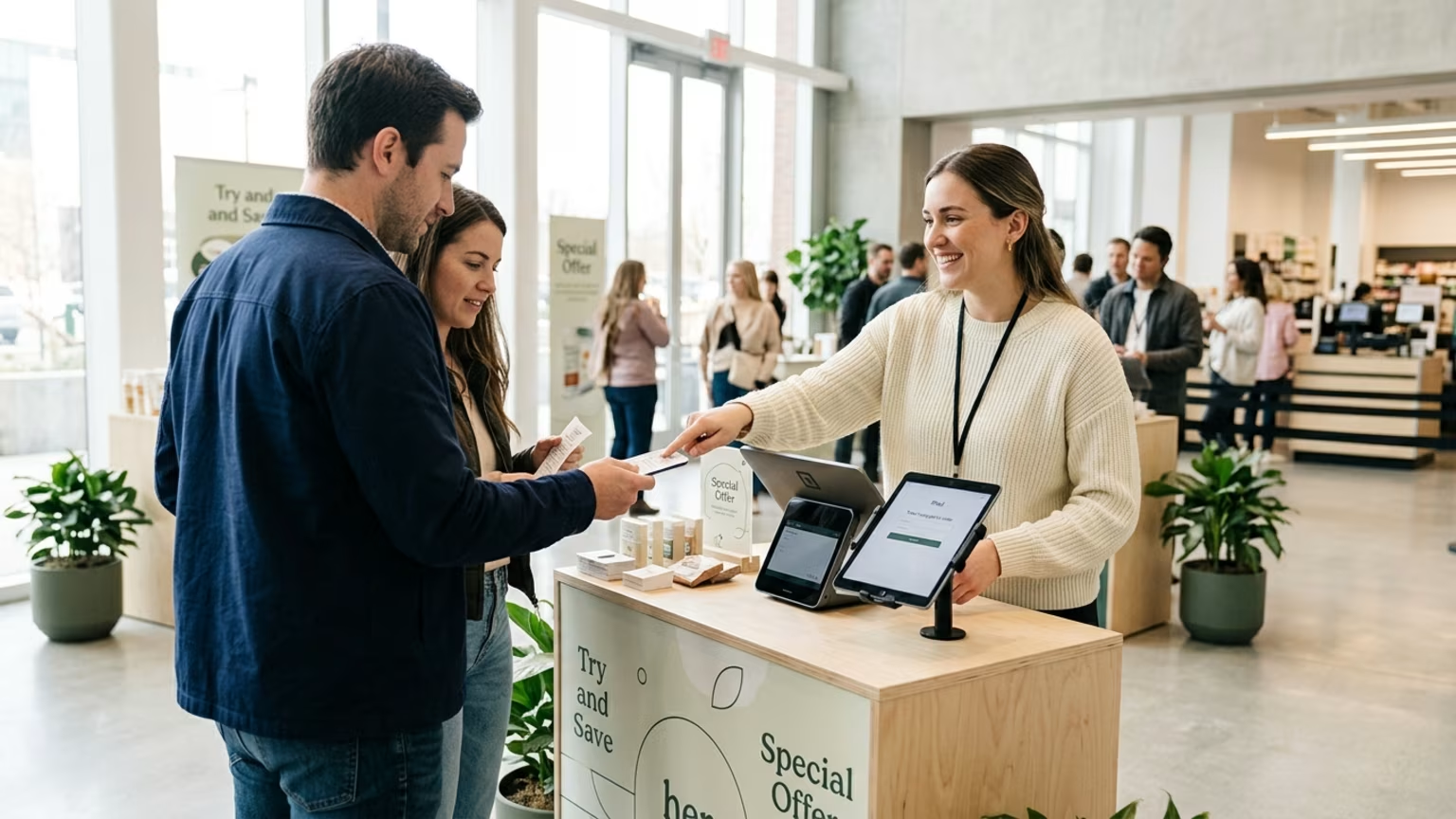
Consider a premium snack brand launching a new product line at a major trade show. Instead of handing out bags indiscriminately, they designed a segmented tasting experience. Attendees scanned a quick entry code and selected their primary snacking priority. This simple data point dictated whether they received a high-protein sample or a low-calorie alternative.
The activation generated thousands of targeted trials and immediate retail data points. They fed this first-party data directly into an automated follow-up sequence. Planners used geographic tags to send visitors tailored coupons for their nearest grocery retailer. This approach consistently yields average sales lifts that far exceed traditional display advertising.
Smart Meetings noted in its summit coverage that connecting authentically in real life remains paramount. Brands must prioritize authentic connection first before attempting to force a sale. This balance of genuine interaction and precise follow-up forms the foundation of modern experiential success.
When consumers feel understood by a brand, they naturally transition from casual samplers to loyal advocates. The initial physical touchpoint serves as the catalyst for a much longer digital relationship. If you are planning an upcoming nationwide experiential marketing tour, building this data architecture early is non-negotiable.
Building smart physical footprints requires a slightly higher initial capital expenditure than simple pop-up tents. Experiential operations have higher variable costs than purchasing digital ad impressions. You are paying for depth of engagement and memorable emotional resonance. When executed correctly, physical experiences beat digital channels on purchase intent by incredibly wide margins.
The true return on investment becomes clear when measuring the cost per qualified prospect. High-margin product categories see massive pipeline acceleration when consumers can physically touch and taste the merchandise. Properly instrumented activations generate valuable first-party data that fuels future marketing efforts. This organic data pipeline reduces reliance on expensive third-party digital advertising platforms.
Event planners must reframe their budgets as strategic data acquisition costs. Every sample distributed should be viewed as an invitation to begin a personalized digital dialogue. This methodology turns marketing expenses into highly measurable sales generation vehicles. We have documented this shift extensively in our analysis of AI and experiential growth engines.
To stop wasting budget on unmeasurable brand theater, audit your upcoming event brief today and attach a specific cost-per-acquisition target to every physical interaction. If your current plans lack this level of rigor, Book a strategy call with our team.

30 Years Experiential & Retail Activation Partner for CPG & Beverage Brands | Multi-Market Demos, Roadshows & Costco/Club Programs That Actually Sell