Robbie Thain
Founder, CEO

Discover how Esselunga and Oracle Red Bull Racing turn a Formula 1 sponsorship into measurable retail revenue through a highly trackable in-store activation.
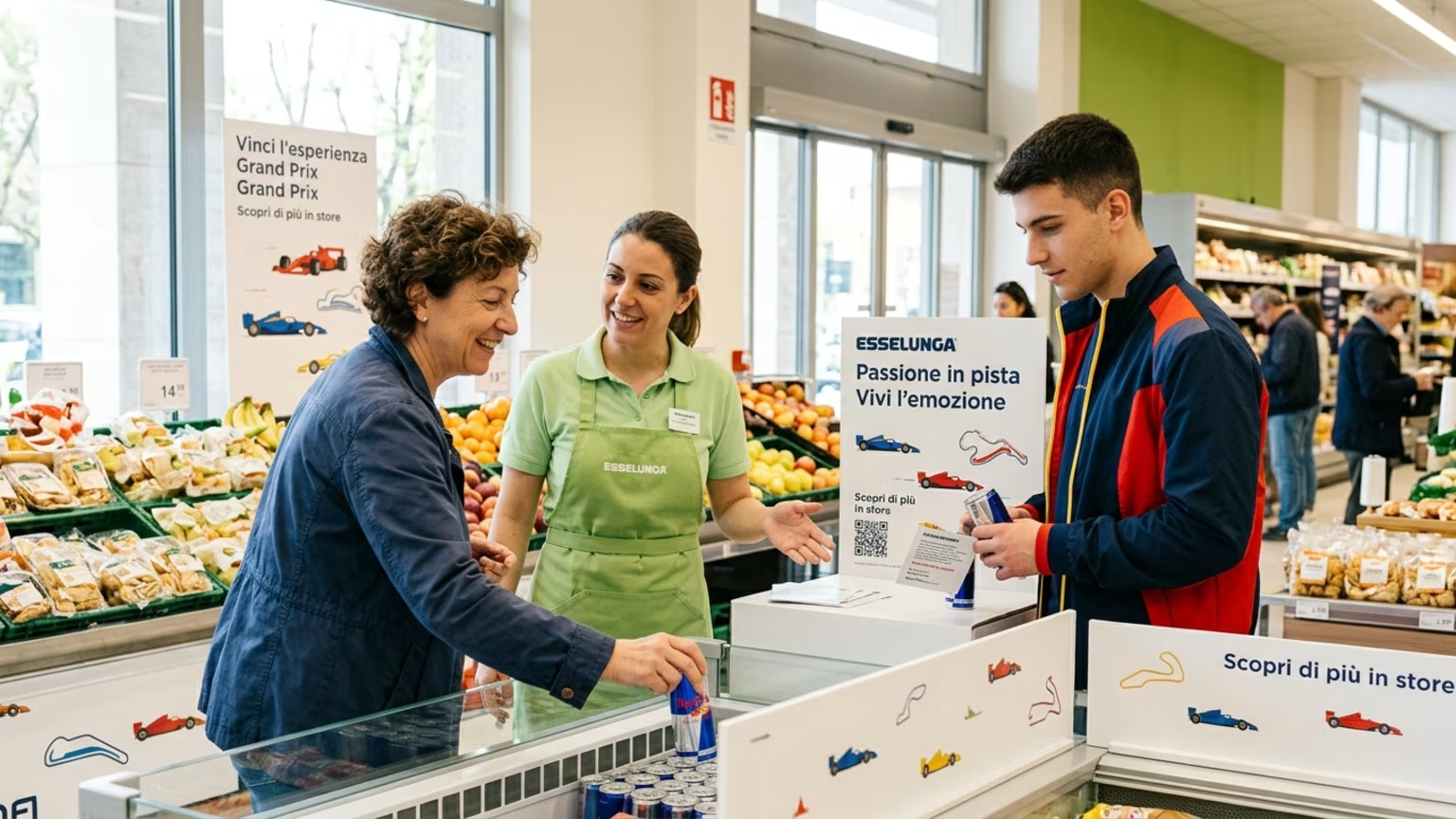
A shopper stops inside an Esselunga supermarket to inspect a towering Oracle Red Bull Racing installation. They pick up a four pack of Red Bull and scan their loyalty card at the checkout register. They leave with a physical product and a verified entry for a driving experience in Austria. These small physical moments define the modern intersection of experiential marketing and rigorous retail strategy.
How do you convert a massive global sports sponsorship into a trackable retail purchase? Esselunga is extending its 2026 collaboration with Oracle Red Bull Racing from trackside sponsorship into grocery retail. The partners are using the Italian Grand Prix at Monza as the organizing moment for an integrated activation. The promotional centerpiece is the Red Bull All Terrain contest. This contest runs from August 3 through September 20, 2026.
To enter, shoppers must purchase at least two individual Red Bull cans or one four pack. These qualifying purchases must happen through an Esselunga store or the online channel of the retailer. The grand prize includes travel to Austria and a driving experience at the Red Bull Ring in Spielberg. This legendary track serves as the home circuit for the Oracle Red Bull Racing team.
The campaign links distinct marketing functions within one cohesive and measurable customer journey. It combines sponsorship visibility, loyalty identification, purchase promotion, and digital engagement. The activation begins well before the Monza race and uses the sporting event as its peak moment. This calculated timing turns a single race weekend into a multi week promotional platform.
Most retail theater stops at cardboard cutouts and passive signage that completely fail to engage shoppers. Esselunga takes a more rigorous approach by transforming the supermarket into a highly active pre event destination. Beginning August 23, three Esselunga stores rolled out dedicated Formula 1 themed displays. These selected locations include Fino Mornasco, Monza viale Libertà, and Macherio.
The physical installations bring high energy motorsport into the normal shopping journey before the race weekend even begins. Dedicated interactive corners and experiential moments give shoppers a compelling reason to pause and explore. This operational distinction matters because an interactive retail environment demands significantly more than just adding a basic contest. Operators must actively connect the contest to a product purchase and a measurable transaction record.
The promotion restricts participation strictly to registered Esselunga Carta Fìdaty loyalty card holders. After completing their qualifying purchase, consumers must navigate to a dedicated contest website to register their entry. They are explicitly required to upload their receipt and play a motorsport themed digital game. Finally, they must submit a written explanation detailing why they want to experience Oracle Red Bull Racing.
A dedicated jury selects the final winners based on creativity, originality, and alignment with the brand values. These strict entry mechanics give the retailer and the brand entirely different but equally valuable potential benefits. Esselunga successfully activates its loyalty base and drives meaningful store engagement. Meanwhile, Red Bull receives a purchase linked promotional environment inside a highly accountable grocery channel.
Adding intentional friction to a retail promotion improves data quality but introduces major risks for shopper confusion. A multi step contest demands absolutely flawless execution from the frontline teams working the retail floor. Retail theater requires strict operational discipline to ensure that shoppers understand exactly what they need to do. The best physical installations will quickly underperform if field staff cannot clearly explain the complex entry mechanics.
We have been connecting brands with people through live experiences, retail programs, and national activations since 1995. Over three decades, we have built a track record of creating meaningful brand moments across the country. In our experience, field staff must operate with our signature aloha methodology every single day. This unique approach perfectly blends warm human connection with the intense precision of a seasoned field general.
Store associates need a concise explanation of the qualifying purchase rules and the specific loyalty requirement. They must confidently guide intrigued shoppers through the digital registration process and the receipt upload mechanics. A shopper should understand the entire offer in one short verbal explanation and clearly see the next step. Our team knows that authentic human connection transforms a complex set of instructions into a smooth retail experience.
This critical human element is mandatory for organizations looking to scale their marketing programs effectively. Brands that invest in how to scale retail activations without losing consistency consistently see higher returns. Field marketing directors must prioritize training their ambassadors to navigate these highly interactive corners. A well trained ambassador team ensures that the transition from a physical handshake to a digital game feels natural.
A conventional sports sponsorship often generates broad market awareness without capturing actionable customer data. Esselunga solves this common limitation by using their Carta Fìdaty loyalty program as the central access point. The loyalty card acts as a rigid eligibility filter that connects the product purchase directly to the contest entry. This specific structure makes the loyalty program a core functional part of the physical experience architecture.
The customer is recognized as a specific shopper who can actively qualify for a highly branded opportunity. For a shopper marketing team, the ultimate goal is to capture trackable data directly from the retail floor. The Esselunga campaign creates an explicit operational path from a physical transaction record to a digital submission. Marketers can effectively use this framework to capture store location, product SKU, and specific loyalty identifiers.
Event Marketer measurement guidance heavily recommends separating return on experience, return on emotion, and return on investment. Tracking hard metrics like receipt validation and contest completion provides the tangible proof needed for actual business impact. This distinction is particularly important for consumer brands facing intense pressure to prove commercial outcomes. Leaders who measure 5 key metrics every field marketing leader needs from pop up activations understand the massive value of this data.
The AEVEAPulse 2025 survey, as reported by MEET IN, found that 44.7 percent of companies viewed events as a strategic channel. The same survey reported attendee experience and business impact as leading event success indicators. Furthermore, 47.4 percent of companies considered physical events a relevant channel within their broader marketing strategy. This data heavily suggests that modern operators are increasingly linking live experiences to rigid commercial accountability.
Complex event logistics can quickly derail your product trial objectives if you lack a rigid contingency plan. A motorsport themed digital game might crash, or the interactive corners might become dangerously overcrowded during peak hours. The purchase to entry process involves several consecutive steps that can easily break down under heavy shopper pressure. Field managers must anticipate these operational failures and deploy immediate fixes to keep the activation moving forward.
When technology inevitably fails on the retail floor, trained brand ambassadors must step in immediately. If the receipt upload portal glitches, staff must provide alternative documentation methods or clear timelines for technical resolution. Operators need robust contingency planning frameworks bulletproof field logistics to handle these inevitable real world stress tests. A strong field general ensures that a broken digital display does not ruin the entire customer journey.
The physical footprint for this specific campaign is strategically limited to control execution quality and staffing resources. The in store component is clearly identified at three Esselunga stores rather than across the entire grocery chain. A limited footprint allows field leaders to closely monitor shopper flow and maintain strict store safety procedures. It also ensures that the experiential displays receive the precise daily maintenance they require throughout the multi week window.
Brands should completely avoid assuming that an aspirational prize alone will create broad based customer loyalty. The written explanation step and the digital game introduce necessary but inherently fragile friction into the entry process. If a shopper abandons the entry because the rules are unclear, the entire brand investment is essentially wasted. Relentless operational oversight actively prevents these small friction points from becoming permanent engagement roadblocks.
The strongest structural feature of this retail campaign is the explicit path from product purchase to brand experience. Before designing a massive visual spectacle, operators should clearly define the exact primary commercial action they want to drive. This could be a qualifying purchase, a specific loyalty scan, or a retailer specific product redemption. Brands must actively build their creative environments and contest rules directly around these concrete commercial actions.
Marketing leaders should always treat digital touchpoints as natural continuations of the physical retail experience. The motorsport themed game intelligently extends the brand interaction beyond the shelf rather than creating an isolated website. Operators should also meticulously plan distinct pre event, live event, and post event phases for their seasonal campaigns. The 2026 Italian Grand Prix is scheduled for September 4 through September 6, but the campaign successfully stretches to September 20.
This strategic pacing heavily stretches the engagement window and maximizes the value of the initial sponsorship investment. A credible post campaign report should always clearly separate subjective experience metrics from hard commerce metrics. Tracking interactive corner participation is genuinely useful, but recording incremental revenue and repeat purchases proves real business value. Marketers should review their data infrastructure to ensure they can connect physical handshakes to CRM records seamlessly. By structuring campaigns this way, brands turn fleeting consumer interactions into highly trackable business outcomes.
Converting passive sponsorship visibility into measurable retail transactions requires intense operational discipline from marketers handling complex regional campaigns. Makai eliminates the problem of scattered attention and poor booth flow by deploying our Experiential Marketing capability. We create hands on brand moments that connect emotionally and turn customers into ambassadors.

30 Years Experiential & Retail Activation Partner for CPG & Beverage Brands | Multi-Market Demos, Roadshows & Costco/Club Programs That Actually Sell