Robbie Thain
Founder, CEO

Learn how adopting an operations coordinator mindset can fix chaotic event logistics, streamline field staffing, and drive measurable retail sales lift.
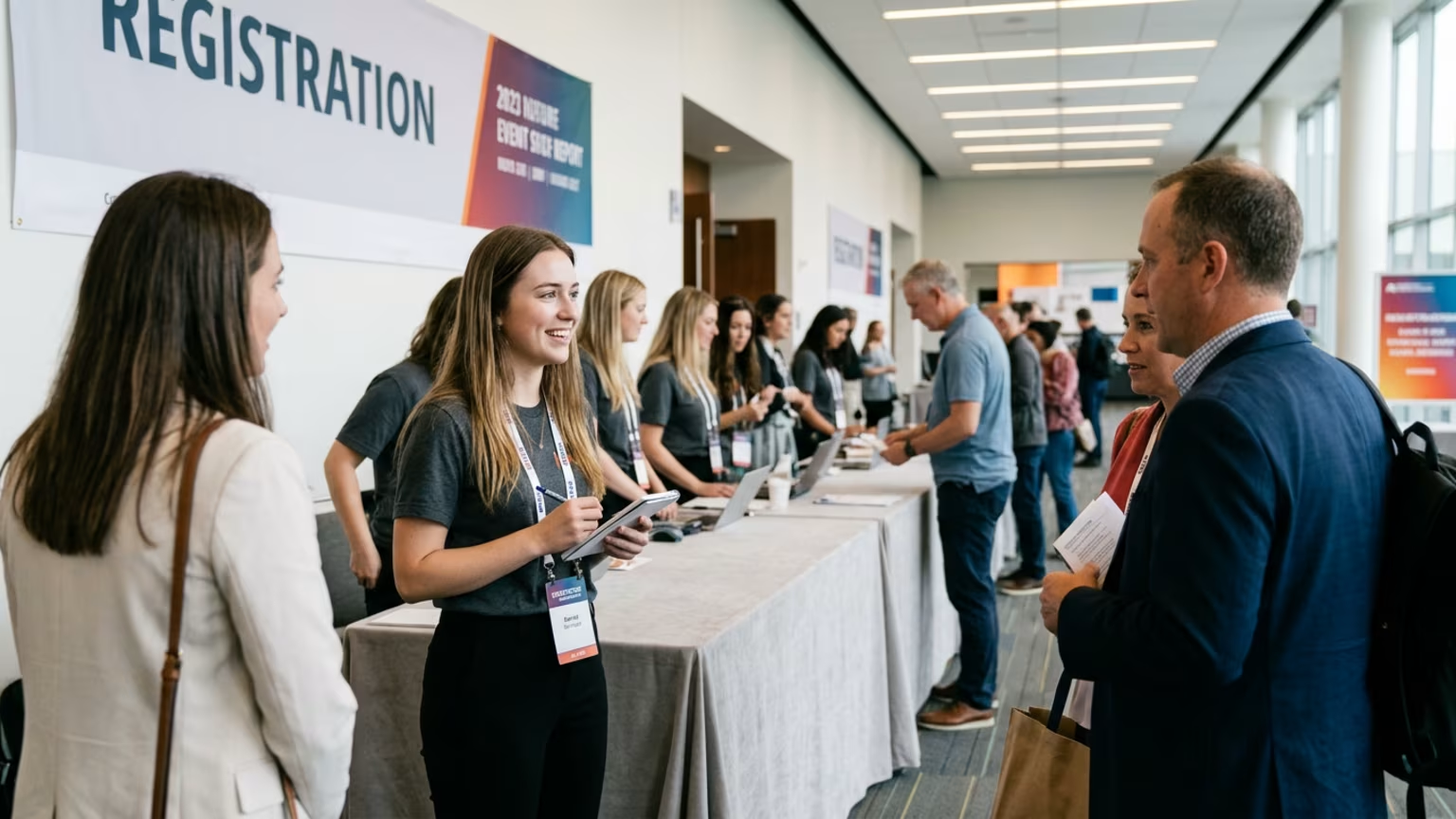
The salary range for operations coordinator roles in California reaches up to $153,000 annually according to recent job market data. Major retail companies invest heavily in an operational backbone to run seamless meetings and collaborative internal sessions. Applying this same rigorous coordination approach to your field marketing creates a direct path from live consumer interactions to a measurable sales pipeline.
A live activation often starts with high hopes, strong creative direction, and massive energy. Soon enough the reality of an understaffed trade show floor hits your marketing team right in the face. Brand ambassadors are busy handing out premium food samples. They completely ignore the lead capture process.
The procurement team forgot the A/V vendor invoicing. This creates a massive delay before the event even opens its doors to the public. This fragmented execution turns what should be a powerful consumer touchpoint into a beautiful dumpster fire. Marketing leaders stand back and watch their event budgets drain away on crowded expo floors.
The activation looks incredibly busy to an outside observer or a casual retail buyer. It produces fog instead of hard evidence for your sales team. Shopper marketing managers face immense pressure to prove that these activations lead directly to sales lift. A chaotic booth layout or a poorly scheduled Costco roadshow ruins brand credibility instantly.
Consumers walking the floor get confused by disjointed messaging, missing promotional materials, and stressed out staff members. The lack of operational control destroys any chance of building authentic retailer confidence or driving product repeatability.
Gap Inc. recently outlined a Design Operations Coordinator role to keep their internal design practice running smoothly day to day. This position sits right at the intersection of operational rigor and team culture within their large corporate framework. The coordinator owns critical procurement tasks like invoicing, vendor contracts, and purchase orders alongside heavy participant screening. They use artificial intelligence tools to automate reporting and data cleanup for large cross-functional workshops.
Experiential marketing teams need this exact operational mindset to succeed in highly competitive physical environments. Consumer events require the same strict vendor management and timeline orchestration as internal corporate summits. We handle every step of activation execution with precision and purpose, from initial concept through final logistics. Our comprehensive approach means that each program is designed to spark curiosity, drive action, and leave a lasting impression on consumers.
Gap lists thousands of employees in related operations to maintain project management and administrative support at scale. Bringing an operations coordinator framework to a field team completely stops the constant daily fire drills. Marketers can shift their focus back to the consumer rather than worrying about missing permits or broken staffing schedules. You need a dedicated resource to resolve queries and unblock serious issues before they ever reach the main stage.
Many industry leaders see the massive financial value in mastering event logistics and experiential operations to support their live consumer engagements. Managing these details requires specialized knowledge of regional regulations and venue requirements. You absolutely must assign a strict owner for handling city event permits and local logistics to protect your brand reputation. A dedicated coordinator treats these mundane tasks as the foundation for high volume product trial and brand awareness.
A successful field campaign requires strict adherence to a highly detailed and unified operations plan. You can build this infrastructure by applying corporate coordination strategies directly to your public consumer events. Here is the exact methodology to scale your activation logistics without ever losing control of the environment.
Leaders often debate the best way to staff these highly critical operational roles internally or externally. Teams comparing agency and in house logistics models frequently find that outsourcing complex coordination duties provides much faster execution. An external partner brings established relationships with venue managers, labor unions, and specialized event vendors. This leaves your internal marketing team completely free to focus on brand strategy and direct creative execution.
The goal is to eliminate the guesswork from physical brand activations and promotional campaigns. An operations lead builds repeatable playbooks that function perfectly whether you activate in Miami or Seattle. They take ownership of the unglamorous backend work so your experiential moments feel effortless to the consumer.
Operational excellence only matters if it generates a highly measurable Return on Investment for your company. You must track specific data points to prove that your logistics planning actually drove real consumer behavior. Start by monitoring these core lead and lag indicators across every single field campaign.
Tracking these performance indicators requires a unified approach to reporting and cross department communication. Managers who consistently connect trade show attention to active sales pipeline never have to justify their event marketing budgets. They use the operations coordinator to gather, clean, and distribute this data to senior leadership automatically.
A premium snack brand recently applied this exact corporate coordination strategy during a major retail product rollout. The marketing team originally struggled with inconsistent sample deliveries and overlapping staffing schedules across multiple regional markets. They decided to embed a dedicated operations lead to handle all calendar management, procurement tracking, and inventory routing.
This new operational structure removed the daily friction from the field marketing staff and local brand ambassadors. The coordinator used automated software tools to consolidate daily shift reports and quickly highlight any regional inventory shortages. The field teams no longer had to chase down missing delivery trucks or argue over missing promotional materials.
The brand saw a massive lift in actual product trial numbers over just a four week period. They tracked a direct increase in local supermarket sales that mirrored their exact activation routing map. By treating their event supply chain with corporate rigor, they turned a chaotic deployment into a predictable revenue engine.
Flashy creative elements will never fix a fundamentally broken event supply chain or a disorganized staffing plan. Reinvesting in the operational backbone of your program is the only way to scale physical consumer experiences effectively. The companies paying up to $153,000 for internal design coordination clearly understand the absolute necessity of smooth logistics. Treating your field marketing with this exact same level of operational respect transforms chaotic crowds into measurable buyers.
You need an experiential partner that blends warm approachability with strict, operator grade execution discipline. This combination is the key to driving actual product trial, retailer confidence, and long term brand awareness. Book a strategy call with our experiential experts to stop the logistical chaos and start building campaigns that convert.

30 Years Experiential & Retail Activation Partner for CPG & Beverage Brands | Multi-Market Demos, Roadshows & Costco/Club Programs That Actually Sell


