Robbie Thain
Founder, CEO

Discover how the Cheez-It Court pop-up at Westfield Topanga Mall turns Y2K nostalgia and a limited food menu into measurable retail trial and brand engagement.

Retail demo programs get judged on cups poured when they should be judged on downstream sales impact. The real question is how snack brands can turn massive foot traffic into measurable retail trial. To answer this, Cheez-It is partnering with B.J. Novak's American Pop Cuisine concept Chain to launch Cheez-It Court at Westfield Topanga Mall in Los Angeles. This limited-run stall is scheduled to operate daily from September 2 through September 30, 2026.
The activation serves as the inaugural brand-partner stall in Chain’s six-month food-court residency at the shopping center. Instead of presenting the cracker only as a packaged snack, the activation makes it visible across recognizable food formats. The concept uses a deliberately narrow menu of three food-court-inspired items. These three hero dishes are a cinnamon roll, a Wagyu hot dog, and a cheesesteak.
The branded menu features the Cheez-Y-Bun, the Crunchy Cheez-Dog, and the Cheez-Steak. Each item utilizes Cheez-It crackers as both ingredients and finishing elements. The announcement describes all dishes as being made with 100% real cheese. This format encourages visitors to mix, match, or share the menu items rather than navigate a large restaurant selection.
The Crunchy Cheez-Dog combines a Wagyu hot dog with panko and crushed Cheez-It crackers. It then adds mustard, ketchup, pickle, and additional Cheez-It seasoning. The Cheez-Steak uses sliced ribeye, American cheese, grilled onions, and pickled jalapeños on a toasted hoagie roll. This roll is seasoned with Cheez-It Extra Cheesy flavoring, plus dill-pickle aioli, and a Hot & Spicy cracker crumble.
The Cheez-Y-Bun is a cinnamon roll topped with Cheez-It Extra Cheesy-seasoned cream-cheese frosting. It also features shortbread crumble, salted-caramel crunch, and a Cheez-It cracker. The physical stall relies heavily on Y2K and mall-food-court nostalgia to engage shoppers. The space incorporates throwback-inspired employee uniforms, Cheez-It-patterned counters, and colorful design details intended to create a photo-friendly environment.
The location is Westfield Topanga at 6600 Topanga Canyon Boulevard. The stall’s published hours are 3 p.m. to 8 p.m. on Mondays and Tuesdays. It operates noon to 8 p.m. on Wednesdays and Thursdays, and noon to 9 p.m. from Friday through Sunday. This month-long run creates more opportunities for trial than a single-day sampling event while retaining scarcity.
How do field marketers handle the complex regulatory requirements of a live food-service installation? Building a custom food-service activation introduces significant operational complexity beyond a simple product sampling table. Preparing a Wagyu hot dog, a ribeye cheesesteak, and specialty frosting requires strict adherence to local food safety regulations. Operating this kitchen safely demands rigorous compliance reporting, fire code approvals, and venue coordination.
We run experiential and engagement programs coast to coast with local crews, smart logistics, and permit expertise that let us launch fast and maintain quality consistency in every region. Our nationwide infrastructure allows us to activate brands wherever their audiences are located. A residency inside a major Los Angeles shopping center requires health department approvals weeks before the doors open. Field teams must map out water access, waste disposal, and power generation long before drafting the final creative layout.
Malls are increasingly attempting to position themselves as third spaces for branded experiences. Chain chief creative officer Nicholas Kraft noted that a younger demographic is returning to in-person mall culture. This shift turns the food court into a place where people spend time together, eat, and browse physical stores. For experiential marketers, this points toward formats that combine food, fandom, entertainment, and place-making.
Any brand testing a scalable experiential template must document the exact conditions required to reproduce the experience elsewhere. The Westfield Topanga location provides a highly specific operating environment embedded within an existing shopping destination. Transitioning a complex food menu from a controlled mall food court to an outdoor festival changes the permitting entirely. Managers must upgrade field operations for pop-up activations to ensure every subsequent location meets local regulatory standards.
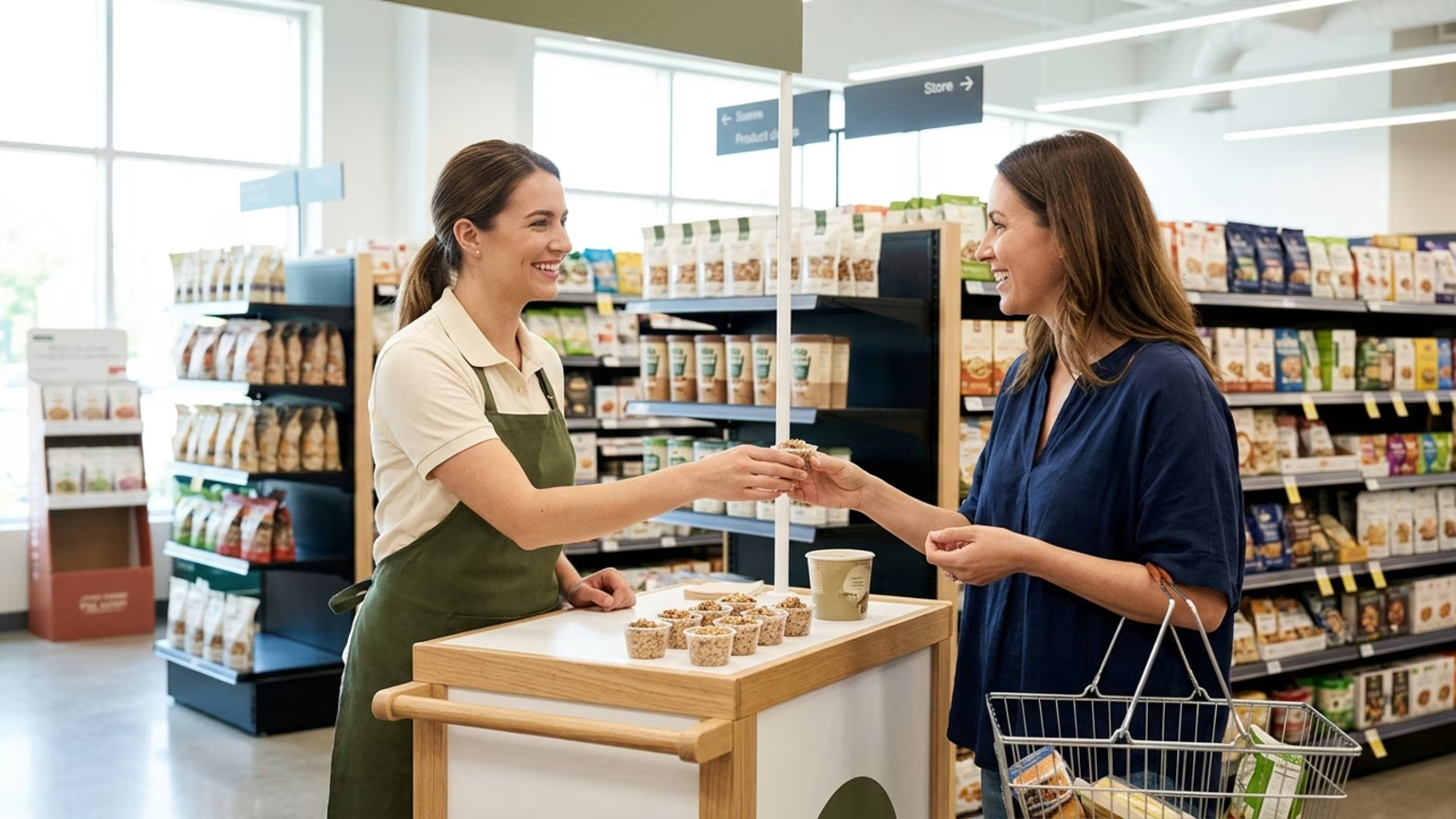
How do you train brand ambassadors to deliver genuine hospitality instead of just reciting a script? Managing a tight menu of three hero products is much easier to staff, explain, and serve than a broad restaurant menu. This constrained product architecture allows the service staff to master the culinary preparation while focusing on customer interaction. The team can clearly articulate the product-integration strategy because the cracker acts as an ingredient, coating, seasoning, and crumble.
The limited menu is strategically important for maintaining high service quality. Three hero products require significantly less inventory management than a full culinary operation. The public descriptions frame the items as shareable, which can increase the number of people exposed to each purchase. This strategy maximizes brand reach without requiring the operating partner to manage a full-scale restaurant.
We know that authentic human connection forms the foundation of any memorable consumer engagement. Our aloha methodology prioritizes hiring individuals who maintain a welcoming presence while managing long ordering queues. A food-based brand activation requires staff who understand both brand messaging and high-volume food service throughput. When a customer asks about the Hot & Spicy cracker crumble, the staff must provide an immediate, knowledgeable answer.
The physical stall relies heavily on visual nostalgia, but design alone cannot compensate for a poorly trained team. The throwback-inspired employee uniforms reinforce the distinct Y2K visual theme while the staff guides visitors through the menu. Training programs must prioritize situational awareness so ambassadors can calmly manage sudden weekend attendance spikes. A properly trained team ensures that every sensory demonstration of the product’s flavor remains consistent.
How do physical product trials actually translate into measurable downstream retail data? The partnership creates an immersive trial occasion, but creative attention does not automatically equal commercial impact. The public announcement does not disclose targeted performance metrics, Return on Investment calculations, or planned conversion rates. Marketers planning similar campaigns must define how they will capture consumer data before the activation opens.
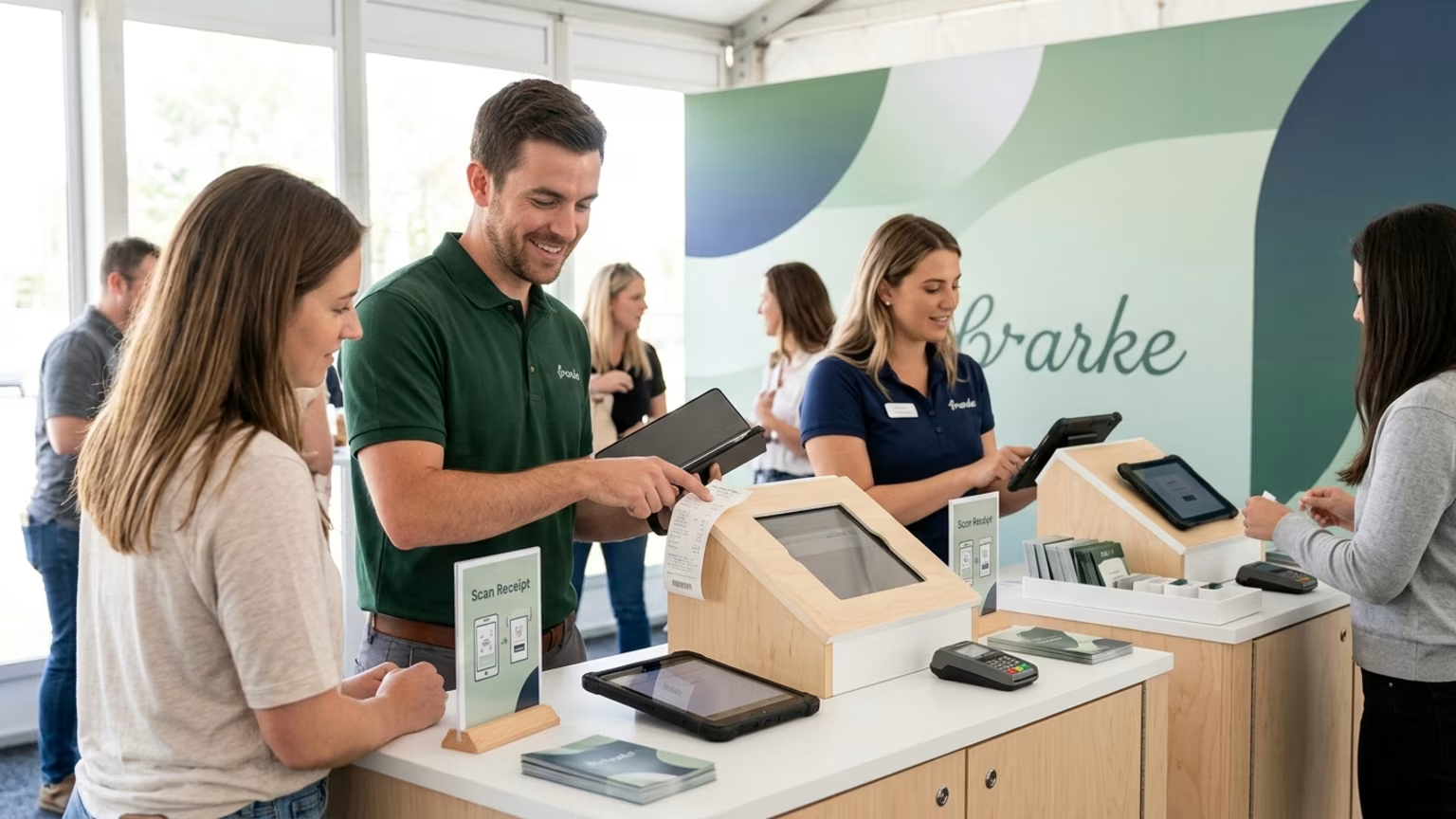
A successful physical pop-up should always separate raw experience metrics from actual retail conversion metrics. High attendance and food-service sales do not guarantee that visitors will purchase the packaged cracker during their next grocery trip. Teams should track footfall, unique visitors, transaction value, and queue abandonment to understand overall operational efficiency. They must also monitor QR scans, coupon redemptions, and email opt-ins to build a retargeting audience.
The companies say recipes for the three menu items will be published online after the pop-up opens. This post-event content component can extend consumer participation far beyond the initial physical visit. Capturing a lead at the counter allows the brand to send automated follow-up messages featuring these recipes. Connecting these interactions to consistent operational planning ensures that sampling directly influences subsequent retail purchase intent.
Chain Snacks is also scheduled to launch at Topanga Social inside Westfield Topanga Mall on September 2, 2026. This separate concept turns General Mills cereal brands into seven distinct desserts and drinks. A rotating six-month residency model creates both flexibility and significant noise for tracking which partner actually drove retail sales. Brands must deploy robust CRM routing to isolate which specific stall directly influenced their downstream conversion rates.
How does a field team recover when point-of-sale systems crash during a Friday night rush? Operating a live activation means accepting that environmental failures, inventory shortages, and technology outages will eventually occur. The published hours extend to 9 p.m. from Friday through Sunday, ensuring maximum exposure during peak shopping periods. If the digital register drops offline at 7 p.m., the floor general must instantly pivot to manual transaction processing.
A robust contingency plan prevents a temporary hardware glitch from ruining the entire brand experience. When digital menus freeze, the staff should deploy printed backup menus to keep the ordering queue moving efficiently. If ingredient availability for the Crunchy Cheez-Dog suddenly drops, the team must seamlessly redirect attention to the remaining items. Maintaining service consistency requires rigid protocols that empower local managers to make rapid, decisive adjustments.
The venue itself may present unexpected limitations regarding network connectivity or electrical power stability. Westfield Topanga provides a specific mall audience, but indoor cellular reception often fluctuates inside massive concrete structures. Field teams must secure dedicated hardline connections or localized wireless networks before relying entirely on cloud-based transaction systems. Every potential failure point must be mapped and mitigated so teams can plan pop-ups that draw meaningful traffic without operational collapse.
Chain chief creative officer Nicholas Kraft described the Cheez-It collaboration as a quintessential mall food court experience. Malls can function as spaces for branded experiences rather than solely operating as transactional retail locations. However, marketers should evaluate whether results from a specialized Los Angeles mall can transfer directly to mass retail environments. The most logical next step is determining how to capture retail conversion data to prove the commercial value of this model.
Attracting massive foot traffic to a food-court installation without capturing data guarantees zero visibility into downstream retail conversion. Makai solves the problem of low quality leads from crowded trade shows by implementing strict data capture protocols across every activation. Our Promotional Campaigns capability connects digital and real world touchpoints to boost visibility and spark brand conversations. We turn casual sampling interactions into qualified retail pipeline.

30 Years Experiential & Retail Activation Partner for CPG & Beverage Brands | Multi-Market Demos, Roadshows & Costco/Club Programs That Actually Sell