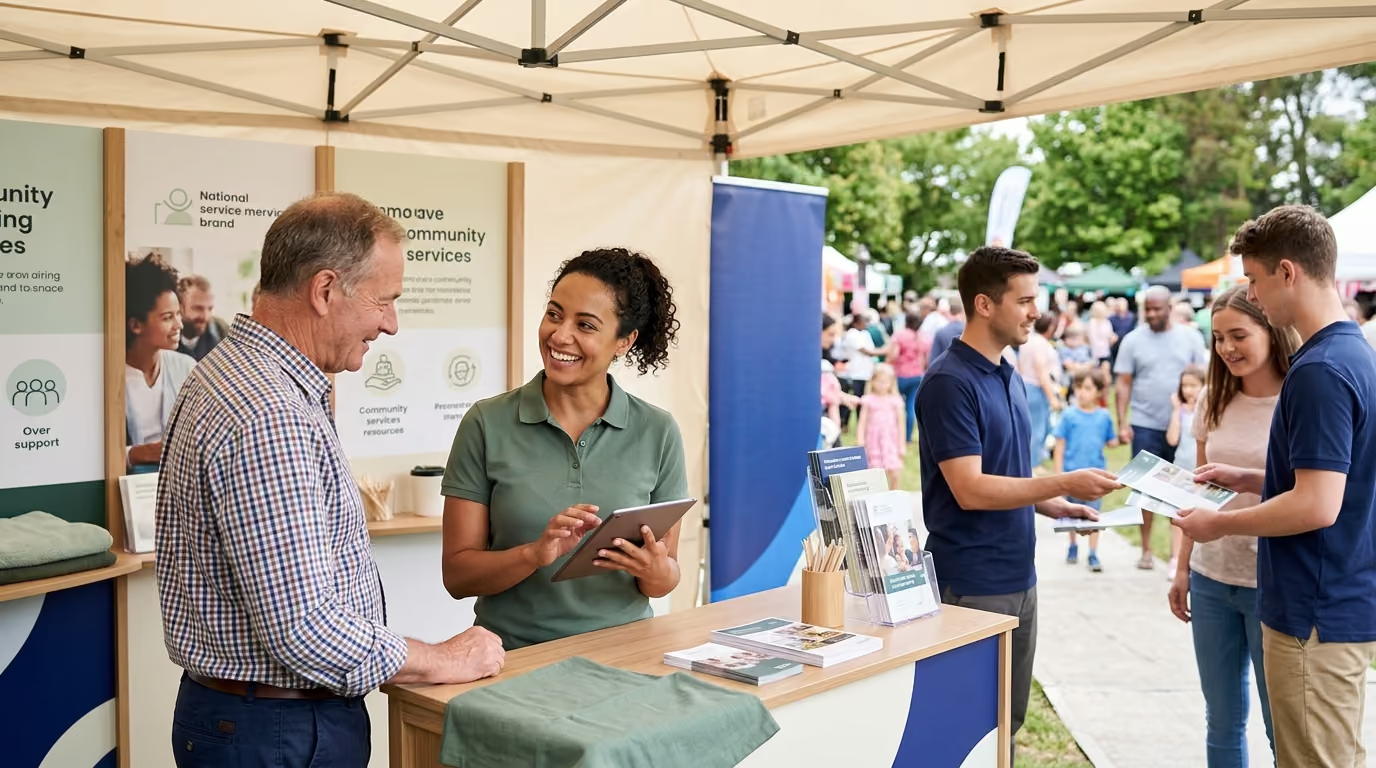
Integrated campaign planning connects creative, media, retail, sales, public relations, social media, customer relationship management, partnerships, and field operations around a single physical activation. This framework establishes clear channel roles before, during, and after an event to turn live interactions into measurable commercial pipeline.
Many brand leaders search for how to coordinate cross-functional teams around a physical event without letting operations collapse into chaos. This guide provides the complete operational blueprint to align nine distinct marketing functions around one live experience.
The Operational Reality on the Event Floor
A trade show floor or public brand activation is an intense, high-friction environment. Booth builders finish construction minutes before the doors open. Field staff scramble to understand product talking points while technical systems struggle with intermittent convention center internet.
In many campaigns, marketing functions operate in disconnected silos. The media team runs broad geo-targeted ads that drive foot traffic without coordinating with on-site staff capacity. Public relations secures media visits that booth captains know nothing about. Field ambassadors distribute samples without capturing qualified consumer data.
- Traditional Siloed Activation
- Paid Media Generic Foot Traffic Live Booth (No Data Capture) Zero Post-Event Follow-Up
- PR / Social Isolated Hype Retail Team (No Inventory Sync) Lost Commercial Pipeline
When activations run without an integrated campaign plan, high foot traffic creates operational bottlenecks instead of revenue. Attendees crowd the space, interact briefly, and walk away without entering a structured conversion path. The sales team receives an unorganized spreadsheet of badge scans weeks late. Retail partners report out-of-stock shelves because regional inventory was never synchronized with the live campaign calendar.
Research shows that live activations carry immense commercial potential when executed with discipline. A 2024 EventTrack study revealed that 74% of Fortune 1000 marketers planned to increase experiential marketing spending. The same study found that two-thirds of surveyed attendees felt more positive about a brand after interacting with it in person. Achieving those outcomes requires treating the live event as the central asset of a unified marketing operation rather than an isolated stunt.
- Integrated Campaign Model
- Pre-Event Media & CRM
- PR & Influencer Push Central Live Activation Real-Time CRM Ingestion Automated Sales Follow-Up
- Retail Inventory Sync (Rigorous Lead Capture) & Shopper Retargeting
The Strategic Framework for Cross-Functional Integration
An integrated experiential campaign uses the physical space as a content engine and conversion engine for the entire brand. Every functional team must work from one unified brief that defines the core audience tension, the brand promise, and the physical demonstration.
- CAMPAIGN CORE BRIEF
- Audience Tension Brand Promise Physical Demo Conversion Action Follow-Up Plan
- BEFORE ACTIVATION
- DURING ACTIVATION
- AFTER ACTIVATION
- Media: Qualified Reach - Operations: Flawless Delivery - CRM: Segmented Nurture
- PR: Narrative Placement - Social: Live Storytelling - Sales: Rapid Lead Handoff
- CRM: Priority Invitations - Retail: Trial & Purchase Hooks - Media: Precision Retargeting
- Retail: Stock Allocation - CRM: Consented Data Capture - Retail: Sell-Through Tracking
Freeman research indicated that 59% of Chief Marketing Officers associate brand experience with creating ongoing consumer relationships. The same research found that the top three tactics used to support brand experiences were websites, social media, and email marketing. An effective strategy treats these digital touchpoints as structured bridges leading into and out of the physical activation.
The Nine Core Functions
To eliminate cross-functional confusion, brand leaders must define the exact responsibilities for all nine commercial functions:
- Experiential Creative: Translates the brand proposition into a tangible, physical environment that encourages active participation and product trial.
- Paid Media: Builds local audience awareness before the event, drives pre-registrations, and retargets verified attendees afterward.
- Public Relations: Secures earned editorial coverage, manages press previews, and amplifies brand announcements tied to the activation.
- Social Media: Documents real-time interactions, distributes user-generated content, and manages digital conversation surrounding the physical space.
- Retail and Shopper Marketing: Aligns local store inventory, negotiates endcap placement, and distributes retail-specific incentives to event attendees. Review our guide on connecting experiential marketing to shopper strategy to see how live trial drives retail velocity.
- Sales Operations: Defines lead qualification criteria, trains booth staff on commercial handoffs, and enforces strict response timelines.
- Customer Relationship Management: Builds custom landing pages, captures consented zero-party data, and deploys automated follow-up sequences.
- Strategic Partnerships: Sources co-sponsors, venue hosts, and non-competing brand partners to extend reach and share production costs.
- Field Operations and Staffing: Manages site logistics, permitting, build fabrication, staff training, and health and safety compliance. For deeper staffing insights, read our field guide to workforce planning.
Organizational disconnects often weaken campaign performance. Historical Freeman research noted that 48% of Chief Marketing Officers believed brand experience could showcase thought leadership. Only 28% of event planners shared that belief. A unified framework forces all internal departments to align around shared business objectives before production begins.
Channel Responsibilities Across Campaign Phases
Assigning static roles to departments causes gaps during live execution. Channel responsibilities must shift systematically across the pre-activation, live, and post-activation phases.
- FUNCTION PRE-ACTIVATION PHASE LIVE ACTIVATION PHASE POST-ACTIVATION PHASE
- Paid Media Geo-targeted awareness ads Hyper-local foot-traffic push Retargeting engaged visitors
- Public Relations Press embargoes and previews On-site media tours Earned recap distribution
- Social Media Teaser campaigns & sign-ups Real-time content capture UGC curation & community wrap
- CRM Operations Pre-registration workflows Real-time lead ingestion Segmented follow-up nurturing
- Retail / Shopper Inventory stocking & staging Geotargeted retail vouchers Sell-through audit & reorders
- Sales Team Lead criteria qualification High-value prospect meetings SLA-bound lead outreach
- Partnerships Co-marketing asset alignment Joint on-site hosting Shared performance debrief
- Field Operations Permitting, freight, build Active booth queue management Strike, packout, logistics
- Creative Studio Spatial design & collateral Dynamic digital screen assets Case study asset compilation
Pre-Activation Phase
The goal of the pre-activation phase is audience qualification, asset readiness, and inventory preparation. Teams must avoid broad, unfocused promotional blasts.
Paid media teams run geo-fenced campaigns within specific travel radiuses around the venue. These ads direct users to dedicated landing pages managed by the CRM team. Early registrants receive calendar holds, access codes, and digital passes.
PR teams pitch regional media and industry trade outlets under embargo. They coordinate scheduled interview slots for executives during the first morning of the event. Creative teams finalize print mechanicals, digital display loops, and interactive software modules.
Retail teams confirm inventory levels at nearby retail accounts. If an activation takes place in Chicago, regional distribution centers must hold adequate safety stock. Field marketing managers coordinate with brand managers to review comprehensive brand activation services and operational logistics plans.
Live Activation Phase
During the live phase, the physical booth acts as the primary content and conversion engine. Field operations leads manage crowd flow, queue times, and product replenishment.
Brand ambassadors engage attendees using structured qualification scripts. Instead of passive badge scanning, staff direct qualified prospects to interactive product trials or private meeting areas. Lead data streams directly into CRM platforms using automated field capture tools. To prevent common data collection errors, teams should review our breakdown on avoiding common lead capture pitfalls.
Social media teams capture high-resolution photo and video assets from active attendees. They publish real-time updates and monitor brand mentions to engage participants while they remain on site. PR teams host confirmed journalists, guiding them through curated product demonstrations.
Retail teams distribute digital or physical bounce-back offers redeemable at nearby retail partners. When sampling food or beverage products, staff track batch numbers, consumption volumes, and direct verbal feedback.
Post-Activation Phase
The post-activation phase determines long-term commercial Return on Investment (ROI). Many activations fail here because teams treat the end of the event as the end of the campaign.
Within twenty-four hours of event closure, CRM teams trigger automated follow-up sequences based on interaction types. Attendees who completed a comprehensive product demonstration receive a personalized email with specific product details. Attendees who merely sampled a product receive a retail locator link and a discount voucher.
Sales representatives receive segmented, qualified leads bound by strict service-level agreements. If a high-tier prospect requests a sales consultation, the account team must contact them within two business days.
Paid media shifts toward retargeting custom audiences built from on-site scans and landing page visits. PR teams distribute post-event milestone releases highlighting total attendance, community impact, or major product announcements. Operations teams manage asset pack-out, freight shipping, and inventory reconciliation as outlined in our brand activation logistics playbook.
Multi-Dimensional Experience Measurement Architectures
Evaluating experiential campaigns solely by foot traffic or badge scans provides an incomplete view of performance. Academic research shows that event experiences are multi-dimensional constructs that influence cognitive and emotional perceptions.
- EXPERIENTIAL MEASUREMENT SCORECARD
- LAYER 1: EXPOSURE & ACTION LAYER 2: EXPERIENCE QUALITY LAYER 3: COMMERCIAL PIPELINE
- Total Booth Footfall - Cognitive Engagement Depth - Sales-Qualified Leads (SQL)
- Verified Dwell Time - Affective / Emotional Lift - CRM Opt-In & Consent Rate
- Product Trial Counts - Sensory & Physical Immersion - Direct Retail Sell-Through
- Pre-Registrations Scanned - Perceived Brand Novelty - Attributed Pipeline Revenue
A study published in the Journal of Travel & Tourism Marketing identifies four distinct dimensions of visitor experience: affective engagement, cognitive engagement, physical engagement, and novelty. Research published in the Journal of Retailing and Consumer Services expands this model to include cognitive, emotional, sensory, pragmatic, and relational components.
- AFFECTIVE ENGAGEMENT
- (Emotional Resonance)
- COGNITIVE ENGAGEMENT PHYSICAL ENGAGEMENT
- (Message Retention) (Active Participation)
- NOVELTY & SENSORY
- (Memorable Impact)
A campaign scorecard must connect four operational layers to capture this multi-dimensional reality:
Layer 1: Exposure and Participation Metrics
These metrics quantify physical audience volume and basic movement within the footprint:
- Total footfall across the event footprint.
- Average dwell time within specific activation zones.
- Total product samples distributed or technical demonstrations completed.
- Conversion rate from walk-by traffic to active booth participant.
Layer 2: Experience Quality Metrics
These indicators measure the depth of audience immersion and emotional connection:
- Affective response measured through rapid digital exit surveys.
- Cognitive comprehension of core brand messaging verified during interactions.
- Sensory engagement ratings regarding product taste, texture, sound, or visual presentation.
- Perceived novelty score benchmarked against historical brand activations.
Layer 3: Brand Perception Changes
These measures capture shifts in brand equity and purchase consideration:
- Net brand sentiment measured across social listening streams.
- Brand favorability shifts captured via post-event digital panels.
- Unprompted message recall tested seven to fourteen days after the activation.
- Customer advocacy score indicating willingness to recommend the brand.
Layer 4: Commercial Pipeline Outcomes
These business metrics justify marketing investment and prove commercial Return on Investment:
- Total consented CRM opt-ins with verified contact records.
- Sales-qualified leads routed to account executives.
- Immediate on-site sales volume or digital order value.
- Retail store sell-through lift in adjacent market zip codes over a 30-day window.
A 2020 Event Measurement Benchmarking Report by Event Marketer revealed that 59% of consumer brands rely on attendee satisfaction surveys and historical benchmarking. The same report found that attendance, social media lift, and sales generated were the top three metrics tracked. Combining operational data with academic experience dimensions creates an executive-ready reporting dashboard.
The Live Activation Execution Playbook
Executing an integrated experiential campaign requires strict operational discipline. Follow this step-by-step process to manage cross-functional handoffs across every phase.
- PHASE 1: STRATEGY & ALIGNMENT (T-Minus 16 to 12 Weeks)
- PHASE 2: ASSET BUILD & CHANNEL SYNC (T-Minus 12 to 4 Weeks)
- PHASE 3: OPERATIONAL READINESS (T-Minus 4 to 0 Weeks)
- PHASE 4: LIVE EXECUTION (Event Days)
- PHASE 5: COMMERCIAL CLOSURE (Post-Event Day 1 to 30)
Phase 1: Strategy and Alignment (T-Minus 16 to 12 Weeks)
- Step 1: Issue the Unified Campaign Brief. Convene leads from creative, media, PR, social, retail, sales, CRM, partnerships, and operations. Present the core audience tension, brand demonstration, and shared commercial targets.
- Step 2: Establish Cross-Functional Service-Level Agreements. Define qualification criteria for leads, maximum follow-up response times for sales teams, and weekly status reporting cadence.
Phase 2: Asset Build and Channel Synchronization (T-Minus 12 to 4 Weeks)
- Step 3: Configure Data Architecture. Build dedicated campaign landing pages with UTM tracking parameters. Integrate on-site lead capture software with central CRM systems. Test badge scanners and offline data caching protocols.
- Step 4: Align Retail Distribution. Audit retail partner stock within a 25-mile radius of the activation site. Confirm purchase orders with wholesale distributors. Issue promotional display shippers to participating store managers.
- Step 5: Launch Pre-Activation Media and PR. Deploy localized paid social, programmatic display, and search ads. Pitch targeted media outlets with exclusive interview opportunities. Distribute VIP invitations to high-value prospects via CRM email workflows.
Phase 3: Operational Readiness (T-Minus 4 to 0 Weeks)
- Step 4: Conduct Rigorous Staff Training. Train field brand ambassadors on product knowledge, brand tone, engagement scripts, and lead scanning workflows. Run roleplaying scenarios covering both high-volume consumer sampling and deep technical inquiries.
- Step 7: Finalize Logistics and Permitting. Secure municipal permits, venue insurance certificates, electrical drops, and internet connections. Coordinate freight delivery windows and load-in schedules with venue union managers.
Phase 4: Live Execution (Event Days)
- Step 8: Manage Operational Flow. Hold daily morning briefings with field staff to review engagement targets. Monitor queue lines, sample temperatures, sanitary standards, and booth cleanliness throughout the day.
- Step 9: Execute Real-Time Content and Media Workflows. Capture high-quality video footage of consumer interactions. Post real-time updates across social channels. Escort registered media contacts through structured booth tours.
Phase 5: Commercial Conversion and Analysis (Post-Event Day +1 to +30)
- Step 10: Trigger Automated CRM Nurture Sequences. Deploy segmented follow-up emails within twenty-four hours of event closure. Deliver tailored offers, product documentation, or retail locator tools based on attendee survey responses.
- Step 11: Route Sales Leads Under Strict SLAs. Transmit qualified B2B leads to designated sales reps. Monitor outreach velocity to ensure 100% contact completion within five business days.
- Step 12: Compile Cross-Functional Campaign Scorecard. Aggregate data across footfall, engagement quality, earned media value, retail lift, and direct sales pipeline. Present a comprehensive performance debrief to executive leadership.
Metrics, Scorecards, and Downstream Business Outcomes
Proving the commercial success of experiential marketing requires tracking both leading and lagging indicators across the campaign lifecycle.
- CAMPAIGN METRIC CLASSIFICATION
- LEADING INDICATORS (Real-Time Optimization) LAGGING INDICATORS (Commercial ROI Delivery)
- Pre-Registration Volume & CAC - 30-Day Retail Sell-Through Velocity
- On-Site Sample / Interaction Velocity - Pipeline Revenue from Sales-Qualified Leads
- Active Lead Scan Qualification Rate - Customer Acquisition Cost (Blended CAC)
- Daily Social Engagement & Share Rate - Verified Customer Lifetime Value (LTV) Lift
Leading Indicators for Real-Time Optimization
Leading indicators allow field managers to make mid-course operational adjustments while the activation is live:
- Pre-Registration Rate: Measures digital media conversion efficiency before the activation opens. If sign-ups lag, reallocate media spend to higher-performing zip codes.
- Hourly Sample Velocity: Tracks how many units brand ambassadors distribute per hour. Low velocity indicates poor footprint positioning or passive staff behavior.
- Lead Qualification Percentage: Calculates the ratio of high-quality prospects against total badge scans. If qualification rates fall below target thresholds, retrain staff on screening questions immediately.
- Social Amplification Ratio: Monitors user-generated posts relative to total foot traffic. Low sharing rates suggest photo moments lack visual appeal or incentives.
Lagging Indicators for Return on Investment Reporting
Lagging indicators prove the bottom-line commercial impact of the campaign after execution concludes:
- Attributed Pipeline Revenue: Total dollar value of closed contracts or direct purchases originated from on-site interactions.
- Regional Retail Sell-Through Lift: The percentage increase in unit sales at retail stores within the activation geography compared to control markets.
- Blended Customer Acquisition Cost: Total activation spend divided by the number of acquired paying customers.
- Customer Lifetime Value Impact: Long-term purchase frequency and retention rates of event-acquired consumers compared to digital-only cohorts.
Research published in the Journal of Advertising demonstrated that high perceived event quality directly enhances purchase intentions toward brand sponsors. By establishing rigorous data collection at each stage, brand leaders can clearly defend marketing budgets with verified commercial data.
Practical Application in Consumer Packaged Goods
A national consumer packaged goods beverage brand recently faced stagnant market share in five key metropolitan areas. The company prepared to launch a premium functional beverage line but struggled to generate retail velocity through digital advertising alone. Retail buyers hesitated to grant expanded shelf space without proof of local consumer demand.
The brand partnered with our team at Makai to execute an integrated experiential campaign centered around high-traffic urban pop-ups and retail demonstrations.
- CPG Integrated Architecture
- Geo-Targeted Paid Ads (5-Mile Radius) Mobile Pop-Up Trial (Zero-Party Data)
- On-Site Retail Digital Voucher Direct Wholesale Pipeline
- Local Supermarket Redemptions Regional Grocery Re-Orders
The campaign integrated all commercial channels around the live trial moment:
- Paid Media: Ran geo-fenced mobile video ads within a five-mile radius of target grocery retailers, driving consumers to an RSVP landing page.
- Experiential Creative: Designed a sensory sampling bar that highlighted natural ingredients, functional benefits, and unique flavor profiles.
- Field Operations: Deployed trained brand ambassadors who delivered cold samples, delivered concise brand messaging, and captured consumer survey data via tablet kiosks.
- Retail Integration: Distributed digital manufacturer coupons via SMS directly to attendees after they completed a taste test. These coupons were redeemable exclusively at local partner supermarkets.
- CRM and Retargeting: Automated email flows sent recipe ideas and local store locators forty-eight hours after the sample interaction. Retargeting ads reinforced brand awareness for attendees who scanned digital passes.
A VP of Marketing in the CPG beverage category told us: "Robbie, your leadership and vision turned our campaign into something truly special. The Makai team brought our new drink to life with energy, creativity, and flawless execution. Thanks to you, our brand isn't just tasted, it's remembered."
The integrated approach produced substantial commercial outcomes across all five markets:
- Distributed over 85,000 chilled samples with an average dwell time of four minutes.
- Captured 32,000 verified email opt-ins with dietary preferences and purchase intent data.
- Achieved a 28% coupon redemption rate at regional grocery partners within fourteen days.
- Drove a 41% sustained lift in regional retail sell-through over the subsequent quarter.
- Secured permanent shelf placement across 450 additional retail doors based on verified consumer trial metrics.
Treating the physical experience as the central driver of a multi-channel campaign transformed fleeting consumer interactions into sustained retail velocity.
Immediate Action Plan for Campaign Operators
Applying this integrated framework requires immediate operational alignment across your commercial teams. Use this checklist to establish cross-functional coordination this week.
Monday: Internal Alignment and Brief Review
- [ ] Audit upcoming event calendars to identify activations operating in functional silos.
- [ ] Schedule a ninety-minute cross-functional alignment workshop with department leads.
- [ ] Draft a unified campaign brief focusing on the single audience tension and physical demonstration.
- [ ] Distribute the unified brief to creative, media, PR, social, retail, sales, CRM, and operations teams.
Tuesday: Channel Role and SLA Definition
- [ ] Map out specific channel responsibilities across pre-activation, live, and post-activation phases.
- [ ] Establish lead qualification criteria with sales leadership.
- [ ] Define follow-up service-level agreements requiring lead outreach within two business days.
- [ ] Assign single ownership points for every cross-channel handoff.
Wednesday: Data Architecture and CRM Setup
- [ ] Create dedicated tracking landing pages with standard UTM parameter naming conventions.
- [ ] Test API integrations between on-site lead capture hardware and central CRM databases.
- [ ] Configure automated post-event email workflows segmented by attendee interaction level.
- [ ] Establish opt-in consent protocols compliant with applicable data privacy regulations.
Thursday: Retail and Field Operational Preparation
- [ ] Cross-reference activation locations with regional retail account distribution.
- [ ] Confirm safety stock levels and promotional displays with regional retail managers.
- [ ] Finalize comprehensive brand ambassador training materials and qualification scripts.
- [ ] Audit site logistics plans, freight delivery schedules, and municipal permits.
Friday: Measurement and Reporting Finalization
- [ ] Build a four-layer campaign measurement dashboard combining exposure, quality, brand, and sales metrics.
- [ ] Establish baseline performance benchmarks from historical event data.
- [ ] Schedule weekly cross-functional operational check-ins leading up to event launch.
- [ ] Review all operational contingency plans with field leads to ensure complete readiness.
Executing an integrated campaign requires moving away from fragmented brand theater and embracing operational discipline. When every channel works in coordination around a live experience, physical activations become predictable, scalable engines for enterprise revenue growth.
Sources
- campaignlive.co.uk
- aipc.org
- snapbar.com