Robbie Thain
Founder, CEO

Seventy-three percent of consumers trust culturally authentic brands, making local collaboration and shared planning essential for modern experiential marketing campaigns.

Building an authentic community-based brand activation requires balancing your strategic goals with genuine local value, co-creation, and long-term relationship design. When marketing teams shift from broadcasting promotional claims to investing in community-led participation, they build durable trust and measurable brand equity.
The floor of a major trade show or metropolitan pop-up zone is usually loud, chaotic, and crowded with generic spectacle. Brand managers stand in branded booths watching hundreds of attendees walk past with tote bags stuffed with throwaway swag. Thousands of dollars flow into temporary vinyl signage, flashing video walls, and scripted promotional staff, yet most interactions barely last thirty seconds. The resulting spreadsheets show high foot traffic, but follow-up engagement falls flat because the experience lacked cultural relevance and genuine human connection.
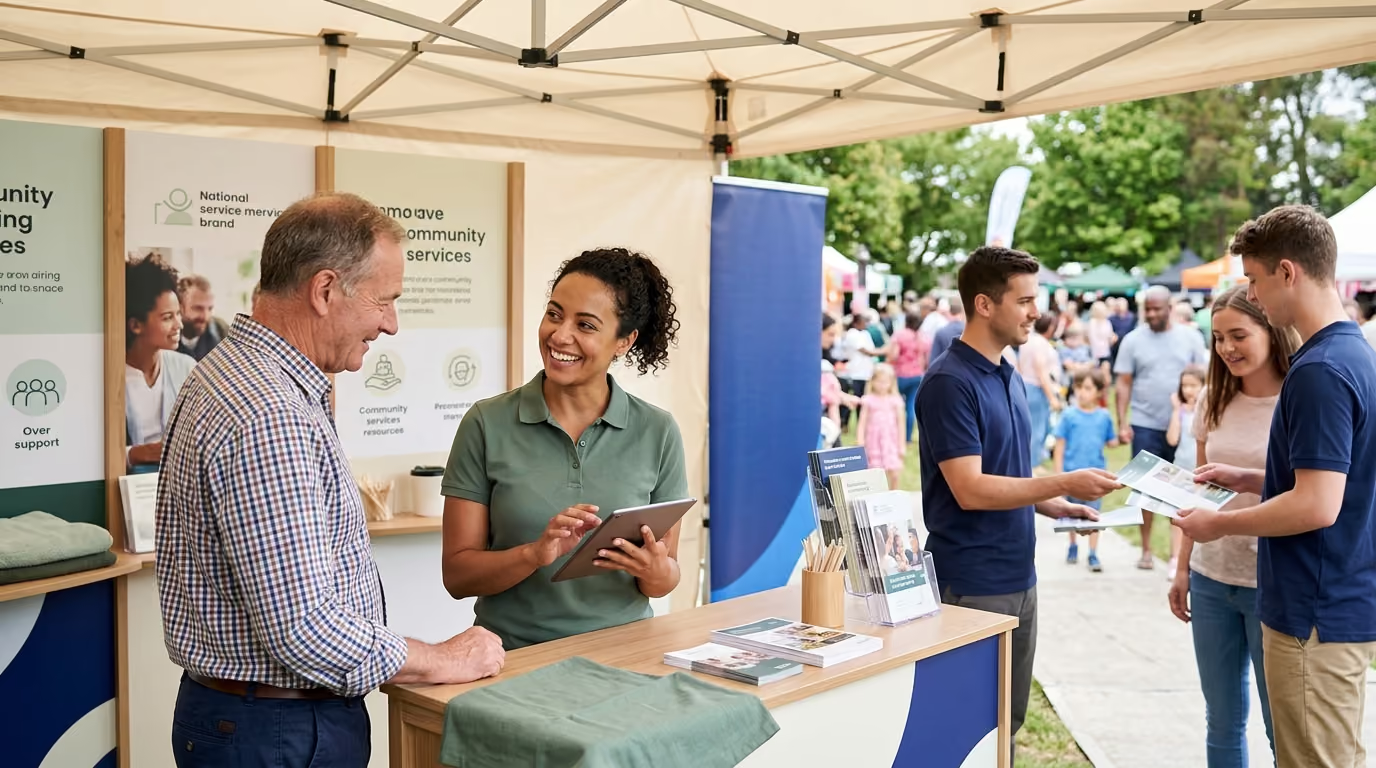
True engagement happens when brands step away from artificial spectacle and enter physical spaces with humility and clear utility. When your activation solves a localized problem, supports existing community traditions, and respects local culture, consumer skepticism turns into advocacy. This comprehensive guide outlines the operational frameworks, cultural research protocols, and field execution methods required to build community activations that deliver verified business impact.
Many marketing teams confuse location-based marketing with community-based marketing. Renting retail space on a busy corner or buying booth space at a convention is merely renting geography. A true community activation is designed with the people who live and interact there. It relies on the social ties, shared interests, and cultural history that define a group.
Academic research published in the European Journal of Marketing defines brand communities as enduring, self-selected groups that share values, traditions, and a sense of mutual obligation. A one-off promotional tent does not create a community. Durable brand equity requires repeated interaction, shared practices, and reciprocal value. If your activation plan can be picked up and dropped into any other city without changing a single detail, you are running a geographic campaign, not a community activation.
Community-based activations must pass a simple litmus test. If the target community were removed from the planning process, would the activation collapse? If the answer is no, your concept is likely brand-centric theater. Community activations invite participants to shape the outcome, contribute ideas, and build relationships with one another.
Trust is the direct byproduct of this alignment. The 2025 Edelman Trust Barometer highlights that 73 percent of consumers report higher trust in brands that authentically reflect current culture. Furthermore, 80 percent of consumers trust the brands they use to do what is right. When brands enter neighborhoods without understanding local dynamics, they risk alienating the exact audiences they hope to attract.
To build programs that resonate locally while meeting corporate objectives, our team relies on a structured operational model. The 6C framework gives field marketing directors, brand managers, and experiential producers a practical guide to plan, execute, and evaluate activations.
Start by defining the specific community you intend to serve. Avoid broad demographic buckets like urban millennials or suburban parents. Instead, map the specific cultural groups, recreational clubs, professional networks, or neighborhood associations that give the area its identity.
Map your target community into four distinct layers:
Understanding these layers helps you identify who will benefit from the event and who might be inconvenienced by it. This ensures you respect local boundaries from day one.
Context represents the cultural, physical, economic, and historical reality of the activation site. Every neighborhood carries historical experiences with corporate sponsors. Some communities welcome brand activations, while others view outside corporate campaigns as intrusive or exploitative.
Review existing gatherings, local permit protocols, and neighborhood traditions. Determine if your activation aligns with an authentic local occasion or if it forces an artificial presence. Selecting the right venue requires deep insight. You can study our location intelligence guide for field activations to analyze foot traffic, municipal zoning, and neighborhood suitability before signing leases.
A community activation must offer tangible value to participants. Promotional flyers and cheap branded novelties are not contributions. A meaningful contribution combines your brand capabilities with a clear local need.
Consider what your company uniquely owns. A food or beverage brand can provide commercial refrigeration, high-volume kitchen equipment, distribution logistics, and quality ingredients. A consumer technology brand can supply hardware, recording suites, and digital literacy instruction. When you match your functional assets with community needs, your presence feels justified and welcome.
Collaboration requires sharing control with local partners. When brands maintain total control over programming, activations often feel rigid and artificial. True co-creation means local partners help shape the schedule, visual presentation, talent selection, and community benefit.
Establish a clear decision-rights framework early in the planning process:
Sharing decision rights prevents misunderstandings. It keeps the activation grounded in authentic local culture.
Design your communication strategy to speak with community members, not at them. Relying entirely on programmatic digital ads creates transactional expectations. Partnering with community newsletters, independent radio stations, local message boards, and trusted neighborhood figures creates genuine anticipation.
Ensure all promotional materials credit local partners visibly and accurately. Be transparent about brand involvement, registration requirements, and data collection practices. If the event includes free services or product giveaways, clearly explain eligibility rules so expectations remain aligned.
Authenticity dissolves when a brand packs up its trucks and disappears forever. An isolated one-day activation rarely builds lasting customer loyalty. Continuity means establishing an ongoing presence through recurring programs, follow-up investments, or direct supplier relationships.
Before launching your activation, define what happens on day two. Commit to purchasing supplies from local vendors for future regional events. You can also establish ongoing product donations for local community pantries or fund permanent neighborhood resources. Planning continuity in advance turns a temporary activation into an enduring partnership.
Many brand teams make the mistake of creating an activation concept in a corporate boardroom and then seeking local facts to validate it. This approach often leads to cultural tone-deafness and wasted budgets. Authentic activations start with structured listening and cultural field research.
Field research should examine how a community views itself, its traditions, and its ongoing challenges. Send your operational leads to visit the target market weeks ahead of the activation. Conduct walking audits of commercial corridors, visit independent grocery stores, read local community newspapers, and attend neighborhood council meetings.
Organize small listening sessions with local business owners, youth leaders, and cultural organizers. Focus your questions on what the community values, what outside organizations commonly misunderstand, and what resources are missing. Listening prevents your team from mistaking temporary social media trends for true community insight.
Consolidate your field observations into an actionable cultural brief that guides your production team, creative directors, and field staff. This document must go beyond demographic summaries and outline clear operational guidelines.
Your cultural brief should explicitly document:
Have your cultural brief reviewed and approved by independent local advisors. If your corporate marketing team is the sole reviewer of cultural accuracy, you increase the risk of public missteps.
Cultural extraction happens when a company takes neighborhood imagery, slang, and artistic styles to build commercial buzz without compensating local creators. Cultural participation means supporting existing cultural expressions with resources, fair pay, and shared platforms.
Pay fair market rates to local artists, performers, technicians, and advisors who contribute to your activation. If you document the event for commercial use, obtain clear written consent and provide fair financial compensation. Respecting community intellectual property builds the foundation for long-term brand credibility.
Local partnerships provide the credibility that outside brands cannot buy through advertising. A trusted community partner acts as a bridge between your corporate brand and neighborhood residents. Choosing the right partner requires careful operational vetting.
Do not choose local partners based solely on follower counts or local fame. Large organizations may lack deep grassroots trust, while smaller non-profits may lack administrative capacity. Evaluate candidates across four practical dimensions:
The best partners are often medium-sized community non-profits, established cultural collectives, or local trade associations. These groups offer real community insight and have the organizational stability needed to support live events.
Depending on your brand goals and lead time, you can deploy several partnership structures:
Your brand supports an established neighborhood street fair, sporting event, or cultural market. You provide funding, equipment, logistics, or waste reduction infrastructure in exchange for a dedicated footprint. This approach minimizes disruption and supports gatherings the community already values.
The brand and a local non-profit co-design an original experience from scratch. A functional beverage brand might partner with a local running club and wellness clinic to build a community fitness morning. The brand funds the venue, supplies gear, and manages registration, while the local partner directs coaching and community outreach.
The activation serves as the launchpad for a multi-year community program. A packaged food company might build an educational culinary demonstration space inside a community center, funding kitchen equipment, weekly classes, and local chef stipends. The live activation celebrates the opening, but the brand utility continues for years.
Commit to spending your production budget within the local economy. Hire neighborhood catering companies, source staging from local audiovisual providers, and commission signage from neighborhood printers. Keeping event budgets within the community provides direct economic benefits that strengthen local goodwill.
Draft written agreements that clearly define expectations for both parties. Unclear verbal agreements often lead to frustration and damaged relationships.
Your partnership contract should explicitly define:
Paying local partners on time is critical. Corporate payment terms of 90 days can strain small non-profits and independent vendors. Process advance deposits and ensure final invoices are paid within 15 days of event completion.
Local creators, community hosts, and neighborhood organizers can amplify your activation when engaged with integrity. They act as cultural translators and live hosts who welcome attendees. Brands must manage these partnerships with clear creative freedom and strict regulatory compliance.
Prioritize local relevance and community trust over vanity metrics. An influencer with 10,000 engaged neighborhood followers often drives more genuine foot traffic than a national celebrity with millions of passive viewers.
Look for creators who actively participate in the community through organizing events, supporting local businesses, or advocating for neighborhood causes. Review their past brand partnerships to verify they handle commercial disclosures properly. Working with creators who genuinely use your product category ensures their endorsement feels natural.
Writing rigid scripts for local creators undermines the authenticity of the activation. Audiences quickly recognize corporate talking points. Give creators the autonomy to describe your brand in their own voice while setting clear guardrails for technical claims and product safety.
Your creator brief should clearly outline:
When building your creator strategy, ensure all field teams understand regulatory requirements. Read our guide on regulatory compliance and ambassador training to build campaigns that meet current standards.
The Federal Trade Commission requires clear disclosures whenever an endorser has a material connection to a brand. This includes financial compensation, free product sampling, travel coverage, or commercial gifts.
Under FTC endorsement guides, disclosures must be prominent and easily noticed. Digital posts must place disclosures like #PaidAd or #Sponsored clearly at the start of captions, rather than buried within hashtag clusters. For on-site hosts and live streams, creators must state their brand relationship verbally during their presentation. Platform disclosure tools alone are often insufficient, so brands must actively monitor creator posts to maintain compliance.
A successful community activation focuses on meaningful participant action rather than passive viewing. When attendees participate in useful activities, they build stronger brand recall and emotional connection.
Design your physical layout to encourage attendees to do something active. Replace passive product displays with interactive workshops, maker stations, culinary demonstrations, and skill exchanges. If you are developing pop-up formats, check out our guide on planning pop-up activations that draw crowds to optimize spatial layouts and visitor journeys.
Proven participation formats include:
These formats shift the attendee mindset from passive viewing to active participation. This creates natural opportunities for positive word-of-mouth conversations.
Not every attendee wants to speak publicly or join a high-energy workshop. Design your physical footprint with multiple ways to engage:
Designing for different engagement styles ensures that families, older adults, and neurodivergent guests feel welcome throughout the event.
Your product should feel like a natural, helpful part of the physical space rather than a disruptive distraction. If you are showcasing a premium beverage, serve it at the optimal temperature in functional hydration stations. If you are highlighting an outdoor gear brand, create testing stations that simulate real trail conditions.
Avoid oversized logos and forced promotional scripts. When your brand provides real utility, attendees will naturally ask about your products. Let the quality of the experience and the expertise of your staff communicate your brand values.
Your on-site staff represent the human face of your brand. Even the most thoughtfully designed activation can fail if field staff are disconnected, overly aggressive, or unfamiliar with the neighborhood.
Build your field team using local brand ambassadors, event producers, and community educators. Local staff bring natural credibility, speak with authentic neighborhood context, and understand regional nuances.
Hire a local producer and give them real operational authority. If on-site issues arise, your local producer must have the power to adjust schedules, alter sound levels, or resolve community questions without waiting for corporate approval. To build high-performing field teams, review our resource on field staffing and ambassador performance.
Run intensive training sessions for all on-site staff before the footprint opens. Go beyond basic product features to cover cultural context, community sensitivities, and operational protocols.
Your staff training program must cover:
Staff should know when to share product details, when to connect guests with local partners, and when to listen. Authentic hospitality builds trust faster than memorized sales pitches.
Establish clear, respectful protocols for capturing photos, video footage, and consumer data. Never assume that walking into an activation gives your brand unlimited rights to use an attendee's image.
Set up clear signage informing guests where photography is taking place and provide photo-free zones for those who prefer privacy. When gathering consumer feedback or contest entries, make data sharing voluntary and transparent. Explain exactly how email addresses or phone numbers will be used, and avoid making data submission a requirement for free community meals or basic services.
Universal accessibility must be planned into your event operations from the beginning:
Prioritizing accessibility demonstrates genuine respect for every member of the community.
Executing a community activation requires operational precision across every phase of the project. Follow this step-by-step operational timeline to guide your team from initial research to post-event follow-up.
Evaluating a community activation requires looking beyond simple foot traffic and digital impressions. High attendance numbers do not automatically translate into brand trust or commercial growth. Marketing teams need a balanced measurement scorecard that tracks execution performance, participant experience, and long-term brand equity.
Academic research in the International Journal of Business and Management Invention shows that high-quality experiential marketing positively influences brand trust, customer loyalty, and organic word-of-mouth. Tracking both short-term interactions and long-term behavioral changes gives you a complete view of your campaign performance.
Operational metrics show whether your activation was delivered efficiently, safely, and according to plan:
Experience metrics capture how participants felt during the activation and how their brand perceptions shifted:
Long-term metrics evaluate the sustained business impact and lasting community value generated by the activation:
Establish baseline measurements in your target market before the activation begins. Tracking brand awareness, local trust, and retail sales baselines before launch ensures you can accurately measure the true impact of your campaign.
Understanding how authentic community activations work in practice helps marketing teams navigate field challenges with confidence.
A premium organic beverage brand was expanding distribution into a culturally historic metropolitan market. Instead of relying on standard billboard advertising or paid sampling teams, the brand partnered with a respected network of community gardens and local running clubs.
The brand funded commercial-grade irrigation upgrades and cold storage for three community gardens. In exchange, the gardens hosted weekend wellness workshops and community harvest markets. The brand supplied fresh ice, hydration stations, and healthy breakfast items prepared by neighborhood chefs. Local running coaches led neighborhood fitness sessions that started and ended at the garden hubs.
One of our clients, a Brand Manager in the beverage space, shared their experience working with our team: "Working with Makai was a pivotal milestone. The activation blew past all our KPIs and created a lasting emotional connection with our customers. Simply outstanding work." This client saw their activation exceed all key performance indicators while building deep emotional connections with their audience.
Even well-funded marketing activations can stumble if operational details are overlooked. Keep your team focused by avoiding these common mistakes:
Avoid treating local aesthetics as a shortcut to cultural relevance. Commissioning street art murals or using local slang in advertisements feels superficial when outside agencies retain all production budgets. True authenticity requires investing in the local economy, sharing creative decisions, and treating community members as valued partners.
Avoid over-branding your physical footprint. When every surface is covered with corporate logos and scripted slogans, the activation feels like an intrusive sales pitch. Let your brand's contribution, product quality, and hospitality communicate your values.
Revisit this guide when planning new market expansion campaigns, retail product launches, seasonal pop-up tours, or trade show activations that require deep consumer trust. Reviewing these cultural research frameworks, staffing protocols, and measurement scorecards will help keep your field marketing programs operationally sound, culturally respectful, and commercially successful.
Building authentic community-based brand activations requires balancing disciplined operational execution with genuine local utility. When you respect neighborhood traditions, share decision rights, and deliver meaningful community value, your brand earns lasting advocacy that drives verifiable commercial growth. If you are preparing your next regional campaign, you can contact Makai to plan your next brand activation with our seasoned field operations team.

30 Years Experiential & Retail Activation Partner for CPG & Beverage Brands | Multi-Market Demos, Roadshows & Costco/Club Programs That Actually Sell