Robbie Thain
Founder, CEO

Recent guidance urges B2B marketers to ditch vanity foot traffic metrics at trade shows. Learn how pre-booked meetings and tiered scoring drive real pipeline.

Over 80 percent of trade show attendees hold direct buying authority, meaning the vast majority of people walking past your booth have the power to sign a contract. Wasting their time with vague pitches and free swag actively damages your sales pipeline. Recent industry guidance urges B2B marketing leaders to abandon raw badge scans in favor of pre-scheduled appointments and tiered lead scoring. This focused approach transforms physical event presence from costly brand theater into a measurable revenue driver.
Walk onto the typical expo floor on day one. Aisle carpets absorb the heavy steps of thousands of wandering attendees. Competitors blast loud music and flash neon signs to draw crowds. Your staff stands near the front of the booth with scanner devices ready, smiling as they scan the badge of anyone reaching for a complimentary tote bag.
At the end of the day, your dashboard shows four hundred new contacts. The sales team receives this list next week, calling the numbers only to find out most people just wanted the free mints. The majority of these contacts have no budget and no intent to buy. Your team spent massive resources gathering names that will never convert.
This outdated method creates deep friction between marketing and sales departments. Field marketing celebrates the high volume of foot traffic as a major victory. Sales complains about the total lack of qualified opportunities and refuses to follow up. The gap between a scanned badge and a signed contract remains incredibly wide.
The fallout from this misalignment extends beyond a single bad event. Sales development representatives waste valuable weeks chasing ghosts instead of working real accounts. Event budget requests face harsh scrutiny during the next planning cycle. Companies need a better way to prove Return on Investment from live events.
This friction forces teams to rethink how to capture better contacts instead of chasing arbitrary volume.
The new standard for event success ignores raw attendance numbers entirely. Industry research points toward a model built on pre-booked meetings and tight sales alignment. The strategy requires moving the heavy lifting to the weeks before the event begins. You must treat your trade show booth as a dedicated meeting space for active buyers.
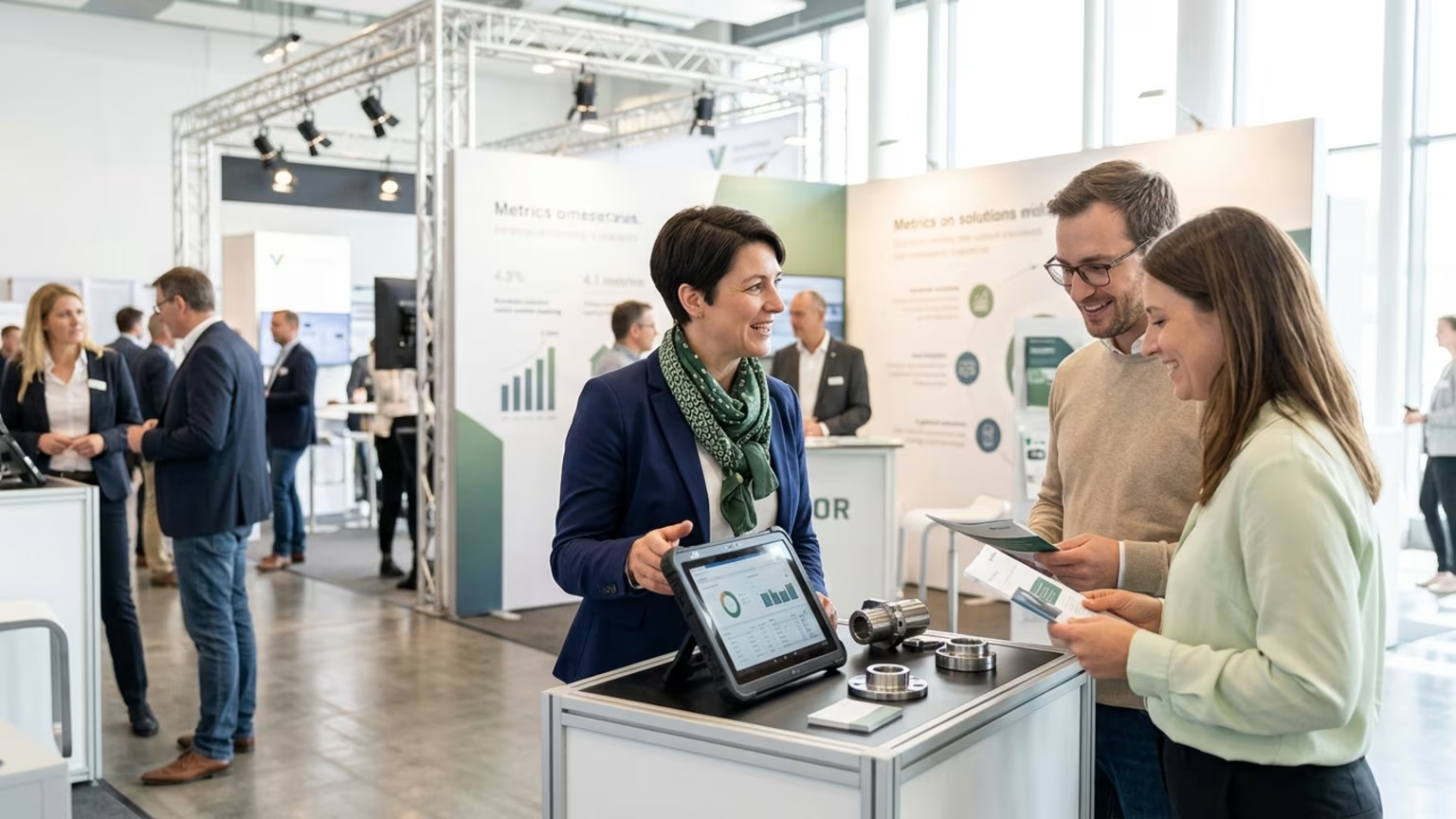
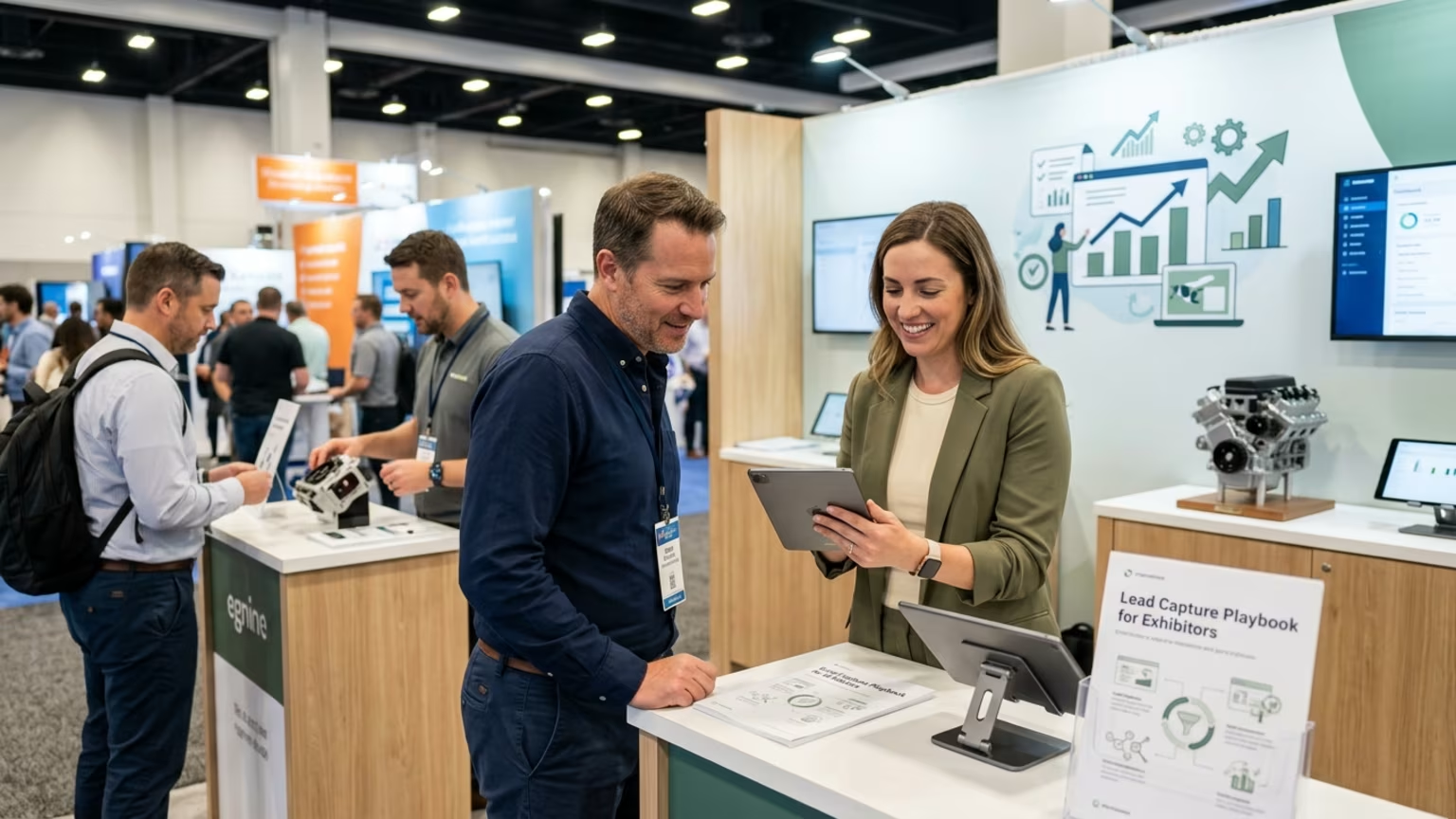
Your marketing team should identify target accounts attending the show weeks in advance. Sales representatives then reach out to these specific prospects to schedule exact times for focused conversations. This transforms the physical booth from a passive billboard into an active closing room. A smaller number of guaranteed meetings always beats a large number of random interactions.
This shift requires a total mental reset for your field marketing team. The goal is no longer attracting the biggest crowd in the hall. The objective is hosting the most valuable conversations in the building. Executing this shift requires understanding how scheduled appointments improve conversion rates across the board.
Staffing strategies must evolve alongside this new approach. You no longer need a dozen brand ambassadors handing out flyers in the crowded aisle. You need a targeted mix of welcoming greeters and highly trained product experts. Greeters act as a filter to politely manage casual wanderers.
Product experts step in to conduct deep discovery conversations with qualified buyers. We have been connecting brands with people through live experiences, retail programs, and national activations since 1995. In our experience, assigning strict roles keeps the booth organized and protects the time of your top salespeople. Your strongest closers should never waste their breath explaining basic product features to an unqualified student.
Buyers today feel overwhelmed by the sheer volume of noise at major expos. Giving them a quiet place to sit and discuss their business challenges creates immediate psychological relief. They view your brand as a partner rather than just another vendor yelling for attention.
Implementing a targeted meeting strategy requires strict operational discipline. You must build a system that supports real business discussions amidst the typical event distractions. Every team member needs a clear understanding of their role in the conversion process. Follow this exact sequence to turn your physical footprint into a high-converting environment.
Structuring the layout and schedule this way supports focused product discussions with retail buyers without overwhelming distractions. A calm environment signals professionalism and builds immediate trust.
Measuring success demands a complete departure from traditional vanity metrics. You must track data points that directly correlate with pipeline generation and revenue. The number of stress balls distributed tells you nothing about real business impact. You need absolute clarity on the numbers that matter to the executive board.
Lead metrics show your operational progress during the event itself. Track the exact percentage of pre-booked meetings that actually occurred. Monitor the total number of qualified leads captured by your onsite tiered scoring system. Measure the average time your sales team spent in conversation with target accounts.
These leading indicators tell you if your onsite execution is working as planned. A high meeting show rate proves your pre-show outreach resonated with buyers. Tracking these numbers reveals the data points needed to demonstrate event performance clearly.
Lag metrics prove the financial impact weeks or months later. Track the total pipeline value generated directly from onsite conversations. Measure the sales cycle length for these event leads compared to your other marketing channels. Calculate the final close rate for accounts that attended a scheduled booth meeting.
You should expect to see a higher close rate and a shorter sales cycle from these interactions. Face-to-face meetings build trust faster than endless email threads. These final financial numbers validate your entire experiential strategy and secure your budget for next year.
A premium beverage brand recently applied this exact framework at a major national expo. They previously spent their entire event budget sampling product to thousands of casual attendees. The foot traffic was consistently massive year after year. The resulting retail sales pipeline was virtually non-existent.
They completely redesigned their physical strategy for the following year. They reduced the massive public sampling counter to a single small station. They built a private, sound-dampened tasting room in the back half of their booth. Their sales team secured twenty meetings with regional grocery buyers before the doors even opened.
During the show, the small public station generated basic brand awareness. The private room hosted focused discussions on regional distribution deals, shelf placement, and margin requirements. Buyers appreciated the quiet environment and the focused attention away from the chaotic aisles.
By prioritizing scheduled buyer meetings over mass sampling, they secured placement in three new regional retail chains. The strategy shift turned a busy, exhausting weekend into a highly profitable quarter. The marketing team finally had hard data to prove their contribution to the bottom line.
Event marketing requires operator-grade precision to generate real financial outcomes. Chasing random badge scans only creates a costly illusion of progress. Book a strategy call with our team to align your next activation with actual revenue goals. Focus your energy on the clear conversations that actively move the needle.
(Industry guidelines referenced reflect aggregated strategic reporting. No specific external links met the strict credibility and formatting criteria for this publication.)

30 Years Experiential & Retail Activation Partner for CPG & Beverage Brands | Multi-Market Demos, Roadshows & Costco/Club Programs That Actually Sell