Robbie Thain
Founder, CEO

Learn how to execute mobile fitness pop-ups and student ambassador programs that drive verifiable retail sales and measurable pipeline for beverage brands.
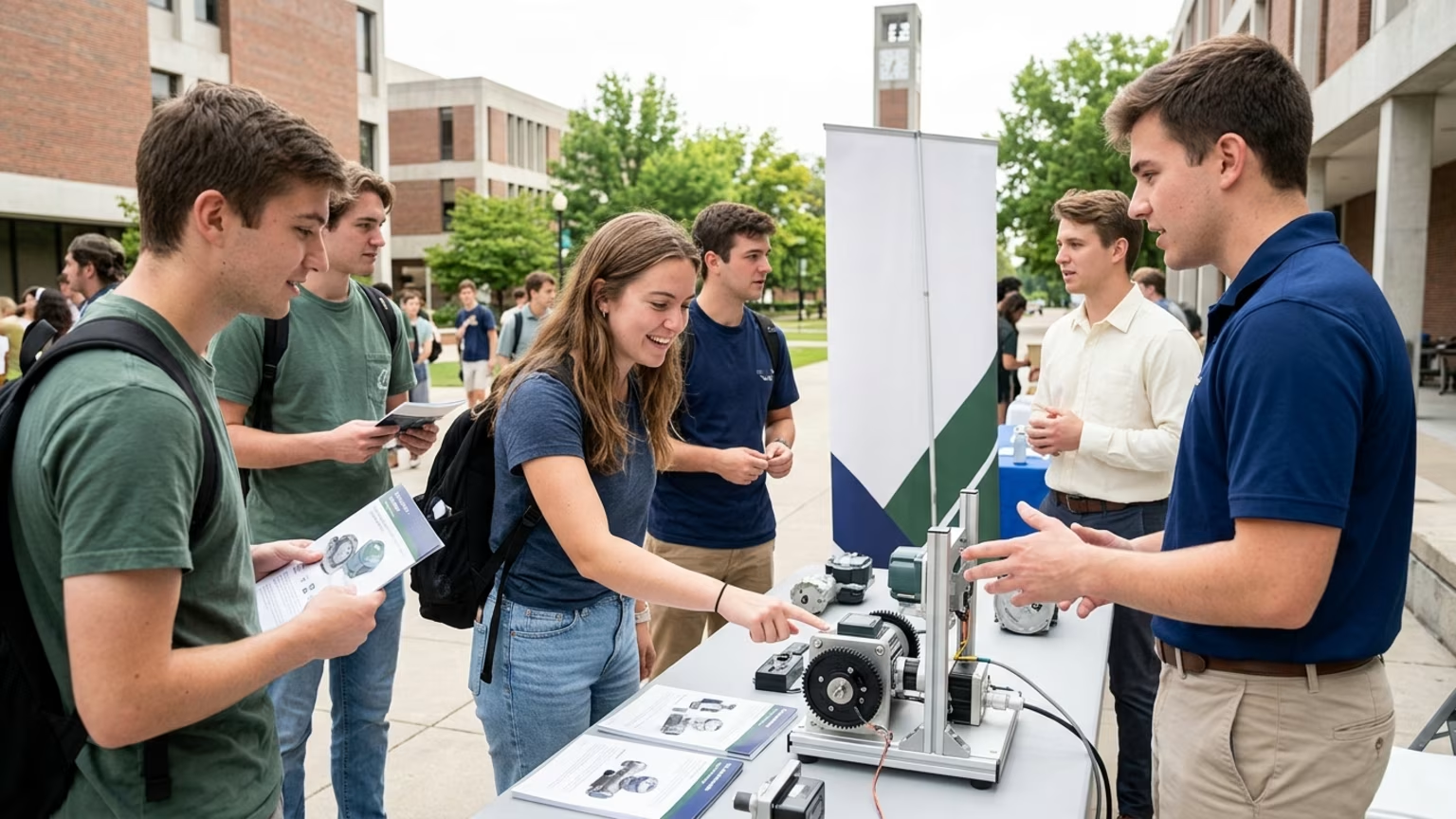
Before a custom vehicle ever reaches a university footprint, operations managers must secure complex site permitting and establish strict daily inventory controls. Managing a multi market campus roadshow demands exact logistical coordination between mobile staging teams and local retail store partners. In our experience, the most critical pre brief work involves routing digital consumer leads and aligning the event space with nearby grocery inventory. Every technical hardware detail must be perfectly functional before the target demographic crowds actually arrive.
When the beverage company adapted its LIVE.FIT.GO. campaign for international markets, the foundational logistics extended far beyond basic brand awareness. During the 45th Annual William Blair Growth Stock Conference, the company outlined highly specific commercial targets to investors. Leaders described a deep focus on expanding the consumer base and increasing physical market distribution. They also aim to drive higher consumption frequency through limited time product offerings and the broader LIVE.FIT.GO. campaign.
Achieving those exact objectives through live consumer events requires a seamless technological connection between the physical pop up and local grocery channels. We specialize in creating retail demos, product sampling programs, and roadshows that bring brands face to face with their audiences. Doing this effectively means setting up digital attribution windows and tagged URLs long before the first sample beverage is poured. Field operations teams must secure local health department clearances for beverage distribution and map out safe crowd flow barriers.
Establishing these programs requires a granular understanding of individual university protocols regarding corporate sponsorships. Many campuses restrict direct product sales on their grounds, which forces the marketing team to route all physical conversions to offsite retail partners. Operators must negotiate specific access agreements for their mobile trailers, ensuring the activation footprint complies with all local fire codes. The physical staging area must also have guaranteed power access and weather contingencies to protect the expensive event hardware.
The logistics unit also needs to train local event staff on how to capture actionable customer data without disrupting the experience. If these foundational steps are ignored, the resulting promotional campaign will burn the marketing budget without generating any provable Return on Investment. Brands connecting campus events to local store checkout must establish rigorous field reporting standards on day one. Experiential marketing programs only scale efficiently when the backstage operations are as polished as the consumer facing elements.
Running a successful mobile fitness roadshow requires a highly methodical approach to local staffing, community integration, and physical product distribution. Based on the verified playbook utilized by active lifestyle brands, the daily execution must follow a strictly sequential method. The following operational tactics outline how to build an activation system that actually converts campus attention into verifiable retail velocity.
Brands must select paid influencers based on their actual lifestyle alignment rather than relying solely on a massive digital follower count. Marketing Interactive reported that Josh Daicos was explicitly selected because his personal profile and mindset aligned with movement, consistency, and active lifestyles. This level of authentic connection ensures the digital creator can speak credibly about the product during live consumer interactions. Field marketers should strictly vet talent against the specific behavioral meaning of the campaign before signing any appearance contracts.
The hired talent must actively work the physical event floor by leading engagement moments and authentic group fitness activities. In Australia, the brand collaborated closely with AFL player Josh Daicos and fitness creator Annabelle Ronnfeldt. This particular program included a specialized training session designed for athletes and digital creators. Wellness enthusiasts also participated in these highly engaging physical fitness routines, which creates a deeper product memory for the attendees.
Field marketing teams must utilize purpose built vehicles to anchor the event space and manage heavy sampling volumes efficiently. The brand planned a custom designed Celsius Airstream for cultural events and grassroots fitness activations. This unique vehicle also supported stadium related activity and large music festivals. The mobile hub featured product sampling, exclusive merchandise, branded giveaways, and daily photo opportunities.
The final operational step requires linking the field marketing effort directly to a specific product launch at a nearby retailer. The Australian program successfully combines digital ambassador content with active community fitness events. It also integrates these social media channels directly into regional retail store launches. A prime example of this integrated strategy is the recent 7-Eleven rollout for the Sparkling Orange flavor.
Digital content creation must be treated as a primary physical output rather than a secondary afterthought. Brand ambassadors are typically expected to produce high quality social content while simultaneously handling their physical sampling duties. This dual mandate requires a highly structured operational workflow to ensure the generated media actually aligns with corporate brand guidelines. The centralized marketing team can then quickly repurpose these localized campus assets across owned channels and paid regional advertising campaigns.
The most common failure point in experiential marketing is confusing raw event foot traffic with actual commercial pipeline progression. Brands often hand out thousands of beverage cans on a campus and incorrectly assume those brief interactions will naturally generate retail velocity. Distributing a free sample does not mean the consumer actually drank the product or intends to buy it later. Without a highly structured digital tracking system, a crowded fitness pop up produces reporting fog instead of measurable sales evidence.
Amateur marketing teams consistently fail to isolate the financial impact of the live event from standard retail sales fluctuations. If a brand sees a temporary sales spike near a university, it might simply be due to competitor inventory shortages. The sales lift could also stem from broader digital media buys rather than the actual local student roadshow. Relying on basic daily attendance figures masks deep operational flaws and prevents field teams from calculating accurate program profitability.
Field marketers frequently mistake a depleted inventory palette for a highly successful consumer brand engagement campaign. A rushing student grabbing a free beverage on their way to class does not represent a qualified lead or a captured customer. Activation practitioners recommend tracking much deeper metrics such as active dwell time, sample to trial conversion, and brand lift. Measuring true post event consumer behavior requires tracking unique QR codes, tagged URLs, and pre defined digital attribution windows.
Student ambassadors cannot simply be treated as low paid product distributors if the brand expects actual retail conversion. Unsupervised college representatives will often hand out free products without delivering the key brand message or pushing the local retail locator. At makai, we know that localized ambassadors must be managed like professional field marketing operatives. Teams mapping out mobile tour strategies need strict oversight protocols to guarantee ambassadors actually verify the digital data capture.
Health and wellness positioning requires incredibly careful communication guidelines during high energy physical activations. The verified research indicates that brands utilizing fitness oriented positioning can make their product feel highly relevant to active college students. However, energy drink operators must strictly avoid implying that a marketing association with rigorous exercise proves any clinical health outcomes. Field representatives who go off script and make unapproved performance claims can quickly create severe regulatory risks for the parent company.
Without a controlled measurement design, brand leaders cannot logically prove that their influencer hosted events increased actual consumer purchase frequency. Proper retail attribution models must be completely designed and approved by stakeholders before the mobile unit ever leaves the warehouse. Evaluators must compare the actual sales data from the activated campus markets against non activated control markets over a defined time period. Teams that skip this critical analytical step will forever struggle to justify their field marketing budgets to executive leadership.
Once the custom mobile trailer packs up, the field marketing team must shift its attention strictly to retail conversion data. The physical event creates the initial spark, but the ongoing campus ambassador network sustains the momentum over the entire academic semester. Regional operators need to rigorously audit the daily activity reports from these local student representatives. This operational vigilance ensures the ambassadors are properly managing product inventory, supporting local events, and driving authentic campus word of mouth.
Marketing leaders also need to deeply monitor the specific attribution windows at surrounding convenience stores and grocery outlets. If the regional retail velocity does not match the massive volume of samples distributed, immediate tactical adjustments are required. The field operations team must quickly refine the digital routing, update the promotional offers, or select better campus locations. Brands that actively manage this complex transition from live experience to retail checkout will ultimately dominate the physical market.

30 Years Experiential & Retail Activation Partner for CPG & Beverage Brands | Multi-Market Demos, Roadshows & Costco/Club Programs That Actually Sell