Robbie Thain
Founder, CEO

Discover how the Tamagotchi USA Road Trip at Polaris Fashion Place turns a 30th anniversary into measurable product trials through retail mobile pop-ups.
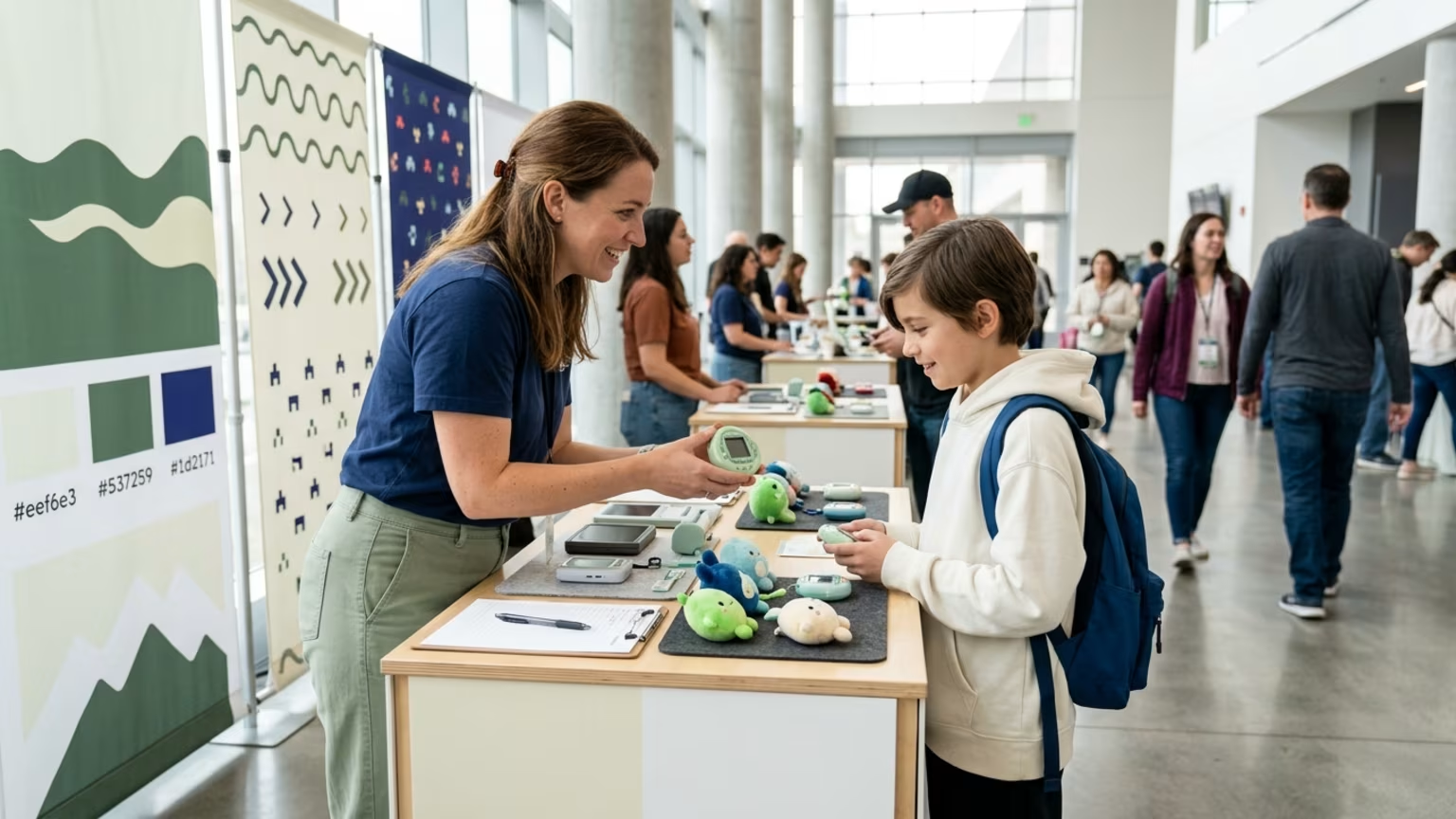
Bandai Namco's Tamagotchi brand recently marked its 30th anniversary by deploying a free interactive pop-up. This two-day installation appeared at Polaris Fashion Place in Columbus on August 29 and 30 of 2026. This milestone highlights a fundamental operational reality for marketers. Mobile experiential marketing is the discipline of placing portable brand environments into high-traffic consumer spaces to generate measurable product trials.
Unlike superficial brand theater, engagement marketing requires structured physical interactions that create actual pipeline. Field marketing leaders use these retail roadshows to capture attention in the physical world. The process connects a recognizable brand asset to a repeatable physical format. A well-planned roadshow turns passive mall foot traffic into verified product trials and merchandise sales.
Many organizations struggle to understand the core purpose of a live event. The true objective is never just about handing out free items to passersby. The activation must function as a localized customer acquisition tool. By operating within an established retail footprint, the campaign effectively shortens the path to purchase.
The Columbus Dispatch reported that Tamagotchi remains active three decades after becoming an iconic toy of the 1990s. The brand utilizes physical activations to prove this ongoing market relevance. This approach transforms a simple anniversary celebration into a strategic business maneuver. Marketers must view these field efforts as critical extensions of their sales operations.
Operating a live activation means breaking down what the concept actually means in the physical retail environment. A successful roadshow completely avoids relying solely on nostalgic sentiments. The Columbus activation operated on the lower level near Von Maur to intercept shoppers directly. This strategic mall placement forces the brand to compete with established storefronts for consumer attention.
The event hours ran from 11 a.m. to 8 p.m. on Saturday and noon to 6 p.m. on Sunday. The footprint combined a branded tour bus, hands-on activities, immersive games, and cross-generational product testing. One prominent attraction was a life-sized poop-sweep cleanup game based on familiar digital-care mechanics. The brand successfully translated a recognizable part of the product experience into a participatory challenge.
This strategic choice separates actionable strategies from vanity brand theater. We have executed over 1000 campaigns across all 50 states, bringing brands to life in every major U.S. market. From retail demos in Seattle to roadshows in Miami and events in Honolulu, our teams activate brands wherever our clients' audiences are located. This extensive field experience confirms that visitors need a simple reason to participate.
The poop-sweep game works because the activity reinforces what the product actually does. A beverage company might convert flavor selection into a timed challenge. An automotive manufacturer could build a family-friendly diagnostic game to show off new features. The goal is always to move consumers from passive observation to active participation.
When participants physically interact with a brand, their likelihood of purchase increases significantly. The physical mechanics of a game create a memorable anchor for the consumer. This tactile connection is impossible to replicate through digital advertising alone. True engagement marketing requires a physical environment where the consumer directs their own journey.
Building a successful activation requires several fundamental components to manifest this concept in a live setting. The first pillar is a modular activation design. The Tamagotchi USA Road Trip utilizes a branded tour bus and portable photo opportunities. This controlled physical environment allows the brand to reproduce the experience consistently across different regional markets.
Operating a portable tour bus eliminates the need to build a new set for every city. The modular format also ensures that the consumer experience remains uniform regardless of the location. Consistency is a vital requirement for brands launching a national campaign. A standardized footprint allows field teams to optimize their daily operations through repetition.
The second pillar is meaningful, cross-generational interaction. The activation allows visitors to test products from different generations rather than encountering only a single current item. Older consumers reconnect with a familiar brand, while younger visitors encounter the product through direct play. Intergenerational participation gives parents and children a shared reason to engage with the installation.
This dual demographic appeal maximizes the value of the mall location. Providing diverse entry points ensures that the footprint appeals to a broad range of shoppers. Interactive product displays encourage visitors to spend more time inside the activation zone. Higher dwell times naturally lead to a deeper understanding of the product catalog.
The third pillar is a clear retail handoff. A pop-up inside a retail center must provide an immediate commercial endpoint for the visitor. The Columbus event featured a dedicated shop selling special-edition merchandise to attendees. This merchandise component creates a tangible conversion mechanism for the brand.
Incorporating mobile pop-up tours within a shopping center keeps the customer journey focused on commerce. A physical merchandise shop prevents the brand from relying on delayed online conversions. Every interaction should guide the participant toward a checkout counter. A highly structured activation footprint ultimately functions as an independent retail branch.
Smart brands track the success of these programs by measuring actual behavioral changes. Polaris Fashion Place provides access to an existing retail environment rather than an isolated festival ground. Marketers must count the visitors entering the activation and distinguish true participants from casual passersby. A strong measurement framework evaluates engagement depth by recording activity completions and dwell time.
Talent Resources recommends organizing campaign reporting into exposure metrics, business proxies, and outcome metrics. Commercial performance indicators include merchandise transactions, product trials, and QR-code redemptions. Brands should also monitor retailer sales during the activation window to prove actual lift. The anatomy of a high-conversion footprint relies entirely on these structured data points.
Operational metrics are equally critical for evaluating a multi-city tour. Field managers must track daily throughput, staffing coverage, and average interaction times to maintain efficiency. Event organizers also need to log equipment downtime and inventory availability. Proper street-to-shelf conversion reporting ensures that a nostalgia-driven campaign actually delivers a return on investment.
Without a rigid data collection strategy, a multi-day pop-up is merely a costly advertisement. Experiential leaders must set exact measurement requirements in their venue contracts before deploying the tour. These requirements should mandate daily counts, staffing logs, issue tracking, and a final outcome dashboard. Hard operational metrics distinguish a successful marketing investment from a purely recreational event.
Marketers should also analyze queue abandonment rates to optimize their footprint layout. If visitors leave the line before playing a game, the activation is losing valuable prospects. High participation counts can indicate strong entertainment value without proving actual product demand. Therefore, brands must isolate the number of unique participants who actually complete a transaction.
A legacy brand can certainly attract former users, but the experience still needs a current product story to succeed. Nostalgia serves as an excellent entry point, but it does not guarantee a final purchase. The Tamagotchi USA Road Trip successfully turns a 30th anniversary into a structured retail conversion engine. Bottom line: A retail roadshow only becomes a true pipeline asset when the physical interaction directly advances the customer toward a verified purchase.
The physical presence of a brand inside a major shopping center fundamentally changes how consumers perceive the product. It signals stability, investment, and a commitment to customer experience. When executed with operational discipline, a mobile pop-up becomes the most powerful tool in the marketer's arsenal. Every interactive element must deliberately point the consumer toward the register.
Generating hands-on participation without a clear conversion path frequently results in wasted experiential budgets, which is why Makai strictly focuses on measurable outcomes. We resolve inefficient post event follow up and CRM routing by deploying our Mobile Sampling Tours capability. We deliver your brand directly to audiences through on the go experiences that drive trial and awareness.

30 Years Experiential & Retail Activation Partner for CPG & Beverage Brands | Multi-Market Demos, Roadshows & Costco/Club Programs That Actually Sell