Robbie Thain
Founder, CEO

The 2026 FDA phase out of synthetic food dyes will force CPG brands to reformulate. Learn how to protect market share with a strategic retail sampling playbook.

Reformulating your flagship product to appease regulators is a surefire way to alienate your most loyal buyers. The impending push to remove petroleum-based synthetic dyes from the food supply by 2026 will force sweeping changes across the grocery store. Many brands will quietly update their labels and pray consumers do not notice the sensory differences. This silent compliance strategy is a massive operational error.
The upcoming regulatory phase out of synthetic food colors presents a major risk for silent customer churn. Savvy consumer packaged goods brands will treat this mandate as an aggressive retail relaunch to protect market share.
Imagine standing in the middle of a massive retail grocer during a busy Saturday morning rush. A shopper picks up a box of legacy kids cereal and notices the colors look slightly duller than normal. They open the box at home only to find the texture has shifted and the flavor feels flat. The natural colors sourced from beet juice and turmeric have fundamentally altered the beloved sensory profile.
That shopper throws the box away and buys a private label alternative the following week. No one in your marketing department ever sees a formal complaint or a negative online review. Your retail buyer simply notices a steady decline in unit velocity and pulls your shelf space during the next category reset. The shift away from synthetic dyes creates a huge opening for competitors to steal your market share.
According to recent food safety reports, the FDA is moving companies away from petroleum-based synthetic colors and toward safer alternatives. This transition targets artificial dyes including Red 40, Yellow 5, and Blue 1. These chemicals provide bright colors at a very low manufacturing cost. Replacing them with plant based alternatives disrupts the entire supply chain and fundamentally alters the final consumer product.
Food scientists face massive technical challenges when replacing synthetic dyes with natural alternatives. Ingredients like spirulina and beet juice lack the aggressive stability of petroleum-derived chemicals. They are highly sensitive to shifts in acidity and often degrade rapidly during the manufacturing process. This instability creates noticeable visual variations from one production batch to the next.
Consumers expect their favorite snacks and beverages to look completely identical every single time they open a package. A duller red or a slightly muted yellow can immediately trigger suspicion and deep dissatisfaction. Natural colors can occasionally introduce unintended earthy flavors that clash with the intended sweetness of the product. These sensory deviations are the exact elements that drive loyal shoppers away from a legacy brand.
Major grocers are not waiting for the final regulatory hammer to drop before cleaning up their retail aisles. Retailers like Target are actively pressuring suppliers to remove artificial colors from prominent shelf placements. Category managers understand that modern parents scrutinize ingredient panels more aggressively than previous generations. Retail buyers want to fill their stores with premium products that align with these rising health standards.
Store managers expect brands to handle this transition without causing a dip in overall category revenue. If your reformulated product fails to maintain its historical unit velocity, the retailer will quickly replace you. They will pivot to aggressive private label brands that have already mastered the clean label formula. You must provide your buyers with hard data showing that consumers accept and genuinely enjoy the new recipe.
You cannot hide a major recipe change from an attentive public. You must actively court your buyers and prove your new formula is objectively better than the original. Natural food colorants are notoriously difficult to stabilize under normal retail conditions. Consumer packaged goods operators must bridge the gap between food science and shopper expectations through physical interactions.
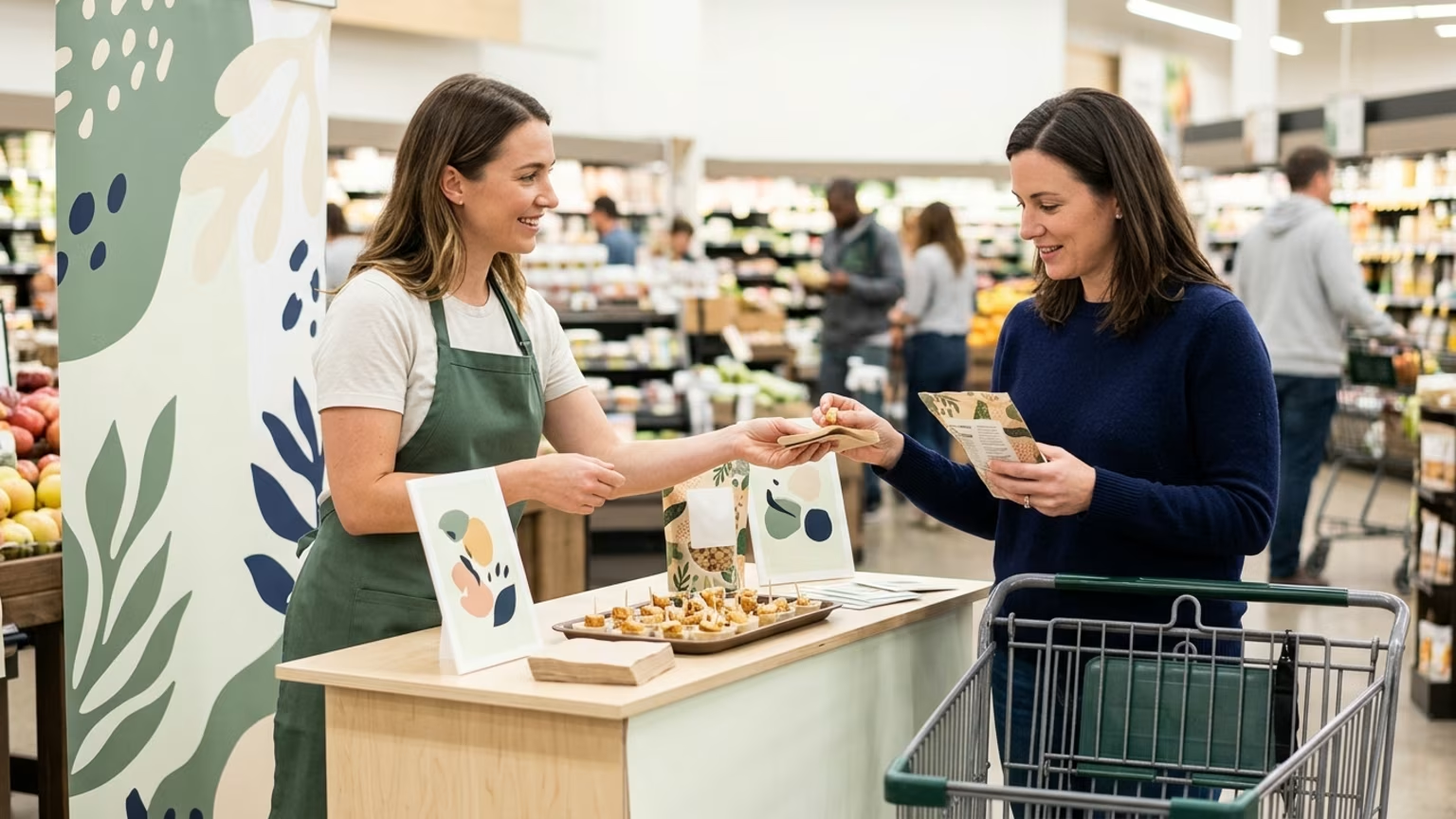
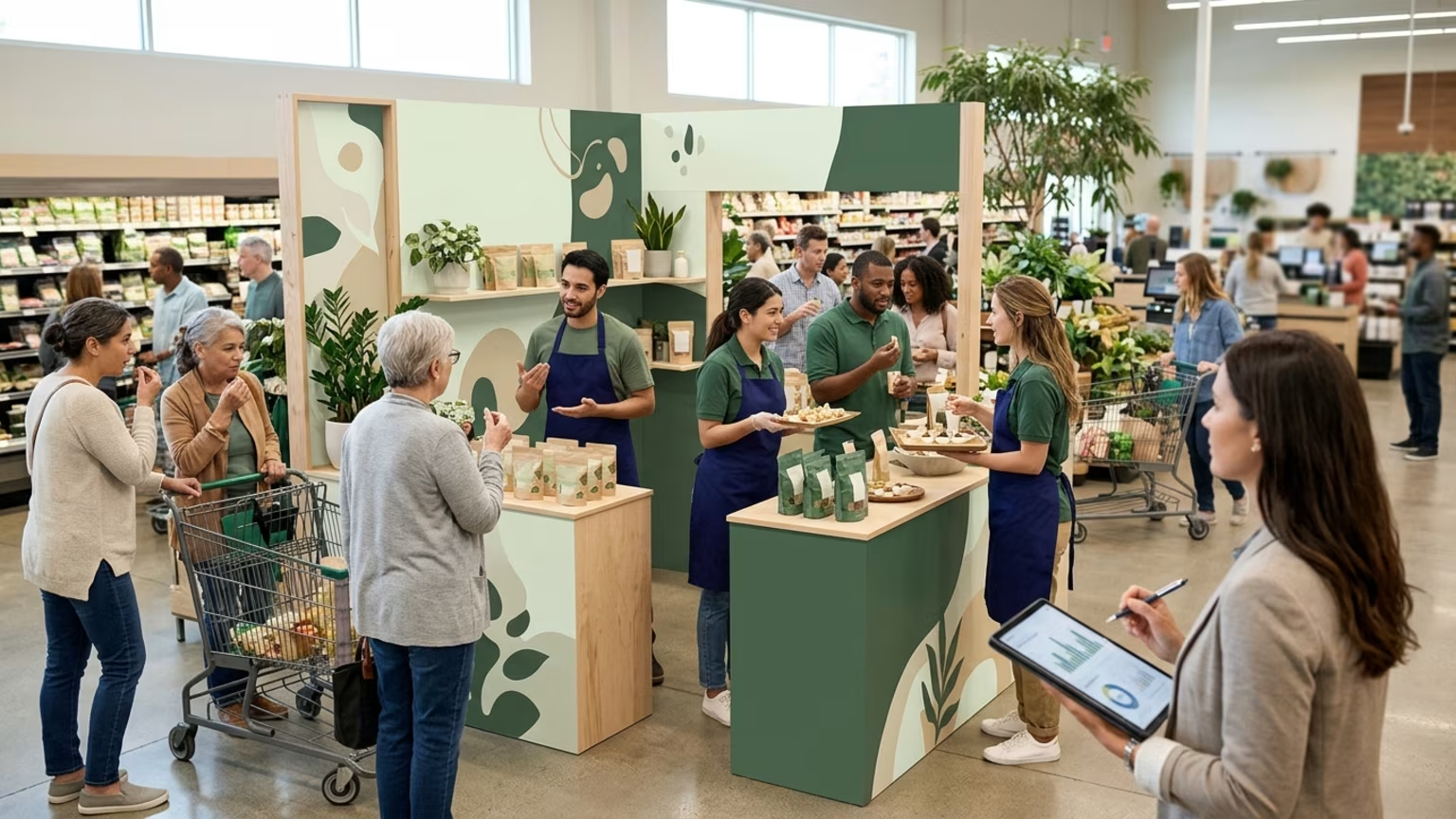
The smartest play is to deploy a localized retail sampling strategy that tackles the ingredient shift head on. This strategy gives your field team the chance to collect real feedback before the new units hit national distribution. A measured rollout allows you to test localized messaging and adjust your packaging claims based on real world conversations. Brands that rely on passive distribution will lose to aggressive competitors who actively educate the consumer.
Many manual CPG operations face delays and packaging errors when rushing a new formula to market. You can avoid these operational pitfalls by treating your reformulation as a premium product launch rather than a compliance chore. This shift is exactly why the General Mills 2026 cereal reformulation offers a masterclass in retail defense. They are leaning into the ingredient change and educating the shopper directly at the store shelf.
The shift from synthetic to natural food dyes requires a military grade field marketing strategy. You need a structured operational approach to transition your loyal buyers to the new recipe without losing their trust. Use this execution playbook to structure your in store activations and protect your retail footprint. Brands facing this transition should book a strategy call to map out a safe retail testing environment.
Sourcing natural colors at a national scale introduces entirely new layers of operational complexity and financial risk. Crop yields for ingredients like turmeric and beets fluctuate wildly based on annual weather patterns and global shipping constraints. These natural agricultural variances make it incredibly difficult to secure a consistent supply of standardized colorants year round. Consumer packaged goods companies must build resilient supplier networks to avoid catastrophic out of stock scenarios during peak seasons.
The sheer cost of natural dyes will force many brands to reevaluate their entire price architecture. Plant based colorants cost significantly more to produce and process than mass manufactured synthetic alternatives. Brands operating on razor thin margins will face immense pressure to pass these elevated costs onto the consumer. Shoppers are highly sensitive to price increases and will demand a premium tasting experience to justify the extra expense.
This economic pressure makes in store product sampling an absolute necessity for mid tier and premium brands. You cannot ask a loyal customer to pay more for a product that looks and tastes slightly different without proving its value first. Live demonstrations give your ambassadors the perfect platform to explain the clean label upgrade and deliver a perfect sample. This real time value exchange prevents sticker shock and justifies the new premium positioning.
Retail buyers are acutely aware of these supply chain vulnerabilities and pricing pressures. They will aggressively question your ability to maintain consistent stock levels during the first year of the transition. Your field marketing data becomes a critical asset during these tense vendor negotiations. Demonstrating strong consumer demand through controlled sampling events forces the retailer to maintain your existing shelf space.
A successful rollout requires precise coordination and a detailed event execution checklist to track every localized activation. You need to present hard evidence that your reformulated product still moves off the shelf at a profitable velocity. We measure success through distinct performance indicators to prove the Return on Investment. Good data protects your valuable shelf space and builds deep trust with your retail buyers.
Lead metrics tell you what is happening on the floor in real time during a live activation. Track the total number of qualified interactions per hour and the immediate sample conversion rate. You should monitor the exact number of blind taste test victories against legacy formulations. Field teams must report these numbers daily to spot early warning signs of consumer rejection.
Lag metrics determine your true financial impact over an extended time horizon. Analyze the thirty day shelf velocity at activated stores compared to silent control locations. Track coupon redemption rates and monitor the baseline lift in overall retail sales. This data proves that your educational sampling campaign successfully transferred consumer loyalty to the new recipe.
International markets provide a clear preview of this incoming regulatory shift and consumer reaction. Several European countries historically restricted classic American snack brands over concerns regarding artificial dyes and child behavior. Multinationals were forced to maintain dual formulations to satisfy both local regulators and overseas consumers. Brands that relied on quiet updates abroad saw sharp declines in brand trust and overall market share.
Companies that turned the ingredient swap into a public retail education campaign retained their core demographic and even attracted new buyers. They set up localized sampling stations and clearly explained the shift to natural ingredients. This transparent approach neutralized the initial shock of a different color profile and rebuilt consumer confidence. American brands must study these international case studies to prepare for the fast approaching 2026 phase out.
Expert food brand marketing strategies rely on transparent communication during periods of ingredient volatility. Consumers respect brands that treat them like intelligent adults capable of understanding complex supply chain realities. You can build incredible brand equity by inviting the shopper into the reformulation process through live retail events. Hiding the changes behind a quiet packaging update is a guaranteed path to irrelevance.
The physical store shelf is the only place where a brand can look a shopper in the eye and make a promise. When the ingredients change, that trust is immediately tested by the realities of taste and texture. Removing petroleum-derived colors is a necessary step for public health and modern grocery standards. The brands that survive this transition will treat the challenge as a chance to prove their enduring quality in person.

30 Years Experiential & Retail Activation Partner for CPG & Beverage Brands | Multi-Market Demos, Roadshows & Costco/Club Programs That Actually Sell