Robbie Thain
Founder, CEO

A recent survey reveals event professionals are shifting budgets toward on-site staffing and operational tech. Learn how workforce management drives real ROI.

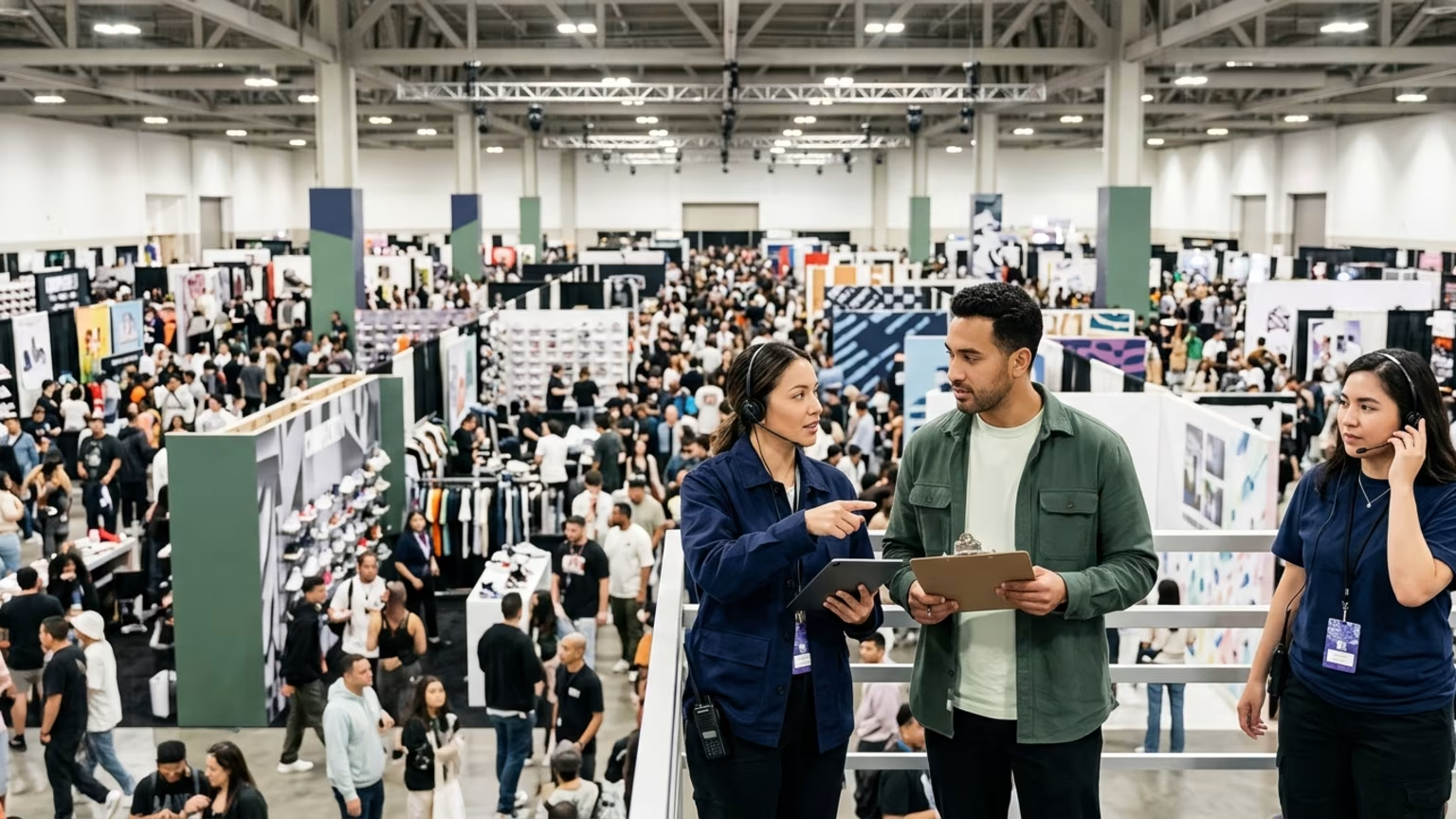
Sarah stared at the stunning custom booth as the convention doors opened. The LED displays looked flawless. Yet her registration scanners were offline, her lead ambassadors were missing, and a line of retail buyers was growing frustrated. That beautifully designed space was instantly paralyzed by a lack of operational control.
A recent survey of over 1,100 event professionals reveals that organizers are actively shifting budgets away from spectacles and into on-site staffing technology. By prioritizing workforce management tools and reliable execution, brands can finally turn chaotic live activations into predictable commercial success.
Live events are returning with immense momentum and expanding operational complexity across the country. Industry barometers show that in-person attendance is approaching or exceeding previous benchmarks for large conferences. As your portfolio of activations grows, the friction on the ground multiplies exponentially. You add more product variants, partner with new vendors, and deploy larger teams across multiple target markets.
When planning lacks strict operational infrastructure, this growth quickly turns into a logistical nightmare. You might build an incredible consumer experience that falls apart when the sampling line is severely understaffed. Staff might arrive late, misplace inventory, or completely forget the core talking points from their morning briefing. These failures do not just annoy attendees on the floor. They actively destroy the Return on Investment you promised your executive team.
Treating event staff as a cheap commodity guarantees high turnover and wildly inconsistent brand representation. Many organizations end up relying on fragmented and disconnected point solutions. One application handles employee scheduling, another captures sales leads, and a third tracks your physical inventory. This setup creates deep data silos that obscure the true performance of your field teams.
Without a single source of truth, field leaders cannot make informed adjustments during a live activation. You are left guessing whether a drop in engagement is caused by a bad location or poor staff performance. This lack of visibility makes it impossible to report meaningful commercial outcomes to your retail partners. Marketing leaders worry about capturing low quality leads from crowded trade shows when their teams lack proper focus. When attention is scattered and booth flow is poorly managed, you end up collecting business cards that never convert.
The smartest experiential marketers are recognizing that smooth logistics function as a true competitive advantage. The latest research indicates that labor planning, training consistency, and real-time operations visibility are the top priorities for field teams this year. Planners are under intense pressure to show measurable commercial impact rather than just aesthetic creativity. This represents a distinct pivot toward repeatable and operationally efficient event programs.
Instead of hoping a celebrity appearance masks poor booth flow, leaders are investing in technology that guarantees flawless execution. Unified platforms now combine recruiting, scheduling, digital briefings, and performance reporting into a single system. These robust tools give you live dashboards to see exactly who has checked in. You can easily monitor what engagements look like in real time.
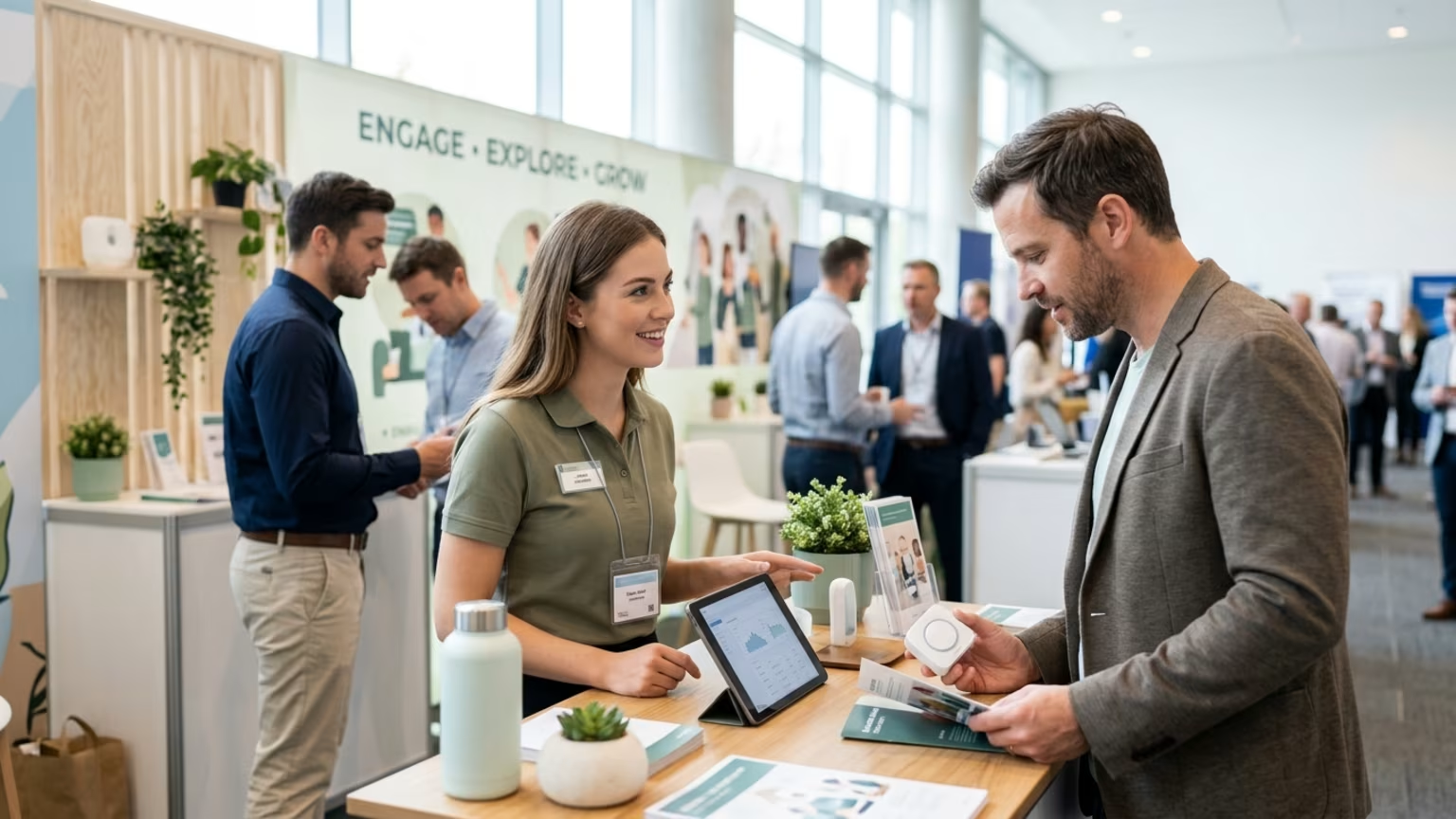
Event staffing agencies are aggressively responding with proprietary tech stacks that offer GPS check-ins and video-based training. This standardized preparation guarantees consistent brand presentation regardless of the specific market or vendor. By centralizing these operations, agencies provide the exact proof of performance that client brands demand. Planners are prioritizing check-in systems, ID verification, and rapid badge printing to avoid bottlenecks. A slow registration process creates a negative first impression that is hard to shake.
Conference staffing providers now position themselves as operational partners rather than just providers of temporary labor. They manage complex tasks like session hosting and digital attendee support to keep programs running smoothly. This guarantees that staffing is treated as a critical piece of the data capture strategy. Our team blends physical and digital experiences by integrating QR codes and mobile technology into a cohesive layer across retail and event spaces. This integration is not a standalone service but an upgrade we apply to many types of experiential work to drive connected results.
This setup empowers staff to manage check-ins faster, track session data, and maintain clear communication with external vendors. You are effectively equipping your brand ambassadors to operate like highly trained field managers. Using centralized guidelines and standardized checklists guarantees that your consumer messaging never dilutes across locations. This level of intentional control is what separates memorable activations from costly mistakes. Integrating technology into your staffing plans provides the foundation for massive retail growth.
Moving your strategy from a slide deck to the trade show floor requires immense discipline and focus. You must build an infrastructure that supports your team from the first shift to the final teardown. Treating operations as an afterthought is the fastest way to burn through your marketing budget. The following steps will help you establish a resilient and scalable operations strategy.
You cannot improve what you refuse to measure properly on the ground. For years, marketers settled for basic headcount numbers and vague engagement estimates that proved absolutely nothing. Today, leading professionals use precise operations data to make rapid decisions mid-campaign. Defining specific commercial key performance indicators allows you to justify every dollar spent.
First, you must track operational leading indicators that highlight staff reliability and training adherence. Measure the exact staffed hours against your initial plan to catch attendance trends early. Monitor training completion rates and physical display compliance across all your active markets. When your team executes the basics flawlessly, your downstream retail results naturally improve.
Next, connect those operational data points to concrete lagging indicators. Track the volume of digital leads captured against your actual post-event follow-up rates. Compare the number of physical product trials with actual coupon redemptions or retail sales lift in nearby stores. By tying engagements directly to buyer behavior, you can clearly prove trade show impact during subsequent roadshows and retail pushes.
Your CRM routing must be flawless so that leads are pursued immediately after the event ends. If your team cannot quickly pass qualified prospects to your sales department, the activation loses its value. Tracking the time from initial engagement to the first follow-up call is a deeply revealing metric. It forces your organization to treat live events as an integrated part of your broader sales pipeline.
Use this collected data to shift your field staffing toward high-performing venues or profitable dayparts. If a specific market underperforms, your dashboards will reveal whether the issue was low traffic or severe understaffing. This complete visibility protects your overall budget and prevents you from repeating tactical mistakes.
Consider a rapidly growing snack brand preparing for a massive Costco roadshow expansion across fifty locations. Their previous attempts relied heavily on generic temp agencies and minimal executive oversight. Staff regularly arrived late, product displays looked disorganized, and sales conversions barely covered the basic operational costs. The brand was failing to convert foot traffic into actual retail sell-through.
For the new campaign, the marketing team completely shifted its operational investment strategy. They partnered with an agency that provided GPS-verified check-ins, mandatory digital training modules, and real-time inventory tracking. Every brand ambassador had to pass a product knowledge quiz before their shift officially started. The agency deployed real-time dashboards to monitor exactly how many samples were distributed per hour.
The impact of this strict operational discipline was immediate and highly profitable. The brand saw a massive reduction in queue abandonment since the staff answered consumer questions efficiently. Field managers could spot inventory shortages hours before they became a problem. By keeping the sampling line moving smoothly, they generated a measurable and sustained spike in retail sell-through.
The operation proved that well-trained personnel are the ultimate conversion engine. When your staffing infrastructure works flawlessly, every other marketing element performs better. The brand successfully justified its marketing spend and secured buy-in for future national expansions.
The smartest experiential leaders know that brilliant creative concepts only succeed when supported by relentless operational discipline. You must invest in the technology and the people that make your brand experience reliable across every single market. Take ten minutes today to audit your upcoming event budget and reallocate funds toward robust field management tools. Book a strategy call with our team to start building an execution framework that actually converts.

30 Years Experiential & Retail Activation Partner for CPG & Beverage Brands | Multi-Market Demos, Roadshows & Costco/Club Programs That Actually Sell