Robbie Thain
Founder, CEO

Samsara is hiring a senior field event manager to run roadshows like performance channels. Learn how to turn event chaos into measurable pipeline.

A field marketing director stands in a noisy convention center holding a useless clipboard. Two brand ambassadors are missing, the lead scanner is broken, and the sales team is complaining about foot traffic. The pressure of managing live events without total operational control feels suffocating.
Connected operations platform Samsara recently opened a senior field event marketing manager position to turn roadshows and sponsorships into measurable revenue engines. This strategic move shows that brands are finally treating physical activations with the discipline of performance marketing.
Many teams treat live events as isolated projects rather than a connected sales strategy. A brand might invest heavily in a beautiful booth space at a major expo. The visual design looks fantastic. The actual execution falls flat when the promised leads vanish into thin air.
Uncoordinated vendors point fingers when logistics fail. Sales reps stand around waiting for magic to happen. The entire activation devolves into a stressful exercise in damage control. Brands without centralized ownership watch their field investments turn into expensive theater.
Leads sit in unassigned spreadsheets for weeks. Follow-up emails go out far too late. The executive team inevitably questions the Return on Investment (ROI) of the whole program. This is the exact scenario preventing field operations from becoming a dumpster fire aims to solve.
When nobody owns the end-to-end commercial outcome, live events leak pipeline at every stage. Many B2B growth leaders now describe physical activations as a core revenue engine. These events accelerate deal cycles and strengthen account relationships in ways that purely digital channels cannot replicate. U.S. adults spend over seven hours per day consuming digital media.
This massive screen time makes digital plays noisy and less differentiated for modern brands. Rising paid social costs have pushed companies to seek high-intent interactions in physical spaces. Without operational discipline, these real-world marketing investments quickly drain budgets.
Sponsorships often suffer from this exact lack of coordination and oversight. Companies buy expensive placements for logo visibility without planning a cohesive follow-up strategy. This passive approach wastes the true potential of direct buyer engagement. An unmanaged sponsorship behaves like a billboard instead of a high-converting channel.
The solution requires moving away from scattered gig work and adopting a centralized management framework. According to recent remote job postings, Samsara expects their new senior manager to handle end-to-end event ownership. This covers planning, strict vendor management, and rigorous KPI measurement across a full portfolio. They are looking for an operator who treats hosted roadshows and industry sponsorships as an integrated performance channel.
This level of discipline means aligning every physical touchpoint with broader sales priorities. A senior event leader builds the commercial logic behind where the brand shows up. They coordinate cross-functional teams to drive pipeline and revenue directly from live interactions. Real-world experiences become core infrastructure in the go-to-market mix.
This integrated approach replaces scattered efforts with building repeatable frameworks for long-term success. Brands are shifting budgets from massive annual tentpoles to targeted regional roadshows. These multi-market tours offer curated audiences and allow constant testing across different stops. A well-designed mobile tour brings the product closer to retail environments and channel partners.
Managing these serial formats requires an operator who understands deep project management. The goal is to scale these activations without multiplying the logistical chaos. Senior ownership protects the brand from disjointed messaging and poor vendor execution. A dedicated event operator reviews every contract and verifies alignment with corporate revenue targets.
This centralized control reduces wasted spend on flashy installations that fail to produce pipeline. The focus remains entirely on generating measurable interactions with targeted buyers.
Running a disciplined field marketing channel requires tight project management and a standardized workflow. Teams must shift from spontaneous planning to a predictable execution model. You need a structured playbook to keep complex activations on time and on budget. Field operations demand the same rigor as running a high-stakes paid media campaign.
Implementing this playbook requires clear communication across your entire marketing department. Every field ambassador must understand the primary goal of their specific retail footprint. The sales enablement team must equip field reps with targeted talk tracks for each activation. This deep alignment prevents costly disconnects between what the brand promises and what the field delivers.
Consistency transforms ad-hoc marketing tactics into a reliable corporate asset. Field managers can replicate successful event formats across multiple cities with absolute confidence. This scalability allows rapidly growing companies to expand their geographic reach without sacrificing quality. A strong playbook turns localized momentum into a national sales advantage.
You cannot manage a performance channel without tracking the right numbers. Teams need to measure data that satisfies the finance department. We must look beyond simple foot traffic and vanity metrics. The focus belongs on metrics that prove your trade show Return on Investment with undeniable clarity.
A senior event manager tracks these outcomes relentlessly. Lead metrics indicate the immediate traction and health of your live activation. You should track the total number of qualified buyer meetings booked prior to the event. On-site metrics include the volume of verified product samples dispensed and direct opt-ins captured.
High engagement rates and fast lead capture times show that your floor strategy is working. Good floor execution should instantly reflect in your daily lead velocity reports. Lag metrics reveal the true commercial impact of your field marketing investment over time. Watch the total pipeline generated and track opportunity velocity through the sales funnel.
For retail brands, you must measure incremental sell-through at surrounding stores in the weeks following a roadshow. A structured reporting dashboard ties these outcomes back to the original event spend. Measuring these precise outcomes transforms experiential marketing from a brand exercise into a pure revenue driver. Connecting physical interactions to digital CRM data closes the loop on event performance.
Modern field teams use mobile scanners and integrated software to feed data instantly to marketing automation platforms. This technological integration provides real-time visibility into the success of ongoing activations. It allows corporate leaders to pivot strategies mid-tour based on concrete performance data.
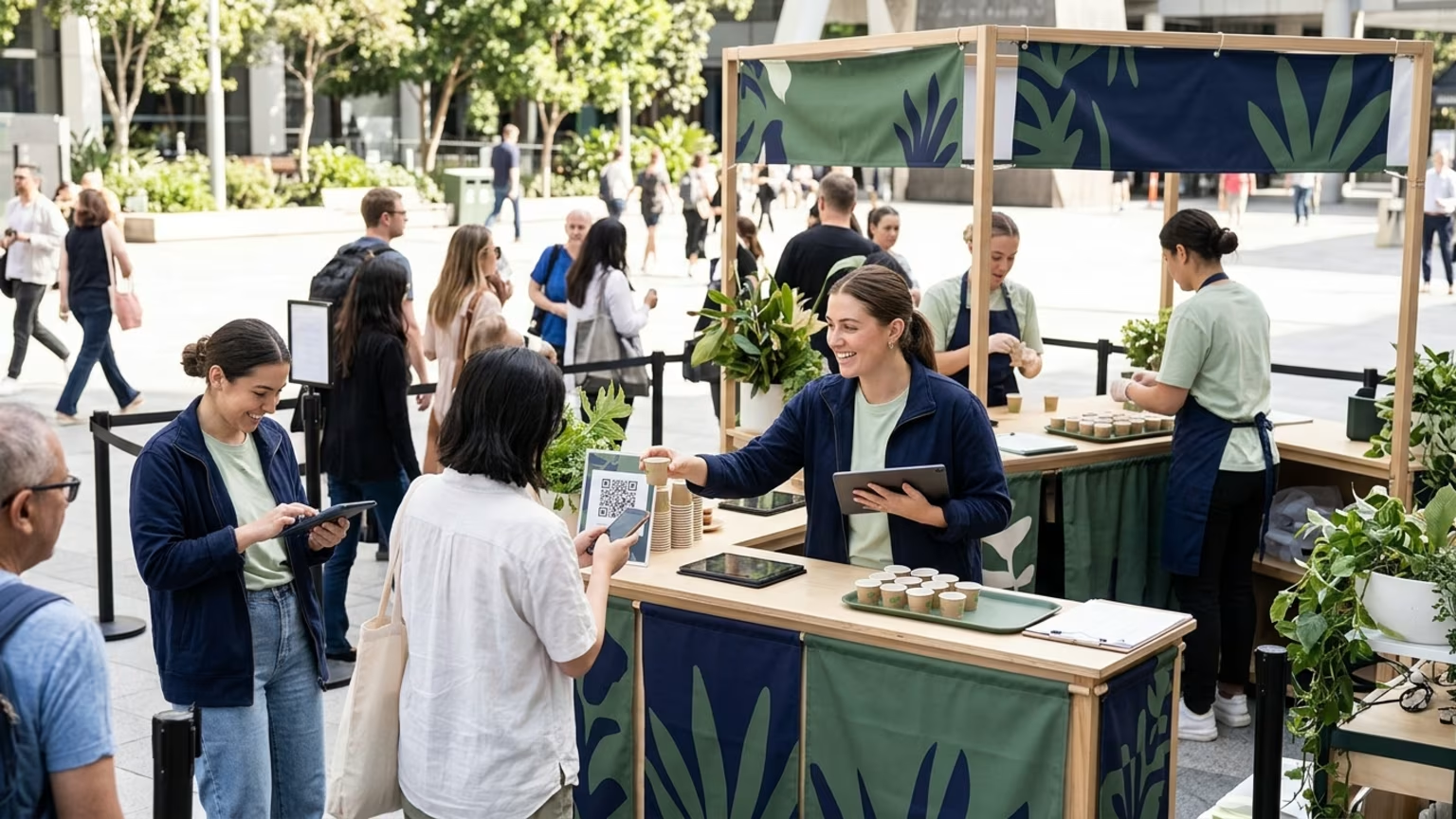
Consumer packaged goods companies face unique challenges when launching new products in crowded retail environments. We recently worked with a national snack brand struggling to gain shelf space at major club stores. Their previous scattered sampling events failed to impress regional retail buyers. The brand needed a serious operational upgrade to secure meaningful distribution.
A fragmented approach was actively hurting their retail negotiations. Our team stepped in to centralize their roadshow operations across four key markets. We built a unified playbook that aligned sampling targets directly with the retailer demands. The field teams executed precise daily demonstrations that tracked samples dispensed against same-day inventory depletion.
We blend physical and digital elements by integrating mobile technology and real-world activations into a cohesive layer across our tour experiences. This blended strategy is not a standalone service but an upgrade we apply to many types of experiential work to drive connected results. The brand collected precise consumer feedback data alongside hard sales numbers. This data gave their sales directors the exact proof points needed to secure permanent end-cap displays.
The campaign generated immediate localized sales spikes and locked in long-term retail authorizations. Measuring direct product trial gave the brand massive leverage in their future distributor meetings. You can book a strategy call with our team to map out a similar approach for your next launch. This level of execution proves that field marketing remains unmatched for building genuine brand trust.
A disciplined roadshow converts curious shoppers into loyal brand advocates right in the aisle. The initial investment in operational excellence pays massive dividends across future product lines. Strategic field management builds a resilient bridge between compelling marketing concepts and actual retail success.
Start treating your next trade show like a performance channel by assigning one person to own the final revenue numbers today.

30 Years Experiential & Retail Activation Partner for CPG & Beverage Brands | Multi-Market Demos, Roadshows & Costco/Club Programs That Actually Sell