Robbie Thain
Founder, CEO

Learn how digital twinning and artificial intelligence transform chaotic trade show floors into measurable sales pipelines for experiential marketing teams.
Adding more technology to a live activation does not make the experience more authentic for consumers. It simply makes the chaos measurable so field operators can stop guessing and start converting fleeting interactions into documented sales pipeline. By adopting digital replicas and intelligent tracking, brands can transform trade show floors from untrackable expenses into predictable revenue generators.
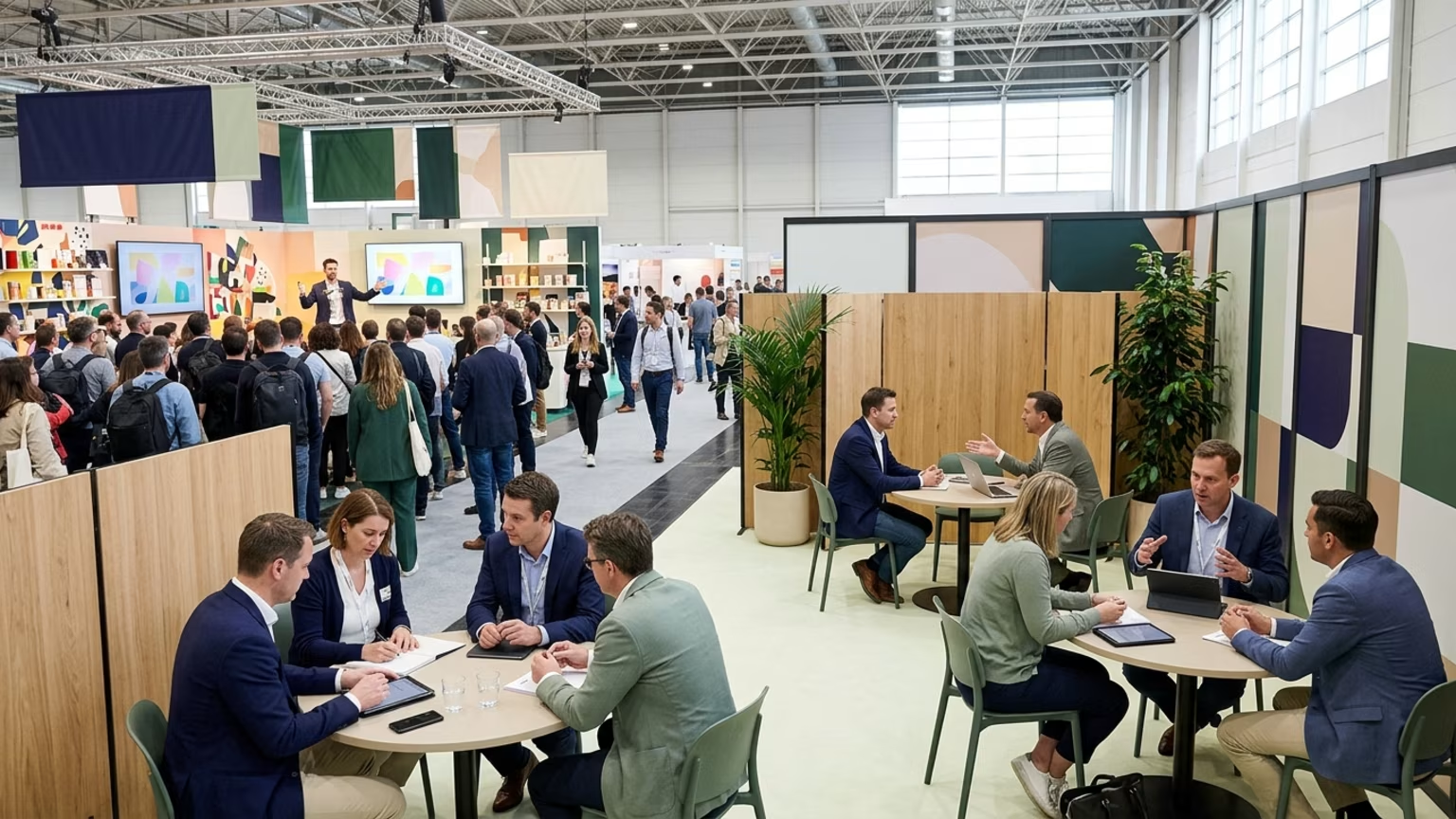
Walk onto any massive exposition floor at noon on the second day. You will immediately see frantic brand ambassadors scanning badges from attendees who only want a free tote bag. Sales representatives find themselves trapped in dead-end conversations with unqualified vendors instead of their target buyers. Management back at corporate headquarters sees a crowded booth and assumes the financial investment is paying off.
The reality on the ground is a disorganized mess of fragmented interactions. The brand spent a massive budget on a premium physical space but has zero clarity on who actually intends to buy the product. According to Forrester Research, mid-senior marketers in the fast-moving consumer goods sector report that 62 percent of events fail Return on Investment tests without digital tracking. The physical activation might look beautiful to an outsider.
The underlying business mechanics are completely blind and bleeding capital. Staff members are exhausted from managing a high volume of low-quality interactions. Post-event follow-up becomes a nightmare of manually sorting through thousands of disconnected leads. The way consumer packaged goods brands manage live growth dictates whether they secure more shelf space or lose retailer confidence.
The global events industry was valued at over one trillion dollars recently. It is projected to reach two and a half trillion dollars in the next decade. Much of this growth comes from formats that prioritize measurable outcomes over traditional unmeasured setups. Brands can no longer afford to operate in the dark.
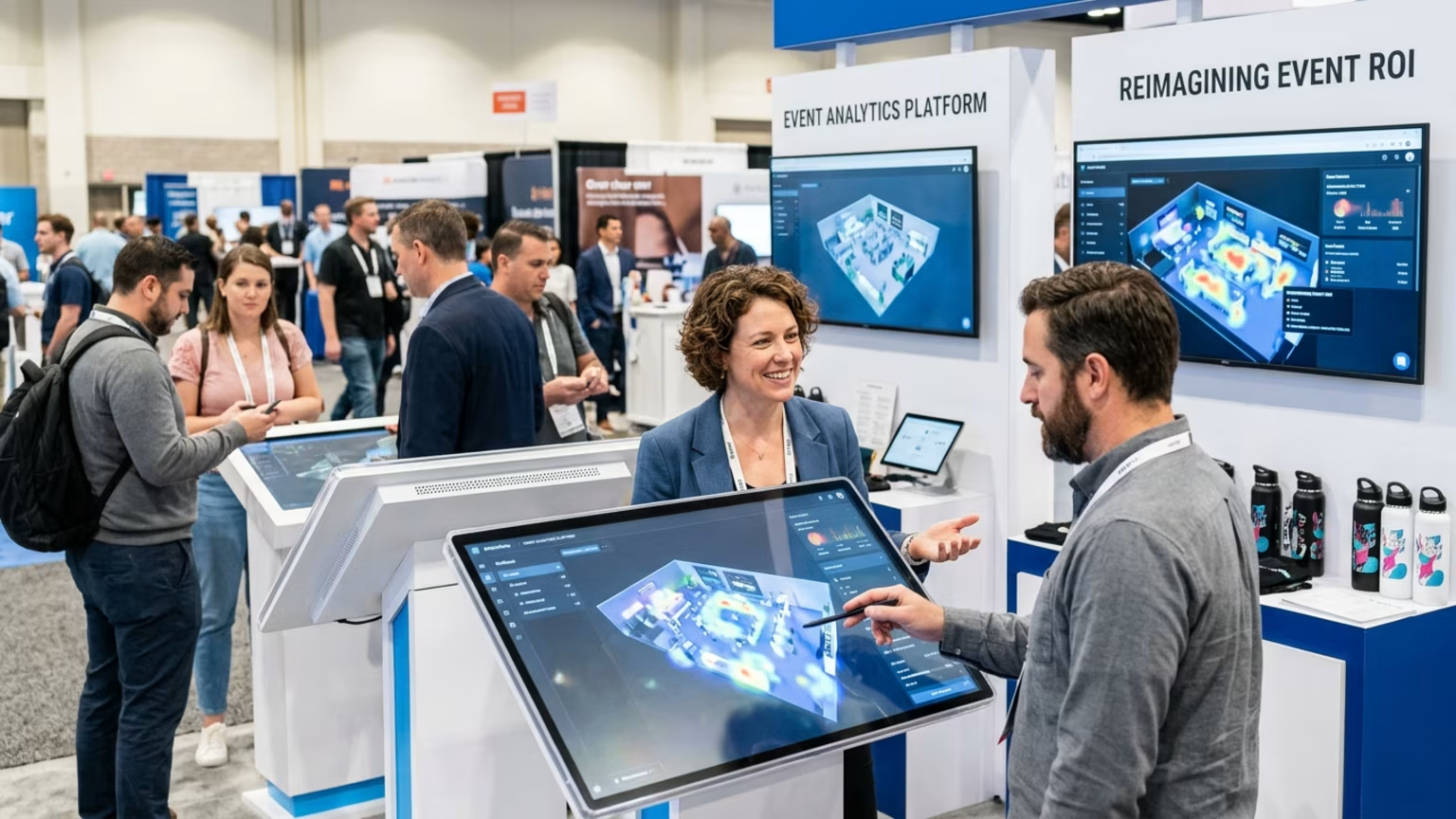
Sanjay Shringarpure of The Freeman Company suggests a permanent shift from scattered touchpoints to highly curated pathways. He advocates for digital twinning to build a virtual replica of your physical assets. This technology allows teams to simulate booth flow and test experiential layouts before spending a single dollar on fabrication. Planners can identify dead zones in a floor plan and correct them in the virtual model.
In our experience, we blend physical and digital experiences by integrating QR codes, mobile technology, and real-world activations into a cohesive layer across retail, event, and tour operations. This integrated approach is not a standalone service but an upgrade we apply to many types of experiential work to drive connected results. This means treating the trade show floor like a high-converting digital landing page. You build a pre-planned route for the attendee to experience the product naturally.
Artificial intelligence tools then analyze that digital twin to remove physical bottlenecks and predict crowd traffic patterns. You create a controlled environment where every action points toward a specific business outcome. By 2027, Gartner projects that 75 percent of enterprise events will use digital twins for simulation to cut waste. This strategic setup enables hyper-personalized consumer trials that lead directly to verifiable sales.
Critics often point out that fully twinned events can lack emotional resonance. The Harvard Business Review noted a drop in emotional connection when events rely too heavily on pure technology. The goal is never to replace the human element of experiential marketing. The technology exists to optimize the physical environment so human interactions become significantly more impactful.
Turning a chaotic booth into a structured sales machine requires intense operational discipline. You must build your data collection stack entirely around the physical attendee experience. This prevents the technology from feeling intrusive or forced during a live trial. Execution requires a clear plan of attack.
Brands that establish a consistent method for proving event value stop fighting for annual budget approvals. They treat the live experience as a highly trackable extension of their digital sales funnel. Industry data shows that 85 percent of event marketers plan to use artificial intelligence for personalization soon. This adoption rate highlights a massive shift away from unmeasured brand theater.
Artificial intelligence is rapidly changing how field marketing managers handle event staffing. Recent integrations of large language models have helped rewrite custom staffing applications from the ground up. This shift has reduced software development costs by nearly 60 percent for major event organizers. Automating these rote tasks frees up the field team to focus entirely on closing deals.
Data privacy remains a significant hurdle for brands attempting to track consumer movement. Reports indicate that 42 percent of attendees distrust event technology that monitors their physical actions. You must design your data collection points to offer clear value in exchange for consumer information. Offering immediate discounts or exclusive access provides a fair trade that respects consumer privacy.
You cannot report on feelings or positive vibes to a chief financial officer. You must deliver hard data that proves your activation moved the needle for the brand. Current data shows that 77 percent of chief marketing officers demand absolute proof of financial returns for events. Lead indicators tell you if the live experience is functioning correctly during the actual event.
Track average dwell time in the booth to measure actual engagement quality. Monitor the precise percentage of attendees who complete the full interactive product route. These early signals dictate whether your field team needs to adjust their approach on the second day. Lag indicators demonstrate the final business impact long after the event concludes.
Measure the exact cost-per-acquisition for net-new retail buyers. Track the retail sell-through lift in the specific region where the event took place. Connecting these distinct data points proves your operational value to the executive board. If you want to build a custom measurement framework for your next product launch, you can always book a strategy call with our team.
A major consumer packaged goods brand recently tested this dual approach at a massive interactive festival. They deployed an intelligent digital twin to optimize their snack sampling stations for maximum throughput and engagement. They tracked attendee interactions and tied each individual sample to a specific digital coupon code. This optimized setup yielded a massive 35 percent conversion rate to actual retail scans.
The team tracked a 15 to 20 percent lift in retail sell-through for the surrounding geographic market. They did not just hand out free snacks to hungry festival attendees. They built a predictable pipeline of documented product trials that deeply impressed their retail buyers. Incorporating interactive technology into live brand operations turned a standard sampling activation into undeniable evidence of business growth.
At major technology expos, brands integrating smart paths have seen sales leads jump by 40 percent. Pre-event simulation through digital twins has reduced setup costs by a staggering 25 percent. The financial barrier to entry can be steep for mid-sized brands. The financial return justifies the initial capital expenditure when the execution is flawless.
A well-executed event does not need to shout to prove its worth. When the structural foundation is built on solid data, the results speak for themselves. The best live experiences leave behind a quiet trail of undeniable proof.

30 Years Experiential & Retail Activation Partner for CPG & Beverage Brands | Multi-Market Demos, Roadshows & Costco/Club Programs That Actually Sell