Robbie Thain
Founder, CEO

Learn how data-integrated exhibitor packages turn standard booth traffic into measurable sales pipeline through intent scoring and post-show remarketing.
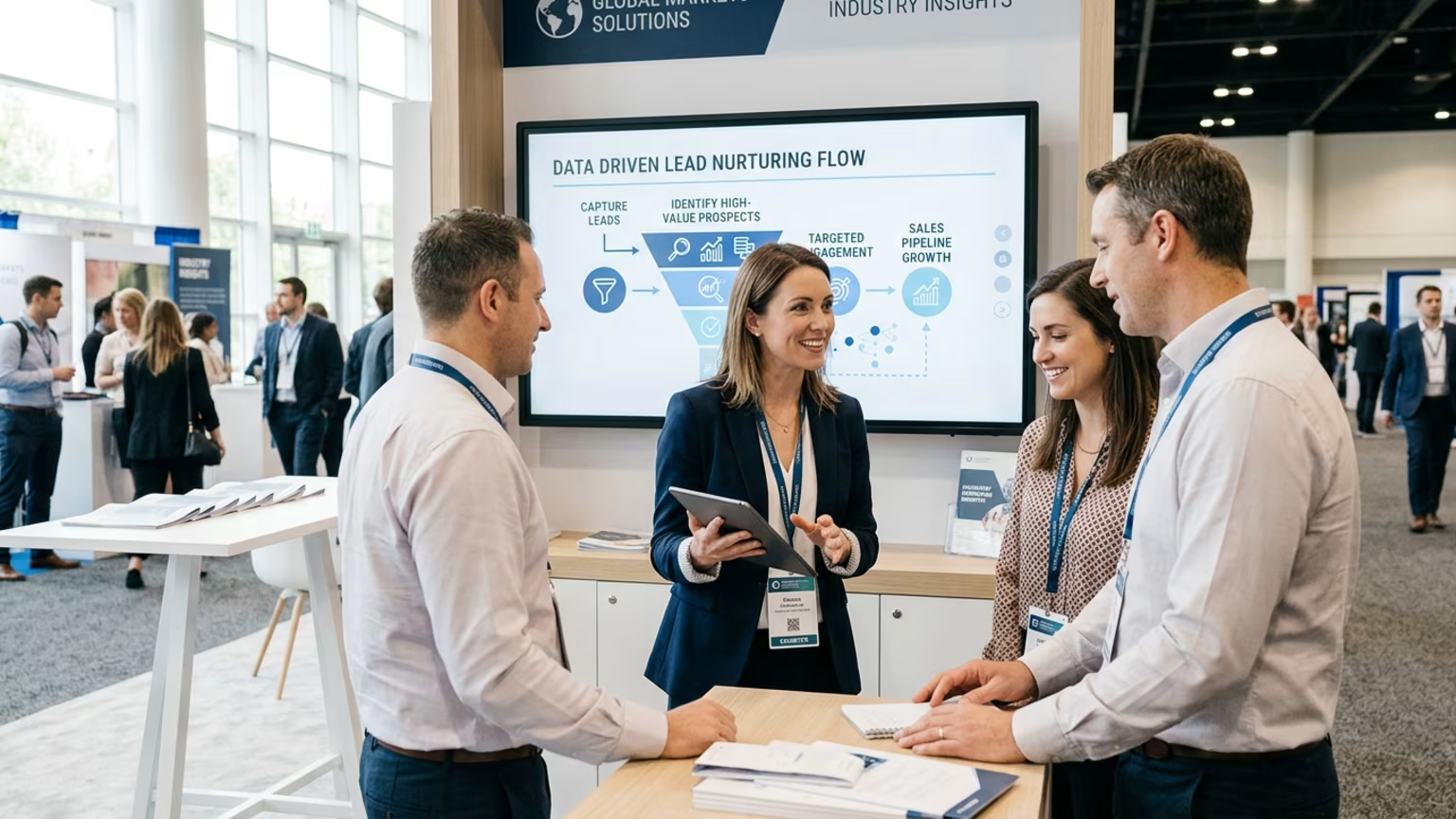
A field marketing director stands in a crowded aisle. Hundreds of badges have been scanned over three days. Not a single post-show meeting has been booked yet.
Informa Markets recently introduced data-integrated exhibitor packages that connect on-site scanning with attendee intent signals and post-show remarketing. This shift turns standard booth traffic into measurable sales pipeline by prioritizing qualified lead scoring over empty scan volume.
The chaotic reality of a live event floor is familiar to any seasoned marketing operator. Your booth is packed with attendees grabbing free samples. Brand ambassadors smile politely and tap their tablets repeatedly to capture visitor badges. You pack up the crates on the final day and fly home feeling exhausted but optimistic.
A week later your sales team starts calling the scanned contacts. They get almost zero traction. The attendees were just there for the snacks and casual conversation. They had no genuine interest in purchasing your product.
This disconnected scenario represents the old way of exhibiting. Space and visibility are no longer sufficient to justify massive event budgets today. Event leaders face constant pressure to prove their programs generate real commercial value. Marketers rely heavily on vanity metrics like total foot traffic.
They hand over raw lists of unqualified names to their sales counterparts. The sales team abandons the list after a few generic outreach attempts. The entire investment becomes a very expensive branding exercise. This creates a frustrating cycle between field marketing and sales departments.
Field marketers feel their hard work on the floor is ignored by sales representatives. Sales representatives feel marketing is handing them useless data. This misalignment destroys event profitability. A smarter framework treats live B2B events like performance media campaigns.
Most legacy systems rely on simple barcode scanning technology. Attendees walk past your display and offer their badge out of polite obligation. Your team scans the barcode and hands over a promotional item. Both parties walk away feeling like an interaction occurred. The reality is that no meaningful business information was actually exchanged.
This barcode interaction creates a false sense of security for marketing teams. You see a dashboard showing five hundred scans by the end of day two. You assume the event is a massive success based on this volume. The illusion shatters when you export the spreadsheet and realize you have no idea who holds actual purchasing power.
You blend physical interactions with precise digital tracking systems. Informa recently signaled this exact shift in the industry. Their core business model relies heavily on physical and digital events paired with specialist data and academic publishing [2]. This corporate strategy shows why they are investing in tools that make exhibitor spend highly measurable.
A recent Informa Markets event in Bangkok united 400 exhibitors and 10,000 visitors from 70 countries [1]. This massive scale proves that physical events remain a major commercial channel. Scale without strategic data integration is just expensive noise. Large event operators recognize they must provide better analytics to retain top exhibitors.
Buyers demand the same tracking capabilities they receive from software platforms. They want packages that combine audience access with clear analytics and follow-up tools. We specialize in creating retail demos, product sampling programs, and roadshows that bring brands face to face with their audiences. Each program is designed to drive trial, build consumer relationships, and accelerate retail velocity across multiple locations.
You need a data stack that aligns with this physical reality. A physical activation requires strict accountability. Brands must move from capturing everyone to identifying the exact right buyers. By utilizing intent data you segment audiences based on explicit needs.
This lets you retire the practice of capturing random booth traffic based solely on volume. A data-integrated package forces your team to ask better questions. The technology prompts your staff to select drop-down menus regarding timeline and budget. This intentional slow down is exactly what you want on a chaotic floor.
Slowing down the conversation filters out the freebie hunters from the serious buyers. The people who only want a free tote bag will walk away. The professionals looking for real solutions will stay and provide the requested information. This self-selection process improves your data quality immediately and makes your outreach hyper-targeted.
Having access to sophisticated software is only the first part of the equation. A strong technology package holds very little value if your team lacks a disciplined execution process. You must build a strict workflow to handle information before the expo doors open. Preparing for a high-tech floor execution requires weeks of advance planning.
You cannot hand your team a new intent tracking app on the morning of the show. They will inevitably default to their old habits of blind scanning. You must run dry runs of the conversation flow. Practice scenarios where an attendee gives mixed buying signals.
Teach your staff how to politely end a conversation with a low-intent visitor. Show them how to smoothly transition a high-intent buyer into the formal data capture process. This training protects the integrity of your entire system.
This structured playbook removes the friction between marketing capture and sales execution. Every person in your booth understands their role in the data collection process. The technology simply scales the human interactions happening on the floor. Without this alignment the data integration becomes completely useless.
Clear attribution requires tracking the right numbers over time. Return on Investment requires a mix of immediate lead indicators and long-term lag outcomes. You must stop reporting on total scans or booth visitors. These numbers look good in a slide deck but mean nothing to your finance department.
Your lead metrics should focus on speed and initial engagement. Track the average response time for reaching out to qualified prospects. Measure the percentage of priority targets who book a meeting within five days of the event. Track the open and click rates of your automated remarketing emails.
These early signals tell you if your targeting was accurate. Lag metrics show the true financial impact of your physical presence. Calculate the total pipeline generated per square foot of booth space. Measure the closed-won revenue directly attributed to floor interactions.
Look at the increase in retail buyer confidence or distributor agreements following the show. Track the repeat purchase rate from accounts acquired during the activation. Do not ignore the cost metrics when evaluating your success. Track your cost per qualified lead rather than your cost per scan.
A qualified lead might cost five times more than a basic badge scan. This higher upfront cost is entirely acceptable. The downstream conversion rate of that qualified lead will easily justify the initial expense.
When you measure the right things your reporting transforms entirely. The conversation shifts from event costs to revenue generated. This allows you to justify larger budgets for future activations. Using reliable performance tracking frameworks becomes the foundation of your ongoing reporting strategy.
Theoretical frameworks matter less than real market execution. Consider a premium wellness beverage brand launching a new product line at a major national expo. They purchase a data-integrated package instead of a basic floor space contract. Their goal is to maximize distributor meetings and build general consumer interest simultaneously.
The brand uses intent signals to separate retail buyers from casual fans. Retail buyers receive immediate personal outreach and VIP sample kits delivered to their offices. Casual consumers are added to a targeted digital list. The marketing team runs remarketing ads promoting a localized retail activation to this secondary list.
This bridges the gap beautifully. It allows them to execute highly targeted retail follow-up campaigns with total precision. The brand completely avoids the trap of treating every scan equally. They allocate their most expensive follow-up resources to the highest intent targets.
The data package provides the intelligence needed to make these routing decisions quickly. The entire event operates as a precise commercial engine. This brand tracked their metrics rigorously for six months following the expo. They discovered that the secondary list drove a thirty percent increase in local retail sales.
The primary distributor list resulted in five new regional distribution contracts. They could tie every dollar of new revenue back to a specific intent signal. This level of operator discipline separates top brands from average exhibitors. Every dollar spent on physical space translates into measurable pipeline velocity.
The focus remains locked on conversion over basic brand awareness. Book a strategy call with our team to map out your next data-driven event execution plan.
Open your CRM right now and map your event lead fields to match your actual sales process.

30 Years Experiential & Retail Activation Partner for CPG & Beverage Brands | Multi-Market Demos, Roadshows & Costco/Club Programs That Actually Sell